
 The New Issue of “BINTEL” Journal Has Been Published
 The new issue of the “BINTEL” journal is mainly about international policy, which has become the banner word of the vast majority of articles on future activities of the newly elected President of the United States of America Joseph Biden. Why so — there is no need to explain once again, especially given the importance of the events and the expectations of the world community of something that would significantly influence the current state of affairs and provide answers to many questions.
For example, will there be a change in US-Russian relations? How will the United States react to China’s policy? What will J. Biden offer to improve relations with South America or Africa? And, of course, J. Biden’s recognition of the Armenian genocide at the beginning of the last century, which was reported by the media a few days ago, not only draws attention to the relations between two NATO member states — the United States and Turkey — but also promises many changes in their ways of resolving important political problems.
 The article by Yevheniia Haber, a Foreign Affairs Expert, “American-Turkish Relations During the “Biden Era”: Prospects, Problems, Trends” states that over the two months since the change of power in the White House, the new administration has determined the main priorities of domestic and foreign policy, outlined the range of key partners and rivals in the international arena, and set out in a series of statements and strategic documents its vision for further development. But J. Biden “still has not found time for the “first phone call” to his Turkish counterpart. Instead, the US State Department has already blamed Turkey for its violating democratic freedoms and has issued several rather harsh statements”. And the author reminds that “there are fewer incentives to maintain a strategic dialogue with Ankara. At the same time, the existing differences on Kurdish, Syrian, Armenian and Cyprus issues, as well as Turkey’s independent policy on a number of regional conflicts, do not promise easy times, either in bilateral relations or in NATO cooperation”. To give readers an idea of the subject of the article, here are its subheadings: “New Priorities in the USA’s Foreign Policy: What Does This Mean for Turkey?”, “Biden 2.0”: Will History Repeat Itself?”, “Biden — Erdogan: the Background of the Relationship”, “View from Turkey: Foreign Policy As a Continuation of Domestic Policy”, “What to Expect from the “Biden Era”: Old Problems, New Opportunities, Invariability of Interests”.
 Kateryna Vakarchuk, Ph.D. in Politics, continues the theme of the USA’s policy under J. Biden in her article “Joe Biden’s Foreign Policy Towards Latin America”. By the way, Kateryna Vakarchuk is known as the author of many analytical works in our media about South America, several of which also appeared on the “Borysfen Intel”’s website. Therefore, it is clear that her current analysis of Washington’s policy towards neighboring countries can be seen as a continuation of such analytical work, which will not be limited to the statement of events that can sometimes be observed in the works of domestic research centers or institutes. This time, she compares the policies of Biden’s predecessors in the post of the US President, finds differences in their political moves, and points to the reasons for the persistence of their actions. The author recalls how at the beginning of the year J. Biden promised changes in migration policy, which is extremely important for those South Americans who want to get to the United States. After all, former President D. Trump, as we know, began to build a border wall in the south of the United States to prevent illegal migration from Mexico, Guatemala, Honduras, Colombia, etc. But the new US administration promises to intensify the struggle against the root causes of mass migration, will help Latin American countries fight poverty and crime. Additional 4 billion US dollars will be spent on specific projects, on the implementation of the four-year regional strategy proposed by J. Biden. Separately, the author focuses on US policy towards some Latin American countries, in particular Venezuela, Cuba and Colombia.
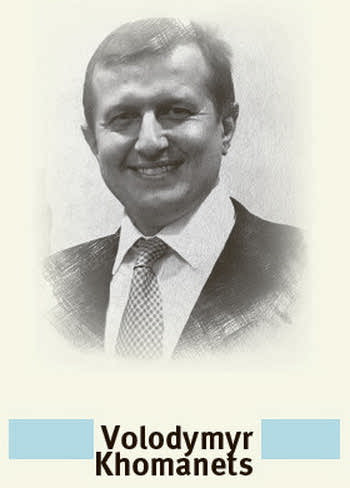 Volodymyr Khomanets, Ambassador Extraordinary and Plenipotentiary of Ukraine to the Republic of Tunisia tells about “Prospects of Joe Biden’s African Policy in the Context of China’s, the European Union’s, Russia’s and Turkey’s Relations with African Countries” in his article of the same name. It is important that the author has the opportunity to see in reality such a policy and, in particular, to support his observations and conclusions with information obtained directly in the areas to which he refers in his article. The author also recalls the experience gained by J. Biden in the international arena. After all, “…since his first election to the Senate in 1972 and before he became Vice President in 2009, J. Biden twice chaired the US Senate Committee on Foreign Relations… Thus, his views on US foreign policy are well known and largely predictable”. The author points out that the African continent is given the same important place in US foreign policy as other continents, especially its economic and security spheres. Describing in detail the state of affairs in African economies, the author mentions on what directions the United States and other developed countries will act on that continent, what will be taken into consideration, and most importantly — what may attract them there in the context of mutually beneficial cooperation. This should no longer be an arms trade, which is what the Russians have been doing and are trying to do. Priorities must be given to economic development and education, so that Africans can cope with the challenges that have plagued them for decades or even centuries. The information is presented under the following subheadings: “Africa in Numbers and Facts”, “The USA and Security Challenges in Africa”, “The USA — Africa: Trade and Economic Cooperation”, “African Policies of the Obama and the Trump Administrations”, “The Prospects of the Biden Administration’s Policy in Africa”, “The USA’s Competitors in Africa: China, the European Union, Russia and Turkey”.
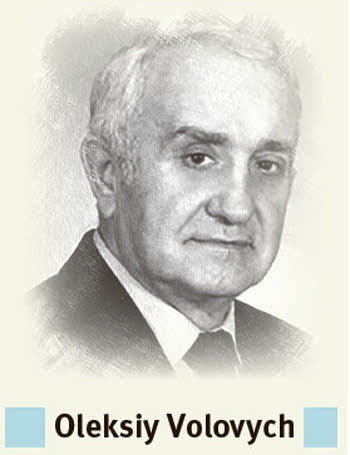 To understand how deeply and carefully one of the regular authors of our journal, Oleksiy Volovych, works on his articles, it is enough to look at the list of sources used by him. Thus, in the process of preparing the work “Prospects of Joe Biden’s Middle East Policy: Military-Political Aspects”, he reviewed at least 20 studies, not to mention personal many years of experience, which can be envied by many international experts. In the article, O. Volovych describes in detail the development of events in the Middle East, gives a political “rating” of the countries there, explains the reasons for their confrontation and the consequences that they had to eliminate today. As it concerns the current US policy in the Middle East, the author thoroughly describes its participants, explains the grounds for their actions, predicts possible consequences of those actions and the degree of responsibility for wrong political (and not only) steps. Regarding O. Volovych’s predictions of further developments in the Middle East and their dependence on US policy, it is enough to quote one sentence from this article: “Whoever becomes the President of the United States, the ship of the American state always moves once and for all on the chosen democratic course, albeit sometimes with temporary deviations, unlike, for example, some post-Soviet countries, where democracy is still beginning to develop, overcoming autocratic and totalitarian consequences, remnants of quasi-communist regimes… The Middle East policy of the United States during J. Biden’s stay in the White House will not undergo radical changes, however, it may be corrected…”
Special attention should be paid to the article of President of the “Borysfen Intel” Centre, Doctor of Military Sciences, Victor Hvozd, “The Role of Intelligence in the Modern World”, which, opening the journal under the heading “Challenges and threats of 2021”, actually continues the analysis of previous years. Thus, in the previous issue of the “BINTEL” journal V. Hvozd pointed out the peculiarities of the situation in the world in 2020 and gave some forecasts for the current year. Today we can say that his conclusions were correct. But why? The answer is simple: the analysis will always be accurate when carried out including on accurate intelligence. The author, in particular, draws attention to the challenges and threats to global stability in 2021. These include further spread of the COVID-19 pandemic, continuing and increasing tensions between the world’s leading centers of power, emergence of new lines of confrontation, intensification of armed races and so on. All these problems fully concern Ukraine, which, as a result of its integration into the modern world, has found itself at the crossroads of the leading centers of power — the United States/Europe and Russia, and to some extent China. To defend its interests, the Ukrainian leadership will have to make every effort. And it will be possible to do this, only understanding the role of our special services and intelligence agencies. Because, in the author’s words, although “intelligence is a prerequisite for an effective policy or strategy, but it can in no way replace the same policy and strategy or military power. The decisive factor is the state leadership’s capability of using intelligence effectively. Without this, even the most accurate and reliable intelligence is worthless”. He refers to historical and nowadays’ experience, in particular recalling the activities of German intelligence during the First World War, when Germany managed to destroy the Russian Empire with the help of the Bolsheviks, the work of Soviet intelligence in the middle of the last century to gain access to nuclear weapons technology. With the collapse of the USSR, the Soviet secret services survived in the form of special services of the Russian Federation and helped V. Putin and his team stop the disintegration of the Russian state, restore its former powers and actually undertake… the restoration of the Soviet Union. The author points out, “…it was the activities of Russia’s secret services, not the trade in natural resources, that saved Russia from disintegration in the 1990s”.

It is clear that the activities of special services did not always guarantee the success of measures at the state level. Thus, the powerful US intelligence community failed to prevent the large-scale terrorist attack on September 11, 2011. The work of the Egyptian and Soviet special services on the eve of the 6-day Arab-Israeli war of 1967 (the Israeli Air Force, which at the time had outdated aircrafts, destroyed 326 aircrafts received from the Soviet Union) was not successful…
The topic of modern special services is extremely important today, especially for Ukraine, which is forced to defend its independence from the encroachments of its neighbor from the East. Therefore, the author writes, we need to keep in mind that “…no ratings, ambitions, business or other mercantile interests of certain political forces should be more important than the national interests of Ukraine”.
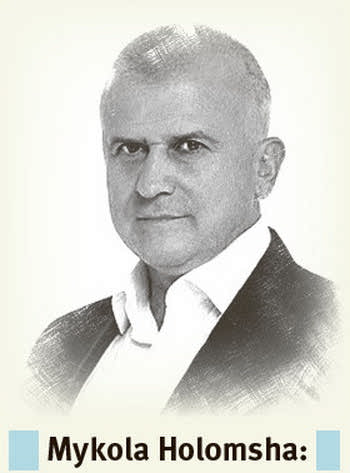 As always, there is a place in the journal for an interview with our guest. This time our questions were answered by Mykola Holomsha, Honored Lawyer of Ukraine, First Deputy Prosecutor General (2014–2019), Professor of Law.
Traditionally, the interview entitled “It is a great evil when the state leadership uses the prosecutor’s office as an element of political violence. This discredits the prosecutor’s office”, is published on the “Borysfen Intel”’s website.
Oleh Makhno
The journal is published in Ukrainian and English and is not duplicated on the website of the Independent Analytical Center for Geopolitical Studies “Borysfen Intel”.
You can buy a PDF copy of the journal on our website.


