
 The Chinese space station promises “harmony of the heavens”. But in reality it is a special tool of power
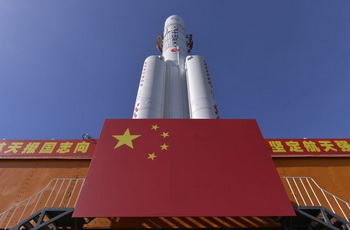
The flag of the People’s Republic of China has five stars: a large one in honor of the Communist Party and four small ones in honor of the most respected strata of the population. Recently, another star has shone over China, though not next to others on the flag, but high in the sky. Its beam is barely visible so far, but it is a powerful geopolitical signal.
Since April 29, 2021, the core module of the new Chinese station has been in space orbit. China has named the core module of its new space station, Tianhe (“Harmony of the Heavens”). Later, a crew with equipment for scientific experiments will arrive there, although, according to the Chinese leadership, science is not in the first place. The People’s Republic of China is trying to demonstrate its power through a special form of “orbital diplomacy”.
China is developing and implementing its long-term space strategy at both the national and geopolitical levels. The national space program and own space station are extremely important for the country’s leadership, as they are a harbinger of future success, and the star of the Chinese Communist Party should shine even brighter.
With the help of the new space station, China is also pursuing foreign policy goals. In 2018, China called on other countries to join the work on the project of the new station, in particular, to conduct science researches on board. Thus, China is trying to compete with the International Space Station (ISS), especially since its future is quite doubtful. The joint use of a new space station can become an important diplomatic tool for interstate relations. Just as China is building bridges in Africa as part of the New Silk Road or distributing a coronavirus vaccine to countries that need it, so astronauts from such countries will one day travel to the Chinese space station. Turning the new Chinese station into an international space station creates a dependency that strengthens the power of the Beijing authorities.
The article is available in Ukrainian


