
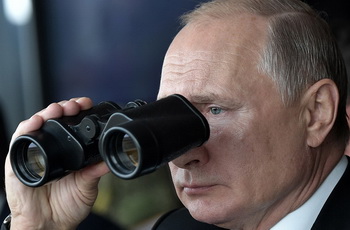
 Russia openly declares its claims to the Black Sea as “its exclusive sphere of influence”
Ivan Sichen
On the “National Unity Day” in Russia on November 4, 2021, which marked the Kremlin’s efforts to declare the end of the Civil War on the territory of the former Russian Empire, Russian President V. Putin visited Crimea and Sevastopol. The main thesis of his speech before the population of the annexed peninsula and the people of Russia was another declaration of maxims about the “Russian affiliation of Crimea”, which allegedly “has a historical character”. In V. Putin’s words, “the Crimean issue is closed by Moscow and is in no way subject to revision”.
However, all this is nothing more than the Kremlin’s wishful thinking, or a manifestation of Putin’s inadequate perception of existing realities. In fact, the problem of Russia’s annexation and occupation of Crimea remains in the spotlight of the world community, which is in no way going to close the issue. Moreover, Russia’s aggression against Ukraine is forcing the United States, NATO and European Union to completely revise their policy in the Black Sea region.
|
…The problem of Russia’s annexation and occupation of Crimea remains in the spotlight of the world community… |
The Black Sea region has always been of special importance to Russia. In the 16th–18th centuries it was one of the main sources of threats from the Crimean Khanate and Ottoman Turkey to the then Muscovy, and then to the Russian Empire. And after a series of protracted wars, when Russia established itself within its borders, it became for it a southern transport hub, which played a decisive role in the country’s economy.
Due to the non-freezing nature of the Black Sea, it has become Russia’s only year-round maritime access to the Mediterranean and the world’s oceans. This has turned the Black Sea into the center of intersection of interests of Moscow and its traditional adversaries, first of all, Turkey, Europe and the United States.
In the times of the Russian Empire and the USSR, such contradictions were restrained or resolved by them mostly by military methods and by demonstration of force, which allowed to ensure Russian and Soviet dominance in the Black Sea region. However, as a result of the collapse of the Soviet Union in 1991, this situation took on a fundamentally different character.
For one, Russia has lost most of the Black Sea region, and its “enemies” — now the United States, NATO and the EU, and with them — Ukraine and Georgia, have practically taken it under their control. As a result, the dominant position in the region has shifted to the West in both the military and economic spheres.
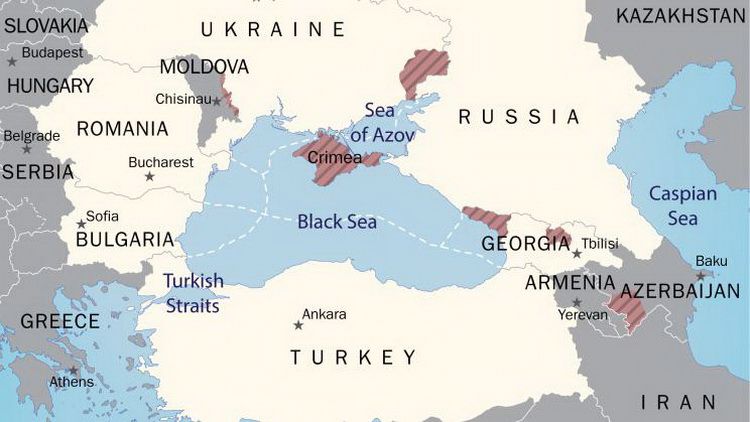 |
| The Black Sea is the center of intersection of interests of Moscow and its traditional adversaries |
In particular, in the early 2010s, under the pretext of the need for logistical support for US/NATO troops in Afghanistan and Iraq, two US military bases were deployed in Bulgaria and Romania — a force up to a mechanized brigade. Later, Joint Task Force East (JTFE) of the US European Command was created on their basis.
At the same time, the European Union and the United States implemented a number of transport and energy projects, which included the construction of oil and gas pipelines to Europe from the Caspian region, bypassing the Russian Federation. In addition, a network of road and railway communications from EU countries to the Central Asian region, the Persian Gulf, China, Southeast Asia and the Asia-Pacific region was also built bypassing Russia.
Of course, Moscow could not accept this and took active steps to restore its control over the region to the level of the former Soviet Union. At this, Russia’s main focus was on Crimea, which occupies a central position in the Black Sea and allows to effectively control the entire region.
 |
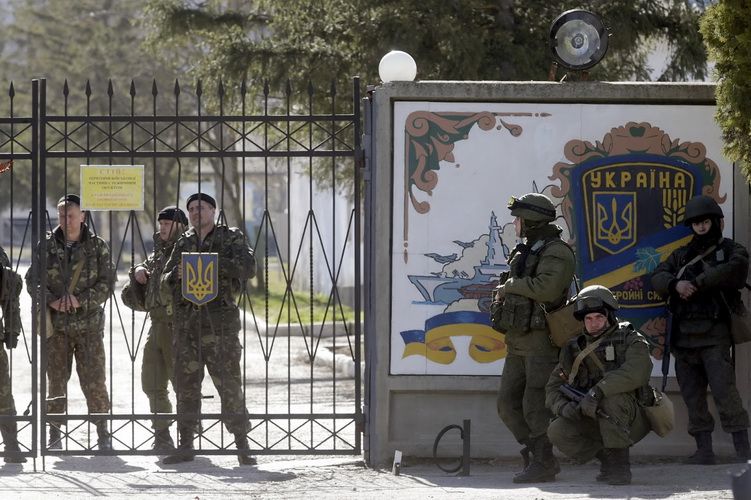 |
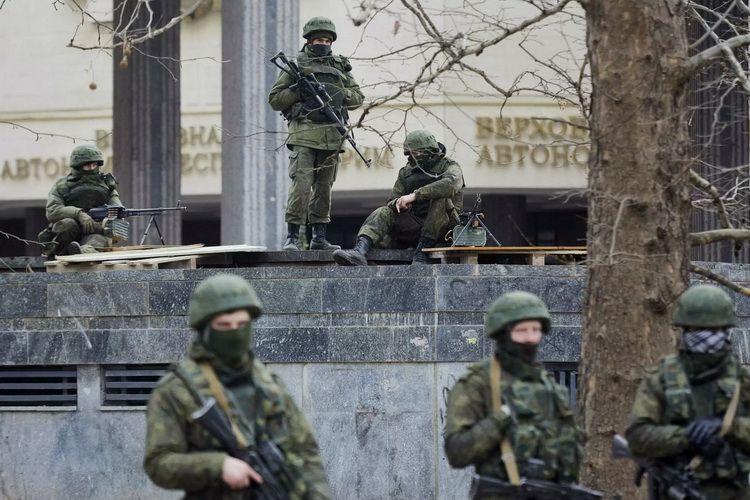
| The capture of Crimea provided Russia with much greater opportunities to exert pressure on the countries of the Black Sea region | |
As you know, the result of Moscow’s policy was Russia’s seizure of Crimea in 2014 with the subsequent annexation of the peninsula. Due to this, Moscow achieved a number of its goals, including:
- increased its influence in the Black Sea-Azov region;
- could use the territory and infrastructure of Crimea, as well as its economic and demographic potentials;
- brought Russian troops closer to NATO’s Black Sea countries and put them at direct risk of missile and air strikes from the military bases on the peninsula;
- weakened Ukraine as Russia’s main adversary in the post-Soviet space (blocked the prospects of our country’s full membership in NATO and the EU, increased the threat to our security from the south, and significantly complicated the work of Ukrainian ports in the Sea of Azov).
 |
| Given the lack of political and economic opportunities in Russia, it continues to rely on military force |
Building on its progress, Moscow has moved on to implementing the second phase of its plans, namely the return of its dominant position in the Black Sea region. At this, given the lack of political and economic opportunities in Russia to achieve such goals, it continues to rely on military force. Evidence of this is the intensification of Russia’s military activity in the Black Sea region, which has an openly aggressive anti-Western and anti-Ukrainian character.
Moreover, Moscow openly declares its claims to the Black Sea as “its exclusive sphere of influence”, including in the military sphere. In particular, according to Russian Foreign Minister S. Lavrov’s speech at the G20 summit in Rome in late October 2021, “Russia alone, without NATO, can ensure security in the Black Sea region”.
|
…Experts from Bulgaria and Romania consider their countries to be the most probable objects of further Russian aggression… |
All this is of great concern to Western countries, which have already completely lost the illusion of the possibility of establishing constructive relations with Russia and have moved to oppose it with their own armed forces. The Western experts’ assessments regarding Moscow’s actions and intentions to implement its plans in the Black Sea region are becoming more realistic.
To date, similar assessments by representatives of the secret services and the expert community of Bulgaria and Romania, which consider their countries to be the most probable objects of further Russian aggression after Ukraine, have the most adequate content. Thus, according to Bulgarian and Romanian experts:
- Russia’s capture of Crimea was a logical continuation of Moscow’s policy of regaining control of the Black Sea region and Ukraine. At this, Ukraine had no opportunity to defend Crimea because it did not have the necessary forces on the peninsula;
- the conflict in the Donbas was also provoked by Moscow with the support of its protégés in the central and local authorities of the Ukrainian government. As in the case of Crimea, such actions by Russia were aimed at the actual destruction of Ukraine as an integral state;
- due to the betrayal of the leadership of Ukraine, led by V. Yanukovych, in 2014, the Ukrainian security forces failed to defend the territorial integrity of the country. However, Bulgarian and Romanian experts for some reason underestimate the importance of the anti-terrorist operation and believe that the Armed Forces of Ukraine were concentrated exclusively around Kyiv in order to prevent its possible capture by Russian troops;
- despite the failure of Russia’s strategic plans to regain control of Ukraine, Moscow has in no way given up its intentions. Evidence of this is the nature of the deployment of Russian troops, which have been deployed in the Ukrainian direction since 2014. At present, they include three groups, namely: in Smolensk, Bryansk and Orel regions of Russia — aimed at Kyiv; in Kursk, Voronezh and Belgorod regions of Russia — aimed at capturing Kharkiv; in Rostov region — with the task of supporting Russian troops in the occupied territories of the Donbas;
- the quantitative and qualitative composition of Russia’s armed forces in Crimea clearly exceeds the needs of defending the peninsula from possible attempts by Ukraine to regain control over it by force. With this in mind, Russian troops on the Crimean peninsula are clearly targeting the United States and NATO in the Black Sea region. This is confirmed by the nature of military exercises of the Russian Armed Forces, first of all, SCPE of the “Caucasus” type, comprehensive inspections of units and forces of the Southern Military District of the Russian Armed Forces, as well as Moscow’s actions to provoke military tensions around Ukraine in the spring and autumn of 2021;
- the capture of Crimea provided Russia with much greater opportunities to exert pressure on the countries of the Black Sea region, as well as to block maritime shipping in the Black Sea. Evidence of this is Moscow’s actions to block the Ukrainian ports of Mariupol and Berdyansk in the Sea of Azov, as well as the systematic closure of international waters on major transport routes in the Black Sea (including near the Ukrainian port of Odesa) under the pretext of military exercises;
- the West’s limited response to Russia’s seizure of Crimea (with the exception of US and EU sanctions, which have no critical consequences for the Russian Federation) may prompt Moscow to take further aggressive actions against Ukraine and Georgia. At this, Moscow’s practice of blocking sea routes in the Black Sea will allow it to make it impossible for the United States and NATO to support Georgia;
- in turn, Ukraine has greater opportunities to deter Russian aggression with the help of its Western partners. There is also the complexity for Russia’s actions against Ukraine from the territory of Crimea, which is due to the peculiarity of this theater of operations, namely — the presence of only one road through the Crimean Isthmus, which is surrounded by swamps. This allows the Armed Forces of Ukraine to destroy the enemy forces quite effectively prior to their forward deployment in combat formations;
- despite Bulgaria and Romania’s membership in NATO, they could be the target of Russia’s military aggression. Moreover, such a threat is higher than for the Baltic States, which are also considered by Russia to be its “lost territories”, but are more integrated into the North Atlantic Alliance;
- another object of armed aggression by Russia could be Turkey. But its military potential is almost not inferior to Moscow’s capabilities. As a result, Russia’s attack on Turkey is unlikely. The presence of US troops on Turkish territory is also a powerful deterrent to Russia’s possible attack on Turkey.Given this, despite the differences between Ankara and Washington, Turkey will not critically strain relations with the United States, let alone withdraw from NATO.
|
…Russia’s aggression against Ukraine is forcing the USA, NATO and the EU to completely revise their policy in the Black Sea region… |
These assessments of Bulgarian and Romanian experts are fully shared by analysts of NATO’s military-political structures and are reflected in the Alliance’s military activities and plans.
For example, back in 2014, during the Welsh Summit of NATO, a decision was made to strengthen the military presence of the United States and NATO in the Black Sea region. According to this decision, a multinational division was deployed in Romania with the participation of units from the United States, United Kingdom, Romania, Bulgaria, Turkey, France, Germany and other NATO members.
After the further intensification of the confrontation between Russia and the United States/NATO, it was agreed to create a Multinational Corps South-East on the basis of this forces (the Multinational Corps Northeast already deployed in the Baltic region with headquarters in Poland).
Besides, the United States/NATO has intensified exercises and other forms of military activity in the Black Sea region. In particular, since 2014, warships from the United States and other NATO countries have been deployed to the Black Sea. At the same time, guided by the United Kingdom (designated by NATO to be responsible for the Black Sea region), an analogue of the so-called “air police” was created, which was founded by the Alliance in the Baltic region in the early 2000s. For example, at least one US/NATO fighter squadron is deployed on a rotating basis at air bases in Bulgaria and Romania.
And this is only part of US/NATO measures to deter Russia in the Black Sea region. In 2019, for the first time in history, the US Air Force strategic bombers flew to the Black Sea region to practice conditional missile strikes on Russian military facilities in the Crimea and the North Caucasus. Some of these flights are conducted over the territory of Ukraine accompanied by Ukrainian Air Force fighters, and have become a real nightmare for Russia.
In 2020, the United States/NATO launched the DEFENDER-Europe strategic exercises, which is explicitly called a “response to Russia’s threats to the North Atlantic Alliance”. They were held for the first time in the Baltic region, and this year in the Mediterranean and Black Sea regions. As noted in our previous articles, it was these exercises that caused the changes in the SCPE of the Armed Forces of the Russian Federation and Belarus “West-2021”, which was reoriented from the North-West to the South-West.
All of these are not just “episodes” in US/NATO policy, but their deliberate actions against Russia. Thus, in October–November 2021, the United States and NATO launched regular military measures to curb Russian expansion in the Black Sea region.
In particular, three American warships entered the Black Sea at once, which became one of the most significant deployment since 2014. Since the beginning of November 2021, the flagship of the 6th Fleet of the US Navy USS Mount Whitney, the Arleigh Burke-class guided-missile destroyer USS Porter, as well as the replenishment oiler USNS John Lenthall are deployed to the Black Sea.
 |
 |
| Measures of US/NATO to deter Russia in the Black Sea region | |
And V. Putin is just watching them from his dacha in the Krasnodar Territory of the Russian Federation near the city of Sochi. Well, that’s the only way Moscow can respond to challenges from the United States and NATO. Moreover, an American B-1B strategic bomber alone, not to mention the Arleigh Burke-class guided-missile destroyer like USS Porter, can destroy the entire Black Sea Fleet with all its bases in Crimea and the Caucasus in one volley.


