
 Exclusively by “Borysfen Intel”
Volodymyr Shevchenko
Andrii Savarets
At first glance, the “Special Military Operation” (SMO), both at the level of intention and at the level of military and political implementation, looks like a triumph of the Russian military and political leadership’ continuous bloody madness that has been going on for ten months.
Based on the version that we tried to substantiate as much as possible in the previous parts of the publication (1, 2, 3), the underlying reason for this “madneZZ”(both at the level of the intention and at the level of implementation) is quite rational.
This is the revolutionary transformation of the Russian Federation into Russia, carried out by interested influential forces within the Russian Federation — that is, into the state of the Russian people, which, in the opinion of these influential forces, has never existed.
By no means other than revolutionary ones, it is possible to move from the concept of the development of the state on the basis of civil nationalism to the concept of ethnic nationalism.
The SMO is an objectively necessary triggering mechanism for achieving this goal.
Given the destructive nature of both the SMO itself and the processes generated by it, for the Russian society, army and state as a whole, critical readers rightly raise a number of fundamental questions.
Question One: “Why?”
There must be very weighty objective and subjective reasons for such a plan. There must be a real problem that needs to be addressed regardless of the means, the costs, or the losses.
Why start a radical reorganization of the Russian society, if everything is already quite successful, both at the level of the elites and at the level of the people: the indicators of the development of the Russian Federation as a whole are quite acceptable in the conditions of the current problematic and unstable world. And “the perfect is the enemy of good”.
Question Two: “For the sake of what?”
What is this ultimate goal, which in the eyes of the initiators of the SMO, and then the people of the Russian Federation, should be commensurate with the sacrifices made to achieve it? It is obvious that such a goal must be inextricably linked with the image of the future of the country and society.
So far, no one managed to formulate a rational and at the same time positive image of the future of the Russian Federation. All it can do now is to move by inertia, each participant in the life of the society getting maximum profit here and now.
Under such circumstances, revolutions are not made.
Question Three: “Why such cruelty?”
Even if we assume that the image of an attractive future for Russia can be formulated, why is the path to building a new type of state and society so destructive? Was it really impossible to use other, softer means to reformat Russian society: democratic procedures, governing games, mass targeted agitation, a military coup, directed repressions, close integration with other states, etc.?
Question Four: “Unnecessary and unjustified risks”
Any revolutionary process, accompanied by an economic downturn, civil war, administrative and legal chaos, is a world entirely consisting of “black swans”, that is, of unpredictable and suddenly emerging new factors that can radically change the situation and its results.
Even for powerful and extremely interested social forces, revolution is an extremely risky action. Here one cannot gain, but on the contrary, can lose everything (and “everything’” for a powerful force integrated into the current Russian government is very, very much).
Dear readers who do not have the opportunity or desire to read long analytical texts proving that the political regime in the Russian Federation is rapidly and irreversibly moving towards building an archaic xenophobic state with the state ideology of National Socialism, we advise to pay attention to a strategic trend, behind which there is a deep understanding of the processes by interested parties.
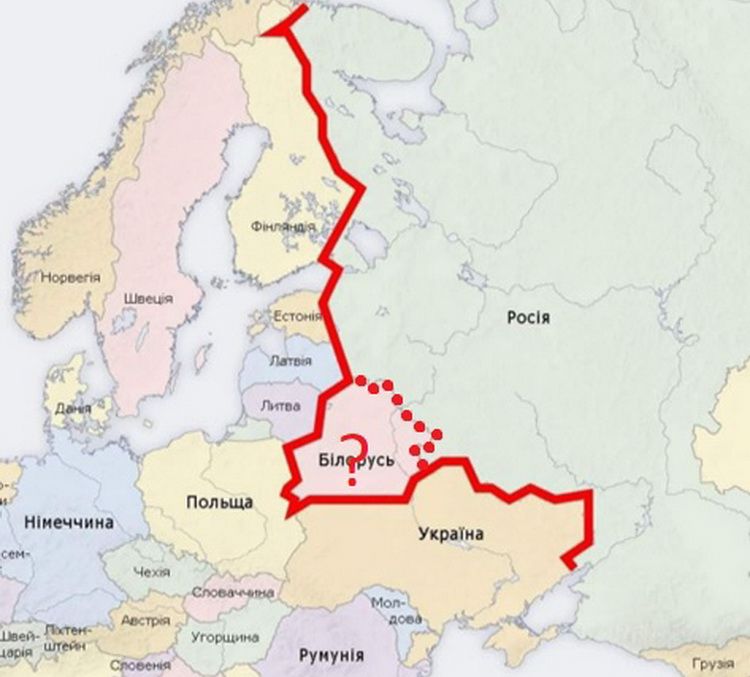
First of all, we mean the tendency of behavior of the liberal democratic countries of the world, which abandon their multibillion-dollar businesses in the Russian Federation, arm themselves at a faster pace and build a layered military defense, as well as a diplomatic, informational, moral and psychological wall on their eastern borders.
Question One: ”Why?”
There must be very weighty objective and subjective reasons for such a plan. There must be a real problem that needs to be addressed regardless of the means, the costs, or the losses.
Why start a radical reorganization of the Russian society, if everything is already quite successful, both at the level of the elites and at the level of the people: the indicators of the development of the Russian Federation as a whole are quite acceptable in the conditions of the current problematic and unstable world. And “the perfect is the enemy of good”.
Objective reasons
The current model of the development of the Russian Federation is guaranteed to deprive it of a positive future, condemning it to the final degradation and absorption by neighbors.
There is a high probability that the initiators of the radical socio-political transformation of the Russian Federation, in addition to solving purely their corporate tasks, do realize the deadlock in the development of the Russian Federation within the framework of the current model and the complete absence of any sane positive picture of the future for the country and themselves personally.
Now in the Russian Federation everyone is looking for a certain “image of the future”, however, the process is still at the stage of “whim and fantasy”. In the sea of “scientific” approaches, from Kurginyan to Devyatov, there is not a single acceptable and at the same time realistic one.
This void is being filled by clerks on the payroll with programs that have no intersection with reality. For example, A. Kharichev (an associate of the Deputy Head of the Presidential Administration of the Russian Federation S. Kiriyenko) wrote an article about the ideal image of the future of the Russian Federation on the basis of his ideas about the perception of basic values by Russians.
As the authors themselves self-critically wrote, there is no positive image of the future in the Russian Federation — it is like the second part of “Dead Souls”, which Gogol burned. According to this study, “Russia is a pie that combines bitter, sour, sweet”. That is, it is the same image of the disastrous present, but attributed to the future and embellished with beautiful poetic comparisons.
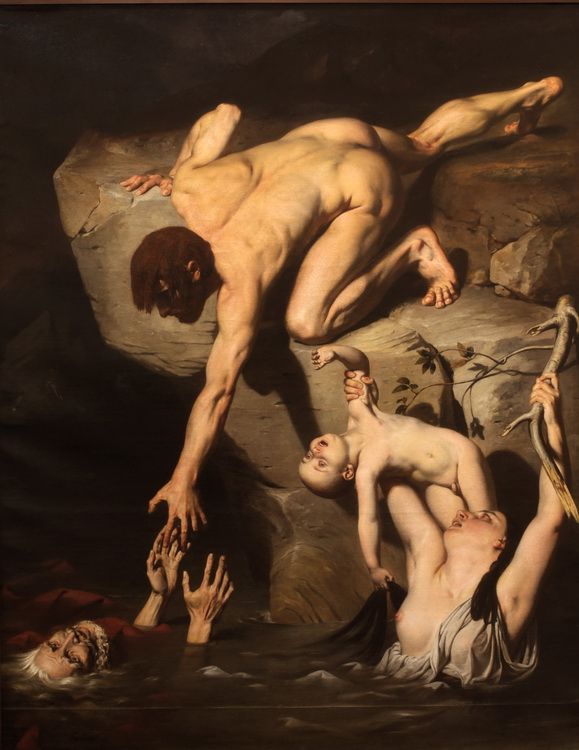 Moreover, the Russian Federation does not have a picture of a sane present! All social ideals are turned to the past.
Hence the “humanitarian-historical mess”, both in the Russian Federation itself and in the occupied territories. Flags: red Soviet, Russian, white-yellow-black imperial; Tsar Nicholas II and Lenin-Stalin in one extremely illogical mixture.
In the work of one of the modern Russian ideologists, we met an interesting and accurate allegory of the Russian Federation, presented through a fragment of Joseph-Désiré Court’s painting “Scene from the Great Flood”, where a man tries to save his father (past) by sacrificing his wife (present) and son (future).
In fact, the ideology of the Russian present combines three destructive ideas:
- The idea of wild capitalism, not limited by laws or morality;
- The idea of the tsarist Russian Empire as a “country-civilization”, which in the USSR was called “a new historical community — the Soviet people”, and the current rulers simply replaced “the Soviet people” with “the Russian people”;
- The idea of imperial greatness associated with the desire for irrational (that is, having no practical meaning in the modern world) territorial expansion.
It is this surrogate ideology of state-building that has already led to:
- extremely unfair distribution of national wealth (1 % of the population of the Russian Federation owns 80 % of the property);
- imbalance in the development of the regions;
- striking contradictions in national policy — the creation of an “empire in reverse”, when the “centre” pays tribute to regional and national clans for loyalty (while the state-forming people — the Russians — do not have their own state formation, and, consequently, there is no policy of social and cultural protection of Russians);
- creation of verticals of power at all levels, functioning exclusively on the basis of the extraction of corruption rents, which, in turn, led to:
- fakeness of all state structures and the state as a whole without exception (which was clearly demonstrated by the war and mobilization);
- ability through corruption ties to influence the development of the country in the interests of mafia economic and ethnic internal structures, as well as external forces at the expense of robbing the people.
That is, in the political structure of the modern Russian Federation there are three fault lines:
- social;
- national;
- regional.
These “fault lines” for objective reasons will try to expand and deepen both external forces and forces within the Russian Federation itself. The build-up of tension along these lines is already destroying and will inevitably destroy the structure of the state, even in the process of its natural evolution without any war.
And this is in conditions when three geopolitical forces are successfully developing on the borders of the Russian Federation, which have their own far from altruistic interests regarding the Russian Federation:
- NATO bloc with allies;
- China;
- rapidly emerging union of Turkic states led by Turkey.
The total economic (and, consequently, economic, political and military) power of neighbors — more than 70 % of world GDP. Despite the fact that the Russian Federation is only 1.5 % of world GDP (with a clear downward trend).
With the natural (even quite peaceful) development of these trends, the Russian Federation will simply be “disassembled into pieces” in the near foreseeable future with the help of “soft power” technologies.
Having such an ugly ideological basis for its development, a fake state called the Russian Federation without a radical internal transformation cannot and will not resist either internal or external challenges.
It makes sense to give a collective image of the current Russian Federation on the basis of the vision of competent and unbiased Russian politicians and political scientists: “Until now, Russians were in a kind of fictional reality, stuffed with fantasies — one more beautiful than the other. In this reality, Russia is one of the world’s leading economies, the owner of: the second army of the world; huge industrial potential; modern highly developed science and outstanding culture; uncountable treasures in the ground. Therefore, all the people of the Earth envy the Russians. Especially, Russians are envied because they have an outstanding president who confuses everyone with his multi-moves, and then beats them. And in general, Russians are mighty and healthy mentally and physically people who have not lost a single war and can resist the whole world.
The harsh reality shows that the Russian Federation is a poor, underdeveloped country: a raw material appendage (formerly of the West, and now of China, India and Turkey); a state lagging behind by absolutely all criteria and an insensitive state with an over-the-top level of corruption, where any person who sees his goal in something other than theft is perceived by the authorities as a source of danger”. (Alfred Koch, “Russia Will Lose This War”).
In addition, the state-forming ethnic group — Russians do not have their own national-territorial formation within the framework of the Russian Federation, and the number of Russians is rapidly decreasing (in absolute numbers, and in percentage terms relative to the population of the Russian Federation is not growing — unlike other CIS countries, where the proportion of the titular nation is constantly increasing).
 Assessment based on the data from Rosstat and the Pushkin State Institute of the Russian Language
So, critically overdue is an objective historical need to abandon the existing paradigm of the development of the Russian Federation as internally contradictory and disastrous, completely obsolete, leading the country and society to complete collapse.
Interested forces within the Russian Federation, aware of the situation (which in fact lies on the surface), and potentially capable of influencing the situation, had two options:
- Passively wait for the inevitable collapse of the state within the framework of the old paradigm of development with unpredictable (including for themselves) consequences;
- Actively and radically (that is, in a revolutionary way) change this paradigm within the framework of a controlled process, obtaining the desired result (including, and above all, for themselves).
We proceed from the assumption that powerful interested forces within the Russian Federation have chosen option two.
The Domestic Political Reason for Radical Transformation
The domestic political reason for the radical transformation is the presence in the Russian political field of power groups whose ambitions go far beyond their existing power abilities.
The ultimate goal of the revolutionary process launched with the help of the SMO is the undivided power in the “New Russia” of the current Russian special services (with the most active support from the Russian Orthodox Church, which seeks to make Orthodoxy the state religion in the “New Russia”) by depriving the influence of other power groups.
The Russian special services are the only center of power that has a motive, moral readiness (the absence of any moral restrictions), technical and professional ability to make true such a project.
One of the arguments against this understanding is the thesis that there is no point in establishing the undivided power of the special services (especially at such a price), since allegedly all power in the Russian Federation belongs to them, and President Putin (the actual absolute monarch) is himself a protégé of the special services, inextricably linked with their interests.
Earlier we pointed out that the instruments of power in modern society are: property (ownership); legislated power; resource of power (legitimate or not — is not very important); conceptual power — the power of the idea (ideology).
In Russia, these instruments are distributed in different proportions among the five main centers of power: oligarchs; national and regional elites; army; the Russian Orthodox Church and special services.
The practical liquidation of the oligarchy as a class in the process of mass nationalization, the discrediting of the army of the old (Putin-Shoigu’s) model, as well as the deprivation of the influence of regional and national groups in the process of transition to a unitary national state, concentrate all the necessary tools of power in the hands of the special services.
And while the absolute power of the special services in the current Russian Federation is rather a legend, in the future “New Russia” it is a completely achievable real goal.
The closest modern analogue of such a model (of course, with adjustments for a specific Russian reality) is Iran, where the Islamic Revolutionary Guard Corps has brought under control the army, economy, executive power, foreign and domestic policy and shares power only with theocratic groups and imams.
Question Two: “For the sake of what?”
What is this ultimate goal, which in the eyes of the initiators of the SMO, and then the people of the Russian Federation, should be commensurate with the sacrifices made to achieve it? It is obvious that such a goal must be inextricably linked with the image of the future of the country and society.
So far, no one managed to formulate a rational and at the same time positive image of the future of the Russian Federation. All it can do now is to move by inertia, each participant in the life of the society getting maximum profit here and now.
Under such circumstances, revolutions are not made.
Repeatedly, as an objection, we have heard that it is impossible for “New Russia” to formulate such a rational strategic goal of its development (a picture of the future expressed in the form of a state ideology), for the sake of which it makes sense to lead the country through military and economic collapse, human losses, international isolation and civil war.
Our answer is — It is quite possible!!! Moreover, it has already been formulated in the form of individual elements.
It remains to assemble it as a picture from the existing “puzzles”. The preparation of these “puzzles” is carried out by interested forces within the framework of the existing system of power, and in a systematized form it will certainly be presented by the future government. At the moment, the Russian society, increasingly sensing the growing crisis, is beginning to ask itself two traditional questions: who is to blame and what to do?
And the “New Idea” through its ideologists must answer these questions very clearly.
Who is to blame?
- The entire old system of government as a whole with the current president of the country.
- The old ideology that sanctifies the construction in the Russian Federation of a cruel and extremely unfair society (without exaggeration — cannibalistic) in the interests of the most unscrupulous, immoral and cruel personalities in the system of oligarchy, state corruption or outright crime;
- Personally — inorodtsy — total strangers who sold for money and benefits the idea of the Motherland and the idea of true patriotism. They, as a rule, have Russian citizenship, but in no way internally associate themselves with Russians and use the state exclusively as a “fodder base” — as an object of robbery (here anti-Semitic narratives are becoming clearer and more open and public).
What to do?
To strive for a new goal. In full accordance with the classics: “We will build our new world. He who was nothing will become everything…”
Now in more details.
Earlier, we outlined the mandatory parameters of the new development goal of the Russian Federation. It makes sense to repeat them.
First of all, the goal must be Great.
Besides:
- the goal should emotionally inspire millions of people and be simple. Hence, it must be abstract — in fact, it must be a goal-symbol [1].
- the “New Great Goal” must resonate with the basic orientations of the national archetypes, which have been developed over the centuries.
To concretize the above, it can be argued that the “Great Idea”, which for centuries has been driving the development of the Russian state and the Russian nation, and which cannot be discarded under any circumstances (but can only be modified), has always been the idea of Greatness.
From its inception in the depths of centuries to the present day, the idea of Greatness has always been understood as the idea of Imperial Greatness.
Empire at the level of mass perception is a rather abstract (without clear boundaries) geographical space that tends to constantly expand (remember Putin at a meeting with schoolchildren with his “the border of Russia does not end anywhere”).
At this, the process of geographical expansion is not a means of achieving any pragmatic goals, it itself is the “Self-Sufficient Ultimate Great Goal”.
The idea of Imperial Greatness lies in the collective conscious and unconscious of the inhabitants of the Russian Federation, and is the main reason for supporting the war in Ukraine (which is clearly reflected in sociology).
The “New Great Goal” should be offered to replace the “Old Great Goal”, which in the process of its implementation degenerated, outlived itself, demonstrated to the people its inconsistency with the trends of the time.
Disappointment in the existing national idea by discrediting it is the basic and deepest factor in the growing revolutionary situation.
In the process of the Russian-Ukrainian war in the Russian society an understanding is gradually maturing that the importance of greatness (as continuous territorial expansion) and traditional (military) methods of achieving in the current reality — is the way to the exact opposite result — national humiliation.
Implementation of the “New Great Goal” should be based on an active and passionate group of initiators of its implementation, as well as on numerous social groups that are already objectively prepared for its perception, or are potentially receptive to the “New Great Goal”’ in the process of its implementation.
In the Russian Federation, there are already passionate groups of initiators, and public support groups, as well as a huge human layer of potential support.
Ideology of the New Russian State
“How often do you hear the question — who are the Russians? How often do you get told that there are no Russians, all have been mixed up for a long time and in general Russian is a state of mind? Add to this piggy bank more questions about the difference between a Russian and a Soviet and a Russian citizen.
Proceeding from the “correct” answers to these questions, it turns out that there are no Russian national interests, there is no nation, there is only a toxic imperial culture of sadism and violence.
The Russian nation must finally meet the challenges of the times”.
Yegor Kholmogorov (one of the ideologists of the “New Russia”)
Destruction of old meanings requires creation of new ones if the goal of development is set, and not “rebellion, meaningless and merciless”.
After the war, in the process of inevitable post-war destabilization, it is unlikely that it will be possible to preserve the old model of the Russian Federation for objective reasons. Therefore, the Russian Federation has only two mutually excluding paths — liberal and National Socialist.
Of course, the democratic world and the Russian democratic opposition dream of a liberal Russian Federation. However, an unbiased analysis of the maximum number of factors suggests that the National Socialist path for building a future Russia is much more likely than the liberal one.
“’During the 22 years of dictatorship in the Kremlin, the Russian liberal opposition has simply been destroyed. Whoever comes to power today, the likelihood that it will not be a “collective Putin” is extremely little” [2]. We fully agree with this assessment, especially since at least one million carriers of liberal views have left the country over the past 10 months. With the emergence of persistent rumors within the Russian authorities about a new wave of partial mobilization (or even general), the next wave of liberal-minded emigration is emerging.
If we exclude the liberal path of development of the Russian Federation at the moment, and exclude the option of preserving the system in its previous form, the choice simply disappears.
Also if we take into consideration:
- dominant mentality of citizens of the Russian Federation;
- evolution of this mentality;
- psychological state of the society at the moment;
- existence of well-known groups of influence in the Russian Federation;
- objective laws of development of historical processes,
the only option left — is National Socialism.
This is the state-attractor [3] of the political evolution of the Russian Federation.
The closest historical model of the ideology of such a state is a mix from the German Reich in its heyday and “rising from its knees” in the late 30s of the last century, Italy of the Mussolini period, as well as the ideology formulated by the creator of the Holy Inquisition Torquemada about the great spiritual mission of struggle (using any methods) with Satan and demons in the name of saving the souls of the “lost” flock, which the Inquisitors love selflessly.
Both religious and secular authorities of the Russian Federation at the level of top officials joined the fight against Ukrainian and world “Satanism” [4]. This, of course, is a shocking know-how in the modern world and requires a separate in-depth study.
Moreover, the struggle against “Satanism” is already manifested by the practice of mass murder committed by supporters of this idea in the occupied territories of Ukraine.
It is Russian National Socialism (Russian fascism or Rashism) that best meets all the above-described parameters of the “Great Goal of Evolution” for the modern Russian Federation [5].
It is this ideology that is intensively developed by different groups (philosophers, propagandists, politicians of different levels, military leaders and public activists).
The goal of the development of Russia (huge rich territories and at least 100 million citizens who define themselves as Russians), according to the creators and conductors of the new ideology, should be to achieve the true greatness of the Russian nation through a NEW SPIRITUALITY, WILL AND LABOR [6].
It should be noted that this is the complete opposite of the approach that D. Likhachev most accurately expressed at one time: “Russia did not have and does not have any special mission! There is no need to look for any national idea for Russia — it is a mirage. Living with a national idea will inevitably lead first to restrictions, and then intolerance will arise towards another race, another people and another religion. Intolerance will necessarily lead to terror. It is impossible to seek Russia’s return to any single ideology, because a single ideology will sooner or later lead Russia to fascism”. (From the book by Academician D. Likhachev “Letters on the Good and Beautiful”).
There is no chance for the modern Russian Federation to develop “according to Likhachev”, since such an approach denies the basic idea of greatness and the existing social reality.
Building a national state of the Russian people will require a radical breakdown and a decisive giving up the existing theory and practice of modern state-building, abandoning the old historical myth and formulation of a new one, as well as formulation of other goals for the development of the people and methods of achieving them.
At the moment, the philosophy, mythology and ritualism of the new “Russian world” are in the process of final formation.
This, without exaggeration, is a grandiose task of a civilizational scale.
The most important point should be abandoning the stereotypes, which should be declared as imposed by external and internal enemies of Russia. The current stereotypes (according to revolutionary ideologists) directly or indirectly state that the Russian nation is second-class and derived from other (Western) centers of civilization. There is nothing surprising in such stereotypes that distort history, since “History is Written by Victors”, namely the West has been such for Russia over the past few centuries.
First of all, the historical myth [7] must be transformed as the basis of the state-forming ideology.
To the dustbin of history should go:
- the concept of the Russian Federation as a “state-civilization” — only two self-identifications should remain — “Russian” and “not Russian”, that is, a representative of any other nation (the concept of “multinational Russian people” in the new coordinate system is absurd and nonsense);
- the concept of “Slavic unity” — there is no real meaning behind it, except for a beautiful literary image that is misleading;
- the Norman theory of the emergence of the Russian nation — humiliating and establishing second-class Russians and derivative from European genetic and cultural roots;
- the Soviet historical myth about Kyiv as the “mother of Russian cities” and Kyivan Rus as “the cradle of three fraternal peoples”, who around themselves “made forever an unbreakable union with other peoples”;
- the statement about the founding of Moscow by the Kyiv prince Yuri Dolgoruky;
- the current formula of the source of spirituality of Russia: “Moscow is the third Rome and the fourth is not given” — cutting in time and distorting antiquity, and the self-sufficiency of the spiritual origins of the Russian nation. The source of true and deep spirituality is declared to be the state of Tartary-Scythia, which previously existed on the territory of northern Eurasia, immeasurably older than Rome and Byzantium. It was from there that the Vedic (Aryan) tradition went, which then reached India. Moreover, on this territory, researchers have discovered traces of even more ancient civilizations, which left behind the remains of giant megalithic structures, much more ancient than the civilizations of Sumer and ancient Egypt.
The new ideology also requires, as a necessary measure, a radical rethinking of the role of key historical figures and events.
In particular, the role of Peter the Great, who, according to the classic, “by barbaric methods eradicated barbarism in Russia” that allegedly existed before his accession to the throne. Peter’s “cutting a window to Europe” ended with the fact that through this “window” a wave of European spiritual and cultural expansion poured into Russia: the managers in the estates are Germans; governesses raising the children of the nobility are French; the language of the elite is French; all subsequent autocrats are foreigners, as are a huge number of high-ranking officials.
In particular, the Russian holiday of “National Unity on November 4”, from which the modern cosmopolitan authorities of the Russian Federation have emasculated its purely Russian content, as well as the first (1812) and second (1941–1945) Patriotic Wars, which should be interpreted as popular and anti-Western, are in dire need of a new interpretation.
Under the new understanding of history, it is also necessary to radically transform the system of education and mass upbringing of citizens.
Principles of Economic Development of “New Russia”
Set out, in particular, by Putin’s adviser, academician of the Russian Academy of Sciences S. Glazyev in his report to the Izborsk Club on September 21, 2022 under the eloquent title: “Operation to Denazify Ukraine in the Context of a World War”.
Those are the principles of the mobilization-type economy, completely subordinate to public administration.
The academician writes: “The implementation of the strategy of advanced development and the simultaneous provision of national security tasks should include the following measures aimed at mobilizing available resources.
- Formation of a centralized control and management structure similar to the State Defense Committee of the USSR, which operated during the Second World War, whose resolutions shall have the force of law and to which all bodies of power, including the government and the Central Bank, systemically important banks and corporations, administrations of the subjects of the Federation shall be subordinate. The export and import of strategically important goods should be controlled by the government in order to provide the Armed Forces and systemically important enterprises with all the necessary resources. An interest-free loan to the government for these purposes should be provided by the Central Bank, which now cannot form its own foreign exchange reserves.
- Subordination of macroeconomic policy, including its monetary component, to the goals of modernization and growth of production of high-tech military and dual-use products. For this end, loans should be organized for enterprises that produce products under state orders and work under state programs.
- Creation of reserves of strategic materials — raw materials and materials needed for the production of military products and ensuring the socio-economic security of the country, with their acquisition at the expense of loans from the Bank of Russia along with gold and currency values.
- Implementation of the strategic plan for mobilization of available resources for the purpose of advanced development of the economy on the basis of a new technological order and providing the Armed Forces and the population with the necessary goods.
- Renationalization of the Moscow Exchange. Restoration of the ruble exchange rate management. Protection of the monetary and financial system from speculative attacks, introduction of licensing of capital and restriction of non-trading operations, fixing the currency position of commercial banks. Radical increase in the efficiency of currency control. Deoffshorization of the economy and cessation of unauthorized export of capital.
- Termination of the use of rating agencies, audit, consulting and legal companies of unfriendly countries in the work of government agencies, banks and corporations. Replacing them with Russian organizations.
- Deepening of the Eurasian economic integration in terms of a set of functions of economic regulation (to supplement them with currency, monetary, educational, scientific and technical policies).
- Moving to national currencies in mutual trade and investment not only in the EAEU and the CIS, but also within the framework of BRICS and SCO. Withdrawal of joint development institutions from the dollar zone. Expansion of payment and interbank information exchange systems independent from unfriendly countries to global levels.
Such a policy will lead to import substitution and development of our own industry, the growth of citizens’ incomes”.
Social Technologies of National Socialism
They are either already implemented or are being intensively implemented.
There is a total incessant zombifying propaganda of hatred, the imposition on society (starting from kindergarten) of the psychological state of the “besieged camp” and (as a consequence) the need to unite around the leader and readiness to die on his orders. All in the name of the greatness of the people.
The state constantly “tightens the screws” — that is, it responds to all the challenges of the time by intensifying repressions against its own citizens, using excessive police and judicial violence, as well as turning a blind eye to demonstrative cases of extrajudicial reprisals against opponents of the regime or apostates. Calls for the return of the legal death penalty have become more frequent at the top.
The Stalinist format of “justice” with its special understanding of law is returning, the concept and practice of the separation of powers is being eroded, the fight against dissent has become dominant in politics and judicial practice, and there is a return to the institution of “enemies of the people”.
Censorship and state control over the media are increasing.
The number of repressive structures, their financing and technical equipment (in particular, methods of total electronic surveillance) are constantly increasing.
There is no doubt that all these “developments”, in which tens of millions of people are already taking part in various capacities, will be taken into the “new world”.
Conclusions
- The ideology of building a post-revolutionary National Socialist Russia does exist. It’s well designed. It has deep roots in Russia. There are no internal contradictions in it. It has shown its effectiveness at certain historical stages in other states during the period of domination of totalitarian regimes in them.
- A number of mechanisms for controlling and managing the post-revolutionary totalitarian society have either already been introduced or are being intensively introduced and tested, which directly indicates that the control center of the processes taking place in the country is built into the top of the current power of the Russian Federation.
Question Three: “Why such cruelty?”
Even if we assume that the image of an attractive future for Russia can be formulated, why is the path to building a new type of state and society so destructive? Was it really impossible to use other, softer means to reformat Russian society: democratic procedures, governing games, mass targeted agitation, a military coup, directed repressions, close integration with other states, etc.?
“We will destroy this world of violence down to the foundations, and then…”
To achieve its true greatness, the new “Russian world”, according to its ideologists, must go through three stages (strictly in this sequence):
- Radical spiritual, intellectual and personnel cleansing;
- Formation in practice of its true identity and creation of an effective state on the basis of the Russian idea and the consolidation of the Russian nation;
- Finding its rightful place in the global world on the basis of success and competitiveness.
Each of these stages is interpreted as the rule of the greatness of the nation, its being capable of sovereign decisive acting.
Cleansing Through Violence
According to the ideologists of the new Russian revolution, the old system of building the Russian Federation as an “apparatus of violence of the ruling class over the oppressed” has completely outlived itself and is criminal. It cannot be reformed. There is not a single progressive structure left. In it, of course, personalities can be changed (Putin can be replaced with a conditional Mishustin or Sobyanin or anyone else), but this will not stop the process of its degradation.
The only way out is to demolish it completely!!!
According to the revolutionary vision, the external enemy (primarily the West):
- has its own colossal representation within all power verticals, including the Presidential Administration of the Russian Federation;
- has penetrated into public administration at all levels, the banking sector, the media, science, culture and education;
- has huge money, property, armed structures, and propaganda tools [8];
- in every possible way encouraged (and encourages) the development of corruption mechanisms within governmental structures and their merger with outright criminals (that is, the creation of classical and ethnic mafia clans).
Within the framework of the constitutional (non-revolutionary) process, no methods can (either practically or even theoretically) ensure the process of cleansing and concentration of power in the hands of one power group, as well as ensure significantly greater social justice.
Only radical non-legal methods can!!!
In the process of cleansing, the most active representatives of the old system should be repressed, and key figures should be killed [9].
Revolution as a way to achieve the “New Great Goal” requires its organizers to abandon any humanity and altruistic impulses, a willingness to sacrifice an unlimited number of lives of both their opponents and supporters for the sake of not even the goal itself, but its symbol.
Reality, in this case, is significantly less important than its symbolic component. “’Boldly we will go into battle for the power of the Soviets, and as one we will die, in the struggle for this” is the natural psychological state of the revolutionary element.
This is how almost all revolutions in the world are carried out, from classical to “cultural”. The organizers of the growing revolutionary process in the Russian Federation learned from the works of the classics, who directly indicated that “the task of the revolutionaries is to turn the imperialist war into a civil war” and that this is easiest to do after Russia’s defeat in the war.
National Humiliation Is a Prerequisite
National humiliation (military, political, diplomatic, economic, moral and psychological) is the most powerful incentive for such cleansing through violence and serves as an excuse for it — the ideal basis for the unfolding of revolutionary processes.
It should be said that it was national humiliation that always preceded radical reforms in Russia (and not just in 1917). A huge number of similar examples can be cited from the history of other countries.
Moreover, too many players (army, oligarchs, regional elites) with instruments of power have a vested interest in preserving the system in its current form.
In previous historical periods, Russia managed to implement at least some reforms only after large-scale socio-political upheavals. Given the imperial ultimate hunger for expansion, such shocks were usually the result of a military defeat:
- for example, the reforms of Alexander II, including the abolition of serfdom, were a direct consequence of the defeat in the Crimean War;
- the establishment of the State Duma by Nicholas II and the announcement of the Manifesto of 1905 as a reaction to the revolution were due, among other things, to the unenviable position of the Russian army in the Russian-Japanese war and further defeat in it;
- the revolution of 1917 was a direct consequence of the difficult situation of the Russian Empire, primarily economic, into which its top military and political leadership drove it through direct active participation in the First World War. “And the war took place, and the first Russian revolution “jumped out” of it”.
National humiliation is the most convincing argument for discrediting the “Old Idea” in the eyes of millions (as ineffective, criminal, or at least outdated).
Conclusions
The modern theory of the new Russian revolution states:
- The Russian Federation is too clumsy and inertial a machine for radical changes to be possible without a powerful trigger, which can be a military and social catastrophe.
- The psychological state of the society caused by a catastrophe of a national scale is a prerequisite for the reformulation of the national idea, and the history of Russia unequivocally confirms this.
- Radical reorganization of the society is too large-scaled and cannot be carried out within the framework of legal procedures. Only through revolutionary violence.
- Unlike previous historical periods, when it was necessary to wait for the relevant conditions, modern technologies of social engineering make it possible to actively create the required situations and appropriate public moods, which is included in the set of professional tools of the Russian special services.
Question Four: “Unnecessary and unjustified risks”
Any revolutionary process, accompanied by an economic downturn, civil war, administrative and legal chaos, is a world entirely consisting of “black swans”, that is, of unpredictable and suddenly emerging new factors that can radically change the situation and its results.
Even for powerful and extremely interested social forces, revolution is an extremely risky action. Here one cannot gain, but on the contrary, can lose everything (and “everything’” for a powerful force integrated into the current Russian government is very, very much).
History tells us unequivocally that all revolutions were organized by representatives of precisely those strata who had something to lose, and only then those who “have nothing to lose but chains” were involved.
And no risks (often huge) stopped those elite groups.
At the head of the English revolution (17th century) was a new nobility — gentry, people who had money (often lots of it), titles (of lords included), public positions and seats in Parliament. And one of the peculiarities of the English revolution was precisely that the bourgeoisie did not enter into an alliance with the masses of the people, but used them to achieve its goals.
The French Revolution (18th century) was started by the nobles. Only in the next stages of the revolution did the so-called third class and the broad masses of the people join it.
“The severest blows struck against the ancient constitution of the State were delivered by noblemen. The patricians began the Revolution, the plebeians completed it” [10].
The main inspirers and beneficiaries of the February Revolution of 1917 in Russia (20th century) were the so-called Duma liberals (M. Rodzianko, A. Guchkov, P. Milyukov), supporters of the constitutional monarchy, but primarily representatives of the interests of the bourgeoisie. Exerting parliamentary pressure on the government, they took great risks, since this threatened at least the dissolution of the State Duma.
In the growing new revolution in the Russian Federation, the situation is much less dramatic for its organizers than it was for their predecessors.
The greatest danger of any revolution is the poor predictability of its specific manifestations.
The best model of behavior in situations with poorly predictable dangers is to actively create and control those dangers.
The achievements of modern sciences (not only in the development of the society and human psychology) allow this to be done [11].
Simply put, it is enough for a manager who knows the properties of the system to start the process with pinpoint actions at the “bifurcation points” and “wait for the corpse of the enemy to float by”.
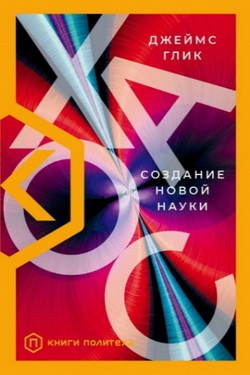
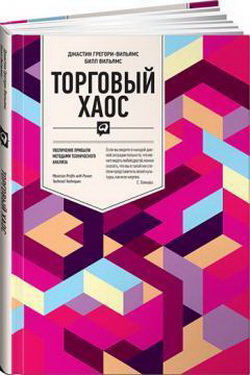
The modern world is increasingly moving to this type of management in all spheres. Currently, the management of processes that used to be considered as chaotic and unpredictable is now commonplace. In macroeconomics, this is generally the main approach. Now it is rapidly spreading to the management of social processes.
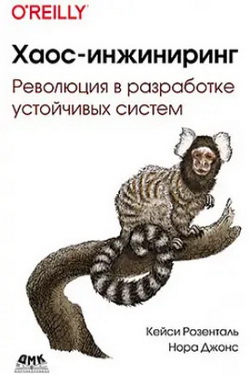
Here are some examples from the mass of fundamental works in this sphere.
 |
 |
 |
Naturally, no one can ever rule out unpredictable situations, but compared to a great goal on the near horizon, this is not significant. As a rule, the risks taken by ambitious people trying to build a career or a serious business are much higher, and here we are talking about undivided power in the territory of at least one eighth of land [12].
Conclusions
- Dangers for the organizers of the revolution in the Russian Federation, of course, do exist, but they are greatly exaggerated.
- With a deep understanding of the process, the number of “black swans” is radically reduced for the creators and managers of controlled chaos.
General Conclusions
- A controlled revolution in the Russian Federation is quite real. The mechanisms of development of revolutions have long been described in detail in textbooks, starting from the beginning of the 20thcentury, but there is a reasonable impression that the revolution in the Russian Federation is conducted according to the calque of 1917.
- The goal of the revolution is to build an ideologically and ethnically monolithic National Socialist Russia in the place of the Russian Federation.
- The SMO and related victims are a tool for achieving the goal.
- We cannot say with absolute certainty that the organizers of the bloody “madneZZ” will succeed in accordance with their cannibalistic plan. Perhaps the process will stop at some intermediate stage and give birth to another monster.
- However, it is safe to say what is being formed on our north-eastern borders in the near future — a dangerous monster.
- Under these circumstances, the most rational behavior for the entire democratic world will be creation of a powerful military, information and physical security belt separating the modern world from the archaic “Russian world”.
- History has decreed that the guardians of this “fortress” will be a number of nations of the Baltic-Black Sea region, but the most effective will be Ukraine.
- The statements and actions of the Ramstein Group coalition indicate that this understanding has already moved to the level of practical politics.
This is confirmed by:
- accelerated accession of Sweden and Finland to NATO;
- the collective West’s moving from cooperation to active countering the economic, political, military, diplomatic and information influence of the “Russian world”.
Examples of such counteraction are:
- rapid withdrawal of world brands from the Russian market, despite multibillion-dollar losses;
- accelerated militarization of Europe;
- not only tactical, but also long-term strategic plans to support Ukraine (supplies of Western weapons and other types of military and economic assistance);
- intensive construction of a physical “fence” (not cheap at all) with a length of more than 2,000 km on the eastern borders of the Baltic-Black Sea “protective belt”, as well as deployment of deeply layered defense on the eastern borders of NATO.
In conclusion, let’s emphasize that the probability of a “revolution” in Russia in order to build an ideologically and ethnically monolithic National Socialist state in the place of the Russian Federation, in our opinion, is quite high. For the first time, Vladimir Putin’s cancelling his traditional annual press conference in 2022 is partly indicative of just that: there is an active search for a political model for the future that does not yet exist.
Thousands of information resources are filled with specific assessments of the events and the role of the leadership of the Russian Federation in unleashing the third, in fact, world war. The topics that we discussed in the publications of the “Mysteries of the Bloody MadneZZ”, including the “Ideology of the “Great Transition”, in our opinion, reflect the philosophy of politics of the current and, probably, the future leadership of Russia.
Notes:
[1] A symbol is a capacious information block in which a variety of meanings are packed at the level of ethical ideas, that is, indisputable and undisputable. They are perceived in an inseparable connection and do not require any explanations and proving.
[2] O. Danilov, Secretary of the NSDC of Ukraine, 05.08.2022.
[3] An attractor state — a state toward which a system tends to evolve inevitably (as if it is attracted) as the result of objective laws. Having the correct initial data an attractor state can be predicted with high accuracy.
[4] Russian Security Council Assistant Secretary Pavlov said that the next stage of war against Ukraine should be “desatanization”.
Medvedev, answering the question “what are we fighting for”, said Russia’s goal of the war against Ukraine is to stop the Satan.
Head of the Russian Orthodox Church, Kirill, called Putin a “fighter against the Antichrist”.
[5] By a “fascist state of the Hitler type” we mean the way of organizing public life in a country where the basis of state-building is a radical nationalist ideology, which is recognized as state ideology, permeates all spheres of the society without exception and is introduced with the help of a rigid vertical of power with the cult of the leader, the cult of collectivism, the cult of self-sacrifice in the name of the nation and the leader.
[6] These symbols are partially reflected in the coat of arms of the non-existent Novorossiya. Earlier we wrote that the idea of Novorossiya is not an idea for Ukraine, but for Russia.

[7] Historical myth is a version of the history of the state, which is supported by the existing government in order to justify and strengthen its position in the society, to ensure the spiritual unity of the people. It is the basis for building an official strategy for the development of the state and society.
[8] The same academician Glazyev frankly says this in the above-mentioned report: “The financial oligarchy claiming world domination does not hide its goal to destroy and erase Russia. This is an existential challenge to the Russian world.
The supporting structure of the modern order in the Russian Federation is the comprador oligarchy formed on the basis of the privatization of the Soviet legacy and the currency and monetary regulator serving its interests, which ensures the pumping out from our country annually 100 billion US dollars capital, billions of tons of non-reproducible natural resources, hundreds of thousands of brains.
Adherents of the Washington Consensus in the Central Bank have pursued and are pursuing a consistent policy of strangling the Russian economy.
The leadership of the Bank of Russia remains a consistent conductor of the policy of Washington financial organizations that block Russia’s economic development and the possibility of resource mobilization necessary for victory.
Constantly taking decisions imposed by the enemy that are harmful to us and missing the strategic initiative, we have no chance of success. This applies to both the economy and the military sphere”.
[9] This is what A. Dugin, I. Girkin, and a number of other “revolutionaries”, state quite frankly.
[10] François-René de Chateaubriand (1768–1848) was a French writer, politician and diplomat, ultra-royalist, viscount, peer of France, conservative, one of the first representatives of Romanticism.
[11] Including on the basis of the theory of behavior of physical, biological and social systems (in particular, the theory of attractors, which came to us from physics). According to the theory of attractors, knowing basic parameters and the peculiarities of the controlled system we can predict with high accuracy the final state of the system, to which it will eventually be “attracted” in the process of its natural evolution under specific conditions.
[12] The Russian Empire occupied about one fifth of the landmass, the USSR — one sixth, the Russian Federation one seventh, and New Russia will presumably occupy one eighth.
| About the Authors: | |
 |
Volodymyr Shevchenko, ex-Assistant to the Secretary of the National Security and Defense Council of Ukraine, Doctor of Philosophy |
 |
Andrii Savarets, Chairman of the Center for Digital Economy Development, Lawyer |


