
 Russia’s Role and Intentions and Their Consequences for Ukraine
Ivan Sichen
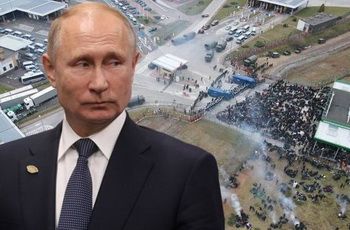
Lately one of the new sources of tension near Ukraine has been the migration crisis on Belarus’ borders with Poland and Lithuania. As you know, the reason for this is the actions of Minsk and Moscow, which are trying to redirect the flow of refugees from the Middle East and Asia to the Baltic region and further to Northern and Central Europe.
Despite the fact that the above-mentioned situation is not directly related to Ukraine, it has a direct impact on the interests of our state. Thus, the possibility of Belarus and Russia organizing migration problems on the Ukrainian border is not ruled out. Besides, Minsk and Moscow’s border provocations are accompanied by an increase in their military activity on the Polish-Lithuanian and, to some extent, Ukrainian directions.
|
…A number of changes in the development of the situation in the world, Europe and around Ukraine are related to a qualitatively new level of the confrontation between Russia and the West… |
Since 2019–2020, a number of changes have been taking place in the development of the situation in the world, Europe and around Ukraine, which are related to a qualitatively new level of the confrontation between Russia and the West. At this, in contrast to the initial period of confrontation between Moscow and the United States and Europe over Ukraine, Russia is beginning to lose its military advantage in the European Theatre.
For example, since 2015, the United States/NATO has restored the elements of the command and control system of their troops in Europe, as well as some of the combat components that existed during the last Cold War. At the same time, the US Armed Forces and the Allied Forces have restored large-scale military exercises, working out all components of the strategy and tactics to counter Russia’s possible attack.
All this already allows the West to deter Moscow, including Russia’s aggression against Ukraine, and Russia’s implementation of its expansionist plans for Europe. Evidence of this was the situation in spring of 2021, when Moscow was forced to reduce its military activity around Ukraine and began to lose initiative in the Black Sea and Baltic regions.
As the US/NATO DEFENDER Europe-2021 strategic exercises and the “West-2021” SCPE of the Armed Forces of the Russian Federation and Belarus have shown, as well as other military actions, Moscow has mostly only responded to the steps of its opponents, it was not proactive. In particular, in connection with US/NATO military operations in the Mediterranean and Black Seas, Moscow has changed the course of preparation of the “West-2021” exercise, essentially reorienting it to the South-West direction. Similarly, Russia has failed to prevent US/NATO action to demonstrate force in the immediate vicinity of Crimea and the North Caucasus.
However, Russia did not abandon its goals and, as always, just changed the methods of achieving them. For example, in the autumn of 2021, due to the gas crisis in Europe, which was the result of miscalculations by the EU leadership in resolving the problem of timely replenishment of natural gas reserves after falling demand for it last year, Moscow again tried to use energy as a weapon to achieve its foreign policy goals.
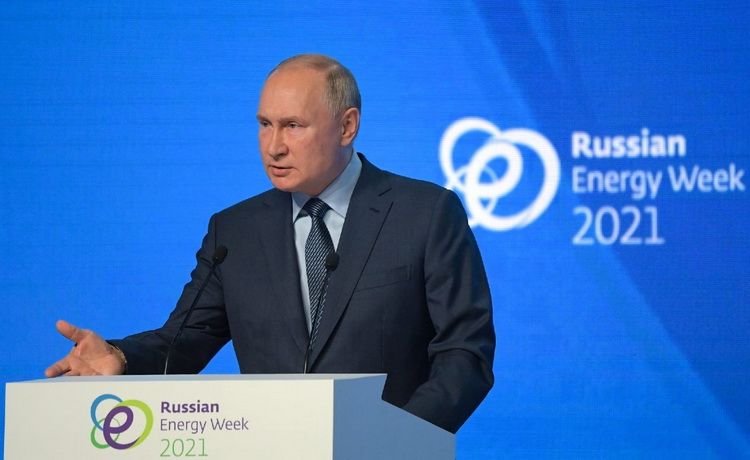 |
| Russia tries to use energy as a weapon to achieve its foreign policy goals |
This is the reason for the sharp rise in gas prices in Europe to record levels of more than 1,200 US dollars per 1 thousand cubic meters. However, this also stimulated the tendency of European countries’ giving up Russian gas supplies and their reorientation to liquefied gas from the United States, Qatar and other suppliers. In addition, the volumes of gas production were also increased by the countries of Northern Europe.
This situation has raised the question of giving up Russian gas even by countries such as Moldova, not to mention Poland, the Baltic states and Ukraine, which have already significantly reduced their energy dependence on Russia. All this has once again shown the weakening of Moscow’s ability to use energy pressure against Europe and the countries of the former Soviet Union who have chosen European and democratic path of development.
This again did not stop Moscow, which used another tried and tested method of creating problems for the European Union by provoking a migration crisis in the member countries of the Organization. The first such crisis was organized by Russia in 2010 after the start of US/NATO military operations against totalitarian regimes in Libya and Syria.
 |
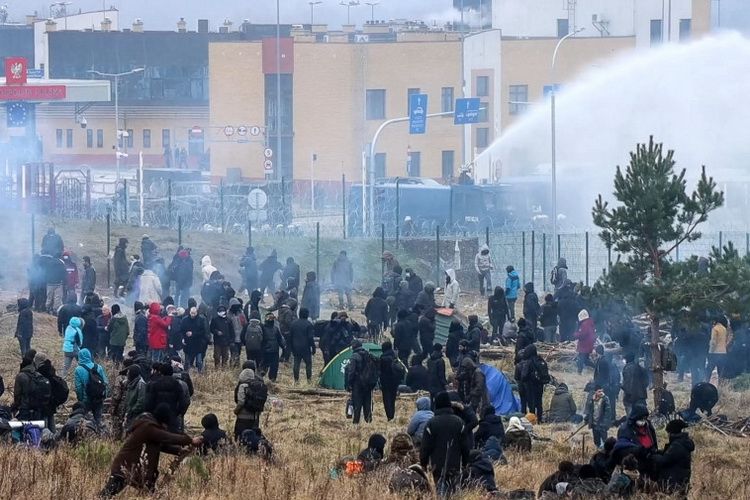 |
| Russia again provoked a migration crisis in the European Union | |
With the support of the leadership and some groups of these countries of anti-Western orientation (including terrorist groups), Moscow managed to provoke long-term armed conflicts on their territory. In turn, this caused massive flows of refugees and migrants to the countries of Southern Europe, and through them — to other EU members.
The result was an exacerbation of internal conflicts in the European Union, which became particularly acute under the influence of the global financial and economic crisis of 2008–2009. As a result, Western countries failed to provide an adequate response to Russia’s attack on Georgia in August 2008, and then agreed to “reset” relations with it. In fact, the same circumstances were the reason for the EU’s rather restrained attitude to Russia’s armed aggression against Ukraine in 2014.
However, in 2015–2016, the first migration crisis in the European Union was largely overcome by reaching an agreement on the reception and distribution of refugees. At the same time, the problems of the European economy were resolved, which restored the positive dynamics of development.
|
…The critical complication of relations between the Lukashenko regime and the West has allowed Moscow to put Poland, the Baltic states and countries of Northern Europe under “migration blow”… |
Nevertheless, the problem of refugees and migrants to Europe has remained relevant, which has continued to be used by Russia for its own purposes. Moreover, the critical complication of relations between the Lukashenko regime in Belarus and the West has allowed Moscow to put Poland, the Baltic states and countries of Northern Europe, which were previously outside the main routes of movement of refugees and migrants, under “migration blow”.
In this regard, provoking the migration crisis in Europe has become another point of cooperation between V. Putin and A. Lukashenko. By doing so, Moscow is weakening Europe and trying to influence the EU’s position on issues that are important to Russia, including Ukraine. Minsk is doing the same, on the one hand also trying to weaken the EU and “revenge” it for not recognizing the results of the presidential election in Belarus in 2020 and supporting the Belarusian opposition, and on the other — to encourage Brussels to dialogue with A. Lukashenko (and, accordingly, legitimize him before the West).
Besides, Russia is setting a resonant precedent for demonstrating military force to the United States/NATO. It can be transformed by Moscow into a real armed conflict with the subsequent military operation to capture the Baltic countries and part of Poland or, at least — to provide land connection with the Kaliningrad region of Russia (through the so-called Suwalki corridor from Grodno region of Belarus along the border between Poland and Lithuania).
A similar scenario can be implemented by Russia in relation to Ukraine. In particular, it will aim to undermine stability in Ukraine, disperse its attention and forces, and bring problems into its relations with Poland and the EU by sending refugees and migrants to Europe through Ukrainian territory. At the same time, the possibility of Moscow organizing several more conflict zones on Ukraine’s borders with their further use for a new military invasion of our state is not ruled out.
In both the first and second cases, Moscow can launch military actions against its opponents under the pretext of defending Belarus, which is an ally of Russia in the Collective Security Treaty Organization.
Given the importance of these goals for both Moscow and Minsk, their steps are clearly organized and carefully planned. Evidence of this is the purposeful actions of the Russian and Belarusian governments to bring refugees to Belarus, where they accumulate in specially created camps near the borders with Poland and Lithuania.
 |
| Routes of transportation of migrants to Belarus |
Russia’s leading (actually state-owned) company, Aeroflot, and Belarus’, Belavia, are involved in transporting migrants, while airlines of other countries have refused to provide services to potential migrants. Moreover, neither Moscow nor Minsk abandon such practices even under the threat of Western sanctions. And to “lure” refugees and migrants to Belarus, they promise them quick and easy access to the EU. Due to this, as well as creating obstacles for the return of refugees and migrants to their countries, their number in Belarus has already reached 16 thousand people.
The actions of Belarusian border guards, but, in fact, special services, to organize and support the migrants’ breakthrough across the Polish and Lithuanian borders are even more revealing. As Moscow intended, this situation posed a direct threat to stability in Poland and Lithuania, and through them in other EU countries in the Baltic region and Northern Europe.
Since September 2021 in Poland alone, more than 32,000 attempts (mostly by citizens of Iraq, Syria and Afghanistan) to illegally cross the border from Belarus have been prevented. According to experts, some migrants do manage to break through to Poland, from where they follow to other EU countries, first of all — Germany. According to the German Federal Police, in the first half of November 2021 alone, about 600 attempts of illegal entry of migrants to Germany from Poland were registered.
All this was perceived by Poland and Lithuania, as well as other countries of the European Union, as a new manifestation of Russia and Belarus’ “hybrid” aggression which needs a proper reaction.
For example, since November 10, 2021, a state of emergency has been declared in the border areas of Poland and Lithuania (to a depth of 5 km), as well as in the settlements of refugees and migrants near Lithuanian cities of Kybartai, Medininkai, Pabrade, Rukla and Vilnius. In particular, curfews have been set in those areas and intensified patrols are being carried out. Plus, additional units of the Polish and Lithuanian police and army have been deployed. According to the Minister of National Defense of Poland M. Blaszczak, his country has already increased the number of its servicemen on the border with Belarus to 12 thousand people. At this, they are allowed to use weapons in case of attempts by migrants to break into Polish territory.
 |
| A new manifestation of Russia and Belarus’ “hybrid” aggression needs a proper reaction from Poland, Lithuania, and other European countries |
The actions of Poland and Lithuania are fully supported by Western countries and international organizations. Following the meeting of the EU Foreign Affairs Council, the criteria for imposing sanctions against the Lukashenko regime for organizing the migration crisis were agreed upon. In total, up to 40 individuals and organizations are threatened by such sanctions. Some European countries are also proposing sanctions against Russia, which is, in fact, the main organizer of provocations on the Polish and Lithuanian borders. The United States is also preparing its own package of sanctions.
NATO can also help Poland and Lithuania. According to Polish General Jarosław Stróżyk, former deputy director of the International Intelligence Board of the NATO Military Staff, the situation with the migration crisis requires the start of consultations within the Alliance. According to the General, this will ensure the readiness of the Alliance to take emergency measures in case of an armed confrontation, and to invoke the Article 5 of the North Atlantic Treaty on collective defense.
However, Russia and Belarus not only continue to provoke a migration crisis on the north-eastern borders of NATO and the EU, but also use their retaliatory steps as an excuse for implementing their plans.
In particular, on November 11–15, 2021, joint exercise with the participation of battalion tactical groups of the Russian airborne forces and special forces of Belarus took place at the Belarusian “Gozhsky” training ground in Grodno region (30 km from the border with Poland and 5 km from the border with Lithuania). According to the Ministry of Defense of Belarus, the exercise was caused by “the increase of military activity near the state border of the Republic of Belarus” with aim to “check one of the components of the response forces of the Union State of Belarus and Russia”.
At the same time, on November 10, 2021, in the airspace of Belarus there were flights of two Tu-22M3 long-range bombers, and on November 11 — of two Tu-160M strategic bombers of the long-range (strategic) aviation of the Russian Aerospace Forces. The flights were carried out under the cover of Su-30SM fighters of the Air Force of Belarus. According to the official information of the Ministry of Defense of Russia, the issues of deepening the cooperation of the parties during joint military operations, as well as checking the forces and means of the Unified Regional Air Defense System of the Union State were being worked out.
November 15, 2021, two Tu-160M strategic bombers accompanied by MiG-31 fighters flew over the Barents, Norwegian and North Seas, which was another demonstration of force, this time — to the countries of Northern Europe.
Besides, CSTO peacekeeping forces’ exercise “Indestructible Brotherhood-2021” was held at the training ground near the Russian city of Kazan with the participation of 1,700 servicemen from the armed forces of Russia, Belarus, Kazakhstan, Armenia, Kyrgyzstan and Tajikistan.
 |
| Russia uses migration crisis to cover its own aggressive intentions towards the West and Ukraine |
Measures of a similar nature were also held last year against the background of mass protests by opponents of the Lukashenko regime in Belarus. At this, both now and then, they were given an openly anti-Western character, which became the central theme of the relevant information campaign. Today, Russian and Belarusian media continue to claim that “the United States and NATO are preparing for armed aggression against Belarus, with the support of Ukraine”.
This is how the steps of Poland, Lithuania, and now Ukraine, to counteract the migration crisis and strengthen the protection of their borders are interpreted. Some Russian experts go even further, suggesting “the possibility of a coordinated attack on Russia by the United States, NATO and Ukraine together with Japan in the Far East”.
Of course, all this is a cover for Russia’s own aggressive intentions towards the West and Ukraine. However, Moscow’s policy, including in this context, confirms the reality of such intentions, which requires an adequate response from our state.


