
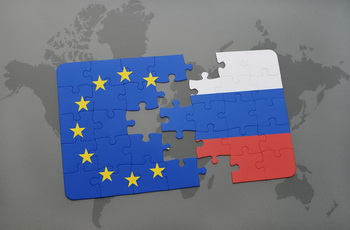
 From Complication of the Relationship to the “Iron Curtain”
Victor Hvozd
Doctor of Military Sciences
The aggravation of relations between Russia and the West, in fact, to the level of the Cold War has remained one of the determining factors influencing the world situation. Until recently, this was mainly about intensifying Russia’s confrontation with the United States and NATO. But Russia’s cooperation with the European Union, despite the existing problems, has not stopped. Moreover, in 2019, the EU reduced some of its political sanctions imposed on Russia, in particular, agreed to restore the RF’s powers in the Parliamentary Assembly of the Council of Europe (PACE).
But the situation has changed significantly in 2021 due to the EU’s decision to impose sanctions on Russia over the poisoning and arrest of Russia’s opposition leader, A. Navalny. In Europe, this was perceived as the fact of Moscow’s having crossed another “red line”.
|
…The aggravation of relations between Russia and the West to the level of the Cold War has remained one of the determining factors influencing the world situation… |
Well, Moscow called it the EU’s direct intervention in Russia’s internal affairs and support for the Russian opposition, which is especially dangerous for the Putin regime during the complication of socio-economic problems in the country and with the approach of parliamentary elections. That is why the Russian leadership has even declared its readiness to sever relations with the EU. At this, as the first such step could be the RF’s withdrawal from the PACE.
Despite the allegedly obvious cause associated with A. Navalny, the above-mentioned changes have a deeper basis: it is a consequence of the escalation of fundamental contradictions between Russia and the European Union, as well as the strengthening of the EU’s capacity to resist Russian expansion. As Ukraine is at the intersection of the interests of Russia and the West (the EU included), this directly affects the situation around our country and, in particular, its national security. Given the importance of these issues, it is advisable to consider them more closely, in particular, the root cause for the complication of relations between Russia and the EU, as well as the consequences for the world and Ukraine.
|
…Russia and the European Union have common interests and significant disagreements in the political, economic and security spheres… |
Russia and the EU are objectively interested in developing their relations. First of all, due to their common interests in the political, economic and security spheres. At the same time, they still have significant disagreements. The main goals of the EU in cooperation with Russia are: strengthening stability in Europe; guaranteeing security at its borders; deepening trade and economic ties; meeting the energy needs of European countries through the supply of gas and oil from Russia.
In the economic sphere, Russia pursues similar goals, the main of them being: development of cooperation with the EU in the trade, economic and energy spheres, as well as expansion of access to European loans and advanced technologies.
In general, the economic goals of Russia and the EU coincide. This is evidenced by the rapid growth of their turnover since the early 2000s. In particular, by 2013 (before the Russian aggression against Ukraine), this figure had almost quadrupled to 410 billion US dollars. At this, the EU took the first place among Russia’s trading partners, and Russia, accordingly, was on the 3rd–4th position among the trading partners of the European Union (after the United States and China).
In addition, as of 2013, European investment in the Russian economy amounted to 288 billion US dollars, and Russian investment in the European economy — 80 billion US dollars.
But in the military-political sphere, the nature of their relations is completely different. For example, at the official level, Russia and the EU are in support of strengthening stability in Europe and deepening cooperation between the parties in resolving European security problems. With this in mind, in 1994 the European Union and Russia signed a partnership and cooperation agreement. In 2005, another agreement was reached to establish a strategic partnership between the parties in the spheres of economy, external and internal security and justice. They also considered creation of a free trade area between Russia and the EU.
|
…Since Soviet times, Russia has considered Europe one of its rivals and the object of its expansion… |
However, in reality, since Soviet times, Russia has considered Europe one of its rivals and the object of its expansion. So, Russia’s true goals regarding the EU are as follows: to strengthen Russia’s influence in Europe; to maintain the EU’s energy dependence on Russia; to undermine the unity of the European Union and NATO; to oppose US policy in Europe; to hinder the EU’s cooperation with former Soviet republics.
In its efforts, Russia uses political, economic, informational, military and special methods of influence: formation of the Russian lobby in political and economic circles of European countries; support for nationalist, leftist, anti-American and extremist forces in Europe; informational impact on the European society in a favorable light for Russia; use of energy and economic levers of influence on the EU.
The RF is actively conducting subversive work in this direction. The main elements of its subversive activity are: disinformation campaigns; organizing riots and provoking chaos in Europe; interference in elections; cyber attacks on computer networks of the European critical infrastructure.
Russia also tries to put pressure on the EU in the military sphere, demonstrating force near European borders and resorting to nuclear blackmail.
|
…Since the middle of the 2010s, V. Putin chose a course of confrontation with the West… |
Russia has been pursuing this policy since the middle of the 2010s, when V. Putin chose a course of confrontation with the West. Since 2014, Russia’s actions against Europe have reached another level, which inevitably provoked a negative reaction from the European Union. But it was at the initial stage of such a reaction that it had to yield to Russia on key issues concerning its interests.
For example, in 2007, under pressure from Russia, leading European countries that are members of the EU and NATO refused to recognize European and Euro-Atlantic prospects of Ukraine, Georgia and Moldova. The European Union even practically agreed with their return to the sphere of Russian influence. In particular, in 2008 the EU leadership refrained from imposing sanctions on Russia for attacking Georgia. And in 2009 it turned a blind eye to the election of V. Yanukovych as President of Ukraine.
This was observed to some extent after 2014 as well. Despite the imposition of the EU’s sanctions against Russia and the de facto termination of the above-mentioned strategic partnership agreements between the parties, the leadership of the European Union did not risk to critically aggravate relations with Russia. The reason for this position of the EU was primarily its economic and energy dependence on Russia. As noted above, Russia and the EU had established close trade and economic ties and were interested in their development. At the same time, by the beginning of 2010, Russia had been providing 24 % of the EU’s needs for natural gas and 27 % for oil.
Russia had been markedly outnumbering Europe militarily. Thus, in 2007–2008, the Russian Federation began military reforms, which included improving the missile and nuclear capabilities, re-equipping the armed forces with new weapons, as well as increasing the number of troops on the European direction. But until 2014, the EU and NATO member states continued to reduce their armed forces. The reduction of American troops in Europe also continued.
European policy had been significantly influenced by the Russian lobby in the EU. In particular, in the 2010s its main representatives were: French President N. Sarkozy and former German Chancellor G. Schroeder; owners of leading European companies (E.ON, BASF, etc.) that had their business in Russia; various political forces that were in fact Russian-backed.
In the EU countries there was a very aggressive information and influence campaign of Russia. Mainly through TV and radio channels, as well as the Internet (including all sorts of social networks). Thanks to this, Russia managed to spread pro-Russian sentiment in Europe, which concerned, first of all, the most problematic EU member states. All this did not let the EU pursue a tough policy towards Russia, and was undermining the unity of European countries in pursuing a common policy on both, Russia’s and Ukraine’s direction.
In 2017–2018, this situation acquired a qualitatively new character, which was a consequence of the resolving by the EU leadership of most of these problems. Thus, since the early 2010s, the EU, with the support of the United States, had implemented a number of programs to reduce its energy dependence on Russia. Mainly due to the new liquefied gas supplies to the European market from the United States and Qatar. At the same time, EU countries had expanded the range of their trade and economic partners, which allowed them to compensate for the loss of part of the Russian market through sanctions and counter-sanctions. Between 2014 and 2019, trade between the EU and Russia decreased by 132 billion US dollars, down to 278 billion US dollars. EU members’ trade with other partners increased by about the same amount. During the same period, European business withdrew a significant investments from Russia.
At the same time, due to the growing level of threats from Russia, in 2014 the leadership of NATO and the EU began to strengthen the defense of the eastern flank of Europe. As a result, NATO and the EU have now effectively equaled their forces with Russia in the European theater of possible hostilities. In addition, the EU leaders have taken a number of measures to counter Russia’s subversive activities, including in the information sphere. As a result, Moscow’s ability to use its lobby and informational influence in Europe has decreased.
It is also important that the new US President J. Biden has resumed close cooperation between America and Europe, including in deterring Russia.
|
…Since 2014, the European Union has strengthened its policy of countering Russia’s aggressive course… |
All this has allowed the EU to toughen its policy towards Russia, including in terms of: countering Russian expansion in Europe; deterring Moscow’s aggressive actions in the post-Soviet space and in other regions of the world; increasing support for European partners who are objects of the RF’s aggression; building up sanctions against Russia over both, Ukraine and other issues.
Besides, the manifestation of such the EU’s policy in the post-Soviet space was the conclusion of association agreements with Ukraine, Georgia and Moldova, as well as the recognition of their right to membership in the European Union. And European NATO members have agreed that Ukraine and Georgia can join the Alliance, and have supported their Euro-Atlantic integration process.
The invariability of the European Union’s policy was confirmed during the meeting of EU Foreign Affairs Council in February this year. Emphasis was placed on the need to oppose all Russian actions that violate human rights and the rule of law, and pointed out was the importance of deterring pressure from Russia, including its steps to build up and demonstrate military force, its disinformation campaigns and cyber attacks.
This was the basis for the decision of the EU leaders to impose new sanctions against the Putin regime over the poisoning and arrest of A. Navalny. The EU, together with the United States, may even strengthen their sanctions policy.
In response, Russia has also taken a tougher stance on the EU, namely: intensified subversive work in Europe; expanded the scale of demonstrations of military force to European countries (especially in the Baltic region); harsh rhetoric and various threats against the European Union. In particular, one such example was Moscow’s statement about the possibility of a complete severance of relations with the EU.
|
…Restoring the elements of the “Iron Curtain” and intensifying the confrontation between Russia and the EU are becoming additional factors destabilizing the situation in Europe and the world… |
As a result of such processes, the elements of the “Iron Curtain” are being restored and the confrontation between Russia and the EU is intensifying, which is becoming an additional factor in destabilizing the situation in Europe and the world. At this, due to the close coordination of the USA’s and the EU’s policy, as well as the overlapping membership in the European Union and NATO, disagreements between Russia and Europe in the political and economic spheres are getting militarized.
However, both Russia and the EU prefer to avoid a critical escalation of tensions in their relations. After all, they want to ensure that opportunities for the realization of mutual interests in the economic sphere are not lost. Besides, Russia and the EU are trying to prevent such contradictions from escalating into a military conflict in Europe, so as not to cause a catastrophe at the regional and global levels.
The above-mentioned tendencies have rather ambiguous consequences for Ukraine. Thus, due to the contradictions in the relations between Russia and the EU, the situation around our state is becoming more complicated. In this regard, the most dangerous would be a complete cessation of the Russian-European dialogue on all problematic issues.
|
…Both Russia and the European Union are trying to expand their ability to influence Ukraine… |
At the same time, both Russia and the EU are trying to expand their ability to influence Ukraine. As part of their confrontation, Russia is trying to restore its influence in Ukraine and hinder the development of its relations with the EU. In turn, the European Union is increasing its support for Ukraine. In particular, in February 2021, the European Parliament confirmed that Ukraine, having fulfilled the set tasks, can apply for accession to the EU. At the same time, Brussels agreed to revive cooperation under the Association Agreement between Ukraine and the EU. Such plans of the EU were specified during the visit of the President of the European Council Ch. Michel to Ukraine in early March this year.
All this gives Ukraine the opportunity to remain on the European side of the new “Iron Curtain” that may appear on the line of confrontation between Russia and the European Union.


