
 Ivan Sichen
Since the beginning of the year 2021, the Black Sea region has been the main center of confrontation between the interests of Russia and the West, accompanied by an increase in their military activity. A manifestation of this is the higher level of aggressive rhetoric of the parties, their holding of a series of large-scale military exercises and building up their armed forces. At this, the steps are being taken by Moscow and the United States/NATO to exert mutual military pressure in the new Cold War pose a real threat of their military confrontation with unpredictable consequences. Especially in the context of Russia’s moving to open provocations against its opponents with the use of weapons. As before, Ukraine remains at the center of this confrontation, which is a consequence of its special importance for both Russia and the West. In view of this, it is also the main object of struggle between them, in the military sphere included.
As you know, since 2007, at the initiative of V. Putin, Russia has moved to open confrontation with the West, which later led to a new Cold War between them. As part of this process, the most difficult situation has developed in the Baltic and Black Sea regions, which have become direct “points of contact” between the parties. In view of the above-mentioned circumstances, Moscow began steps to strengthen its position and influence in these regions in opposition to the West. At this, the main direction of Russia’s expansion was the Black Sea region. The reasons for this are a number of military-political and economic factors:
- according to the Kremlin, the Black Sea region is the most problematic area of the southern flank of NATO and the EU, which increased Moscow’s ability to achieve its goals. This was due to the weakness of NATO and EU members such as Romania and Bulgaria, as well as the complication of US-Europe’s relations with Turkey, which is a leading member of the Alliance in the region. In addition, the Black Sea region was in fact in the background of the West, as a result of its remoteness from major European centers. In contrast, the Baltic region was one of major centers, primarily due to Germany’s attention as one of the most powerful countries in NATO and the EU;
- in the Black Sea region there were a number of countries of the former USSR, namely: Ukraine, Moldova and Georgia with their own problems, which allowed Russia to use them for its own purposes. In particular, the following opportunities were created for it: the above-mentioned countries’ economic and energy dependence on Russia; pro-Russian sentiments of part of their population; unresolved conflicts in Moldova and Georgia, which were once provoked by Moscow and maintained by it in a simmering state;
- geographical position of the Black Sea region, as the Russian Federation’s access to the Mediterranean Sea, and through it — to other parts of the world. At this, the possibility of year-round shipping in the Black and Mediterranean Seas has identified their role as one of Russia’s main sea routes.
 |
 |
| The Black Sea region became the main direction of Russia’s expansion | |
To achieve its goals in the Black Sea region, Moscow was paying great attention to regaining control over Ukraine, or at least its southeastern part. The same applied to Moldova and Georgia. This would allow Russia to: significantly strengthen its position in the region by regaining the entire northern coast of the Black Sea — from Romania to Turkey; block Ukraine’s and Georgia’s plans to join NATO, as well as expand buffer zones with the Alliance; to obtain Ukrainian and Georgian seaports and other communication routs.
In this context, of particular importance to Moscow was the capture of Crimea, which occupies a central position in the Black Sea region. This would give Russia the opportunity to turn it into a powerful military base, as it was during the Soviet era, and to threaten all Russian opponents in the Black Sea region. Moreover, Crimea had a sacred significance for the Kremlin as a “lost territory” that it had to “regain” by all means. Since the collapse of the Soviet Union, this had been one of the main ideas of Moscow’s neo-imperial policy.
 |
| Russia’s buffer zones with NATO in the Black Sea region |
The main stages of the Kremlin’s actions to achieve these goals were: building up its troops in the Black Sea and Ukrainian directions; intensification of anti-American and anti-NATO military exercises in the region; the attack on Georgia in August 2008; the beginning of armed aggression against Ukraine in February 2014, together with the annexation of Crimea and occupation of part of the Donbas; moving to direct confrontation with the West.
All this allowed Russia to implement part of its strategic plans, namely — to strengthen its position in the Black Sea region. However, it did not rest on its laurels but began to take steps to establish its dominance within it. At this, Moscow continues to operate mainly by military means. They mainly include the militarization of Crimea, as well as conducting military events with the arbitrary closure of various areas of the Black Sea (including in international waters near the Ukrainian port of Odesa, Crimea, the Kerch Strait and on major transport routs).
In order to demonstrate “who is the master of the house”, Moscow has sharply intensified provocations against US/NATO warships and aircrafts in the Black Sea region. Initially, such provocations included only imitation of attacks on them, albeit with the creation of dangerous situations. But in 2021, Russia allowed itself the direct use of weapons. As noted in my previous articles, an example of this was Russia’s attack on the British warship HMS Defender near the Crimea in June this year.
Moreover, proceeding from its “successes”, Moscow has extended its expansion to the Mediterranean region as a “rear zone” of NATO and the EU’s southern flank. At this, Russia again uses the problems of NATO and the EU in this region, which it considers another “weak link” in their composition.
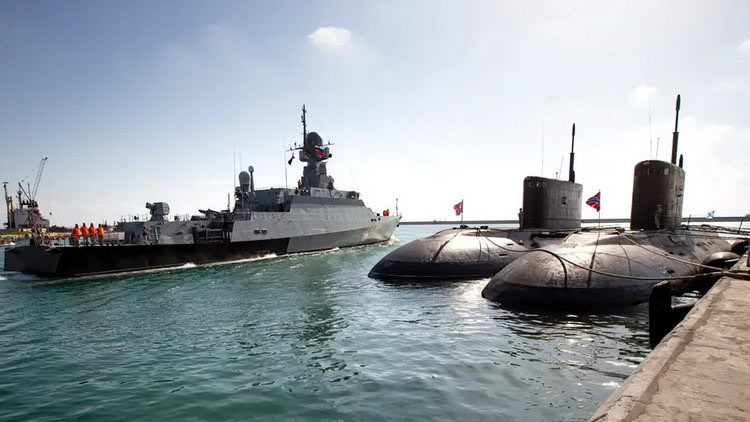 |
| Proceeding from its “successes”, Moscow has extended its expansion to the Mediterranean region |
Indeed, it is in this region that Greece, Italy and Spain are located, which have always had difficulties in relations with the North Atlantic and European Unions. Plus they cannot resolve their economic problems and try to get help from all those who can offer it. Including from Russia, despite its anti-Western policy.
Favorable opportunities for Russia’s actions in the Mediterranean region are also created by a number of armed conflicts in North Africa and the Balkans. Especially since most of them were provoked by Moscow for such purposes. For example, back in the early 1990s, Moscow supported Serbia’s revanchist policy, which led to the civil war in the former Yugoslavia, which continues to this day. As a result, Serbia has become a major proponent of Russian interests in the northeastern Mediterranean.
And in 2015, Russia brought its troops to Syria, which was a direct intervention in the internal conflict in that country on the side of the ruling regime of Assad. This allowed Moscow to deploy its military bases on Syrian territory, which now houses not only tactical but also strategic aircrafts of the Russian Aerospace Forces. And this is not to mention the fact that the bases in Syria are home for the permanent group of Russian naval forces in the Mediterranean. All this already allows Moscow not only to control the eastern part of the Mediterranean Sea, but also gives it the opportunity to threaten US/NATO warships and bases in the region.
|
…The main conclusion is that the world is returning to a new Cold War between Russia and the West… |
At the initial stage, the United States and NATO did little to respond to Moscow’s actions. Thus, Western countries virtually ignored even Russia’s military invasion of Georgia in August 2008, which showed the true nature of the Kremlin’s policy. And only after Russia’s attack on Ukraine in 2014 did the situation take on a fundamentally different character.
As you know, during the NATO summit in Wales in September 2014, a decision was made to return the Alliance to the strategy of the last Cold War in terms of countering Russia’s possible aggression. The decision called for a stronger US/NATO military presence in the Baltic and Black Sea regions, as well as the resumption of operational and combat trainings to protect Europe from threats from the East.
All these issues have been repeatedly and in detail covered on the pages of our website and in other media. Therefore, I will not repeat and tire readers with all the known information. I just want to draw a few conclusions and focus on what is happening now.
As I wrote earlier, the main conclusion is that the world is returning to a new Cold War between Russia and the West. Again, I will not elaborate on this issue. All this is clear. I will just say that neither Russia nor the United States/NATO are going to give up their positions. At this, today the United States and NATO are no longer making concessions to Russia but give it a hard rebuff in all directions, including in its southern flank in the Black Sea and Mediterranean regions. This year, after Russia began open preparations for a new attack on Ukraine, the reaction of our Western partners to Moscow’s aggressive actions became particularly sharp.
 |
| Today the United States and NATO give a hard rebuff to Russia in all directions, including in the Alliance’s southern flank |
We all remember how this spring Moscow has deployed troops near Ukraine’s eastern border. And how Russian propaganda was provoking a new war against Ukraine under the pretext of accusing our state in the intention to restore control over the “DPR” and “LPR”. And who can after that believe in Russia’s “non-involvement” in the events in the East of Ukraine? Nobody can. In early July this year the Parliamentary Assembly of the Council of Europe (which for some reason is considered a pro-Russian organization) adopted a resolution in which Russia is clearly defined as a party to the armed conflict in the Donbas. Earlier, such a role for Russia was recognized in the final documents of the NATO and EU summits. There is more to those documents than just words.
The United States and NATO counterbalance Russia’s military force with their own military force. Thus, in response to Moscow’s armed provocations against Ukraine, the United States and NATO resorted to similar large-scale demonstrations of their military capabilities. The forces of the US Navy 6th Fleet and the NATO’s naval group in the Mediterranean were mainly involved. In particular, from January to April this year with the participation of warships and aircrafts from these forces, systematic military exercises were conducted in the Black Sea, with the participation of Ukraine included.
 |
| The United States and NATO counterbalance Russia’s military force with their own military force |
And in May this year, in the Mediterranean and Black Sea regions, there began the main phase of strategic exercise of the United States/NATO and their partners DEFENDER-Europe 21. As it was already written on our website and in other media, about 28 thousand servicemen from 26 countries, including the USA, Canada and European members of NATO, plus Ukraine, Georgia, Moldova and the countries of the Western Balkans (except Serbia) were involved in the exercise. The main element of the exercise scenario was NATO’s conflict resolution operation in Bosnia and Herzegovina. At this, NATO troops were deployed in most of the neighboring countries and in the rear areas of the region, in particular in Albania, Croatia, Macedonia, Greece, Italy, Romania, Bulgaria and Hungary. Deployment of military units and military equipment to those countries was carried out as usual by air, sea, rail and road transport, and by airborne and amphibious landings.
In addition, US and NATO naval and aviation groups were strengthened in the Mediterranean and Black Sea regions. In particular, in March this year the US Navy’s carrier strike group, led by the aircraft carrier USS Dwight Eisenhower (includes USS Monterey guided-missile cruiser and the destroyers USS Mitscher and USS Thomas Hudner), was sent to the Mediterranean Sea, and in June and July, two British Navy carrier strike groups, led by HMS Queen Elizabeth and HMS Prince of Wales aircraft carriers. The air wings of the carrier strike groups include F-35 aircrafts, and escort ships equipped with Aegis guided-missile systems and BGM-109 Tomahawk cruise missiles (up to 56 cruise missiles per warship).
 |
| British Navy’s aircraft carriers HMS Queen Elizabeth and HMS Prince of Wales |
All this demonstrates the broader nature of the objectives of the DEFENDER-Europe 21 exercise than was officially stated. Especially if in addition to resolving purely peacekeeping tasks, its participants also rehearsed repulsing enemy attacks and holding territories, as well as retaliatory strikes within the framework of ground, air and sea operations. Besides, the exercise was openly positioned by the US and NATO leadership as a demonstration of readiness to protect its allies and partners from Moscow’s aggressive policy. By the way, some events of the exercise were held in the Baltic region to address traditional tasks of countering Moscow’s aggression.
 |
| Sea Breeze-2021 military exercise is the next measure to deter Russia in the Black Sea region |
The next measure to deter Russia in the Black Sea region was the joint military exercise of Ukraine and its partners Sea Breeze-2021, which took place from June 28 to July 10 this year (immediately after the end of the active phase of DEFENDER-Europe 21) and had the largest scale since the inception in 1997. Again, as is known from the media, a total of about 5,000 servicemen from 32 countries took part in the exercise. It also involved more than 30 ships (including from the 6th Fleet of the US Navy and a battle group of the British Navy in the Mediterranean), as well as 40 aircrafts, helicopters and unmanned aerial vehicles).
The exercise was conducted at sea and ground ranges in the north-western part of the Black Sea, as well as in Mykolayiv, Kherson and Odesa regions. During the exercise, Ukraine rehearsed a scenario to protect Zmiinyi island and Bessarabia direction from attack by Russia. At this, the following tasks were performed: repulsing the enemy’s naval and airborne landings; air, anti-ship and anti-sabotage defense; combat operations of land forces, ships, aircrafts and special forces; intelligence and assessment of the situation in the theater of operations.
However, as in the case of the DEFENDER-Europe 21 exercise, the objectives of the Sea Breeze-2021 also went far beyond the officially announced scenario. The exercise once again demonstrated the readiness of the United States and NATO to support their allies and partners in the Black Sea region, as well as tested the capabilities of Russia’s military system, which it has created in Crimea and the North Caucasus since 2014.
This was the purpose of the demonstrative actions of the British warship HMS Defender and the Dutch frigate HNLMS Evertsen, which sailed near Cape Fiolent in Crimea and the Kerch Strait in international waters that were illegally closed by Russia. Simultaneously, the United States and NATO conducted a series of air reconnaissance operations involving the strategic UAV RQ-4 Global Hawk over the territory of Ukraine, as well as reconnaissance aircraft RC-135 and anti-submarine aircraft P-8 Poseidon in the airspace over the Black Sea, including in direct proximity to Crimea.
|
…Ukraine is of crucial importance for the United States and NATO as a “forward outpost” in deterring Moscow’s aggression in the Alliance’s southern flank… |
In general, these circumstances reaffirmed the crucial importance of Ukraine for the United States and NATO as a “forward outpost” in deterring Moscow’s aggression in the Alliance’s southern flank. It is through deepening military cooperation with Ukraine that the United States and NATO have the opportunity to strengthen their advanced military presence in the immediate vicinity of Russia’s main political, economic and military centers. Moreover, it completely thwarted Moscow’s plans to establish its dominance in the Black Sea region.
These are the main conclusions from my article. And to confirm them, I would like to cite a few more facts.
The United States, Great Britain, Turkey, and now France are actively assisting Ukraine in building its new Navy. Unlike what Ukraine got from the Black Sea Fleet of the former Soviet Union, they already have real combat capability.
And Sea Breeze exercise is not the only joint military exercise of Ukraine and its Western partners. In July this year joint military exercise of Ukraine and Great Britain Cossack Mace-2021 with the participation of military units of the USA, Canada, Denmark and Sweden, as well as the Lithuanian-Polish-Ukrainian Brigade started at the Shiroky Lan training ground in Mykolaiv region. The main task of the exercise is to rehearse joint actions to repulse Russia’s possible attack on Ukraine from the territory of the annexed Crimea. Several more similar exercises are planned by the end of this year.
Of course, Russia has not yet abandoned its goal of establishing dominance in the Black Sea region and will continue to intimidate Ukraine and its Western partners. However, it will definitely not succeed. The only thing it can really do is provoke a new war with catastrophic consequences for everyone, including itself.


