
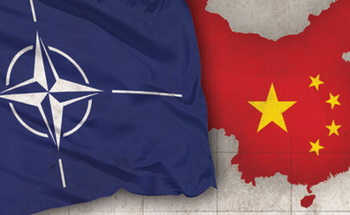
 For more than a year, the Alliance has been trying to determine its position on China
In the fourth issue of its quarterly working paper, the German Federal Academy for Security Policy (BAKS) published material on global problems and the role that leading geopolitical players can play in resolving them. In particular, how China influences the Far Eastern policy of NATO.
The Alliance so far does not have a unified strategy for relations with China, which undermines NATO’s military mobility and combat capability. It should be noted that for more than a year the Alliance has been trying to determine its position on China. At their December 2020 meeting, Allied Foreign Ministers gave an interim assessment of such a difficult discussion, which revealed both the divergent interests of NATO member countries and the consensus on many issues of Allies.
Western countries do not see China as a military threat, but they cannot help seeing it as a potential adversary capable of turning its economic and technological expansion into military power.
As an organization in dialogue with China, NATO must specifically address the issues of concern to its members, while clearly stating that China will lose economic benefits if it does not address the well-known problems in its security policy.
The article is available in Ukrainian


