
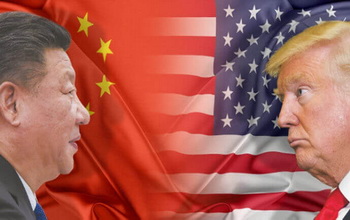
Positions of China and the USA
Roman Kot
Consequences of the confrontation between the USA and China, as a key dichotomy of modern world politics, are felt in those regions of the world where both superpowers have their strategic interests.
South-East Asia, especially the South China Sea region, is most important to the PRC. After all, the ports on the coast of the South China Sea are the main gate of the Celestial Empire to the outside world: for export of domestic goods and at the same time import of energy carriers and other resources needed for production.
In view of this threat, the Chinese leadership is trying to reduce dependence on coastal logistics routes. As part of “The Belt and Road” initiative, land routes to Europe are being established via Russia and Central Asia. Another way to reduce communications dependency in the South China Sea is to create logistics corridors via Myanmar and Pakistan to the Indian Ocean and beyond. While Chinese projects have been implemented on Pakistani territory for a long time, leading to Islamabad’s considerable economic dependence on Beijing, in Myanmar all of this is just beginning.
Given China’s dependence on maritime communications, the Chinese leadership is taking a number of measures to ensure maritime safety in the South China Sea.
Against this background, an important aspect of the US strategy for China is the organization of strongholds around the South China Sea to deploy US troops. The importance of the Philippines to the United States is due to the fact that this archipelago blocks the exit from the South China Sea to the Pacific Ocean.
Thus, the removal of the “Philippine link” from the common “chain” of US strongholds limits the US presence in the region. Among other things, it is a powerful blow to the USA’s image in Asia. After all, for over one hundred years, the Philippines have been considered one of the USA’s bastions in the region.
The article is available in Ukrainian


