Vadym Volokhov
Only a week has passed since the three presidents’ meeting in Sochi (November 22 this year), accompanied by releases about the victory and readiness to “firmly defend peace, independence and territorial integrity” of Syria, but the situation seems to have become even more deadlocked.
The Syrian National Dialogue Congress, scheduled for mid-December 2017, is threatened by the uncompromising position of Ankara, which is categorically against the Kurds’ presence at the conference. The Geneva conference is also questionable, because the Syrian opposition demands B. Assad’s resignation even before it is held.
Such positions of the participants in the process of reconciliation create a rather big problem for Moscow, which tightens the mask of “a peacekeeper and an irreconcilable fighter against terrorism”. This is due to the fact that Russia has announced the withdrawal of its troops from Syria, and to begin it, it would be important to create a “peaceful background” and actively participate in the work of conferences, whose decisions would allow Moscow to leave Syria like it were a winner. Along with this, one of the conditions for Russia’s participation in the war was the preservation of a united Syria, and now this unity is becoming increasingly illusive. Moscow, despite the demands of the Syrian opposition, does not want to replace B. Assad with a new political figure before conferences, because in this case the “winner” would do bidding, which would also negatively affects Moscow’s image. Another deadlock.
Meanwhile, the military situation in Syria itself bears little resemblance to a victory. Reports on the situation in de-escalation zones are full of lies, losses are great and the advance of government troops is minimal. Only in recent days, B. Assad’s regime has lost 250 fighters in killed and 280 — in wounded during the fighting for Mayadin and surrounding villages.
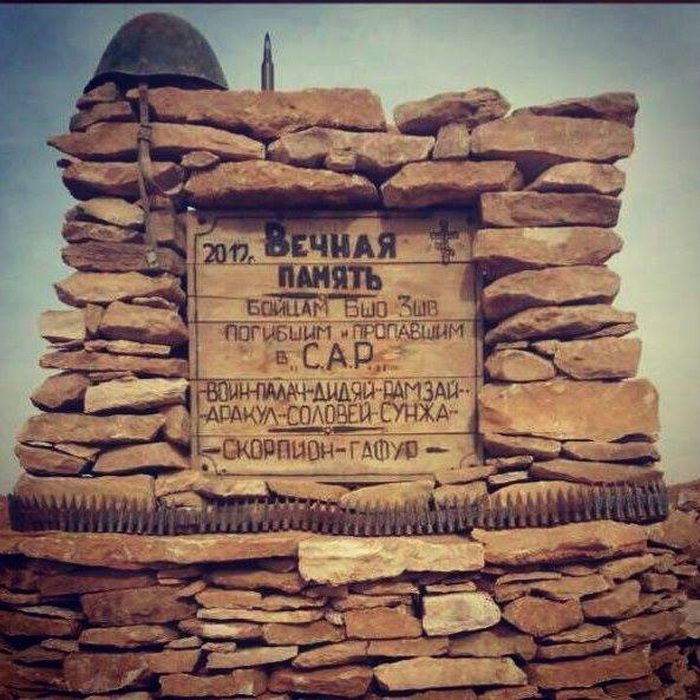 |
| Reports on the situation in de-escalation zones are full of lies and losses are great |
Lies become most obvious when aviation strikes are reported on areas and settlements that earlier were announced liberated from ISIS militants.
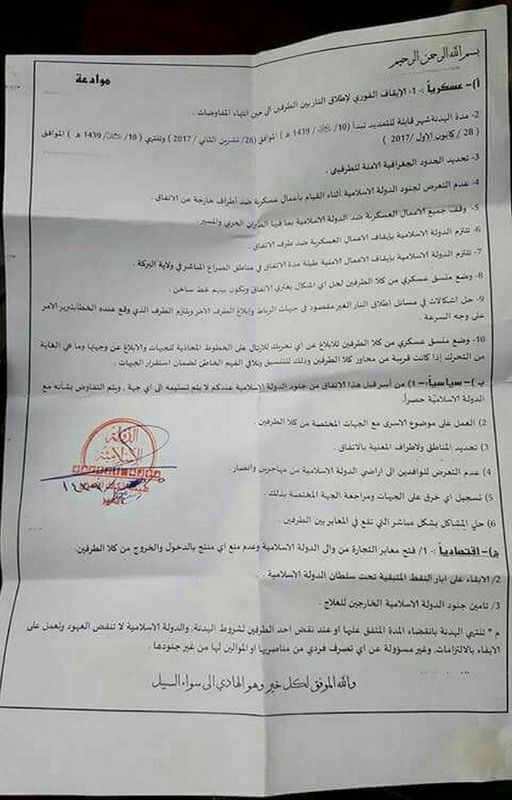
The situation is even more slipping out of Moscow’s, Turkey and Iran’s control after the conclusion of the armistice agreement between the Kurds from the SDF and ISIS for a month, with further extension based on consent of the parties. In general, it is meant to be a truce for 6 months.
To Ankara, Tehran and Moscow it is much more than a surprise. ISIS fighters have got a corridor for the movement of forces and resources in the Kurdish zone. Moreover, they now can safely complete the evacuation.
Washington and Saudi Arabia have got an additional instrument to exert pressure on Russia, Iran and Turkey, because it is difficult to imagine that the Kurds signed the agreement without the consent of the United States.
Ankara is also becoming an “injured party” because the Kurds are able now to move their forces from south to north and to prevent Turkey’s expansion in the Kurdish areas of Syria.
So, the West’s Coalition struck a blow to the interests of the three (Turkey-Iran-Russia), to which they have nothing to respond with.
|
Note:
Military part: 1. Immediate cease-fire on both sides until the negotiations are completed. 2. Termination of fire for one month: from November 28 to December 28, 2017. 3. The truce works within the borders at the time of its beginning. 4. The truce applies only to the ISIS and does not apply to other groups. 5. Termination of all military anti-ISIS operations, including air and drone strikes. 6. The ISIS takes on the obligation to cease military operations against the parties to the agreement. 7. The ISIS takes on the obligation to stop all operations in the current battlefields in the al-Barakah area (north of al-Hasakah province). 8. Appointing military coordinators from both sides to resolve any emerging problems. Establishing a hotline between the parties to the agreement. 9. Resolving unpredictable problems (force majeure) with unauthorized opening of fire at front posts in the form of an immediate notification of the injured party in the shortest possible time. 10. Appointment of military coordinators from each side to inform about any military convoys at neighboring fronts, information about their movements and purpose (if it is in the direct proximity of the front line) and exchange of the coordinates to prevent misunderstandings in order to guarantee stability at the front. Political part: 1. Soldiers of the ISIS captured before the signing of the agreement will not be transferred to a third party, and negotiations on their further fate will be conducted solely with the ISIS. 2. Work on the issue of prisoners will be a task for special representatives from each side. 3. Identification of areas and parties to the agreement. 4. Not to interfere with the movement to the territory controlled by the ISIS of Muhajirs (foreign fighters in the ISIS) and the local population. 5. Recording all violations on the fronts and consultations with designated personnel (those who will be appointed to control observing of the cease-fire). 6. Settling problems between parties only directly, without intermediaries. Economic part: 1. Free transfer from the areas controlled by the ISIS. Not to interfere with the trade or crossing of borders for civilians. Works in relation to both parties. 2. Preserving oil fields currently under control of the ISIS. 3. Ensuring safety of the ISIS soldiers from the “Department of Health Care” (military doctors). Note: A cease-fire is possible at the time of termination of the agreement after the expiration of the agreement. The validity of the deal is not canceled due to the actions of people who support the ISIS but are not officially ISIS soldiers. |