
 Yurii Mykhailenko
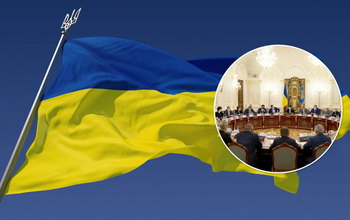
At the end of July this year the National Security and Defense Council of Ukraine approved the foreign policy strategy of our country. It fully meets the national interests of Ukraine and must be implemented. This is the path taken by the countries of Central and Eastern Europe and the Baltics, which allowed them to integrate into Europe, ensure their security, as well as gain the opportunity for stable economic development. At the same time, in the current situation around Ukraine, the practical implementation of the Strategy is associated with a number of significant problems that must be taken into consideration in achieving the goals set.
|
…The Strategy fully meets the national interests of Ukraine and must be implemented… |
According to the Minister of Foreign Affairs of Ukraine D. Kuleba, the main goal of the Foreign Policy Strategy is to bring our country to the level of “an active participant in international politics, which forms a security architecture for itself, the region and the world”. Besides, cooperation with partner countries will give new economic opportunities. Achieving these goals is expected through:
- ensuring the sovereignty and territorial integrity of Ukraine;
- diplomatic protection of Ukraine from Russian aggression;
- deoccupation of Ukrainian territories; bringing Russia to justice for its crimes;
- continuation of Ukraine’s European and Euro-Atlantic integration with the ultimate goal of its accession to the European Union and NATO;
- promotion of Ukrainian exports to world markets and investment attraction;
- protection of the rights of Ukrainians abroad;
- promotion of the positive image of Ukraine in the world.
|
…The document has put an end to all speculations concerning the foreign policy of Ukraine… |
As D. Kuleba pointed out, the document “has put an end to all speculations concerning the foreign policy of Ukraine”. And this is especially important when some Ukrainian politicians of a fairly high level publicly admit the possibility of Ukraine’s reorientation from the West to Russia.
In general, the above-mentioned directions of Ukraine’s foreign policy are supported by our Western partners. Moreover, from the point of view of the US and NATO leaders, the stability and strengthening of Ukraine is one of the main guarantees of European security. With this in mind, Western countries and international organizations continue to provide consistent assistance to Ukraine in developing its economy and strengthening its defense.
|
…The successful implementation of the Strategy is complicated by a number of significant external and internal problems… |
Unfortunately, not everything is so simple. The successful implementation of the Foreign Policy Strategy of Ukraine is complicated by a number of significant external and internal problems. Let’s analyze them in more detail.
Firstly, the United States and leading NATO and EU countries do provide real assistance to Ukraine. At the same time, they, first of all, adhere to their own interests. An example of this was the agreement reached between the United States and Germany on Russia’s implementation of the Nord Stream 2 project. Both the United States and Germany promise to compensate for Ukraine’s losses. However, there are still no guarantees of such compensation.
Secondly, Ukraine is, in fact, hostage to the confrontation between the United States and Russia. At this, both sides are actually interested in continuing the armed conflict in the Donbas. For example, for the United States, this is a reason to continue sanctions against Russia, which leads to its weakening as a geopolitical adversary of America. In turn, Russia uses the conflict as a tool to undermine Ukraine’s stability and implement its plans for its disintegration under the guise of federalization. The same applies to China, which also benefits from Russia’s annexation of Crimea and occupation of part of Ukraine’s Donbas. As noted in our previous publications, Western sanctions against Russia are pushing it closer to China, expanding its access to Russia’s natural resources.
Thirdly, despite the new Cold War between the West and Russia, the United States and Europe are trying to avoid an excessive escalation of the confrontation, let alone an armed conflict between the parties. Given this, in the near future Ukraine will not only remain out of NATO, but will not be granted with the Alliance Membership Action Plan. It is likely that the United States/NATO will not provide direct military assistance to Ukraine in case of Russia’s large-scale offensive against our country. However, the US/NATO will continue to increase military and military-technical cooperation with Ukraine, which will remain a powerful deterrent to Russia’s aggressive policy.
Fourthly, as in 2000’s, attempts by the United States and leading European countries to establish a dialogue with Russia to resolve problems in their relations are perceived by Moscow as a “weakness” of the West and its “willingness” to make concessions, including on the Ukrainian issue. Moreover, some Russian politicians (in particular, a former adviser to V. Putin — A. Illarionov) are already claiming the “consent” of the United States and Europe to return Ukraine to the sphere of Russian influence. This explains the intensification of Russian propaganda on the “historical unity” of the Russian and Ukrainian peoples.
Fifthly, Europe is indeed “tired” of the situation around Ukraine. First of all, this applies to large European businesses, which have its interests in Russia and cannot achieve them due to Western sanctions. It is the owners of the main energy companies in Germany, who have their lobby in the country’s leadership, and forced it to agree to the Russian Nord Stream 2 project. And now this very lobby is forcing Ukraine to agree to the so-called Steinmeier formula, which, in fact, provides for the recognition of the “DPR” and “LPR” and opens the way to federalization, but, in fact, — destruction of our state.
Not to mention that Russia is in no way going to fulfill its obligations under the Minsk Agreements to withdraw Russian troops from the occupied areas of the Donbas and return control of Ukraine’s eastern border to Ukraine. Instead, Moscow is forcing residents of those territories to get Russian passports, and is conducting massive propaganda in the spirit of “love” for Russia and hatred for Ukraine.
Sixthly, again, unfortunately, not all citizens of Ukraine understand the true nature of Russia’s policy. Despite the fact that Moscow’s armed aggression against Ukraine has lasted for more than seven years, a significant part of Ukrainian citizens continue to have a positive attitude to Russia, consider it a “friendly country” to our state and do not believe in the Kremlin’s involvement in the Donbas. And some even approve of Russia’s annexation of Crimea. This is exactly what Moscow is counting on when implementing its plans for Ukraine.
Against this background, Russia continues military activities around Ukraine, including within the framework of the final stage of preparation for the strategic command and post exercise “West-2021”. At this, Russian politicians and the media once again begin to talk about “Ukraine’s preparing for a violent solution to the Donbas and Crimean problems”. Due to this, Russia is accumulating forces and creating a cause for the possibility of a new attack on Ukraine, which poses a direct threat to our state.
|
…No matter how much our Western partners help us, in case of a new Russian attack on Ukraine, the main role in counteracting the aggressor will be played by the Ukrainian Armed Forces… |
In general, these circumstances require some measures of military, political and economic nature to support the implementation of the Foreign Policy Strategy of Ukraine.
First of all, this concerns the need to further strengthen Ukraine’s defense capabilities, mainly relying on own forces. No matter how much our Western partners help us, in case of a new Russian attack on Ukraine, the main role in counteracting the aggressor will be played by the Ukrainian Armed Forces.
|
…The situation around Ukraine needs to expand the circle of our partners… |
Also, the situation around Ukraine needs to expand the circle of our partners. Given the elements of doubleness in the policy of the United States and Germany (not to mention France and most other European countries) in their attitude to Ukraine and Russia, this issue is of special importance. In particular, the most promising is the expansion of ties with the United Kingdom, which is a traditional adversary of Russia and has the strongest position in relations with it. At this, unlike other countries, the United Kingdom does not stop even at the threat of armed conflict with Russia. This is exactly what was shown in June this year by London’s actions to demonstrate military force in the immediate vicinity of Crimea with the participation of the British warship HMS Defender. By the way, during the Welsh NATO summit in autumn 2014, the United Kingdom was designated responsible for deterring Russia in the Black Sea region.
|
…The priority for Ukraine is to resolve the problem of complete elimination of our’s dependence on Russian gas… |
Along with the above, the priority for Ukraine is to resolve the problem of complete elimination of our state’s dependence on Russian gas. Completion of the construction of the Nord Stream 2 gas pipeline will finally “untie” Moscow’s hands in using the energy factor as an instrument of pressure on Ukraine in all critical spheres. First of all, such Moscow’s demands will be:
- forcing Ukraine to accept the Russian version of the “settlement” of the conflict in the Donbas;
- recognizing the “Russian affiliation” of Crimea;
- Ukraine’s giving up the idea to join NATO and the EU.
The reality of such a threat for Ukraine requires concentration of all possible efforts on its full integration into the European gas transportation and gas distribution system. In particular, today this has already been done by Moldova with the help of Romania. Ukraine has been taking certain steps to resolve this problem since 2014. However, they are mostly organizational rather than technical in nature, as a result of which they may be blocked by Russia after the commissioning of the Nord Stream 2 gas pipeline and the cessation of gas transportation to Europe via Ukraine.
Besides, Ukraine’s integration into the European energy system will also be a powerful basis for strengthening political ties between our country and the European Union. Especially as Ukraine is already an important economic partner of the EU, namely — one of the five largest food suppliers to Europe.
|
…The main precondition for the survival of Ukraine as an independent state is a change in the public mood of its population… |
Finally, the main precondition for the survival of Ukraine as an independent state is a change in the public mood of its population. I am in no way going to incite ethnic hatred between the Ukrainian and Russian peoples. The enemy for us is not the Russian people at all, but the Putin regime, which is trying to destroy Ukraine with his political ambitions to revive the Russian Empire.
|
…Russia’s information war against Ukraine must be opposed by our own information war and not only defensive but also offensive… |
Thus, implementation of the Foreign Policy Strategy of Ukraine is not only necessary, but also quite possible. At the same time, this requires not only political declarations, but also diligent and persistent work of all ministries and institutions of Ukraine, including those that are not directly related to its foreign policy.
As well as creation of a powerful system of information support of Ukraine’s foreign interests, as it has already been done by all the leading countries of the world. Russia’s information war against Ukraine must be opposed by our own information war and not only defensive but also offensive.


