
 Ivan Sichen
In the conditions of dynamic changes of the geopolitical situation in the world, the leading states and international organizations make adjustments to the main directions of their foreign policy in order to bring it in line with today’s realities. In particular, in accordance with the new principles of the European Union’s foreign policy, it is planned to resume full-fledged cooperation with the United States, balance relations with China, increase pressure on Russia and increase support for Ukraine. Such plans of the European Union provoke different attitudes in the world and may have ambiguous consequences for Ukraine. For example, on the one hand, the new EU course will help strengthen Ukraine and increase its capabilities in the confrontation with Russia, but on the other — will lead to further escalation of tensions around our country.
|
…The new EU course will help strengthen Ukraine and increase its capabilities in the confrontation with Russia, but will lead to further escalation of tensions around our country… |
As already noted by political scientists, 2020 became one of the turning points in the development of modern history. The reason for this is believed to be the COVID-19 pandemic, which has acted as a catalyst for most of the world’s problems in political, economic, military and other spheres. As a result, the general geopolitical situation in the world has changed, having become more complex, dynamic and dangerous for all participants in international relations.
Taking into consideration the above circumstances, the world’s leading states and international organizations are refining their strategies in the new geopolitical environment. In particular, as part of such work in the United States in March–April this year, special assessments and reports were prepared by the country’s intelligence agencies on the world situation and threats to America’s security and interests. NATO has developed a new Strategy 2030, which should be finalized in the near future.
Similar measures are being taken by the European Union. In particular, the main directions of changes in the EU’s policy were discussed during the European Council meetings in March and May this year. The focus was on the EU’s response to global challenges to humanity, the EU’s relations with the United States, China, Russia, Ukraine, Turkey and other countries, as well as European issues related to the influx of refugees, conflicts in neighboring regions and other factors.
 |
| 2020 became one of the turning points in the development of modern history. The COVID-19 pandemic has acted as a catalyst for most of the world’s problems in all spheres |
Strategic decisions on these issues have not yet been made. Their discussion is scheduled for the next European Council meeting in June this year, after which we may expect adoption of new principles of foreign policy of the European Union. At the same time, the analysis of the speeches and proposals of the participants of these and other EU meetings, as well as their final documents allows us to draw preliminary conclusions about the direction of the future course of the European Union. In particular, we should expect:
Continuing the EU’s active participation in fighting the COVID-19 pandemic, including through: strict compliance with quarantine measures in the member countries; increasing the production and improvement of vaccines, as well as mass vaccination of the population; providing economic and medical assistance to the most affected countries.
As the pandemic ends, the EU will reduce quarantine restrictions and open borders. For example, the leaders of the EU member states supported the plans to create a European Digital Green Certificate, which will allow citizens of other countries to cross the borders of the European Union. At the same time, the so-called “emergency brake” mechanism has been adopted, which provides for the possibility of temporarily restricting all trips to the EU from third countries in case of deterioration of the epidemiological situation.
Full-scale restoration of EU-US relations, which deteriorated during Trump’s presidency. The issue is planned to be discussed in more detail during the EU leaders’ meeting with the new US President J. Biden during his visit to Europe in June this year to participate in the G7 summit in the UK and NATO summit in Brussels. In particular, one of the problems in the relations between the parties that needs to be resolved today is creation of a free trade area between the European Union and the United States.
Maintaining the EU’s balanced relationship with China. For example, China is one of the largest trading partners of the European Union. However, the EU’s leading countries are seriously concerned about China’s growing economic expansion in Europe. First of all, this applies to China’s activities to obtain (expand) access to the European high-tech industry, the banking sector, the energy sector and the transport infrastructure. In view of this, it is envisaged to continue the development of mutually beneficial trade and economic ties with China while curbing its expansion.
Increasing the EU’s pressure on Russia. At present, the EU’s policy towards Russia is based on five fundamental principles, which were adopted in 2016 and provide for:
- possibility of lifting anti-Russian sanctions only if Moscow fulfills the Minsk Agreements;
- support for the Eastern Partnership and development of cooperation with countries participating in the program;
- strengthening the EU’s resilience to the Kremlin’s hybrid threats;
- continuing the dialogue with Russia on issues of interest to the European Union;
- promoting the development of civil society in the Russian Federation.
The EU leadership remains committed to these principles. However, there is an increase in threats from Russia, which is stepping up the scale of subversive work against the European Union and individual member states. With this in mind, there is a need to use additional, more effective methods of influencing it. In particular, according to French President E. Macron, the policy of step-by-step sanctions against Russia is not yielding the expected results. Therefore, the EU must develop a new strategy for action on the Russian direction in the short, medium and long term. Discussion of these issues within the framework of the strategic discussion is planned for the next EU summit in June this year.
Despite some differences between EU member states on European policy towards Russia, the final documents of each summit of the Organization include provisions condemning Moscow’s aggressive policy, first of all against Ukraine.
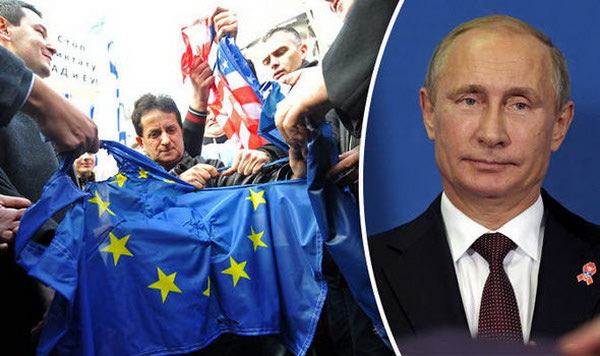 |
| Russia is stepping up the scale of subversive work against the European Union and individual member states |
Further deepening the EU’s cooperation with Ukraine and assisting it in resolving economic problems, carrying out reforms and confronting Russia. The EU leadership remains committed to supporting Ukraine’s independence, sovereignty and territorial integrity, as well as its European choice. Besides, the EU and NATO see Ukraine as one of the “cornerstones” of European security.
Based on such positions, it is planned to continue the implementation of all programs provided for in the Association Agreement between Ukraine and the European Union and other agreements of the parties. At this, the EU agrees with Ukraine on the expediency of expanding and supplementing such programs, as well as providing them with more specific content.
However, in the near future, the provision of guarantees for Ukraine’s membership in the European Union is not envisaged. The reasons for this are Ukraine’s non-compliance with EU criteria regarding implementation of reforms, failures in fighting corruption and the lack of proper support for European integration aspirations among the country’s population.
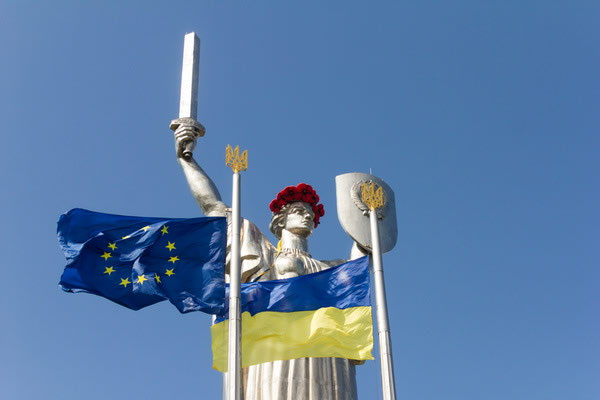 |
| The EU and NATO see Ukraine as one of the “cornerstones” of European security |
Establishing a dialogue between the EU and Turkey and resolving problems in relations between the parties. For example, Brussels is proposing that Ankara restart their relationship, which has become significantly more complicated in recent years. According to the preliminary agreement of the parties, the basis of such a process may be:
- negotiations at the highest level;
- modernization of the joint customs union;
- simplification of conditions for travel of Turkish citizens to EU member states;
- extension of the agreement on the EU’s financial assistance for the maintenance of Syrian refugees staying on Turkish territory.
However, both sides understand the difficulty of reaching an understanding between them. The reason for this is the European Union’s criticism of the Turkish leadership for violating democracy in the country, which provokes a negative reaction from it.
Implementation of all other measures provided for in the EU Common Security and Defence Policy, the European Neighborhood Policy and other foreign instruments. In general, such measures will include:
- strengthening Europe’s security against threats from the East and South (Russia and terrorist threats respectively);
- deepening cooperation between the EU and NATO;
- combating illegal migration to the European Union, resolving problems related to refugees;
- development of cooperation with the countries of the Middle East, Africa and Asia;
- participation in settling the conflicts near the EU borders and in other regions.
The EU leadership pays special attention to the situation in Belarus, namely to the actions of the ruling regime led by A. Lukashenko to brutally suppress the opposition. Another reason for this was the incident around the forced landing on May 23, 2021, in Minsk, an aircraft of the Irish company Ryanair, which was flying from Athens to Vilnius on an open international route crossing the airspace of Belarus. At this, a well-known Belarusian journalist and blogger R. Pratasevich and his girlfriend, who were implementing a number of opposition-oriented projects, were detained and arrested.
Such actions of the Lukashenko regime were perceived in the EU as the final crossing of the “red lines” not only in violation of the principles of democracy and freedom of speech, but also the norms of international law. In response, the leaders of the EU member states decided to impose new sanctions on Belarus, both in general and against those involved in the arrest of R. Pratasevich. Besides, EU member states were advised to suspend overflights of Belarus, as well as to ban overflights of EU airspace by Belarusian airlines and prevent access to EU airports of flights operated by such airlines. These decisions are now being implemented.
In addition, a number of European politicians are proposing to extend anti-Lukashenko sanctions to Russia as the main donor to Belarus’ ruling regime. In particular, such a proposal was made by the British Foreign Secretary D. Raab.
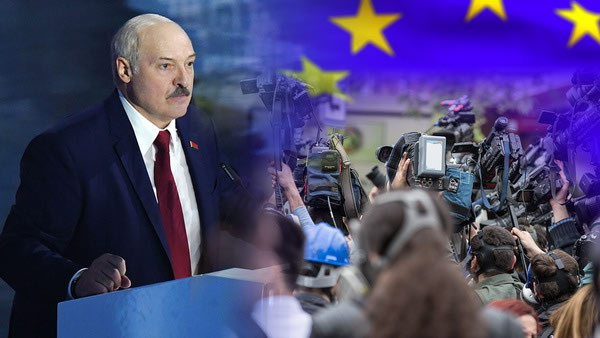 |
| In Europe consider Russia as the main donor to Belarus’ ruling regime |
The new principles of the European Union’s foreign policy provoke a different reaction in the world. For example, they are fully backed by the United States, rather rejected by China and negatively perceived by Russia. At this, as always, Moscow is already threatening to take adequate measures in response to the possible toughening of European sanctions against Russia and other hostile actions to it.
All this will have ambiguous consequences for Ukraine as well. For example, the restoration of the unity of the United States and Europe will objectively increase their ability to deter Russia, including on the Ukrainian direction. At the same time, the strengthening of the EU’s assistance to Ukraine will help strengthen our state and its capability of countering Moscow.
|
…Given Moscow’s inability to exert real influence on the USA and the EU, it will “play out” with their partners in the post-Soviet space, primarily Ukraine… |
However, further deterioration of relations between Russia and Europe will complicate the situation around Ukraine. And even more. Given Moscow’s inability to exert real influence on the United States and the European Union, it will “play out” with their partners in the post-Soviet space, primarily Ukraine.
Another problem may be the EU’s negative attitude to deepening Ukraine’s cooperation with China. As a result, in addition to Ukraine’s being already at the center of the confrontation between Russia and the West, it may become one of the objects of disagreements between the EU and China.


