
|
Member of the parliamentary faction — the “P. Poroshenko Block.”
|
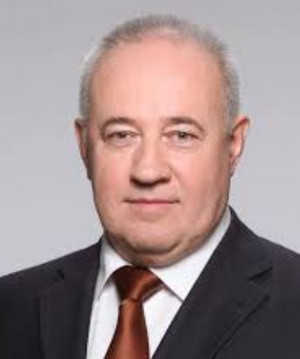 Chumak Viktor Vasylyovych
“Over the Last Year European Politicians Have Changed Their Attitude to Us… Ukraine Is in the Center of Their Attention”
— Viktor Vasylyovych, you have recently returned from Budapest, from a regular meeting of the NATO Parliamentary Assembly. Has it strengthened your expectations regarding this event?
 — I felt how the European politicians’ attitude to Ukraine has changed over the last year. In the context of security Ukraine is now in the center of their attention. And it is clear — the war is on. The events in the East of Ukraine used to be called Ukrainian crisis, the civil war, now the rhetoric and terminology are completely different — the “Russian aggression”, “Russian troops”, “Russian occupation”… Perhaps our expectations were too high, when we were hoping to get visa-free regime already today, at this speculating with political assessments of political expediency and not doing all the required procedures. For example, we have not eliminated corruption procedures in the border and customs structures, etc. Therefore, I believe that it is normal that we have been promised the visa-free regime from 2016 on.
We would like to hear more about our prospects of EU membership, that the door to Europe and NATO are open for Ukraine. At our insistence, the Parliamentary Assembly adopted a Resolution in which two paragraphs are devoted to Ukraine, including the possibility of NATO membership for Ukraine.
— Do Ukrainians need to do more preparatory work themselves or to pay attention to the West’s preparations for our joining the EU?
— These are parallel processes. The more we are prepared to join, the more the West will be happy with our joining. NATO has opened five trust funds for us; they need to be filled with the necessary content. We must show that we can work with these funds, we can properly use the money provided for specific purposes. We must finally understand that no one will do our work for us.
— Do you think that we can still be invited to join NATO?
— It is clear that today for NATO we are a problematic country due to the ongoing war in the East of Ukraine. But countries such as Georgia, Macedonia, Bosnia and Herzegovina, Montenegro did get the invitation to join NATO. If we have solved our own problems, there will be no delays with the invitation.
— Then, what do you think — is the war the reason or a consequence of our desire to join NATO?
— Neither… The very war with Russia — is, in principle, the confrontation between the two ideologies — the Eurasian and European, between the two value systems.
— Russia believes that in this way it will be able to stop our movement in Europe, doesn’t it?
 — Let it think, as it likes. But it should not impose its views and approaches on us. If we always look back at it, follow in the footsteps of its policy, we will never do anything useful for ourselves. Our policy must be asymmetrical and consistent, we are not obliged to anticipate Russia’s desires.
— But Russia has always been this way to us!
— That’s why we should persevere in our work.
— Should the mechanism of getting these European values, — and especially in the sphere of security of the state, — be based on the scheme of joining the EU before joining NATO or vice versa?
— The question of entry is different for each country. But let’s consider the example of Serbia, the most anti-NATO country in Europe. 9 % of the Serbian population is for Serbia’s accession to NATO, and 21 % — for the country’s joining the EU. Serbia is being dragged by the ears into the EU, and I think it will be there in 2 years. But it will take Serbia at least 15 years to become a member of NATO!
— Allow me to disagree with this, because Europe will never invest into a country, the security system of which does not guarantee the safety of assets and their efficient use.
— Having been to Europe recently, I am sure: it is clear to all European politicians that Serbia will first be a member of the EU, and then of NATO. And they will “drag” this country there, since they do not need a “hole” in Europe. Serbia must be economically “mounted” into the European economy. For this purpose, it will be given serious preferences from the European funds.
— And if these funds will simply go away from Serbia?
 — But Serbia and the EU have joint plans to be carried out. Serbia’s movement into the EU does not depend, by and large, on Serbian or European leaders. Today Serbia has a pro-Russian President and a pro-Russian government. And together they are leading their country into the European Union. For the country situated in the center of Europe, there is no alternative to the EU! What could Russia offer Serbia instead, if Serbia is “tied up” to the European economy?
— Perhaps if Yugoslavia in its time had been a member of the Council for Mutual Economic Assistance, now the Serbs would not be so categorical in this matter.
— NATO is more important to them than we are, than Greece… Had I not been there, had I not seen the mood of the Serbian Parliament, the Serbian government, perhaps I would be less categorical… They cultivate the question of joining the EU, but their buildings of the Ministry of Defense, Ministry of Interior Affairs, Foreign Ministry stand with the holes from the bombing by NATO aircrafts — a living reminder of the recent military actions. Therefore, one can see such paradoxes there. But, despite this, they will join the EU, without insisting on joining NATO.
I had a chance to talk with NATO Secretary General J. Stoltenberg, other leaders, including European ones. They understand that the system of European security has been shattered by Russia’s annexation of the Crimea. Certain sanctions have been imposed on the aggressor. But it is clear that the members of the collective security system cannot react to it to the full due to the fact that the aggressor is a member of the UN Security Council. It blocks any, related thereto, solutions. I do not exclude that soon a question will be raised about development of a new system of common security in Europe.
— Is such an approach possible?
— So far no one is sure about it. For example, no one knows what the security system will do if the Russian-speaking Estonian citizens suddenly seize a part of the country and announce the establishment of the “People’s Republic of Narva” with Estonian population. NATO today does not know what it should do in such a case. Will it be an attack on a NATO member or not? Because these “invaders” will have Estonian passports. Will this capture be considered an aggression? It’s an internal conflict, so how could NATO interfere here? Lithuanians and Latvians, for example, have adopted their internal laws — in case of any capturing of the territory or facilities in their country, the army is on alert and, together with the police, automatically resists the threat. But in today’s Estonia such actions are impossible.
— Let’s wait for the new year, wait, till Russia has recognized its aggression…
— You know, Europe has great difficulties. Not being part of the united Europe, we do not see the European citizens’ attitudes to our events. Ukrainian TV channels do not have access to the European television. While largest Russian channels, as we know, for example, “Russia Today”, have an access to almost every European home. And the Belgian or German burgher does not understand why he should lose the dividends from investing into shares of “Gazprom”, “Rosneft”, “Rosatom” on a completely legal and legitimate base, because of an incomprehensible conflict in Ukraine? How to explain this to him? And we need to explain!
— It is also necessary to explain our experiences to Serbs.
 — In Serbia, anti-NATO sentiments are very strong due to the past bombings by Alliance’s aircrafts. Today, the task is set so that Serbia becomes an EU member. And only then it will consider other issues of unity and protection. In Serbia, the EU will act as a promoter of European collective security system. Yes, I should say that I was perceiving this with surprise. But I think that I felt and understood the Serbs’ attitude, their aspirations, hopes, I saw desire in the plans signed by them. They have a clear “road map” with a schedule what has to be done daily, monthly, etc. It is not just a political statement, it is the level of technical implementation of the signed agreements.
— Viktor Vasylyovych, in the east of the country there is a war, called the ATO. As a former military serviceman, and now MP, what did you tell, for example, your European colleagues about the priorities facing the Ukrainian community in a year after the presidential elections and the elections for the Verkhovna Rada of Ukraine?
— I told them, of course, that Ukraine is in a very difficult situation, not only because of the events in the East, called a “hybrid war”, “nonlinear war,” etc. And this war is conducted by different methods, different instruments, at different “fields” and at different levels with the involvement of military forces and equipment. We have not just lost the Crimea. We have lost 11 districts of Donetsk and Luhansk regions, where a large enough economic potential is concentrated. Today, the loss of our GDP is 17 %. Besides, we still have the not reformed state administration, tax system, our judicial system remains quite corrupted. All this is our great negative. But we now have really come to reforming our state. Our society is seriously consolidated now in regard to the Ukrainian history and Ukraine’s future. Please note, in all regions of Ukraine common heroes are welcomed and respected, the future of Ukraine is becoming one and only for the whole of our society. We have a serious enough volunteer movement, really “pressing” the state authorities, which, like the government, quickly react to the needs of the society, criticism of our media, negative tendencies in the public life. This has a positive effect on the process of our reforms.
However, there is one big problem here: among the state authorities, in the civil society the mass of citizens who are able to overcome the officials resisting reforms is still not “critical”. In other words, the “critical mass”, which will be able to overcome this resistance, is being formed.
We are accused of being too slow with reforms. But how could it be otherwise? There is a lack of specialists who understand how to implement these reforms.
And another problem: low salaries of civil servants. This does not motivate well educated and experienced people to carry out positive steps to reform the state. This is particularly seen at the middle and lower levels. That’s why our economy is “limping”, and in the foreign policy we have great problems. However, we need a change in our lives. Whether we like it or not, but these changes will happen.
— Contrary to the desire of our oligarchs, well settled at the very top of our society? They, more than anyone else, are defending their interests!
— Our oligarchs are losing their former influence! For example, our greatest tycoon R. Akhmetov’s influence on the policy is almost zero. Now all his forces are thrown on preserving his own assets in Donetsk.
— They can be compared to his football team “Shakhtar” fighting for its credibility on foreign football fields, can’t they?
— Well, a football team can not be a tool for making such decisions. Such a tool may be factions in the Verkhovna Rada. And Rinat Akhmetov does not have his own deputy faction anymore.
— Nor an authoritative deputies “coach”, like the Romanian football coach of “Shakhtar”?
 — He’s already leaving the football team… Our another oligarch is Igor Kolomoyskyi. He takes an openly pro-Ukrainian position. But he somehow is not too good at what he once said privately to his friends: “Perhaps the time has come to live differently.” He explained this also to his “team”, not a soccer one. And the fact that two of his very profitable and efficient assets — “Ukrnafta” and “Ukratransnafta” were taken back to the state from him peacefully enough, without a lot of opposition, shows that Kolomoyskyi, in principle, will “play” by the rules. Yes, the policy will feel his influence, but, so to speak, within the framework of common rules, that is, within the framework of the Law.
As for our President, I believe that I have no right to comment on anything… Well, other oligarchs, of Pinchuk’s level, are off the active influence on political decisions.
— What about Dmytro Firtash?
— Yes, he is currently in Vienna. He has a tool of influence in the form of the parliamentary group. However, he has serious, so to speak, “inconsistencies” with Americans. The Viennese court, as is known, decided to release the detainee Firtash from house arrest, but some questions still remain there. I think the appeal of Americans will clarify the nature of their claims against the oligarch. They intend to arrest him… So, I repeat, the situation with the oligarchs has changed dramatically.
Please note our current Parliament has not adopted a single “pro-oligarchic” law. But it has adopted plenty of “anti-oligarchic” ones. So now, I would not exaggerate our oligarchs’ the influence, nor would I hurry to underestimate it. Apart from the above-mentioned Firtash and Kolomoyskyi no one else can be called an active politician. The rest, as the military say, are “in an ambush”.
— Then tell me, please, is there a great likelihood that the Maidan will be repeated in the future?
— The society now has more positive expectations than negative ones. Despite the fact that the economic situation is not very good. But the fact that our citizens still hope for the best, keeps them from drastic steps. By the way, we all know that the protesters make 2-3% of the population. The rest of our “percents” are now busy with the reform. That is, there are simply not enough human resources for a protest.
— People obviously want to trust theirs President, don’t they?
— His rating is now about 24 %. This is a rather high figure, even a very high percentage, if you remember about the situation in which our country now lives. That is why I say that the percentage of positive expectations is higher than the percentage of negative expectations. Because this percentage is formed by an active part of the society.
— And what can be said about the confidence in the government?
 — The level of confidence is lower, as everywhere, but here the situation is somewhat different. The matter is that the parliamentary coalition is strong not due to the unity of views of the members of the coalition (where we have five parties), but due to the fear that the Parliament can be dissolved. And the one who will be the first to announce his withdrawal from the coalition, will be recognized the nation’s enemy. Therefore, the Parliament, with all its populism, with all of its low level of professionalism, can be considered to my mind the most persistent parliament over the recent years. That is the paradox.
But we need to create a constructive opposition. It must trust the government, just as it is trusted now. It should not be the communist opposition, or the oligarchic opposition or pro-Yanukovych or pro-Russian opposition. It must be a pro-Ukrainian opposition, the opposition of national-patriotic forces. It will be very difficult to create it now.
The conversation was recorded by Oleh Makhno.


