
LAST WEEK’S KEY FACTORS AND MAIN TRENDS
IN THE DEVELOPMENT OF THE SITUATION AROUND UKRAINE
(May 15–21, 2017)
I. Major-Profile Events in the Development of the Situation around Ukraine
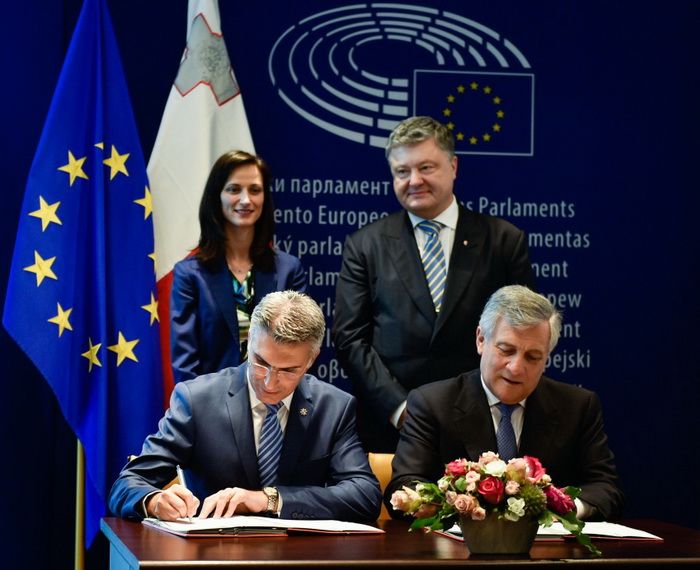
The main event in the development of the situation around Ukraine in the context of our country’s European integration was the completion of the visa facilitation between the EU and Ukraine. May 17, 2017, President of the European Parliament A. Tajani and a representative of the Maltese presidency of the EU Council signed a legal decision on the matter. Under the new rules, citizens of Ukraine have the right of entry to the EU without a visa for 90 days for the purposes of tourism, business activities, visiting relatives and friends.
The EU’s decision confirms the failure of Russia’s policy of obstructing Ukraine’s convergence rapprochement with the European Union and discrediting our state in the eyes of the West. Besides, visa facilitation between the EU and Ukraine is a clear evidence of the advantages of living in the free Ukraine over living in the occupied Ukrainian territories with the “Russian World”.
 |
 |
 |
Against this background, one of the main factors deterring Putin regime from expansion of Russia’s armed aggression against Ukraine is the USA and EU’s politico-economic sanctions against Russia. In this connection important for Ukraine will be the EU’s decision to extend such sanctions in July 2017. Previously this issue was considered during the meeting of Foreign Ministers of the EU Member States on May 15 this year in Brussels. Following the talks, agreement was reached on the need to preserve the EU’s sanctions imposed on Russia for its provoking the conflict in the Donbas. The reason for this was Moscow’s not implementing the Minsk Agreements, which leads to continuation of the armed conflict in the East of Ukraine.
In this context, rather revealing is the growing unity of the views of European political parties on the feasibility of further pressure on Russia. Unlike last year, this need is not subject to heated discussion in the EU. This is the result of the practical implementation of the European Union’s decisions concerning the intensification of counteracting Russia’s influence in Europe, and contributes to the EU countries’ greater awareness of the true policy of the Putin regime.
A manifestation of this trend is the decision of the major parties of the European Parliament — the European People’s Party and the Alliance of Liberals and Democrats “For Europe” to build a common policy towards Russia. In particular, they are planning to join efforts in addressing the issue of the EU’s support to the so-called “Mahnitskiy’s Act” (adopted in the USA and providing for sanctions against persons involved in violations of human rights), and struggle against expansion of Moscow’s propaganda.
II. Russia’s Military Aggression against Ukraine
2.1. The East of Ukraine (the ATO Zone)
Developments in the conflict zone in the East of Ukraine confirms Moscow’s actual giving up a peaceful settlement of the situation in the Donbas. Thus, during the next meeting of the Trilateral Contact Group in Minsk on 15 May 2017, Special Representative of the OSCE in the negotiations Martin Sajdik pointed out the exacerbation of the armed conflict during the May holidays, which, in his words, “…were the most deadly period for a long time”. He drew attention to the increasing number of civilian casualties, particularly as a result of heavy artillery’s shelling of Avdiivka.
In turn, despite the obvious facts, Russia’s Plenipotentiary Representative in the Contact Group B. Gryzlov and representatives of the self-proclaimed republics again accused Ukraine of “blocking the Minsk process”. They said evidence of this was Ukraine’s refusal to introduce a law on a special status of the Donbas based on “Steinmeier’s Formular” which provides for fulfilling the political part of the Minsk Agreements prior to resolving security issues of the region (first of all the withdrawal of Russian troops from the occupied territories and transfer to Ukraine the control over its eastern border area). Based on its principled positions, Ukraine rejected these demands as those that do not meet the peace plan.
In response, Russia intensified fighting in the Donbas. Thus, the Russian-terrorist forces have increased the intensity of fire, including using heavy weapons systems prohibited by the Minsk Agreements. However, on 15 May this year near the village of Pisky on the southwestern outskirts of Donetsk there was an attempt to capture positions of the Armed Forces of Ukraine. The enemy’s attack was repelled. In fact, the said confirms Russia’s resuming the tactics of “creeping” expansion of the occupied territories of Ukraine through local attacks in certain areas.
2.2. The Crimean Peninsula
 Last week the most prominent event in the Crimea was another anniversary of the deportation of Crimean Tatars in May 1944. Despite the Crimea’s occupation authorities’ repressions, on 18 May 2017 — Day of Struggle for the Rights of the Crimean Tatar People — Mejlis of the Crimean Tatars conducted a series of actions to commemorate the deportees. This showed Russia’s inability to fully control the Crimea.
In view of the above-mentioned, Russia continues its pressure on the Crimean Tatars, including by arrests of activists. At this, Moscow’s main aim is to completely destruct national consciousness, historical memory, cultural traditions and dignity of the Crimean Tatars.
Moscow’s criminal deportation of the Crimean Tatars and continued persecution of the Crimean Tatar were pointed out by the Chargé d’Affaires of the US Mission to the OSCE K. Byrnes during the meeting of the Permanent Council of the Organization in Vienna on 18 May 2017.
2.3. Other Aspects of the Russian Federation’s Actions against Ukraine and the West
In the situation of the growing confrontation between Russia and the USA/NATO, the leadership of the Russian Federation continues its active steps to build up the combat potential of the Russian Armed Forces and gives it frankly offensive orientation. Thus, lately a decision has been made to create Strike Army Groups, which include most combat-ready units of the RF Armed Forces.
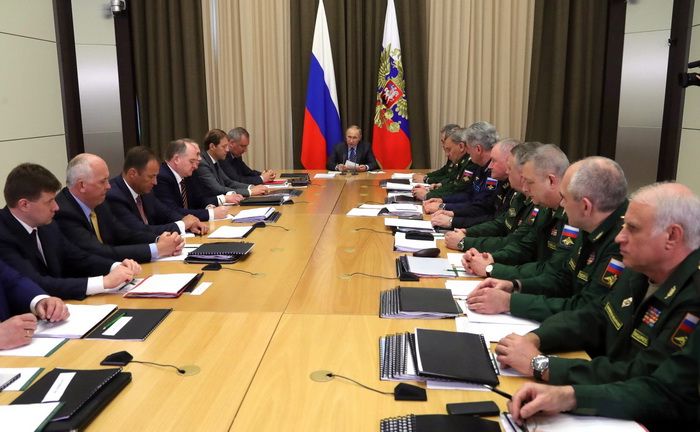
At the same time, according to Russian President V. Putin’s speeches during a series of meetings with the leadership of the Ministry of Defense of the RF and Defense Industry of Russia (16–19 May 2017 in Sochi), the Russian government decided to revise the plans for reequipping the groups of troops on the Western and South-Western strategic directions taking into account changes in the development of the military-political situation. To this end, the State Armaments Program for 2011–2020 will be revised and specified.
 |
 |
In particular, after the tests, a new generation of tanks T-14 “Armata” will be introduced into service. First of all, these tanks will go to the 1st Tank Regiment (restored in 2016) of the 2nd Guards Motorized Infantry Taman Division of 1st Tank Army of the Western Military District of the RF Armed Forces. Today the Regiment is equipped with modernized tanks T-72B3 (the last batch of such tanks was transferred to the Regiment in May 2017).
All in all, as of the beginning of 2017, the RF Armed Forces were 58.3 % equipped with modern armaments and military equipment. The main priority is the development of strategic nuclear component of the RF Armed Forces. For example, the process of adopting new mobile missile complexes “Jars” and submarines of the strategic project “Borey”, modernization of strategic missile carriers Tu-160 and Tu-95MS will continue.
As part of the summer training period, the RF Armed Forces also have resumed active measures of operational and combat training of the Russian Army and Navy. In particular, since 12 May in the Barents Sea there have been trained a group of warships of the RF Northern Fleet led by the missile cruiser “Marshal Ustinov” (has 16 launchers of cruise missiles). Along with mastering tasks of combat use of the war ships, the training is meant to demonstrate Russia’s military presence in the Arctic region.
At the same time, Russia continues measures to improve the organizational structure and build up the Army of the Northern Fleet of the RF as a major component of the Arctic Joint Strategic Command “North”. Thus, in April 2017, the RF’s Coastal Forces were merged within the framework of the new 14th Army Corps. In 2016 similar Corps of Coastal Forces (11th and 32nd) were formed in the Baltic and the Black Sea Fleet, respectively.
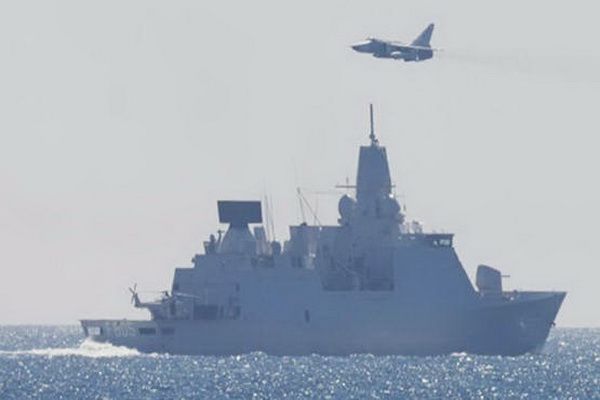
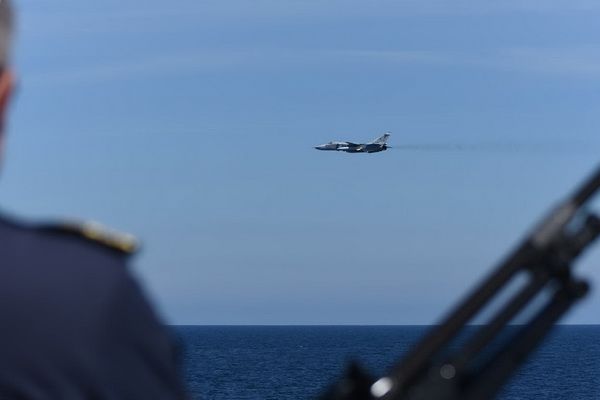
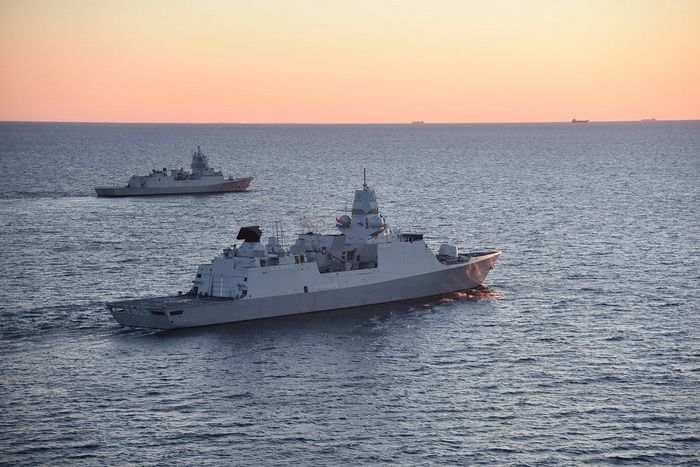
In addition, Russia continues provocations against the USA and NATO in the Baltic and Black Sea regions. On May 17, two Russian Su–24M (Fencer) attack jets flew quite close to the Royal Netherlands Navy frigate HNLMS “Evertsen”, operating in the Baltic Sea.
 |
 |
III. Ukraine, International Organizations and Leading Western Countries
3.1. International Organizations
NATO. In response to the intensification of Russia’s military activity on the European direction, NATO also demonstrates it force. Thus, within the framework of the strategy of the “Prompt Global Strike”, NATO’s continues to conduct complex military exercises in the Baltic and Black Sea regions. Since 8th May 2017, international NATO exercise “Spring Storm-2017” has been taking place in Estonia (in the northern and northeastern parts of the country near the border with Russia; more than 9 thousand military servicemen from the USA, UK, Germany, France, the Baltic countries and Ukraine and Georgia are participating in the exercise).
In the course of the exercise, six warships from the Standing NATO Mine Counter Measures Group One (SNMCMG1, includes minesweepers “Wambola” from the Estonian Navy, “Hinnoy” from the Royal Norwegian Navy, “Shoreham” from the Royal UK Navy and “Primula” from the Navy of Belgium) and from the Standing NATO Maritime Group One (SNMG1, includes frigates “Roald Amundsen” from the Royal Norwegian Navy and “Evertsen” from the Royal Netherlands Navy). In addition, at the airports in Estonia there arrived Su-22 of the Air Force of Poland and four AN-64 Apache and three UH-60 Black Hawk helicopters of the US Armed Forces. In the exercise also participate jet trainer aircrafts L-39 of the Air Force of Estonia and F-18 (Hornet) fighters from the NATO’s Baltic Air Policing mission.
 |
 |
All in all, in 2017 in the Baltic and Black Sea regions there will be 28 NATO exercises, which will be attended by over 60 thousand military servicemen of the armed forces of NATO Member States and partners of the Alliance.
The European Union. The change of power in France due to E. Macron’s having been elected President, and the forthcoming parliamentary elections in Germany this autumn increase urgency of the future of the European Union. It is the positions of France and Germany as the leading European countries that the EU’s future will depend on.
The results of the presidential elections in France showed a clear domination in the French society of the ideas of strengthening cooperation with countries of the EU and NATO, not of the populist slogans for a rapprochement between Paris and Moscow. A similar situation is also in Germany. Thus, the results of local elections in several German lands showed a high probability that the current ruling coalition can win the parliamentary elections, and thus — that A. Merkel will remain Federal Chancellor of Germany. In particular, last week the Christian Democratic Union (CDU) won the most votes in the election in the Federal Land of North Rhine-Westphalia.
 Given these circumstances, crucial in determining the future development of the EU was A. Merkel’s meeting with E. Macron on 15th May in Berlin. The parties agreed to develop a “road map” for reform of the European Union, which should provide a new dynamic of the development of the EU, intensify the integration of the member countries, as well as to improve the security in Europe.
This question is particularly important in terms of the significant problems in the EU associated with the “migration crisis”. Thus, last week warned the leadership of the European Union warned Poland and Hungary about the need for implementation of the EU quota for reallocation of migrants. At this, they expressed intention of the European Commission to impose sanctions against these countries in case of their failure to fulfill their obligations to the EU.
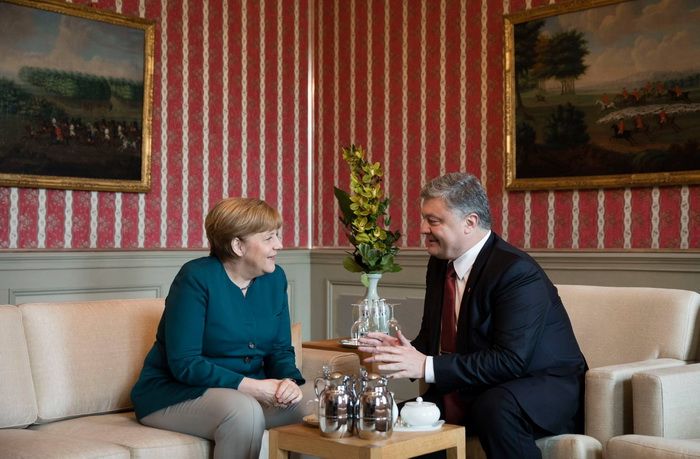 At the same time, A. Merkel and E. Macron confirmed their intentions to continue cooperation within the “Normandy” group for resolving the conflict in the Donbas. The positions of France and Germany on this issue were agreed with Ukraine during Angela Merkel’s meeting with President of Ukraine Petro Poroshenko on 20 May. This once again confirmed the impossibility of any agreement between the West and Russia “behind Ukraine’s back”.
3.2. Leading Western Countries
The USA. The US Congress increases the pressure on B. Assad’s regime in Syria and its allies. May 18, 2017, the House of Representatives passed a bill to impose sanctions against countries and individuals who provide the Syrian government with financial, material and technological support and services in the military sphere. The adoption of the law by the US Congress allows Washington to strengthen sanctions against Russia and Iran. Thus, Moscow’s military intervention in the situation in Syria does not justify the Putin regime’s hopes for a possibility of establishing relations with the West, more so, it leads to a further increase in negative consequences for the Russian Federation.
At the same time, the political scandal surrounding the resignation of the Director of the FBI J. Comey continues in the USA. Thus, representatives of the Democratic Party in the US Congress insist on the need to complete the investigation of Trump’s environment’s possible ties with the President of Russia. To this end, J. Comey will be heard on the above-mentioned issue and Donald Trump’s attempts to prevent the investigation.
The political situation in the USA is getting complicated because the growing confrontation between the Congress and the President has a negative impact on the US and world economy. These problems have led to a sharp fall in world stock market on 17 May, 2017. As a result, major corporations of the world have lost about 35 billion US dollars, including Microsoft — 1 billion, Facebook — 2 billion US dollars.
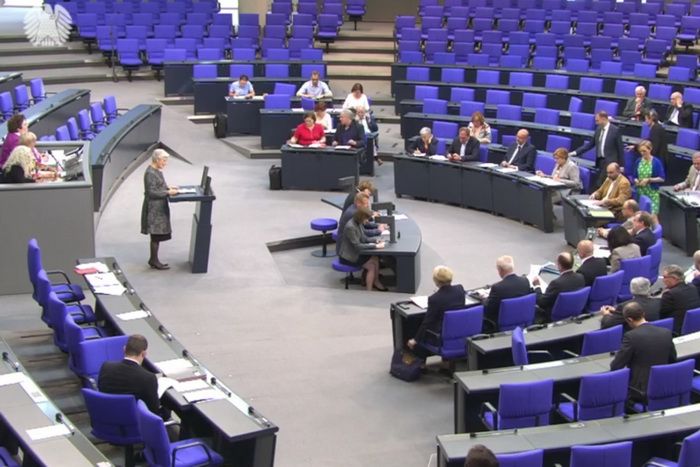
Germany. The Federal Republic of Germany as the leading EU country demonstrates special responsibility for the future of Ukraine. May 19, 2017, in the Bundestag (Parliament) of Germany were held hearings on “Germany’s Historical Responsibility towards Ukraine”.
 |
 |
During the discussion on this issue, a need was emphasized not only for a historic reconciliation between the two peoples, but also for Germany’s support to Ukraine at the present stage of its development. In this regard, representatives of the faction of the CDU/CSU in the ruling coalition in the Parliament of Germany stressed Germany’s moral obligation to do everything possible for Ukraine’s joining the united Europe.
IV. Other Important Trends and Developments that Will Have an Impact on Ukraine’s National Interests
The Russian Federation. The loss of any prospects for restoration of cooperation between Russia and the USA and the EU causes a new wave of foreign investors’ fleeing Russia. Thus, in January–April 2017, the outflow of capital from Russia was more than twice higher than the figure for the same period of last year and reached 21 billion US dollars. Besides, an additional problem is the need to pay Russia’s external debt in the amount of 15.3 billion US dollars in the second quarter and 8.5 billion US dollars in the third quarter of 2017.
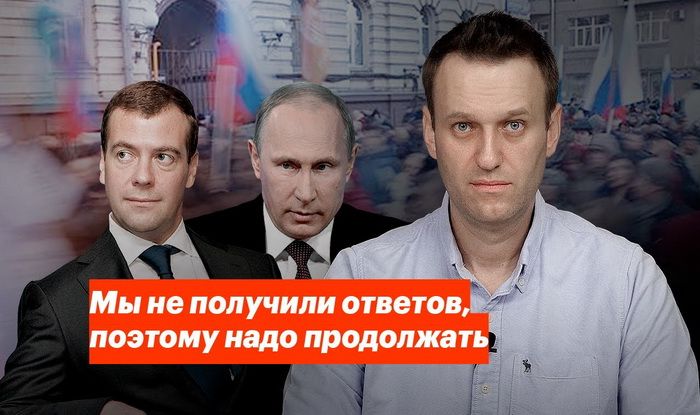
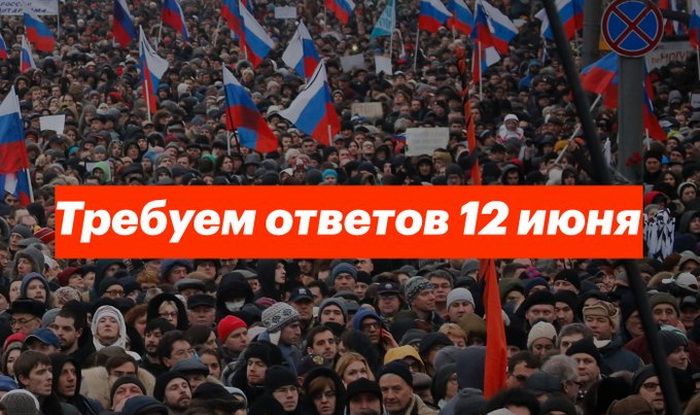
In turn, the worsening of the economic situation in Russia leads to further spread of protest activity in the country. On 12 June, mass protests led by the leader of the Russian opposition F. Navalnyi are going to restart. Actions are planned in more than 200 cities of the Russian Federation. At this, the RF leadership’s repressive actions against A. Navalnyi and his supporters, as well as attempts to discredit them (particularly by accusations of support for the antiterrorist operation in the Donbas of Ukraine), only add to the popularity of the opposition.
 |
 |
Yet another problem is revitalization of Islamic extremists’ activity in the North Caucasus. In particular, on the night of May 12, 2017, there was an attempt to capture a police post on the outskirts of the city of Malgobek in Ingushetia. During the attack, one police officer was seriously injured and two terrorists were killed. According to the Russian police, many weapons used by terrorists in the North Caucasus come from the conflict zone in the of Ukraine. So, as expected, the conflict in the Donbas, which was engineered by Putin’s regime, is an increasing source of instability in Russia itself.
At the same time, Moscow’s interference with the internal conflict in Syria also raises the level of terrorist threat to Russia and its Armed Forces. According to the Turkish intelligence, militants of the “Islamic State” plan to launch attacks on Russian warships during their passage through the Black Sea straits. For this they are going to use portable missile systems, which terrorists have.
V. Major Trends in the Development of the Situation around Ukraine in the Future
5.1. Key Events and Trends that Will Be Most Important for Ukraine
The military activities of the armed forces of Russia and the USA and NATO show further aggravation of the confrontation between them that becomes a new level of the “cold war”. An example of this is the parties’ turning to simultaneous large-scale military exercises and other activities in the same areas, which significantly increases the risk of armed incidents that may grow into military conflicts. In particular, an example was the shelling by the RF Black Sea Fleet’s ship of a Ukrainian military aircraft participating in NATO exercises in the Black Sea in March 2017. Also, we should not exclude the possibility of other incidents, including collisions of Russia’s and the US and NATO’s military aircraft due to Russia’s provocations, false shelling (including anti-aircraft missiles) and disruptions in computer systems or radar systems of Air/Missile Defence.
The threat of a military conflict between Russia and the USA and NATO will grow in the view of the upcoming presidential elections in Russia (March 18, 2018 — the day of the fourth anniversary of Russia’s annexation of the Ukrainian Crimea). Thus, further worsening of the socio-economic situation in Russia and spread of protests in the society makes Putin’s regime resort to resonant actions in order to maintain its credibility in the country. Traditionally, Moscow will escalate its confrontation with the West, in order to divert the population’s attention from internal problems and consolidate it around the leadership on the grounds of “common opposition to foreign enemies”. In view of this, Russia will continue intensifying military activity on the European and American directions, raising the risk of armed incidents and conflicts between Russia and the USA/NATO. Besides, in case of a critical situation for the Putin regime, the latter can go to a direct aggression against the Baltic countries.
As part of these processes, a milestone will be the joint strategic command-staff exercise (SCPE) of the Armed Forces of Russia and Belarus in September this year in the Baltic area. In the same period in the Baltic region is planned to be an exercise of the Armed Forces of the USA and NATO with the task to demonstrate force and hold Moscow back from a possible attack on the Baltic countries. This creates a real danger of an armed incident between the parties. Evidence of this is Russia’s reaction to NATO’s military exercises “Spring Storm — 2017”. Thus, since 9 May 2017, Russia concentrated in the area of the exercise almost all combat-ready ships of the Baltic Fleet.
5.2. Prospects for the Development of Events in the Conflict Zones in Ukraine
Exacerbation of the confrontation between Russia and the USA/NATO also significantly increases the threat of expansion of Moscow’s armed aggression against Ukraine, including a comprehensive offensive to create a land corridor to the Crimea and Trans-Dniester. Such an operation can be carried out by Russia both, in the course of its military conflict with the USA and NATO, and separately — in case of appropriate conditions for this (including aggravation of the domestic political situation in Ukraine).
The proof of Russia’s preparations for implementation of such plans is the continuation of Moscow’s actions to build up groups of troops on the Western and South-Western strategic directions, re-equipping them with new models of weapons and military equipment and creation of Strike Army Groups. Thus, according to Russian experts, the equipment of the units of the 1st Tank Army with modernized tanks T-72B3 has nearly doubled their attack capabilities. In addition, a sign of Russia’s possible transition to larger operations against Ukraine is Moscow’s intensification of the armed conflict in the Donbas. At this, Russia is using for its own purposes the rather passive position of the OSCE Special Monitoring Mission, which does “not notice” the Kremlin’s apparent intervention in the conflict in the East of Ukraine. Moreover, the OSCE actually does not respond to militants’ direct attacks on members of the SMM and creating obstacles to their activities and limits itself to statements on this matter.
In general, the above-mentioned circumstances reaffirm the urgent need for a deployment in the conflict zone in the East of Ukraine of an international peacekeeping force with weapons and real powers.
5.3. Other Important Events that Will Influence Ukraine’s Interests and Security
After his meeting with Federal Chancellor of Germany A. Merkel President of Ukraine P. Poroshenko will have a meeting with new President of France E. Macron. The meeting will be important for Ukraine as it will mean the leading EU countries’s support to our position and coordination of the views of the parties on ways of resolving the conflict in the Donbas (first of all within the framework of further work of the “Normandy” group).
May 23, 2017, the Senate (Upper House) of the Parliament of the Netherlands is going to discuss on the ratification of the Association Agreement between Ukraine and the EU (February 23, 2017, the Agreement was ratified by the Lower House of the Parliament of the Netherlands). The Senate’s positive decision would mean the final completion of the process of the approval on the Agreement by the countries of the European Union.

