
LAST WEEK’S KEY FACTORS AND MAIN TRENDS
IN THE DEVELOPMENT OF THE SITUATION AROUND UKRAINE
(May 10–14, 2017)
I. Major-Profile Events in the Development of the Situation around Ukraine
May 11, 2017, the Council of the European Union made a decision on visa liberalization with Ukraine. Under the new rules, citizens of Ukraine who have biometric passports will be able to visit Schengen countries without visas for up to 90 days for business and tourism purposes as well as for family reasons. The ceremony of signing the act in the EU Council and the European Parliament is scheduled for May 17 this year. Thus, the EU has actually recognized and confirmed the status of Ukraine as a European state, not part of the “Russian world”.
In this context rather illustrative was US President D. Trump’s meetings with Russian Foreign Minister S. Lavrov and Foreign Minister of Ukraine P. Klimkin, which were held on the same day (May 10, 2017). Donald Trump confirmed the immutability of the USA’s position on the possibility of lifting sanctions against Russia only if it has implemented the Minsk Agreements. At the same time, he supported the territorial integrity of Ukraine and expressed Washington’s firm intention to continue to provide comprehensive assistance to Ukraine. The intentions of the United States on these issues were specified during separate talks of US Secretary of State R. Tillerson with S. Lavrov and of Vice President of the United States M. Pence with P. Klimkin.
All this was actually a demonstration of the USA’s principled position regarding the inability to achieve any agreements with Russia, “behind Ukraine’s back”. In fact, the USA continues the practice of mandatory consultations with Ukraine if discussing the “Ukrainian question” with Russia. That is, in the situation when negotiations within the framework of the “Normandy group” are ineffective, a new format of the negotiating process — “isosceles triangle” US-Russia-Ukraine — is being established. At this, the USA does not offer any advantage to Russia and does not consider it an equal leading country.
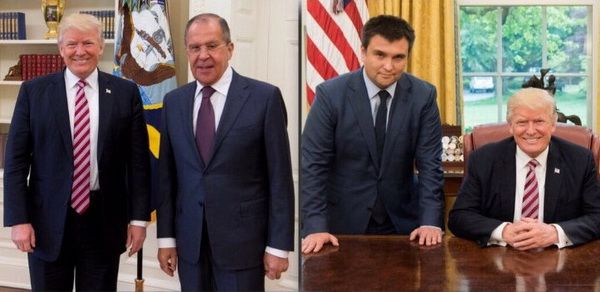
During the US leadership’s talks with S. Lavrov, the parties expressed readiness to seek opportunities for cooperation on resolving the situation in Syria and the fight against international terrorism. However, with the deep disagreements between the USA and Russia over the principles of solving these problems (especially regarding the fate of the Assad regime) did not allow them to reach any agreements.
Despite the obvious facts, the results of the negotiations were interpreted by Moscow as a “Russia’s diplomatic victory” and “the beginning of the West’s breaking through Russia’s isolation”. Moreover, the thought is being actively imposed about some alleged “compromises already reached between Russia and the United States over Ukraine”. At this, Moscow carefully conceals the real situation with Russia’s begging for meetings with the United States’s leadership in hope to achieve lifting or at least easing Western sanctions against the RF.
In general, these circumstances confirm actual failure of Russia’s “hybrid policy” to achieve its goals regarding both, Ukraine and the West. In view of this, the Putin regime’s attempts to establish a dialogue with the USA is accompanied by the Kremlin’s resorting to a more aggressive policy to implement its neo-imperial plans by demonstrating military force.
One of the first examples of this kind of demonstration were the latest military parades in Moscow and in about 30 other Russian cities with showing modern armament and military equipment.
 According to Russia’s plans, the next large-scale example in this context is to become a strategic command post exercise (SCPE) “West-2017” in September 2017 in Russia and Belarus. Preliminary the elements of the scenario of the “West-2017” SCPE were conceptually worked out within the framework of the final inspection of the Armed Forces for the winter training in March and April 2017 and mastered an offensive operation on the North-Western (“Baltic”) strategic direction while practicing a defensive operation on the South-Western (“Black Sea”) strategic direction.
A special aim of Moscow’s “hybrid policy” for strengthening confrontation with the West, and demonstration of military force, is to divert the Russian population’s attention from domestic problems caused by the deterioration of the socio-economic situation in the country. This issue is of particular relevance for Putin’s regime because of the gradual spread of protests in the society, and the forthcoming presidential elections in Russia in March 2018.
Under such a policy, Putin’s regime has actually given up the peaceful settlement of the conflict in the East of Ukraine on the basis of the Minsk Agreements. Thus, according to the RF President’s Press-Secretary D. Peskov, after D. Trump’s meeting with S. Lavrov in Washington, “…Russia is not responsible for the implementation of the Minsk Agreements and is just one of the guarantor countries, along with Germany and France”.
II. Russia’s Military Aggression against Ukraine
2.1. The East of Ukraine (the ATO Zone)
In terms of practical implementation of this approach, Russia continues to provoke tensions in the East of Ukraine. Thus, the systematic shelling of the ATO Forces’ positions and peaceful settlements continues with the average intensity of more than 60 per day. At this, the center of the enemy’s activity is shifting the to Coastal (Mariupol) direction.
To prevent Ukraine’s getting evidence of Russia’s involvement in the events in the Donbas, Russian-terrorist troops interfere with the work of the OSCE Special Monitoring Mission in the conflict zone. In particular, under the threat of arms, May 7, 2017, the militants did not let the Monitoring Mission to the temporarily occupied village Sosnovske, Donetsk region (35 km northeast of Mariupol). Besides, May 8, 2017, near Avdiivka, they shot down the OSCE’s drone. Despite all this, the OSCE continues to fulfill its tasks. For example, the Mission has reported on heavy military equipment participating in the so-called parades in the “DPR” and “LPR”, which is another violation of the Minsk Agreements.
2.2. The Crimean Peninsula
The Crimean occupation authorities’ intensifying repressions against the opponents of the Putin regime in the Peninsula, draw increased attention of the international community to the Crimean problem. May 12, 2017, the US representative to the OSCE K. Byrnes expressed concern about the intensification of acts of persecution of the Crimean Tatars. At the same time she sent the leaders of the OSCE a document on the subject with concrete facts of oppression of the Crimean Tatar population.
At the same time, among the population the Crimea is widely discussing the visa free regime between the EU and Ukraine, which opens certain opportunities for the population of the Crimea as well. In this context, it turns out that many residents of the Peninsula have kept their Ukrainian passports (both domestic and foreign) which enables them to travel to the EU countries without visas. This fact is another proof of Ukraine’s attractiveness to the residents of the Crimea and weakness of the Russian positions in the Peninsula. At the same time this is a major reason for the Kremlin’s actions to strengthen the police regime in the Crimea and large-scale militarization of the Peninsula.
2.3. Other Aspects of the Russian Federation’s Actions against Ukraine and the West
Against the background of Russia’s actions to demonstrate its military power to Ukraine and the United States and NATO, Moscow continues measures to build up the group of the RF Armed Forces in the occupied Crimea.
Thus, May 9, 2017, the Black Sea Fleet received two counter-terror boats U-415 and U-452 of the project “Raptor” (those included, the total number of the boats of this type in the Black Sea Fleet has reached eight units). Boats of this type can operate at any time of the day in coastal seas, straits and river mouths at ranges up to 100 nautical miles from their bases. “Raptor” can deliver up to 20 marines to the destination, intercept and detain small surface targets, and perform search and rescue tasks. The length of the boat is 17 meters, width — 4 meters, speed — 50 knots.
 |
|
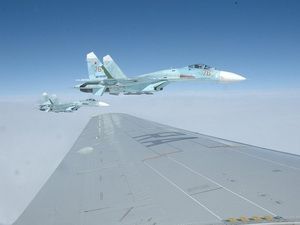
Russia continues provocations against the USA and NATO in the Baltic and Black Sea regions. In particular, May 9, 2017, Russian fighter Su-30 from the Crimean airbase came up at the dangerous distance to the US Navy’s patrol aircraft P-8A Poseidon in the airspace over the Black Sea. According to the RF Ministry of Defense, “…the fighter took off to intercept a US spy plane that was heading towards the Russian border”. On May 12, 2017, another such an incident happened.
 At the same time, Russia continues to provide military and military-technical aid to B. Assad’s regime in Syria. In particular, at the end of April 2017, to the base of the Russian Navy in the Syrian Tartous were brought more than twenty M-30 122-mm howitzers with their further transfer to Syrian troops.
In addition, to Syria sent a plane of distant radar detection and control A-50 of the RF VKS, which is meant to improve the effectiveness of the actions of Russian aircrafts in the country.
III. Ukraine, International Organizations and Leading Western Countries
3.1. International Organizations
NATO-USA. The intensification of Russia’s military activities causes the USA and NATO’s adequate response — taking additional measures to ensure security of Europe. Thus, during Russia’s “West-2017” SCPE in September 2017, the USA and NATO are going to intensify their military presence in the Baltic region to deter Moscow’s possible aggression. Within the framework of the series of exercises, maneuvers and trainings, additional number of combat aircraft and ships and troops will be sent to the region. Besides, temporary deployment in Poland and the Baltic countries of the “Patriot” system is being considered.
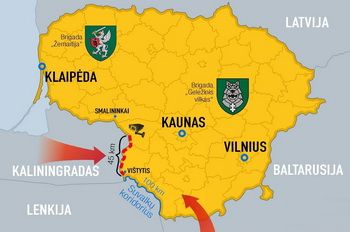
In turn, the Baltic countries continue to take measures to strengthen their borders with the Russian Federation. In particular, the leadership of Lithuania has decided to construct an about 45 km long line of engineering obstacles on the Lithuanian-Russian border. The barrier will be built in the area of convergence of the borders of Lithuania, Poland and Russia near Lake Vistitis and will go on through the territory of Shakyay and Vilkaviskis districts to the Neman. The cost of the construction is defined in the amount of 1.3 million Euros.
 |
 |
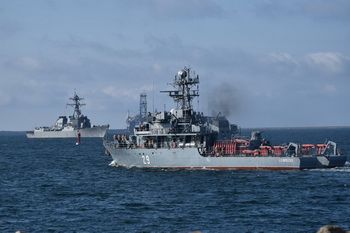
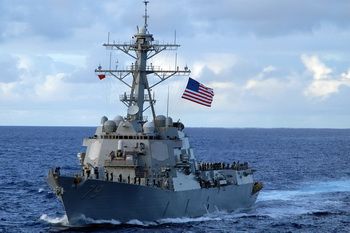
Against this background, May 12, 2017, there began four-day NATO military exercises in the Black Sea. In the exercise, conducted in the territorial waters of Romania, there participate an American destroyer with guided missiles “Oscar Austin”, as well as the Romanian frigate “Redele Ferdinand” and minesweepers “Lt. Dimitre Nicolescu “and” Lupu Dinescu”.
The exercises are designed to improve air defense skills of crews and to consolidate interoperability among the Navies of the NATO members states. Also were mastered air combat exercises, with two MiG-21 airplanes of the Romanian Air Force and two British Typhoon fighters playing the enemies.
 |
 |
The European Union. Along with the increased aggressiveness of the Kremlin’s foreign policy and the threat of international terrorism, a significant problem in Europe is the influx of refugees from conflict zones in the Middle East and North Africa. With this in mind, May 11, 2017, the EU Council adopted a recommendation to the European Commission to prolong the temporary border controls at internal borders of the Schengen zone. Previously, in early May 2017, the Commission recommended European countries to begin phasing out such control.
3.2. Leading Western Countries
The USA. The US Congress maintains strict attitude to the Russian Federation. May 8, 2017, a group of Senators called on D. Trump to confirm the determination of the US positions in supporting its allies in Europe, especially Ukraine. In this regard, the need was stressed for US President D. Trump’s meeting with President of Ukraine P. Poroshenko before Mr. Trump’s meeting with Putin, which is planned for 7–8 July 2017 in the sidelines of G-20 in Hamburg. Besides, representatives of the US Congress have spoken in favor of introducing additional sanctions against Russia for its violating the rules of world trade.
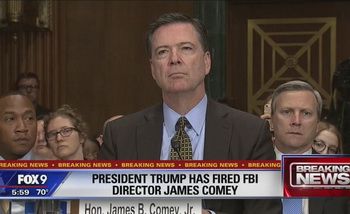 However, the situation around D. Trump’s and his associates’ ties with Russia is getting another aggravation. Thus, May 9, 2017, US President fired the FBI Director J. Comey, explaining this by “…the loss of confidence in him on the part of the Ministry of Justice, representatives of both parties in the Congress and ordinary employees of the Federal Bureau of Investigation”. However, according to a number of American politicians, the real reason for J. Comey’s dismissal was his intention to publish the information on D. Trump’s “team”’s contacts with representatives of the Russian Federation.
In fact, in response to this, the Committee on Intelligence of the Upper House (Senate) of the USA addressed Trump’s former National Security Advisor M. Flynn with the demand to submit all the documents related to Russia’s possible interference with the presidential elections in the USA.
IV. Other Important Trends and Developments that Will Have an Impact on Ukraine’s National Interests
The Russian Federation. An objective consequence of the Kremlin’s neo-imperial policy is further deterioration in the living standards of Russians. Thus, according to the statistics data, in April 2017, the citizens’ expenses have decreased by 6.8 % compared with March 2017, and by 9 % compared with April last year. Thus, the expenses of the Russian Federation’s population are now at the lowest level in the last five years.
The reason for this trend is the negative impact of Western sanctions on the Russian economy, leading to lower income of the people and growing prices of basic goods and services. As a result, today over 45 % of Russian citizens have difficulties in buying essential goods, and 11 % — even food.
In general, these circumstances create a base for growing protests in the society. The major driving force behind the protests is young people who do not see any prospects for building a normal life in the country.
V. Major Trends in the Development of the Situation around Ukraine in the Future
5.1. Key Events and Trends that Will Be Most Important for Ukraine
In the short and longer term the main factor influencing the development of the situation around Ukraine will be the character of the USA-Russia relations. Despite the intensification of the US-Russian dialogue taking place lately, practical actions of the parties confirm further growing confrontation between them, in the military sphere included. At this, fundamental disagreements between Washington and Moscow over key issues in their relationship (especially over Syria and Ukraine) actually make it impossible to achieve any strategic compromises. Moreover, the internal situation in the United States and Russia virtually does not allow the possibility of mutual concessions.
Based on the peculiarities of the mentality of the current leadership of the United States and Russia, all this will be accompanied by increasing military activity of the parties, including intensification of measures to demonstrate military force and build-up groups of troops in key areas, including in the Baltic and Black Sea regions, Central and Eastern Europe and in Syria. Thus, on 16–20 May, 2017, at the residence of the Russian President in Sochi under the leadership of Putin is going to be held a series of meetings on the development of the RF Armed Forces and military-industrial complex.
 In turn, this increases the likelihood of all sorts of incidents and conflicts between the USA and Russia. The evidence of the reality of this threat is the increasing number of cases of dangerous situations related to the actions of the armed forces of both sides. This applies in particular to the threatening approaching of aircrafts of Russia and the USA/NATO in the airspace over the Baltic and Black Seas, provocative flights of Russian bombers towards the United States (Alaska) and along the borders of European countries and the simultaneous exercises of the parties in the same areas. Besides, military incidents between Russia and the USA are possible in Syria, where the armed forces of both countries are conducting combat actions.
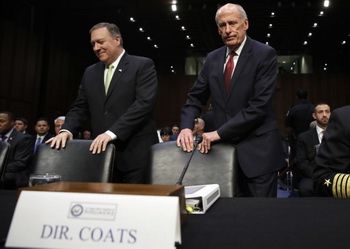
Also, according to the US Intelligence, the confrontation between Russia and the USA in cyber sphere will keep growing. According to the annual report released by the Director of the US National Intelligence D. Coats on 11 May, 2017, Russia will continue and intensify hacking attacks on US and other Western countries’ computer networks.
5.2. Prospects for the Development of Events in the Conflict Zones in Ukraine
The growing confrontation between Russia and the US in the military sphere, and even more — the likelihood of an armed incident between the parties will directly affect Ukraine. In particular, lately examples of this were Russia’s provocations against Ukrainian aircraft and ships participating in NATO exercises in the Black Sea region. Based on these trends, such provocations will gain further intensification and a more rigid nature.
Besides, building up the group of troops of the RF Armed Forces in the Southern Military District, carried out under the pretext of tensions in the Black Sea region (including the deployment of the 8th Combined Arms Army in Rostov region), raises the possibility of expansion of Russia’s armed aggression against Ukraine. Thus, in case of destabilization of the internal situation in Ukraine, Russia can go for a comprehensive offensive to establish a land corridor to the Crimea and Trans-Dniester.
5.3. Other Important Events that Will Influence Ukraine’s Interests and Security
 Along with visa liberalization with the EU, important for our state is to complete the ratification of the Association Agreement between Ukraine and the European Union.
To date, the only EU country that has not ratified it is the Netherlands. Consideration of the issue in the Upper House (Senate) of the Parliament of the Netherlands is scheduled for May 23, 2017. Considering the support of Association of Ukraine with the EU by the majority of the Netherlands Senate, final approval of the document should be expected soon.

