
LAST WEEK’S KEY FACTORS AND MAIN TRENDS IN THE DEVELOPMENT OF THE SITUATION AROUND UKRAINE
(June 13-19, 2016)
I. Peculiarities of the Development of the Situation in the Conflict Zones in Ukraine and around Our State
1.1. The East of Ukraine (The ATO zone)
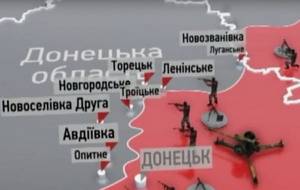 Last week the situation in the conflict zone in the East of Ukraine got significantly complicated — June 12-15 saw a peak sharpening of the armed conflict to its highest level since the conclusion of peace Agreements at the beginning of this year.
Russian-terrorist forces stepped up the intensity of firing on positions of the ATO forces and peaceful settlements almost along the entire front line to 60 attacks per day. At this, they used heavy weapons systems, including 152 mm caliber guns. There were also some attempts to break through the Armed Forces of Ukraine’s defence line.
As a result of the enemy’s active operations, the most tense situation has developed in the area of the mine Butovka-Donetska in the industrial zone of Avdiivka. At the same time, subject to intensified bombardments were also a number of the ATO forces’ other strong points and settlements on the Donetsk, Luhansk and Mariupol directions.
There were signs of Russia’s continued preparations for a larger-scale offensive into the depth of the territory of Ukraine. Evidence of this was the increase in the volume of transfer of heavy weapons, ammunition, fuel and lubricants and other material and technical means for the needs of the Russian-terrorist units. Besides, the activity continued to improve the advanced infrastructure and to concentrate troops in the probable forming-up positions.
As in previous cases, an aggravation of the armed conflict in the Donbas was provoked by Russia on the eve of and during the next meeting of the Trilateral Contact Group in Minsk on the 15th of June. The cause of the exceptional intensity of hostilities on the part of the Russian-terrorist forces was the negotiators’ talks on the two critical issues, namely: determination of the main conditions of the local elections in the Donbas, and taking a decision on the deployment of the OSCE Armed Police Mission in the conflict zone in the East of Ukraine.
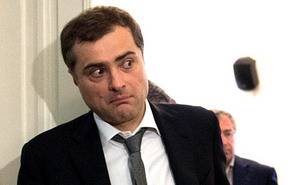 Evidence of the parties’ increased attention to these problematic issues was their consideration by special representatives of the “Normandy Four”, and also the participation in the negotiations of the Russian Federation President’s Assistant — one of the main curators of the “DPR”/LPR” — V. Surkov.
Taking into consideration the above-mentioned circumstances, as well as Russia’s strategic interests in relation to Ukraine, Moscow’s actions regarding the latest intensification of provocations in the Donbas included:
on the first issue — forcing Ukraine to accept the Russian version of the organization of elections in the “DPR” and “LPR” [before the withdrawal of the occupation troops, weapons and military equipment from their territories and the transferring to Kyiv the control over the eastern section of the country’s border as required by Ukraine];
on the second issue — demonstrating the impossibility of deployment of the OSCE Armed Police Mission in the East of Ukraine due to the continuation of active hostilities in the conflict zone.
Along with provoking tensions in the Donbas, another notable factor of Russia’s pressure on Ukraine was the RF’s actual blocking of the exchange of prisoners by concealing information regarding the Ukrainian military personnel and other citizens who are held captive by the Russian side and its puppets.
Due to the fundamental unacceptability of such approaches for Ukraine, the latest meeting of the Trilateral Contact Group in Minsk actually ended with no result, except for individual agreements on trade and economic issues.
1.2. The Crimea
 Due to the acute shortage of funds for the occupied Crimea’s integration into the political and economic system of Russia, on June 14, 2016 the State Duma of the Russian Federation extended the transitional period in the Crimean Peninsula until January 1, 2019. In particular, this concerns introduction of Russian standards for all forms of economic activity in the Crimea. This actually “preserves” the problems of the business in the Crimea, which has no opportunities for normal cooperation with partners in Russia due to legislative differences.
Against this background, Russian experts have concluded the “euphoria” of the Crimea’s becoming part of Russia keeps decreasing both, among the pro-Russian part of the population of the Peninsula — because of the complexity of the economic problems in the region and in the Russian Federation proper — as a result of the negative influence of the Western sectoral sanctions on the Russian economy.
Under such circumstances, instead of focusing on solving the economic problems of the Crimea, the Russian leadership intensifies repressive means against non-governmental organizations and individual activists who express dissatisfaction with V. Putin’s regime’s policy and are in favour of returning the Crimean Peninsula to Ukraine. In particular, June 12, 2016 in the so-called “Day of Russia”, in several cities of the Crimea several people were detained for having taken to the streets with Ukrainian flags, and who have been accused of “extremist activities”.
Besides, a separate target of Moscow’s severe repressive actions remains the suppression of anti-Russian sentiments among the Crimean Tatars. According to the Mejlis of the Crimean Tatar people, to date, about half of the political prisoners in Russia are the Crimean Tatars. It has been suggested that all the enemies of the Russian Federation and, in particular, the Crimean Tatars, are deliberately being driven out of the Crimea.
The consequence of this policy has become an increase in the number of migrants from the Crimea to the mainland of Ukraine and other countries. According to the Geneva Human Rights Committee — Internal Displacement Monitoring Centre, since the occupation of the Crimea, the number of such persons has amounted to 50-60 thousand people (according to Ukrainian sources, up to 100 thousand people).
II. Other Important Factors for the Development of the Situation around Ukraine, Affecting Its National Interests and Security
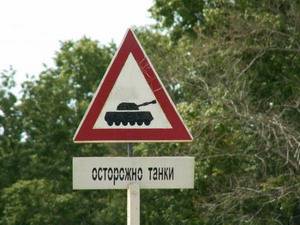 The Russian Federation. Activation of Russia’s armed provocations in the Donbas was accompanied by Moscow’s demonstration of its military force to Ukraine and our Western partners. Thus, according to Russian President V. Putin’s order, on June 14, 2016 there began a sudden inspection of groups of Russian troops in the Western and Southern Military Districts and in the occupied Crimea (under the personal supervision of Defence Minister Sergei Shoigu, who arrived in the Crimea). During the sudden inspection, mobile forces were trained to act in offensive operations.
Against this background, the leadership of the Russian Federation confirmed the intention to extend the commitment to its course, despite pressure from the West. According to the Minister of Foreign Affairs S. Lavrov, during his speech in the State Duma of the Russian Federation on June 15, 2016 the USA and EU’s sanctions will not force Moscow to change its foreign policy. He accused the West of leading “inadequate” policy towards Russia.
A resonant political event in the development of the situation around our country was the International Economic Forum in St. Petersburg on June 16-18, 2016, which was used by the European Union and the pro-Russian forces in Europe to demonstrate their attitude to V. Putin’s regime’s policy and the prospects for Ukraine’s European and Euro-Atlantic integration of Ukraine.
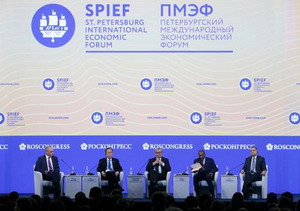 For the first time since the introduction of the EU sanctions against Russia, the event was attended by the representative of the supreme governing body of the European Union — President of the European Commission Jean-Claude Juncker. Speaking at the Forum, he condemned Russia’s armed aggression against Ukraine and confirmed the EU’s solidarity on the issue of the continuation of sanctions against it until full implementation of the Minsk Agreements by Moscow. At this, he emphasized the need to withdraw Russian troops and weapons from the Ukrainian territory and to return to Ukraine the control of its eastern border. J.-C. Juncker recognized the right of Ukraine as an independent state to independently choose its foreign policy. At the same time, he confirmed the possibility of the resumption of the EU’s cooperation with Russia in case of settlement of the situation around Ukraine.
In contrast to the EU’s leadership’s position, the former French President Nicolas Sarkozy called for the need for mutual lifting of sanctions by the European Union and Russia and urged V. Putin to take the first step in this direction. At the same time, he actually accused Ukraine of “infringement the rights” of the Russian-speaking minority in the Ukrainian territory, and openly declared the impossibility of Ukraine’s joining NATO and the EU.
III. Ukraine and Its Allies and Partners
The European Union. The leadership of the European Union has maintained a positive attitude to Ukraine and demonstrated readiness to continue sanctions against Russia until the full implementation of the Minsk Agreements. At the same time, there was an increase in a number of EU countries’ skepticism about the prospects of Ukraine’s European integration and increase in the number of EU member countries supporting Moscow.
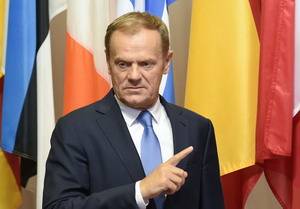 Thus, according to the statement of the European Council’s President Donald Tusk on June 16, 2016 the decision to extend sanctions against the Russian Federation will be taken at the end of June 2016 (approximately June 24, 2016). The reason for this is the continuation of Russia’s military aggression against Ukraine and Moscow’s demonstrative ignoring the Minsk Agreements.
At the same time, a negative signal for Ukraine were the next pro-Russian actions in the European Parliament (EP). On June 13, 2016 a group of 12 MEPs from France, Italy and Germany called on the EU countries to lift the sanctions against the leadership of the Russian special services. The “feasibility” of such a step was explained by “…a positive experience of cooperation between the EU and Russia in the fight against Islamic terrorism in Syria and the need to create favorable conditions for further deepening of cooperation between the parties on security issues”. According to Western experts, the real reason for such action was an attempt of pro-Russian lobby in the European Parliament to create a precedent to start the lifting of the European Union’s sanctions against Russia.
At the same time, the governing bodies of the EU continue considering the prospects of introducing visa-free regime with Ukraine. June 13, 2016, as part of a special report by the Committee on Foreign Affairs of the European Parliament, an MP from Poland J. Saryusz-Wolski pointed out the need for the speedy granting of visa-free regime to Ukraine and the inadmissibility of linking this issue with taking similar decisions regarding third countries, in particular Turkey.
It is worth noting that the discussion of J. Saryusz-Wolski’s report, as well as public statements by representatives of the EU member countries’ leaders showed persistence of significant differences in the European Union on the possibility of cancelling the visa regime with Ukraine.
NATO. With the approach of the Warsaw NATO summit (July 8-9, 2016) the leadership of the Alliance continues discussing the issues of strengthening the Alliance in the context of an adequate response to the growing threats from Russia.
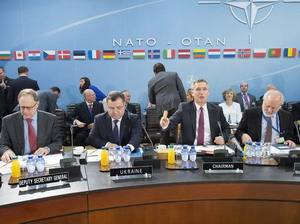 These issues were discussed during the meeting of Defence Ministers of NATO member countries on 13-15 June, 2016. During the event, the Secretary General of the Alliance J. Stoltenberg expressed concern about the continuation of the armed conflict in the Donbas, and laid on Russia the responsibility for the continued tension in the region. Besides, he accused Moscow of intensifying provocations against NATO and the EU.
J. Stoltenberg also reiterated the Alliance’s intention to continue steps to strengthen the NATO missile defence system on the Eastern direction. In particular, he said that four battalions of NATO forces numbering between 800 and 1,000 troops would be deployed in Poland and the Baltic countries. Besides, within the next two to three years, a regional system of air defence of Poland, Lithuania, Latvia and Estonia will be created.
It is also planned to build up NATO military capabilities in the Black Sea region. In addition to measures already taken, they are considering Romania’s proposal to deploy on its territory the staff of the NATO multinational brigade.
Besides, the capability of NATO Response Force /NRF/, designed to strengthen the operational group of the Alliance forces in threatened areas, will be built up. In order to timely detect such threats, there is now a new post of NATO Assistant Secretary General for Intelligence.
To ensure the implementation of these plans, in 2017 NATO’s military expenditures are planned to grow to 3 billion US dollars, accounting for 1.5 % of today’s military budget of the Alliance.
At the same time, J. Stoltenberg expressed NATO’s readiness for dialogue with Russia to jointly solve problems of European security. In this connection, he did not rule out the possibility of holding a meeting of the Russia-NATO Council on the eve of the Warsaw Summit of the Alliance.
Within the framework of the meeting of Defence Ministers of the member countries of the Alliance, a meeting was held of the NATO-Ukraine Commission. The meeting agreed on a new comprehensive package of the Alliance’s assistance to Ukraine. Besides, an agreement was signed on cooperation between the Ministry of Defence of Ukraine and the NATO Agency for Technical Maintenance.
Against this background, there continued a series of joint military exercises with the participation of member states and NATO partners.
For example, in Poland continued NATO military trainings “Anaconda-2016” (June 7-17, 2016). Commenting on the progress of the exercises (practicing joint actions of national and coalition commands and units within the framework of a joint military operation in a “hybrid war”), President of Poland A. Duda pointed out the increasing aggressiveness of Russia’s foreign policy, which requires the appropriate NATO’s response. In this context, the holding of such exercises has shown improving of NATO’s ability to ensure collective defence of Europe and of Poland in particular.
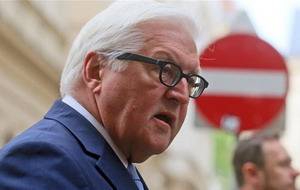 At the same time, German Foreign Minister Frank-Walter Steinmeier (a politician from the Social Democratic Party of Germany) criticized the Doctrine of NATO and partners of “Anaconda-2016”, recognizing them a challenge to Russia. In his opinion, wrong are those who “…use a symbolic parade of tanks on the eastern borders of NATO to provide more security of the Alliance”. He called “a fatal mistake” the intention to focus all attention on the military aspects and seek refuge in the deterrence policy. At this, he urged not to revive the old confrontation but to maintain dialogue with Russia, forcing it to “responsible partnership” with the aim of disarmament in Europe.
In the period of June 13-17, 2016, joint USA-Romania Navy exercises were conducted in the Black Sea. In the course of the exercises, they mastered the interaction of units of Naval Forces of the two countries in joint operations to repulse external aggression. In the trainings from the United States there participated the destroyer USS Porter (equipped with Aegis Missile Defence System, and 56 Tomahawk Cruise Missiles), and from Romania — frigate Regina Maria, a corvette, a Puma Naval helicopter and three Mig 21 Lancer aircrafts.
Germany. Despite internal disagreements on the Russian-Ukrainian issue, the most stable position on the support of Ukraine among the countries of “old” Europe was shown by Germany.
According to the Defence Minister U. Leyen’s statement for the German publication Die Welt of June 13, 2016, restoration of a constructive partnership between Germany and Russia is absolutely impossible without solving the problem of Russia’s annexation of the Crimea and termination of Moscow’s armed provocations in the Donbas. Similar estimates have been made also by the German Minister of Finance W. Schäuble.
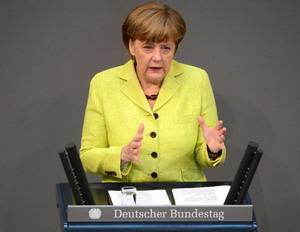 Speaking in the Bundestag on June 15, 2016, Federal Chancellor of Germany A. Merkel expressed support for the liberalization of the EU visa regime with Ukraine together with Turkey and Georgia. However, in her opinion, to address this issue, should be developed mechanisms for urgent restoration of visa restrictions in case of force majeure.
According to the latest reports of Deutsche Welle, Chairman of the Committee on Foreign Affairs of the European Parliament Elmar Brok (CDU) ruled out the possibility of rapid easing of sanctions against Russia. According to him, the extension of sanctions against Russia for another six months — “goes without saying.” Gradual easing of sanctions is only possible “…when there is progress in the peace process,” said E. Brock.
That was E. Brock’s answer to the initiative of a number of representatives of German business and German Foreign Minister Frank-Walter Steinmeier (SPD) about the need to phase-out economic sanctions against Moscow in response to the progress of the Minsk process, without waiting for the full implementation of the Minsk Agreements.
Furthermore, June 17, 2016, the EU extended the ban on economic relations with the annexed by Russia the Ukrainian Crimea until June 23, 2017. The sanctions include a ban on the import of products from the Crimea, investments, cooperation in the sphere of tourism and export of certain goods and services.
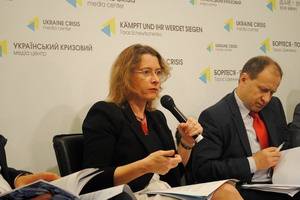 France. At the official level, France also declares support to Ukraine. This position was expressed by the Ambassador of France to Ukraine I. Dumont during the presentation of the “Foreign Policy Audit: Ukraine-France” on June 14, 2016 in Kyiv. According to her, the French government has a clear position on the possibility of easing sanctions against Russia only in case of Moscow’s complete fulfillment of the Minsk Agreements. Besides, France is in favor of the liberalization of the EU visa regime with Ukraine. At this, I. Dumont denied the opportunity to influence of the appeal of the Lower House of the French Parliament — National Assembly of France — on the need to lift the sanctions against Russia — on the appropriate official decision of Paris.
The Netherlands. The government of the Netherlands is actually against Ukraine’s European integration. June 13, 2016 Prime Minister of the Netherlands government. M. Rutte expressed doubts about the accession of his country to the Association Agreement between Ukraine and the EU. The reason for this was called the negative results of the referendum in the Netherlands on this issue. Besides, M. Rutte even questioned the possibility of lifting the visa regime between the Netherlands and Ukraine.
Slovenia. Slovenian Foreign Minister Carl Eryavets, during his visit to Moscow on June 14, 2016, advocated the need for the EU’s more flexible approach to its sanctions policy towards Russia. He said the sanctions against the Russian Federation have not improved the situation in Ukraine, so they need to be objectively revised. At this, C. Eryavets stressed “…the fallacy of linking politics and economy in dealing with issues of international security”.
IV. The Main Trends in Further Development of the Situation around Ukraine
4.1. In conflict zones on the territory of Ukraine
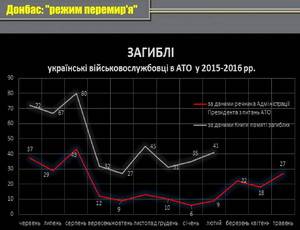 Next week we should expect continuation, and most likely, intensification, of Russia’s armed provocations in the conflict zone in the East of Ukraine. Thus, the inevitability of the extension of sanctions against Russia on the eve of or during the EU Summit will sure as a gun cause V. Putin’s regime’s negative reaction, which may resort to “revenge actions” by radical worsening of the armed conflict in the Donbas.
Besides, for June 29, 2016 has been scheduled the next meeting of the Trilateral Contact Group in Minsk, which may also be an occasion to intensify Russia’s armed provocations as a means of pressuring Ukraine. This question is very relevant for Moscow, due to the agenda issues of the local elections in the Donbas and the deployment of the OSCE Armed Police Mission in the East of Ukraine.
In this context, along with intensification of shelling of the ATO forces’ positions all over the front line, we can’t exclude the possibility of Russia’s transition to direct efforts to break them in a number of places, first of all in the areas of Avdiivka, Donetsk Airport and near Mariupol.
At the same time, resonant provocation and terrorist attacks against the civilian population in the territories of the “DPR” and “LPR”, followed by accusations of Ukraine of violating the Minsk Agreements, can be conducted. Based on previous experience, all this will be accompanied by a massive anti-Ukrainian and anti-Western media campaign, including with involving the controlled by Russia European media and political forces.
4.2. In the European Region and around Ukraine
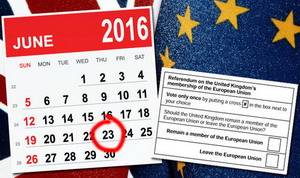
The United Kingdom. June 23, 2016 there will be a referendum on Britain’s membership in the European Union. The whole world is preparing for its possible consequences. Ukraine also needs to be prepared for possible problems.
 Firstly, to economic ones. Because if the UK leaves the EU, Ukraine will again have to negotiate with it about opening of the market. Secondly, Kyiv will lose London’s significant support on our way to European integration. And, thirdly, the British will have enough of their own problems without Ukrainian ones. And this will play strongly into the Kremlin’s hands.
No matter how optimistic European leaders are trying to sound today, but in any case, the UK’s leaving the EU will significantly weaken the European Union. In its ranks, Europe will lose a country with a strong economy, as well as considerable contributions to the EU budget. Moreover, the example of the British can be followed by some other Eurosceptic countries. The first disappointing signal has come from Switzerland, which refused to apply for EU membership.
According to leading experts and analysts, the question of holding a referendum in the UK on its withdrawal from the EU, in fact, was provoked by three main factors: the aggravation of economic problems; migration crisis and simply the ambitions of some British politicians.
At the same time, experts predict difficult times for Great Britain, if it leaves the EU, namely a drop in economic growth at once by a few percent; outflow of investments; a blow to the banking system; closure of educational and labor boundaries. And what is the worst thing for London — the possible loss of access to the common huge European market.
The moods of the British are now mixed. However, according to recent polls, those who are “for” Britain in the EU make majority.
The European Union. One of the key foreign policy events of June 2016 will be President of Ukraine P. Poroshenko’s visit to Brussels on June 27, 2016, which will take place on the eve of the EU Summit scheduled for June 28-29, 2016.
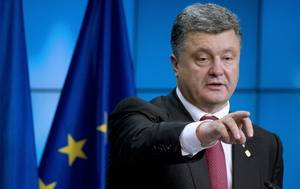 As expected, in the format of the upcoming visit, the President of Ukraine will hold bilateral consultations and negotiations with the President of the European Council Donald Tusk, European Commission President Jean-Claude Juncker, and the President of the European Parliament Martin Schulz. Most experts and analysts are already calling these negotiations the EU-Ukraine mini-summit. It is noted that the aim of future negotiations for Ukraine will be realization of two strategic objectives.
The first strategic objective is related to the need to preserve, extend and expand sector sanctions against Russia until “…Russian side’s full implementation of its obligations within the framework of the Minsk Agreements, and de-occupation of the Crimea”. Ukraine will also insist on expansion of the “package of sanctions” against Russia in connection with the “ban on the Mejlis of the Crimean Tatar people and persecution of the Crimean Tatars”.
The second strategic objective is to discuss the problems and prospects of liberalization of the visa regime for Ukrainian citizens. The Ukrainian side, in the format of future meetings can express its “serious concern” about the EU institutions’ slowing down consideration of the issue of visa-free regime for Ukrainian citizens. At this, Ukraine will stress the fact that the EU has certain obligations to the Ukrainian side on visa liberalization, and will insist on the speedy making a political decision on this issue without considering the position of “blocking minority” from a few European Union countries.
A key subject of the talks will also be the current military-political situation in the Donbas, due to the escalation of the military confrontation in the region and “the Russian Federation’s aggressive actions.” The Ukrainian side intends to initiate questions concerning the implementation by the warring parties in the Donbas of the a Set of Measures for the Implementation of the Minsk Agreement of 12 February, 2015 (“Minsk-2”), and will also express Ukraine’s readiness for a peaceful, political and diplomatic settlement of the military conflict in the region.
Besides, in the negotiations, the Ukrainian side is going to discuss issues related to the implementation of the EU-Ukraine Agreement on a Free Trade Area, as well as a number of issues related to energy security.
The upcoming talks of the EU-Ukraine highest political leadership will be attended by the Vice-President of the European Commission, the EU High Representative for Foreign Affairs and Security Policy Federica Mogherini, Vice-President for the Energy Union of the EC Maroš Šefčovič, as well as by the European Commissioner for Enlargement and European Neighbourhood Policy and Negotiations Johannes Hahn.
It should be noted that this event will be preceded by a meeting of Foreign Ministers of the EU member states on June 24, 2016, in which will be considered the EU’s sanctions policy towards Russia, as well as prospects for the introduction of the EU visa-free regime with Ukraine.
Both these issues cause ambiguous attitude on the part of the EU countries, which can lead to heated debates during the discussion. At this, the major agents of Ukrainian interests will still be Germany, Poland and the Baltic countries. At the same time, the biggest obstacles in their implementation will be created by France, the Netherlands, Italy, Spain, Portugal, Greece, Slovenia, Czech Republic and Hungary.
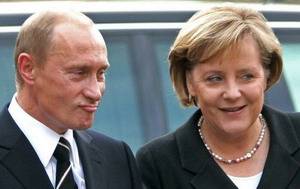 Germany. According to available information, Federal Chancellor of Germany A. Merkel is going in the nearest future to meet with Russian President V. Putin to discuss the resumption of the peace settlement of the conflict in the Donbas. According to Deutsche Welle, in the “ideal case” the meeting will take place before the NATO Summit scheduled for July 8-9, 2016.
Besides, information has been spread about a possible meeting of the “Normandy Four” on the eve of the NATO Summit in Warsaw.
As we have already mentioned, on June 15, 2016 in Minsk took place a “preparatory meeting” in the “Normandy Format”, during which were discussed first of all the questions of the organization of elections in the occupied regions of Donetsk and Luhansk regions. The meeting was attended by Deputy Head of Presidential Administration of Ukraine Kostyantyn Yeliseyev, Russian President’s Advisor Vladislav Surkov, and Advisers to the Federal Chancellor of Germany Angela Merkel and to French President Francois Hollande.
The Russian Federation. Within the framework of trade and economic pressure on Ukraine, Moscow has decided to extend the ban on the import of Ukrainian food products into Russia until the end of 2017. Currently, the Russian Federation Ministry of Economic Development is preparing a document on the subject.

