
LAST WEEK’S KEY FACTORS AND MAIN TRENDS IN THE DEVELOPMENT OF THE SITUATION AROUND UKRAINE
(October 10-16, 2016)
I. Major-Profile Events in the Development of the Situation around Ukraine
On Russian President V. Putin’s birthday October 7, 2016, the Russian Parliament presented him with a luxury bouquet of 450 roses — one from each Deputy. According to traditions, even number of flowers is laid on a grave. According to popular belief, if one is given an even number of flowers, one will face adversity, and even death. Was it not done on purpose by the Russian statesmen and magnates? If nothing else, he is 64. He has lived quite a few decades — “for the joy of the whole world”.
Nevertheless, the main factor influencing the development of the situation in the world and around Ukraine was further aggravation of confrontation between Russia and the West on the issue of Syria.
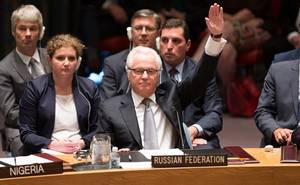 Thus, on 8th October , 2016, Russia blocked a draft resolution of the UN Security Council on the “Syrian” issue, which had been prepared by France, and called for a cease-fire in the city of Aleppo, establishment of a “no-fly zone” over the city and providing its population with humanitarian aid (before that, the document was discussed on 6th October 2016, during the meeting in Moscow of the Minister of Foreign Affairs of France J. Hérault and Russian Foreign Minister S. Lavrov). However, the forces of B. Assad’s regime ruling in Syria, with the support of Russian combat aircraft and troops of Russian mercenaries intensified the fighting against the rebels around Aleppo.
Against this background, October 9, 2016, Russian Foreign Minister S. Lavrov accused the USA of “…the implementation of aggressive steps that really hurt Russia’s national interests”. Those “steps” included: NATO’s expansion (including to the East); strengthening of NATO’s military presence near Russia’s borders, as well as anti-Russian sanctions. According to S. Lavrov, “…this policy was launched by the USA before the Ukrainian crisis and was designed to prevent the revival of Russia as a great world state after the collapse of the USSR”.
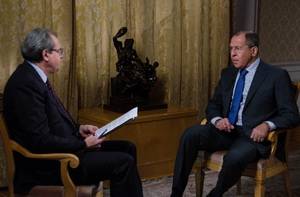 Besides, S. Lavrov made an attempt to shift the responsibility for the violation of ceasefire in Syria onto the USA . According to him, the reason for the resumption of hostilities was “…the US air strikes on Syrian government forces in the area of Deir ez-Zor”, as well as “…the rebels’ actions to capture new territories after the removal of B. Assad’s units from the front line”.
At the end of his speech, S. Lavrov expressed an actual threat of the possibility of using military force against the West. According to the Minister of Foreign Affairs of the Russian Federation, “…Russia has three reliable allies able to protect its interests, namely: the Aerospace Force, Army and Navy”.
The above-mentioned was complemented by the decision of the upper house of the Russian Parliament — the Federation Council, which ratified the law on indefinite deployment of the RF Armed Forces’ aviation group in Syria. Based on this, October 14, 2016 Russian President V. Putin signed the relevant federal law of the RF.
Along with this, Russia has made an attempt to engage China in its confrontation with the United States, NATO and the EU. October 11, 2016 the First Deputy Chief of the Main Operations Directorate of the General Staff of the RF Armed Forces, Lieutenant — General. V. Poznikhir, speaking at a briefing in Beijing themed “US Global Layered Missile Defense System as a Threat to the Military Security of Russia and China and Strategic Stability in the World”, accused the United States of the preparation of nuclear-missile strikes both against the Russian Federation and the People’s Republic of China.
All this was seen by the USA and European countries as a direct challenge to the West from Moscow, as well as the Putin regime’s overt unwillingness to go for a peaceful resolution of the situation around both, Syria and Ukraine. Accordingly, the United States, the UK, Germany and France were in favor of the need to strengthen sanctions against Russia, and to make an international investigation into Russia’s actions in Syria. In particular, the Minister of Foreign Affairs of France J. Hérault showed intention to personally appeal to the International Criminal Court in The Hague with a suit on the matter. In his turn, the UN Secretary-General Ban Ki-moon has put forward an initiative to create a special international tribunal to identify and punish those responsible for war crimes in Syria.
The idea to introduce additional sanctions against the Russian Federation because of the “Syrian” issue was expressed also by the Head of the European Council D. Tusk, President of the European Parliament M. Schulz and NATO Secretary General J. Stoltenberg.
In the above-mentioned situation, French President F. Hollande refused to meet with Russian President V. Putin, the meeting with whom was scheduled for October 19, 2016. In her turn, the Federal Chancellor of Germany A. Merkel admitted the possibility of inviting V. Putin to Berlin for a meeting in the “Normandy” format only if there is a chance to resolve the situation in the East of Ukraine.
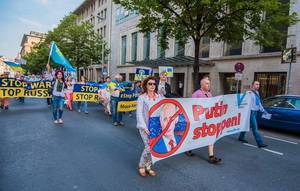 Besides, October 14, 2016, mass public actions (“Stop Putin’s War in Ukraine”) were held in 30 countries and 70 cities of Europe and the world with the demand to Putin to stop the military aggression against our country.
In response to the increased aggressiveness of the Russian Federation’s policy, the United States takes additional measures to strengthen its military presence in Europe. In particular, in addition to the deployment of the US’ and NATO’s military units in the countries of Central and Eastern Europe and in the Baltic States, plans are being considered to deploy the US Armed Forces’ unit in Norway as well.
Taking into consideration the increasing level of threats from Russia, measures to strengthen their own security are being taken by other countries of the Northern Europe and the Baltic region. For example, Sweden plans to send its troops to the island of Gotland, close to the Kaliningrad region of the Russian Federation. The Ministry of Defence of Sweden made an official statement about the possibility of Russia’s deployment in Kaliningrad region of nuclear weapons (simultaneously with the deployment of “Iskander-M” tactical ballistic missile systems).
 Due to Russia’s constant provocations, as well as the RF AF Airborne Troops’ exercises on the North-Western direction (in Pskov region), the leadership of Lithuania decided on a full-scale re-deployment of the country’s Armed Forces with the concentration of their main part on the border with the Russian Federation.
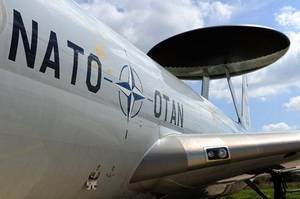
Besides, on 13th October, 2016, an aircraft of the airborne early warning and control AWACS-NATO for the first time arrived at Siauliai Air Base in Lithuania. According to the Ministry of Defence of Lithuania, the above-mentioned is intended to provide traceability of positional areas of Russian mobile intercontinental ballistic missiles, and “Iskander-M” tactical ballistic missile systems.
In turn, according to British media reports, the Command of the Royal Air Force of Great Britain granted its permission to pilots of their fighters in Syria to shoot down Russian planes if they interfere with their activities. To this end, the British Tornado aircraft will be additionally equipped with AIM-132 “air-to-air” missiles.
II. Russia’s Armed Aggression against Ukraine
The situation around Syria has a direct impact on the development of the events around the armed conflict in the East of Ukraine. Thus, answering journalists’ questions about the possibility of solving the Syrian conflict, Russian Foreign Minister S. Lavrov linked the issue to the situation in the Donbas, and actually confirmed that Russia had no intention to fulfill the Minsk Agreements. According to him, “…a month of complete silence, give us the border, let there the OSCE, provide complete security, disarm everybody, except for the Ukrainian army, and only then we’ll deal with political reforms. That won’t work!“.
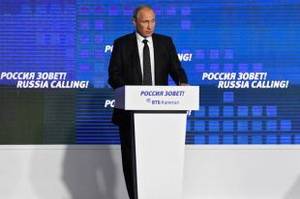 October 12, 2016, in the course of the forum “Russia Calling!”, Russian President V. Putin openly acknowledged Russia’s actions for the occupation and annexation of the Crimea and the provocation of the armed conflict in the Donbas. According to his statement, “…Russia had to protect the Russian-speaking population in the Donbas, as well as to respond to the desire of the people living in the Crimea to return to Russia”.
According to some authoritative experts in international affairs, by this the Russian Federation has announced not a “hybrid”, but a direct war.
2.1. The East of Ukraine (The ATO zone)
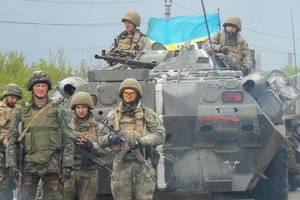 All last week through, Russia continued “protecting the population of the Donbas” by active shelling of the ATO forces’ positions and peaceful settlements. The enemy’s greatest activity was observed in the direction of Mariupol (near Novotroitsk, Talakivka, Vodyane and Shyrokine) where Russian-terrorist forces used 120 mm mortars and tube artillery of 122 mm calibre. The intensity of fire had increased to more than 40 attacks a day by the end of last week. Russia is no longer stopped even by the presence of representatives of the OSCE Special Monitoring Mission.
All this has led to the actual breakdown of the process of disengagement of forces in certain parts of the front line. At this, as always, the responsibility for the next escalation of the conflict was shifted by Russia onto Ukraine.
The worsening of the situation in the Donbas was the subject of the President of Ukraine P. Poroshenko’s special telephone conversations with French President F. Hollande and German Chancellor A. Merkel. The parties agreed that Russia totally disregards the Minsk Agreements in the part which concerns the security in the zone of the provoked by Moscow conflict in the East of our country.
2.2. The Crimean Peninsula
In the context of the acute confrontation with the United States, NATO and the EU, Russia continues building up the grouping of its Armed Forces in the Crimean Peninsula. October 10, 2016, the 43rd Separate Marine Attack Aviation Regiment of the aviation of the RF Black Sea Fleet (Saki airfield) received a next — the ninth multifunctional Su-30SM (side number 43 “blue”, serial number 10MK5 1317; individual name “Sevastopolskiy”).
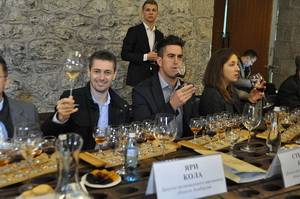 At the same time, in the period from October 14 to 16, 2016, at the invitation of the State Duma of Russia, the Crimea was visited by a delegation of Italian businessmen and parliamentarians from local councils of the provinces of Veneto, Liguria, Lombardy, Tuscany and Emilia-Romagna, which have recognized the “legality” of Moscow’s annexation of the Crimean Peninsula. The fact is actively presented by V. Putin’s regime as “international recognition of the Crimea’s belonging to Russia”.
However, due to Western sanctions, Russia’s own businesses are massively leaving the Crimea. Thus, after Russia’s occupation and annexation of the Crimea in 2014, of 31 credit institutions of the Russian Federation only 14 remain in the Peninsula.
2.3. Other Aspects of the Russian Federation’s Actions against Ukraine and the West
The complication of relations between Russia and the West is accompanied by Moscow’s large-scale events to demonstrate its military force to the USA, NATO and the EU. October 13, 2016, during the exercises of the Strategic Missile Forces (RVSN) of the RF Armed Forces, were carried out three launches of intercontinental ballistic missiles, including from the training field “Plesetsk” — a RS-12 mobile intercontinental ballistic missiles “Topol-M” and from the “Georgiy Pobedonosets” and “Novomoskovsk” submarines — sea-based ballistic missiles (BRMB) of the “Sineva” type.
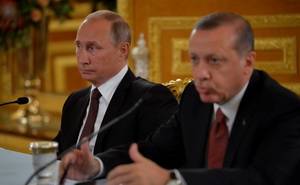 In this situation, the Russian President V. Putin is welcomed only in countries of the “third world” and the satellites of the Russian Federation from the former Soviet republics. As part of Russia’s measures to strengthen its international position, October 10, 2016, Russian President V. Putin paid a visit to Istanbul, during which he met with President R. Erdogan (at the sidelines of the World Energy Congress). As a result of the negotiations, agreements were reached on: Russia and Turkey’s resuming the work on the project of the “Turkish Stream” gas pipeline(under the Black Sea, bypassing Ukraine; Russia promised Ankara lower gas prices and turning Turkey into a distribution center of Russian gas in Southern Europe); coordination of the parties’ actions on the “Syrian” issue; deepening cooperation between the two countries in the military-technical sphere, as well as opening of the Russian market for Turkish food products (mostly fruits).
After Turkey, on October 14, 2016, V. Putin visited Armenia to participate in the next session of the Collective Security Council of the Collective Security Treaty Organization. They discussed the situation in the “zone of responsibility” of the CSTO, as well as the fight against terrorism.
Apart from this, Russian media widely advertise the beginning of the testing of the A-60 — a new Russian aviation complex with laser weapons on board. It is argued that such complexes could destroy aircraft, cruise missiles, unmanned aerial vehicles and enemy satellites. The development of new types of weapons is carried out by the Rocket and Space Corporation “Energia”, which at one time tried to create an analogue of the American “Shuttle” — “Buran” system. As pointed out at the Ministry of Defense of Russia, “…when the Russian combat lasers will be adopted — is unknown”.
III. Ukraine, International Organizations and Leading Western Countries
3.1. International Organizations
The European Union. Along with the declaration of plans on the possibility of imposing sanctions against Russia for the “Syrian” issue, the EU’s leadership also advocates the extension of sanctions against the Russian Federation because of Ukraine. In particular, on 10th October, 2016, the Head of the European Parliament Committee E. Brock pointed out the expediency of prolongation of sanctions against Russia in December immediately for the entire year 2017. According to him, this would demonstrate the EU’s firmness and “…will deprive V. Putin’s regime of illusions about the possibility of a quick exit from under the pressure from the West”.
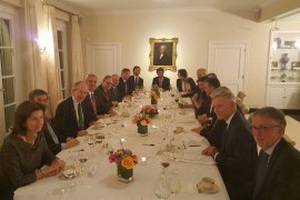 NATO. Like the European Union, NATO continues demonstrating its full support for Ukraine in our State’s confrontation with the Russian Federation. October 13, 2016, at the Headquarters of NATO in Brussels, there was the first meeting of the “Friends of Ukraine” from among the member countries of the Alliance. The participants discussed the questions of providing assistance to Ukraine in the sphere of security and defense.
The Parliamentary Assembly of the Council of Europe. October 12, 2016, the PACE adopted two resolutions which expressed deep concern over the situation with human rights in the annexed by Russia Crimea and in the occupied territories of the Donbas, and condemned the Russian Federation’s military invasion of Ukraine. At this, in its resolution the PACE for the first time recognized the Russian Federation’s actions against Ukraine as an “armed aggression”.
At the same time, a negative factor for Ukraine is the certain change in the attitude towards Russia of a number of representatives of the leadership and members of the Assembly. Thus, the President of the PACE Pedro Agramunt stated the need to return the Russian Federation to participation in the work of the Organization.
The idea was supported also by German Foreign Minister F. Steinmeier, who expressed the hope that Russia would take steps to return to the PACE. Even though he did not link this to Moscow’s implementation of the Minsk Agreements.
3.2. Leading Western Countries
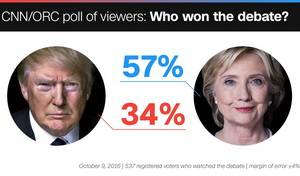 The USA. October 10, 2016, there was the second round of public debates between the main candidates for the US presidency — Democrat H. Clinton and Republican — D. Trump. Despite D. Trump’s attempts to demonstrate a departure from his pro-Russian position, as well as to accuse the US current leadership of miscalculations in the economic, energy and security policy, in fact, he completely lost to H. Clinton. According to exit polls, Clinton won 57 % of the vote against D. Trump’s 34 %. This actually means he has no chance to be elected President of the USA, and therefore to change Washington’s policy toward Ukraine. The next round of public debates between the candidates for US presidency will take place on 19th October, 2016 in Las Vegas (Nevada).
France. The aggravation of the situation around Syria due to Russia and B. Assad’s regime’s actions, has led to radical changes in the French leadership’s attitude to the situation around Ukraine. According to French President F. Hollande’s statement of October 13, 2016, “…in case if Russia does something in Ukraine, Kyiv will receive lethal weapons and will join NATO, while Moscow will have international sanctions”.
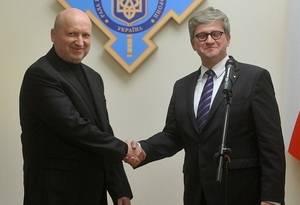 Poland. Despite the attempts of certain political forces in Poland, with Moscow’s support to undermine the strategic partnership between Poland and Ukraine, the Polish side holds the persistent position on supporting our State in the confrontation with the Russian Federation. According to the Director of the National Security Bureau of Poland P. Solokh, Warsaw will do everything possible for the “Ukrainian” issue “…not to be dropped to the roadside of international politics”. According to him, the issue of Ukraine’s security is important for Poland itself, and for the entire European Union.
IV. Other Important Trends and Developments Concerning Ukraine’s National Interests
All Russia’s actions to put political and economic pressure on Ukraine are, of course, doomed to failure.
In particular, this applies to Moscow’s intentions to build new gas transportation routes bypassing Ukraine, which already cannot help the Russian Federation. By the results of the 3rd quarter of 2016, the export revenues of the Russian gas monopoly — “Gazprom” declined by one third compared with last year — to be exact, — to its lowest level of 2004. “Gazprom” has already gone beyond profitability. According to the Russian consulting agency Rus Energy, “Gazprom” is already selling its gas to Europe at prices below its production and transportation costs.
 The Russian Federation’s closest ally — Belarus — also refuses to buy Russian energy carriers. Thus, due to the unresolved disagreements between Russia and Belarus on energy issues, Minsk has started negotiations with Tehran on buying Iranian oil. Favorable conditions for this are created by the lifting of international sanctions against Iran, and by the existing experience of alternative oil supplies to Belarus through Ukraine and Lithuania.
Besides, Russia’s significant problem the growing activity of extremists in the North Caucasus. For example, at the beginning of last week, there were several armed clashes between militants and the RF security forces units, including in Gudermes and Shali districts of Chechnya, as well as in Prokhladnenskiy district of Kabardino-Balkaria. According to the Russian Federation’s law enforcement agencies, eight militants and three Russian military servicemen were killed. Four Russian soldiers were injured. According to some experts, the above-mentioned is the Islamists’ reaction to Russia’s actions in Syria.
Against this background, on the 13th of October 2016, the Russian government has adopted the Russian Federation’s draft federal budget for the next three years. It does not provide for any growth of the Russian economy.
V. Main Trends in the Development of the Situation around Ukraine in the Future
5.1. Key Events and Trends that Will Be Most Important for Ukraine
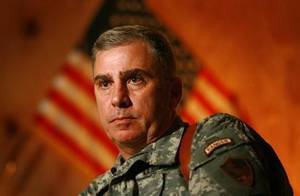 In terms of external support of Ukraine at the strategic level, most important will be results of the negotiations with the United States about giving our state a status of the United States’s ally outside NATO. Before the end of October 2016, Ukraine is expected to be visited by the Advisor to the Ministry of Defence of Ukraine — US General J. Abizaid, who will coordinate the negotiating process on this issue.
If Ukraine does get this status, it will be life-changing for our State not only in the war in the Donbas, but also in the geopolitical perspective. For example, it will allow Ukraine to participate in joint with the USA defense initiatives, and also to receive American weapons (first of all, the most necessary for the Ukrainian Armed Forces anti-tank and anti-aircraft means). Washington’s decision to grant Ukraine this status will be a logical continuation of the adoption by the House of Representatives on September 21, 2016 of the bill H.R. 5094 “On Support for the Ukrainian Stability and Democracy”.
By this, Washington will give a clear signal to Russia that Ukraine is no longer in its sphere of influence, and has a “security umbrella” under the patronage of the United States of America.
According to independent experts, in this regard a special role should be plaid by firmness of Ukraine’s position on the implementation of the plans for its exit from virtually unnecessary for our State CIS structures. Such a step would be the final stage of Ukraine’s final transition from “Eurasia” to Europe.
5.2. Prospects for the Development of Events in the Conflict Zones in Ukraine
In general, the above-mentioned circumstances leave no room for rapid achievement of peace in the Donbas. Moreover, Russia will continue the purposeful use of the conflict in the East of Ukraine to put pressure on our State and its Western allies.
Due to this, the next meeting in the “Normandy ” format, including, at the highest level, will have no positive consequences. Even if all the parties agree to the negotiations, Moscow will use them exclusively in its own interests — namely, to promote its own version of the “settlement” of the conflict in the Donbas, and to demonstrate the “firmness” of Russia’s international positions.
The latter is of particular importance for the Kremlin after French President F. Hollande’s refusal to meet with V. Putin because of the Russian Federation’s actions in Syria.
5.3. Other Important Events that Will Have an Impact on Ukraine’s Interests and Security
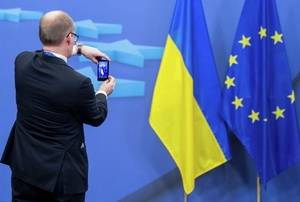 In the nearest future a positive factor for our country in terms of its European Integration will be the mini-summit Ukraine-EU on the 19th October 2016, in Brussels. The event will be attended by President of Ukraine P. Poroshenko, President of the European Council D. Tusk, European Commission President J. Juncker and profile members of the European Commission.
It is planned to discuss the situation in the Donbas and in the Crimea, the state of implementation of the Minsk Agreements, as well as prospects for the continuation of European Union’s sanctions against Russia in connection with its military aggression against Ukraine. Besides, the participants will discuss the course of reforms in our country, further steps towards the ratification of the Association Agreement between Ukraine and the EU, as well as simplification of visa regime for Ukrainian citizens.

