Iran: Playing on the Brink

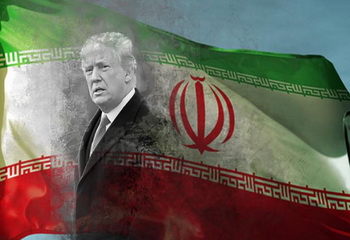
Just a few days ago, we mentioned the new stage in the escalation of the military-political situation in the Persian Gulf region. Less than a week — another event: the IRGC Air Force shot down an American drone. US President D. Trump made a decision about air strike, but later he called off the strike. The question arises: “How long will the period of threats last, where is the limit of such an escalation, why and in whose way does Iran stand?” Today, despite tense muscles and promises to punish, all the parties to the conflict, without exception, have come close to the “red line”, but do not dare to cross it. It is easy to start a war, but how much and what…

More >>

To Bomb Or Not to Bomb?

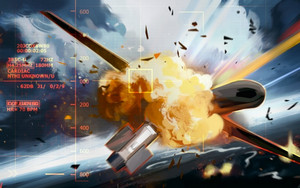
Iran shot down an American UAV in the Persian Gulf   According to the Iran Daily of June 21, 2019, on 19th June the Air Force of the Islamic Revolutionary Guard Corps of the Islamic Republic of Iran shot down a US UAV in the Kouh-e Mobarak district, near the city of Jask, the southern province of Hormozgan. After an inspection of the wreckage, the Iranian side identified the drone as the MQ-4C Triton of the US Navy, which is a modification of the RQ-4 Global Hawk. Iran’s Supreme National…

More >>

Persian Gulf: a New Stage of Escalation?

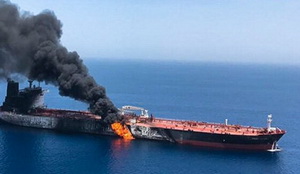
Vadim Volohov June 13, 2019, in the Gulf of Oman There Was an Attack on Two Tankers: “Kokuka Courageous” under the Panamanian flag (owned by Japan) and “Front Altair” under the flag of the Marshall Islands   In fact, this can already be perceived as a war at sea, and in response, one should expect nothing less than an action against the country that unleashed this war. On the same day, June 13, US Secretary of State Mike Pompeo at a press conference accused Iran of “provocative actions that greatly…

More >>

Iran — US: Consequences of the Oil Embargo. And Not Only

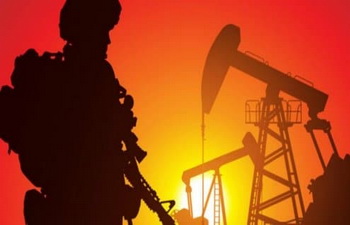
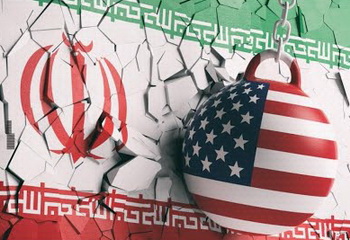
Vadym Volokhov The military-political situation in the Middle East remains tense. The events seem to be developing, so to speak, in two directions: Washington is strengthening the military group in the region; Tehran intensifies its activity on the international arena. Everything that is happening between Iran and the United States now has the form of a scenario of the White House’s “hybrid” war against Iran. As written in the Turkish newspaper Milliyet, Washington seems to be aiming at war, but does not want to fight. On the one hand, the US President imposes sanctions, strengthens the…

More >>

Middle East: a Footstep Away From the “Point of No Return”

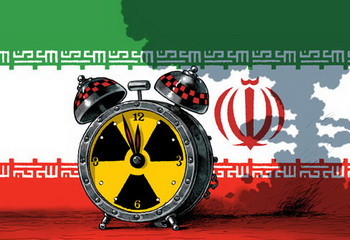
Iran has officially abandoned a series of the 2015 “nuclear deal” commitments   Vadym Volokhov May 8, 2019, a predicted and anticipated event took place: the Islamic Republic of Iran officially informed Ambassadors of the United Kingdom, China, Germany, France and Russia that Iran would stop complying with parts of the 2015 “nuclear deal”. Today, the further development of the situation in the region will depend on Europe’s reaction. But we should not lay great hopes on the EU. Europe has shown “concern”, but it will hardly actively interfere with the conflict between the United States and Iran. In general, Tehran’s actions can be called a…

More >>

Iran — US: A New Cycle of the Crisis in the Middle East

Today, the main question is important: when and how will the opposing parties cross the “red line”?   Vadym Volokhov Washington decided to deploy the USS Abraham Lincoln Carrier Strike Group, as stated on 5th May by the US National Security Advisor John Bolton. In his view, Tehran should receive this “clear and unmistakable message” if it did not fully understand the White House’s decision on “oil sanctions” against Iran. John Bolton, in particular, pointed out that the United States was not seeking war with the Iranian regime, but was fully prepared to respond to any attack, whether by proxy, the Islamic Revolutionary Guard Corps, or regular Iranian forces. It…

More >>

The Taliban: A Threat to the Central Asia Region

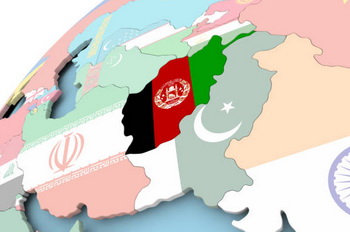
Vadym Volokhov The years-long war in Afghanistan has given rise to the phenomenon of the Taliban movement. Some Afghan political analysts and analysts in the West consider it a purely Afghan phenomenon. Maybe it is, but the events of the spring of 2019 show that the melting of snow and opening of mountain passes increases the danger for Afghanistan’s neighboring countries — Tajikistan, Uzbekistan, Kyrgyzstan and Turkmenistan. The aggravation of the situation on the borders of Afghanistan indicates that the phenomenon of the “Taliban” is no longer purely Afghan, and in addition to Tajikistan, they…

More >>

Afghanistan Is at the Cusp of Great Changes

The History of Revolutions, Treachery, Civil War and Terror   Vadym Volokhov The Islamic Republic of Afghanistan is located at a crossroads between the East and the West and since ancient times has been the center of trade and migration. The advantageous geopolitical location — between South and Central Asia, on the one hand, and the Middle East on the other, allows it to play an important role in economic, political and cultural relations of the countries of the region. Through the territory of Afghanistan there went ancient trade routes from the Mediterranean and Caspian seas and the countries of Central Asia to the Indian Ocean coast.…

More >>

New Threats to Central Asia

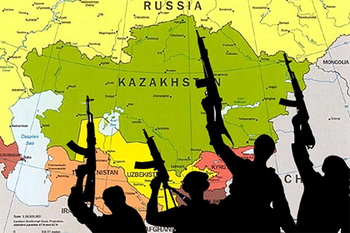
Vadym Volokhov In the spring of 2019, we should expect aggravation of the military-political situation on the Tajik-Afghan border, in Tajikistan and in the South-East of Uzbekistan. It is unlikely that the fighting of the ISIS and the Tajik opposition will become large-scale one, since both Tajikistan and Uzbekistan are members of the “Shanghai Cooperation Organization” and of the “Collective Security Treaty Organization”, and the charts of these organizations provide for “strengthening peace, international and regional security, collective defense of independence, territorial integrity and sovereignty of member states”. The potential of member countries is relatively higher than that…

More >>

Moscow Is Playing the Taliban

Vadym Volokhov November 9, 2018, Moscow hosted negotiations and consultations with the participation of the Taliban on “peaceful settlement in Afghanistan”. The talks were attended by representatives of Russia, India, Iran, Kazakhstan, Kyrgyzstan, China, Pakistan, Tajikistan, Turkmenistan and Uzbekistan. The United States was also invited, but its representative was not there. Here one should understand that Russia is not a direct participant in the negotiations, but acted as an intermediary and provided a place for the meeting. And here again the question arises: “Why did Russia go for legitimization of the Taliban movement, which in itself is…

More >>