
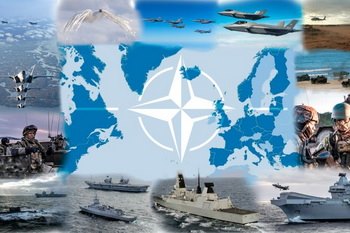
 Exercises of our Western allies distract the resources of the Russian Federation from its war against Ukraine
Ivan Sichen
Everyone knows how the United States, along with NATO, providing weapons and military equipment to Ukraine, helps us to strengthen our defense. However, their contribution into fighting Russia’s aggression is wider in nature. For example, since 2014, after Moscow’s first attack on Ukraine, the USA and NATO intensified military exercises near the borders of the Russian Federation. In scale and theme, they resemble those that took place during the past Cold War. During the exercises, the repulsing of Russia’s alleged attack on NATO and EU countries is being practiced. The whole set of tasks is performed — from transferring US troops to Europe to the organization of defense and counter-offensive operations. One of these exercises — Steadfast Defender 2024 — began on January 24, 2024, and will last until the end of May 2024. The active phase of the exercise started on February 1, 2024. Moscow has already called this exercise a threat to Russia’s security and is trying to take military actions in response.
US and NATO’s military exercises in Europe is directly related to Ukraine because they distract the resources of the Russian Federation from its war against Ukraine. So, let’s analyze the Steadfast Defender 2024 exercise in more detail.
As already mentioned, since 2014, the United States and NATO have actually returned to the practice of military exercises characteristic of the past Cold War. The main ones were Steadfast Defender and DEFENDER-Europe. They are mostly similar, although do have some specifics. The former is held by NATO, while the second — by the United States. These exercises are held either alternately once a year or jointly, depending on the circumstances.
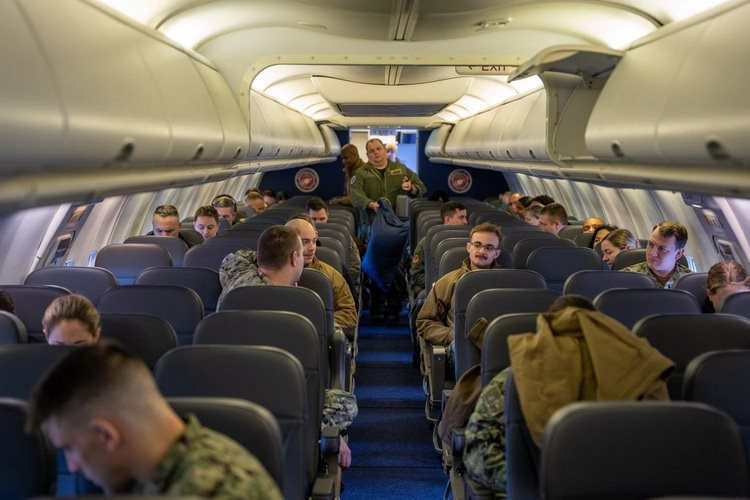
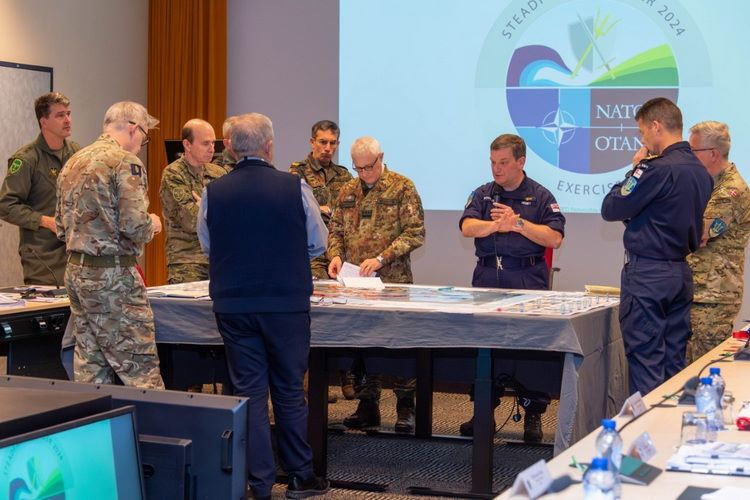 The exercise Steadfast Defender 2024 is currently underway. It involves more than 90,000 soldiers and officers from all 31 Allies and Sweden; more than 50 naval assets including aircraft carriers, frigates, corvettes and destroyers; more than 80 air platforms including fighter jets, helicopters and unmanned aerial vehicles; more than 1,100 combat vehicles including 166 tanks, 533 infantry fighting vehicles. Of course, this is less than the number of troops that Russia has used in the war against Ukraine, but the force is still powerful. Especially as this is only a small part of what is available to the USA and NATO. Besides, troops in Europe can be promptly strengthened by rapid deployment of US troops from the United States to continental Europe. Currently, this issue is being worked out in the first stage of the active phase of Steadfast Defender 2024, which has the status of a maritime-focused live exercise (LIVEX).
Second stage of the exercise (in February-May 2024) will be focused mainly on conducting defense and counter-offensive operations throughout the European Theater. Exercise activities will take place in the UK, Finland, Sweden, Norway, Lithuania, Latvia, Estonia, Germany, Poland, Slovakia, Hungary and Romania.
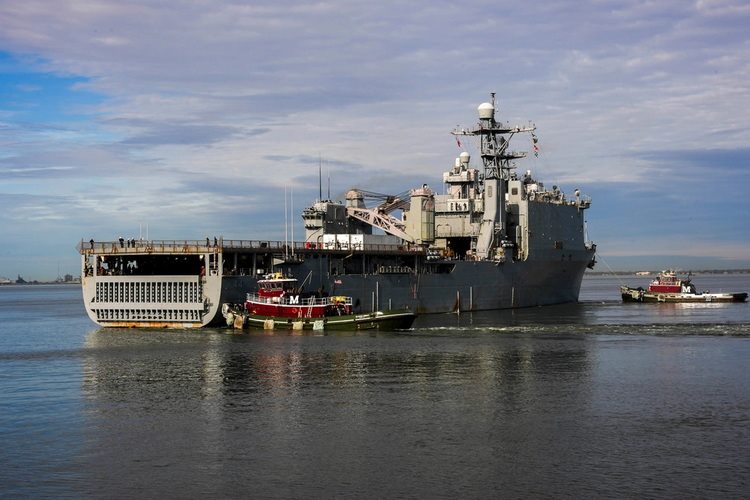
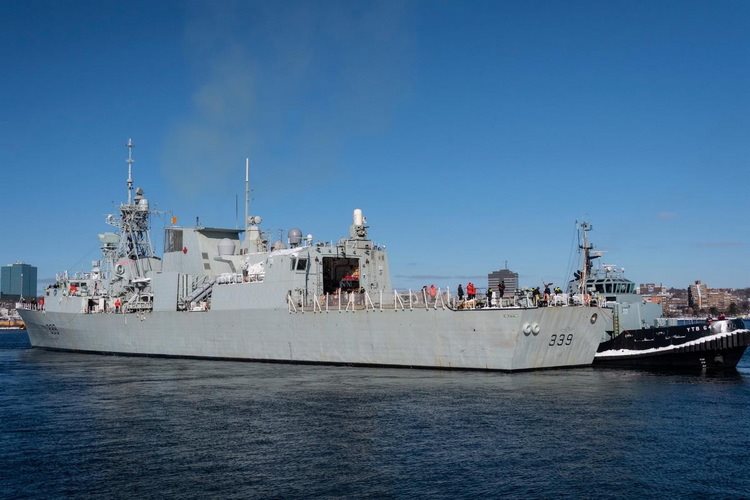
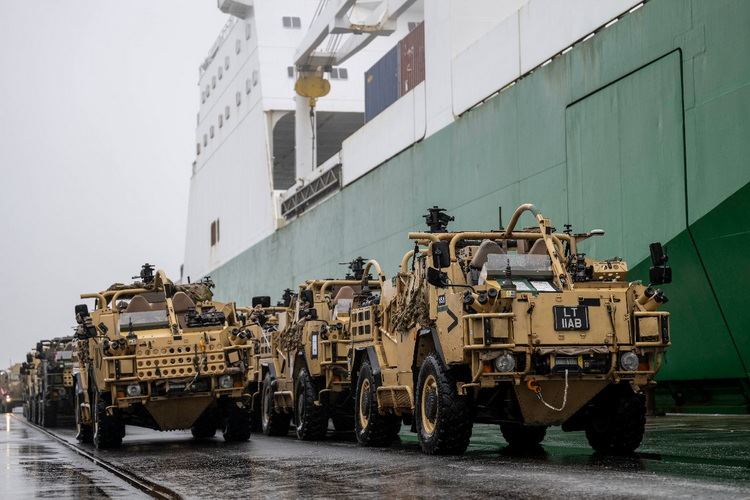
Currently, the US dock landing ship USS Gunston Hall and the Canadian frigate HMCS Charlottetown are used as part of the task of transporting troops from the USA and Canada to Europe. On board, they have sets of weapons and military equipment for a Marine Brigade. For comparison, a large landing ship of the Russian Navy can transport no more than a company of marines. That is why the Black Sea Fleet of the Russian Federation was unable to carry out amphibious landing operations to capture Ukrainian cities of Mykolaiv and Odesa, although it had more than a dozen of large landing ships, along with those that were transferred to the Black Sea from the Northern Fleet of the Russian Federation.
 |
 |
Russian large landing ships had to ensure the amphibious landing of the 810th Separate Marine Brigade of the Black Sea Fleet. However, the creation of a strong coastal defense by Ukraine made such intentions impossible. Two combat teams of the 810th Separate Marine Brigade found their deaths at the Ukrainian cities of Mykolaiv and Mariupol. The military camp of the Russian Marine Brigade in the temporarily occupied Sevastopol is destroyed. Today, three Russian large landing ships have already been completely destroyed, another one is seriously damaged.
The US Armed Forces act in an absolutely different way. The US troops are mainly deployed to Europe by military-transport and civil aviation. Even before the arrival of landing ships, they receive weapons in warehouses in Germany, the Netherlands, Belgium and Poland. Weapons and military equipment, unlike those at long-term military storages in Russia, are in proper condition. At least, no one tries to steal it how it happens in the Russian Federation…
 |
 |
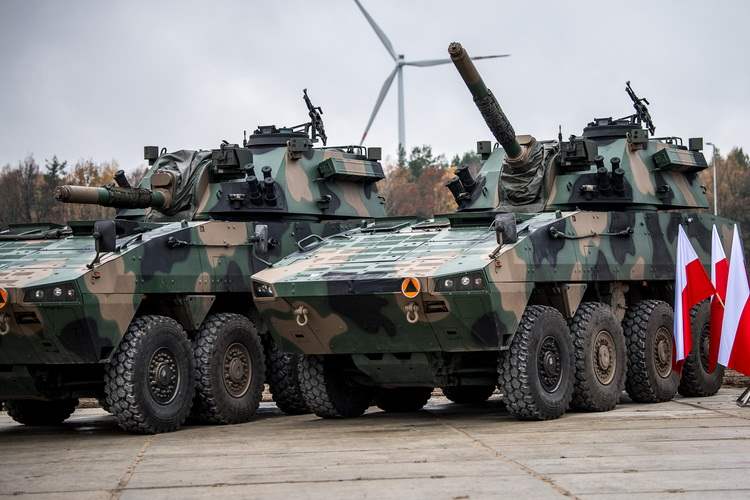
The next stage of the exercise will be to rehearse ways of fighting Russia’s attack on Poland and the Baltic States. The main focus is to prevent the breakthrough of the Armed Forces of the Russian Federation through the so-called Suwałki Gap from Gomel region of Belarus to Kaliningrad region of Russia along the border between Poland and Lithuania. It is protected by the 1st Legions Infantry Division of the Polish Army, formed in 2022–2023. The 1st Legions Infantry Division consists of four brigades, an artillery brigade and four more auxiliary regiments. The Division has 30,000 troops and is equipped with Abrams tanks, Krab howitzers, and Gladius unmanned aerial vehicles.
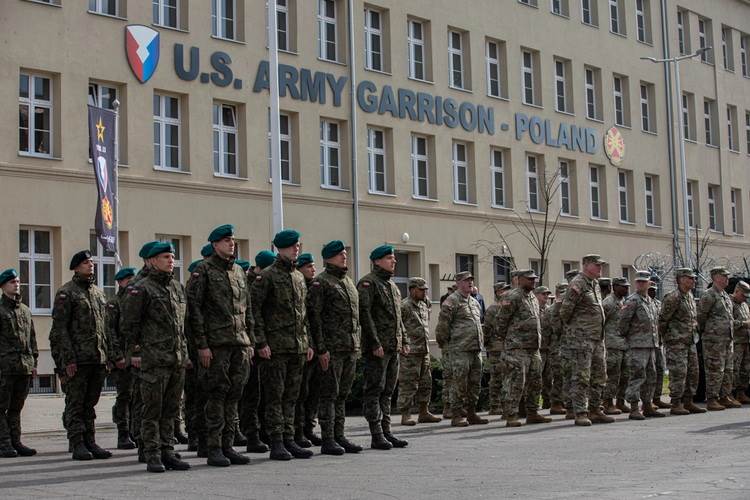
In the event of an escalation of the conflict, the NATO Very High Readiness Joint Tasks Force (VJTF) will also be deployed to the region, and then — the forces of the Multinational Corps Northeast. Its Headquarters — in Szczecin (Poland), and its divisions are located in Poland and Germany. Separate units of the Multinational Corps Northeast are located in the Baltic States. And then the V Corps of the United States Army, headquartered in Poznań, Poland, will join the battle against Russia. The Division’s Headquarters, Infantry (Armor) Brigade Combat Team, Helicopter Brigade, Sustainment Brigade and Special Task units are subordinated to the V Corps.
As part of the first stage of the active phase of Steadfast Defender 2024, the task of strengthening the V Corps is performed. At this, the plans for NATO member states and the EU to strengthen European defense against Russia’s attack are being tested and clarified. Besides, the exercise is intended to restrain the Russian Federation’s aggression.
 |
 |
Moscow is well aware of this, so it is loudly complaining about threats to its security, or more precisely, its neo-imperial plans. In response to the NATO exercise, Russia has intensified demonstration measures of operational and combat training in the northwestern and northern directions. Basically, its demonstration measures involve the Baltic and Northern Fleets’ ships, as well as their coastal troops and naval aviation.
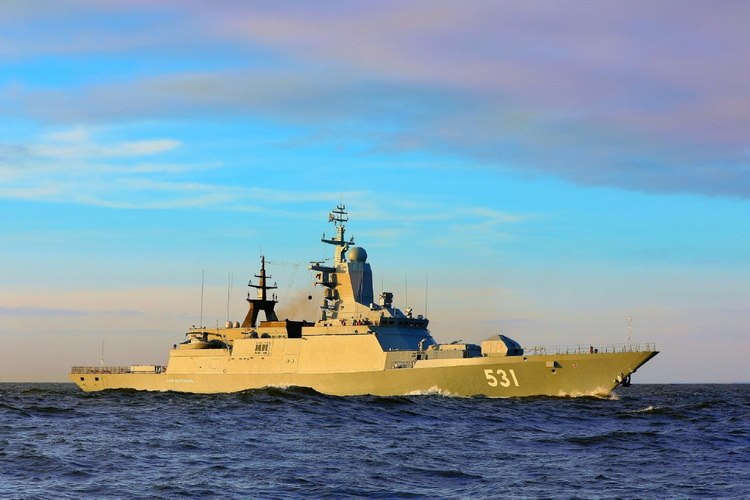 In the first decade of February 2024, the Baltic Fleet of the Russian Federation deployed its naval group which includes the corvettes “Stoikiy” and “Soobrazitelny”, small missile ships “Sovetsk” and “Grad”, a small anti-submarine ship “Kabardino-Balkaria”, as well as a minesweeper “Aleksandr Obukhov”. The naval group’s training tasks include: conducting sea battles, strikes on coastal targets, tracking and destroying submarines, air defense and anti-sabotage defense, mine clearing operations on own communications and planting minefields on the enemy’s sea routes.
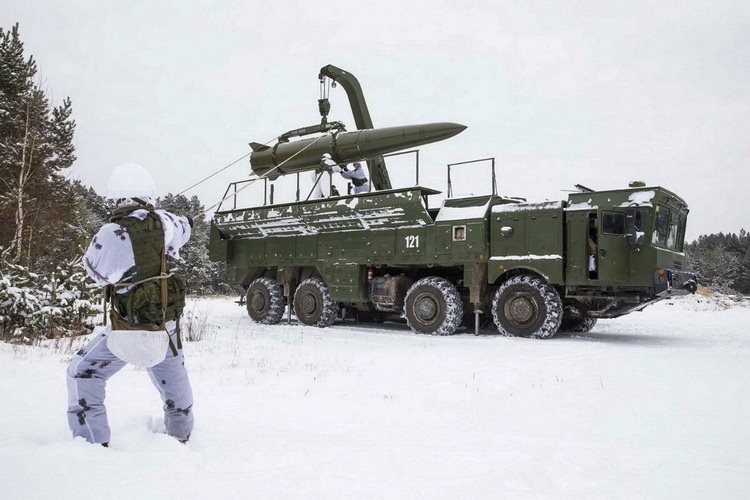 At the same time, Russia has intensified trainings of the 11th Army Corps and other units of the Coastal Troops of Baltic Fleet. Since the beginning of February 2024, most of them have been deployed in operational areas. Thus, units of the 18th Motorized Rifle Division and the 336th Separate Marine Brigade from the 11th Army Corps are on defensive positions in Kaliningrad region of Russia. They are engaged in practicing of defense operations. These forces are supported by units of the 25th Separate Coastal Missile Brigade (village of Donskoe, Kaliningrad region) and the 152nd Missile Brigade (Chernyakhovsk, Kaliningrad region). The former has the anti-ship missile systems “Bal” and “Bastion”, the latter — the operative-tactical missile complexes “Iskander-M”. During the exercises of the Baltic Fleet, they carry out field training exercises and conditional electronic launches against sea and ground targets. Besides, the forces of the 244th Artillery Brigade (Kaliningrad) are involved in the trainings.
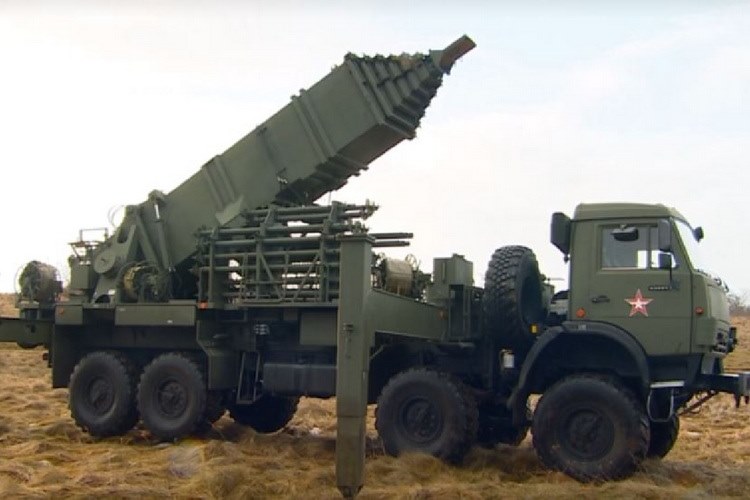 Special attention is paid to providing stable communication with the enemy’s use of electronic warfare or the chemical weapons, as well as suppressing enemy command systems by own electronic warfare systems. Such tasks are assigned to the 40th Separate Command Battalion (Gusev, Kaliningrad region), 841st Electronic Warfare Centre (village of Yantarny, Kaliningrad region) and the 302nd Electronic Warfare Regiment (Gvardeisk, Kaliningrad region). Quite an interesting topic was the training task to disrupt the communication between an AWACS aircraft and the enemy’s naval group.
Leningrad region of the Russian Federation is covered by the 6th Combined Arms Army. They perform the same tasks as the Baltic Fleet Coastal Troops in Kaliningrad region. Prior to Russia’s full-scale attack on Ukraine, the 6th Combined Arms Army was one of the smallest in the Russian Armed Forces, since Leningrad region bordered with neutral Finland, as well as Estonia (and through it, with other Baltic States), which did not have powerful NATO troops deployed. Now the situation is absolutely different. Therefore, the processes of strengthening the 6th Combined Arms Army are ongoing today. The issue of creating another army on the border with Finland is also considered. Also, the Leningrad and Moscow Military Districts have been restored, instead of the liquidated Western Military District of the Russian Armed Forces.
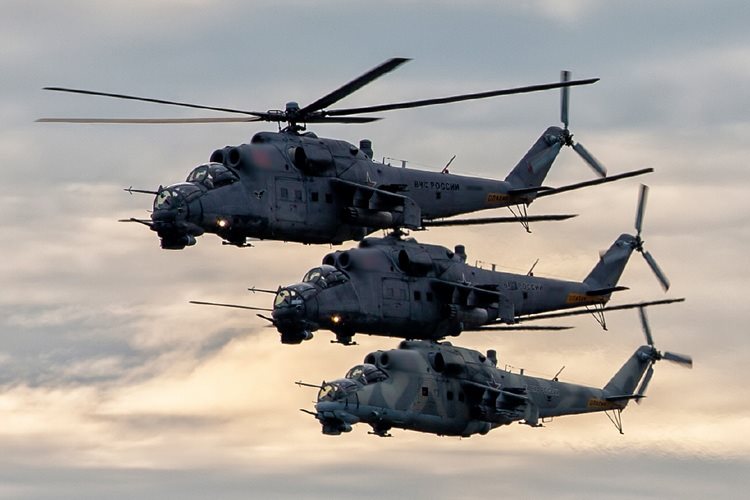 The Baltic Fleet naval group and its coastal troops are covered by the 34th Mixed Aviation Division and the 44th Air Defense Division. The 34th Mixed Aviation Division includes two Fighter and one Helicopter Regiments with Su-30SM and Su-27 fighter jets, Su-24M and Su-24MR bombers (according to the current organizational structure they are part of the Fighter Regiment) as well as helicopters Mi-24, Ka-27LP and Ka-27PS. Units of the 6th Combined Arms Army are covered by the 6th Air Force and Air Defense Army. In the direction of Leningrad region, the 159th Fighter Regiment (Petrozavodsk, the Republic of Karelia) and the 33rd Mixed Aviation Regiment operate in Leningrad region. They are equipped with Su-27 and Su-35 fighter jets, as well as Mi-8 helicopters of different modifications.
During the trainings of aviation units, the tasks of missile and bombing strikes on positions, concentration of military equipment, columns, command posts, communications units and warehouses of the conditional enemy are performed. Air battles with elements of complex maneuvering are mastered. Training and combat attacks on surface ships and sea drones are conducted, submarines are being tracked and conditionally destroyed. The air defense forces are training to repel attacks of aircrafts, missiles and unmanned aerial vehicles.
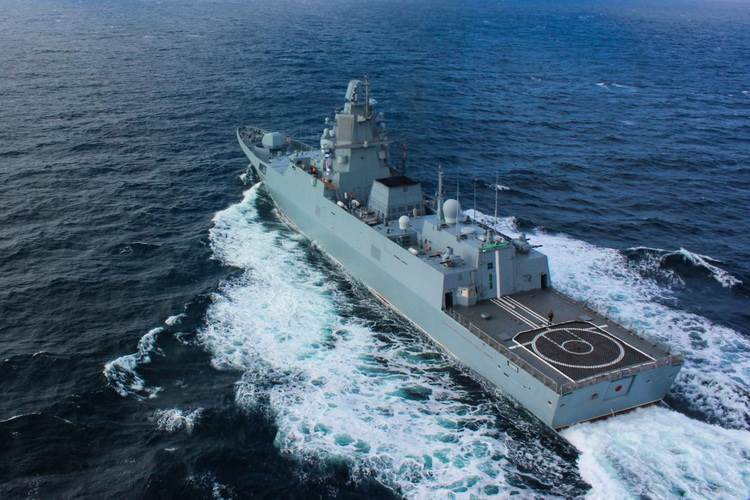
Similarly, Russia responds to the US and NATO exercises in the Arctic region, albeit with certain local specifics. Thus, in the Barents Sea, a naval group of the Northern Fleet of the Russian Federation, consisting of the “Admiral of the Fleet Kasatonov” (flagship), a large landing ship “Aleksandr Otrakovsky”, a small missile ship “Rassvet”, a small anti-submarine ship “Brest” and a small minesweeper “Kolomna”, is deployed.
 |
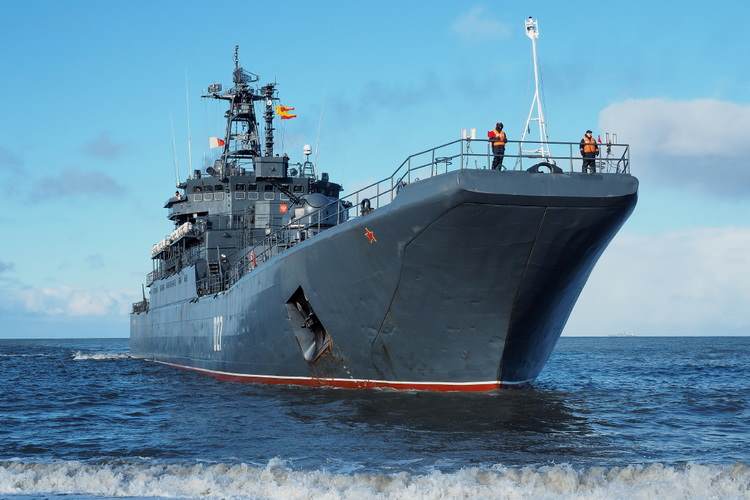 |
Their tasks are similar to those performed by the naval group of the Baltic Fleet, but they also master the amphibious landing of Marines on the undeveloped coast. Another naval group is formed, which must conduct a maritime campaign in the Kara Sea in order to protect the Northern Sea Route, which Moscow considers exclusively its own. The Northern Fleet’s submarines with nuclear missiles on board probably operate in northern seas, but this has not been confirmed.
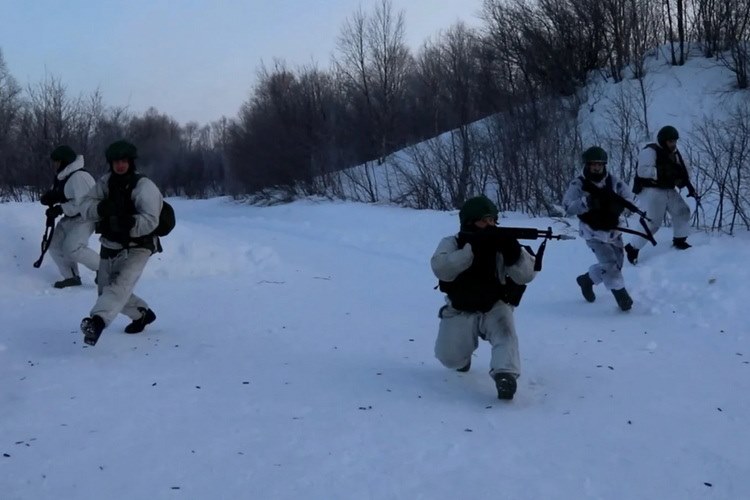 Against this background, in Murmansk and Arkhangelsk regions of the Russian Federation, there are trainings of the 14th Army Corps of the Coastal Troops of the Northern Fleet. By its combat and numerical composition, it is actually equal to an army and includes the 61st Marine Brigade, the 80th and the 200th Separate Motorized Rifle Brigades, the 536th Coastal Missile Brigade and a number of other units that support the Fleet’s activity and its anti-sabotage defense. In the current conditions, they mainly protect the northern borders of Russia.
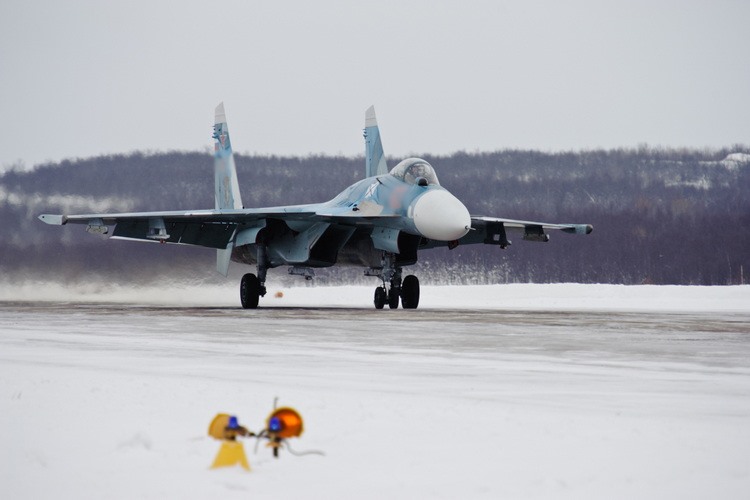 The ships and forces of the Northern Fleet’s Coastal Troops are covered by the Fleet’s Mixed Aviation Corps and the 45th Air Force and Air Defense Army (HQ — the village of Safonovo near Severomorsk), which is in its operational subordination. They operate with multirole carrier-based fighter jets MiG-29KR, MiG-29KUB, Su-27UB and Su-33K, carrier-based bombers Su-25UTG, anti-submarine and patrol aircrafts Il-38 and Tu-142 of different modifications, reconnaissance aircrafts Il-18, Il-20RT, Il-22M, interceptors MiG-31BM, bombers Su-24MR, helicopters Mi-8, Mi-24, Ka-27, Ka-29 and Ka-31, as well as air defense systems, including S-400.
In addition to the standard tasks typical for the aviation of the Baltic Fleet and the 6th Air Force and Air Defense Army, some other tasks are being worked out. For example, fighter jets provide assistance to the naval and coastal forces of the Northern Fleet in the protection of the Northern Sea Route, namely — counteract the approach of enemy aircrafts. At this, anti-submarine aircrafts are flying over the Arctic, having the task of detecting US submarines operating in the waters of the Arctic Ocean.
|
…Russia’s measures to counteract the USA and NATO military exercises are much smaller in scale than Putin’s war against Ukraine. However, the exercises of Western allies really distract the Russian forces from our country… |
Of course, Russia’s measures to counteract the USA and NATO military exercises are much smaller in scale than Putin’s war against Ukraine. However, the exercises of Western allies really distract the Russian forces from our country.
As you know, the units of the Baltic and Northern Fleet Coastal troops have been fighting in the Ukrainian territory since 2022 and have already lost several combat teams destroyed by Ukrainian troops. But the Russian aviation, designed to counteract the US and NATO in the northwestern and northern directions, mostly stays there and is not used against Ukraine. Professional and trained military may still remain in the naval and aviation units of the Baltic and Northern Fleets. But the Coastal troops are mostly just persons drafted into conscript military service, with the remnants of weapons and military equipment, which was not used in the war against Ukraine.
|
…In addition to military exercises, our Western partners can safely increase the volume of military and technical assistance to Ukraine… |
Therefore, the USA and NATO should not be afraid of them, because even missile launches are performed there solely in a conditionally electronic way. Therefore, in addition to military exercises, our Western partners can safely increase the volume of military and technical assistance to Ukraine.
Although it is necessary to further deploy US and NATO troops in the European Theater and to improve their support. These issues are now addressed by NATO’s Joint Support and Enabling Command (JSEC) in Ulm, Germany. This process will inevitably take into consideration the experience gained during the Steadfast Defender 2024 exercise.


