
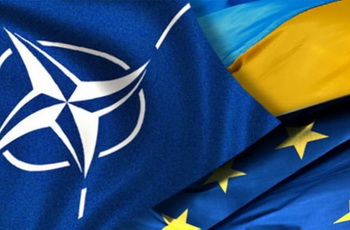
 Results of Summits of Our Western Partners
Ivan Sichen
In June-July 2023, the decisive political events to influence the course of the Russian-Ukrainian war were summits at the highest level of the European Union and NATO. Analysis of the results of these summits allows us to clarify and draw new conclusions about the consequences of the war, as well as the positions and plans of actions of Western countries and international organizations in response to Russia’s full-scale aggression against Ukraine. In turn, this allows us to predict further events, and how the war may eventually end. But then, all this is already clear. The United States, NATO and the EU will continue helping Ukraine and putting pressure on Russia until a joint victory over it. As for Ukraine, it will definitely become a member of the North Atlantic Alliance and the European Union. At the moment, it is not we, Ukrainians, but they, Europeans, who are most interested in this.
|
…Ukraine will definitely become a member of NATO and the EU. At the moment, it is not we, Ukrainians, but they, Europeans, who are most interested in this… |
So, what can we say about the summits of the European Union and the North Atlantic Alliance. Their main results are as follows: EU and NATO leaders demonstrated their intention to continue supporting Ukraine and strengthening sanctions against Russia; they confirmed prospects of European and Euro-Atlantic integration of our state; approved plans and program of assistance to Ukraine in the political, economic and military spheres, as well as in establishing peace in the country; defined measures to strengthen European and Euro-Atlantic security with the participation of Ukraine; strengthening of the European economy in modern conditions; opposing China’s expansion while developing mutually beneficial aspects of cooperation between the parties; recognized the need to deepen Europe’s relations with partner countries. Analysis of the decisions of the EU and NATO summits on such issues, as well as the process of their discussion, allows us to draw the following conclusions.
|
…The West sees Russia as its main military adversary and the most significant and direct threat to its own, regional and global security… |
First. Russia’s war against Ukraine remains the focus of attention of the world community and has a decisive impact on international relations. The EU and NATO summits confirmed the division of the world into coalitions, the basis of which are the collective West (USA and Europe), Russia and China.
The West sees Russia as its main military adversary and the most significant and direct threat to its own, regional and global security. In contrast, the United States and Europe perceive China as a world power, competitor and systemic rival. On the one hand, it is an important trade and economic partner, but on the other — a competitor in the international arena with significant military potential.
So far, the West has refrained from directly acknowledging the emergence of a new Cold War in the world. However, it actually takes place within the framework of the sharp confrontation between the USA/Europe and Russia, as well as their growing disagreements with the PRC.
|
…In the center of the intersection of interests of the West and Russia at present is Ukraine… |
Second. In the center of the intersection of interests of the West and Russia at present is Ukraine. On its territory there is actually a military clash between them, as it was during the last Cold War in Korea, Vietnam, the Middle East and Afghanistan.
Russia seeks with the use of military force to destroy Ukraine and restore its control over it, which aims to provide the necessary conditions for its revival as a “great world power”, to strengthen Russia’s positions in Eastern Europe and to create a springboard for expansion in the European direction. In turn, the United States and Europe provide military and other assistance to Ukraine, which, in fact, is the West’s “bastion fortress” in deterring Russia.
These circumstances demonstrate the steadfastness of the USA and Europe’s positions on the issues of comprehensive support for Ukraine “for as long as it takes”, which was once again confirmed by the EU and NATO leaders. Moreover, Western countries and international organizations are consistently increasing the scale of such support and expanding its forms.
As you know, during the meetings, the leaders of the European Union and the North Atlantic Alliance condemned Russia’s war against Ukraine (including atrocities and forced deportation of Ukrainian citizens), as well as its actions to impede the export of Ukrainian grain (the use of food as a weapon), which threatens the food security of the countries of Africa and Asia. Western leaders strongly condemned the deliberate destruction of the Kakhovka dam, which threatens the safety of the Zaporizhzhia nuclear power plant.
Proceeding from the above-mentioned, the leaders of the EU and NATO countries supported the introduction of the 11th sanctions package against Russia and called for bringing its leadership and other persons to accountability for the crimes committed.
The participants of the European Union summit decided to: allocate additional amounts of financial assistance to Ukraine and take forward work on Russia’s frozen assets; production and joint procurement for the needs of our state of one million rounds of artillery ammunition and missiles; ensuring international support for Ukraine’s Peace Formula, including through an upcoming Global Peace Summit.
For their part, NATO leaders reached agreements on: assistance in achieving Ukraine’s full interoperability with NATO; transformation of the NATO-Ukraine Commission into the NATO-Ukraine Council, which should bring relations between the parties to a qualitatively new level; providing long-term assistance to our country in the amount of 500 million Euros per year. Unlike the Commission, the NATO-Ukraine Council will be able to make concrete decisions, and no one, the pro-Russian leadership of Hungary included, will be able to hamper this process.
|
…The leaders of the EU and NATO countries refrains from setting specific dates of Ukraine’s getting membership… |
Third. The European Union and the North Atlantic Alliance unequivocally recognize Ukraine part of the Western world and support the processes of its European and Euro-Atlantic integration. At the same time, the leaders of the EU and NATO countries refrains from setting specific dates of Ukraine’s getting membership. Despite this, it can already be equated in a number of aspects to EU and NATO members. First of all, this concerns the depth and forms of their cooperation with our state, as well as the scale of assistance provided to Ukraine.
The final declaration of the EU summit agrees on Ukraine’s readiness to fulfill the necessary conditions for its accession to the European Union, as well as supports Kyiv’s consistent steps in this direction. It is also about Brussels’ intentions to continue close cooperation with Ukraine and to support its full meting conditions of EU membership.
Members of the North Atlantic Alliance confirmed that Ukraine will join NATO and abolished the requirements for it to undergo the procedures of the Membership Action Plan. At present, there is no doubt that Ukraine will be in NATO. Of course, we will not be able to enter the Alliance until the end of the war and our victory over Russia. However, this will definitely be done.
|
…Military assistance to Ukraine largely allowed our state to restrain Russia, partially seize the initiative at the front and liberate a number of Ukrainian territories… |
Fourth. Military assistance to Ukraine from Western countries and international organizations is highly effective.
It largely allowed our state to restrain Russia, partially seize the initiative at the front and liberate a number of Ukrainian territories. At this, at least half of the Russian military potential has been destroyed. And in terms of the number of tanks and artillery systems, Ukraine is beginning to match Russia. Our sky is also largely closed and the Russians’ superiority in the military aviation has been leveled.
New arms supplies to Ukraine will strengthen our counteroffensive. Ukraine’s partners intend to provide the next packages of military assistance. In particular, the United States agreed to transfer cluster munitions; Germany — 40 Marder infantry fighting vehicles, 25 Leopard 1 tanks, LUNA UAVs and two Patroit air defense systems; France — SCALP long-range missiles; Norway — two NASAMS systems and a thousand of Black Hornet minidrones. Agreements were also reached on the training of Ukrainian pilots on F-16 aircrafts.
All these are the main guarantees of Ukraine’s security. They are fundamentally different from those provided under the Budapest Memorandum in connection with Ukraine’s accession to the Treaty on the Non-Proliferation of Nuclear Weapons and the transfer of Ukrainian nuclear warheads to Russia.
|
…In addition to providing assistance to Ukraine, NATO and the EU are taking measures to strengthen their own defense capabilities… |
Fifth. In addition to providing assistance to Ukraine, NATO and the EU are taking measures to strengthen their own defense capabilities.
An important outcome of the summit of the North Atlantic Alliance was the adoption of three new regional plans to counter the main threats to NATO — Russia and terrorism. The first of these plans concerns the Atlantic and the European Arctic, the second — the Baltic States and Poland (the center of the Baltic region and Central and Eastern Europe), the third — the Black Sea and Mediterranean regions. To implement them, 300 thousand troops will be at high readiness, including substantial air and naval combat power. 40 thousand NATO troops will perform tasks to counter the threat of Russia’s attack on the Baltic States and Poland.
The participants of the NATO summit approved an action plan for the straightening of defense industry, which provides for increasing the production of weapons and military equipment, deepening cooperation in this sphere between NATO and EU countries. Allies have committed to invest at least 2 % of Gross Domestic Product annually on defense.
Strengthening European security was also agreed at the summit of the European Union. It was found necessary to increase responsibility for own security, which includes urgent steps to develop the military components of the EU, deepening the European Union’s interaction with NATO, as well as strengthening the technological and industrial base of the European defense sector. To this end, the following steps are envisaged: improving the system of joint procurement of ammunition; European defense industry reinforcement; development and implementation of the European Defence Investment Programme; increasing the amount of financial resources of the European Peace Facility; further military support to Ukraine; enhancing the European Union’s capacity to prevent and respond to crises and conflicts; strengthening security in cyberspace, maritime and space domains; expansion of the civilian component of the Common Security and Defence Policy.
|
…The leadership of the EU attaches special importance to increasing long-term competitiveness of the European economy… |
Sixth. As part of strengthening the capabilities to counter new challenges and threats to Europe’s security, the leadership of the European Union attaches special importance to enhancing long-term economic strength and resilience in the EU, developing and preserving the integrity of the European market, as well as reducing strategic dependencies on unfriendly countries.
To achieve this, the following steps are envisaged: continuation of work on the development of strategic technologies and improvement of their production chains; improving the efficiency of production processes; adoption of the critical raw materials acts; transformation of the EU into a major centre for the development of artificial intelligence; stimulating investment in the European economy; reduction of inflation; resolving demographic challenges.
|
…Western countries and international organizations are choosing a more balanced policy towards China… |
Seventh. Western countries and international organizations are choosing a more balanced policy towards China, which is an important partner for them and, at the same time, a competitor and systemic rival.
According to this approach, the United States and Europe will continue to make efforts to develop constructive and stable relations with the PRC, based on respect for the rules-based international order for international law and reciprocity. The West will continue to cooperate with China in resolving global problems, in particular, in the spheres of fighting climate change, preventing new pandemics, ensuring food security, reducing the risks of natural disasters. Trade and economic cooperation between the parties will continue.
Western countries will also reduce their dependence on the Chinese market and goods. Military capabilities for containing the PRC will be increased. At the same time, the United States and Europe will try to put pressure on Beijing to use its influence to force Russia to stop the war against Ukraine, and will continue to criticize its actions for provoking tensions around Taiwan and oppression of human rights in the PRC.
Eighth. Important for the United States and Europe are also the countries of the Mediterranean region, North Africa, the Caribbean and Latin America. First of all, this concerns the deepening of trade and economic relations with them, as well as joint addressing the international problems.
The European Union is interested in a peaceful settlement of conflicts near its southern borders — in Cyprus and Kosovo. At the same time, the EU supports the process of European integration of the countries of the Western Balkans and strengthens its partnership with Tunisia.
|
…The results of the EU and NATO summits are not what Ukraine wanted. However, they cannot be considered failures… |
The above-mentioned conclusions make it possible to predict the consequences of the Russia’s war against Ukraine. As in the case of all other wars, its consequences will depend on several main factors, namely: morale and training of personnel of the armed forces of the parties; the level of the population’s support for the country’s leadership and the army; available resources and the allies’ assistance.
Since the beginning of the war, Russia has had superiority over Ukraine only in terms of its military and economic resources. As a result of the assistance provided to our country by our Western and other partners, Moscow has now lost that advantage. Therefore, Ukraine will certainly win. Of course, not as quickly as we and the entire civilized world would like, but certainly and confidently, with catastrophic consequences for the Russian Federation.
Sadly, the results of the EU and NATO summits are not what Ukraine wanted. However, they cannot be considered failures, as our external and internal enemies wanted. One way or another, but everything is moving in the right direction, which is confirmed by another wave of hysteria in the Russian political and information space.


