
 Ivan Sichen
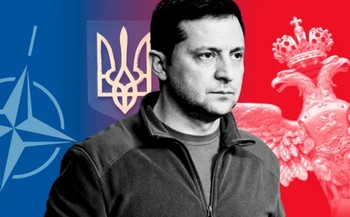
The failure of Putin’s blitzkrieg against Ukraine has created large-scale negative consequences for Russia, which are becoming increasingly acute in all spheres. In turn, this pushes Moscow to negotiate with Kyiv on the possibility of ending the war. Of course, all Ukrainians are also interested in this, but by no means on the Kremlin’s terms, which provide for the capitulation of Ukraine and its de facto destruction as an independent state. However, Moscow’s inability to achieve its goals forces it to make some compromises. First of all, it concerns the discussion of the possibility of ending the war by Russia in exchange for Ukraine’s refusal to join NATO and return to non-aligned and neutral status. Besides, Moscow puts forward a number of other demands to Kyiv, but this issue is still a priority for it. Ukraine agrees to non-alignment and neutrality, but only if it is given real security guarantees by Russia and the world’s leading nations. In view of the above, the experience of other European countries, which already have non-aligned or neutral statuses and are guided by the relevant principles in their foreign policy, needs attention.
Today, Switzerland, Austria, Sweden, Finland, Ireland, as well as two small countries, Malta and Liechtenstein, officially or de facto have non-aligned and neutral statuses in Europe. The decisions of these countries to choose such a course have various reasons, and their foreign policy is characterized by a number of inherent features, including relations with Russia, NATO and the EU.
Despite the non-alignment and neutrality of these European countries, their positions on this issue depend on the specifics of the current situation. For example, their leaderships and populations’ views were greatly influenced by Russia’s armed aggression against Ukraine in 2014 and, especially, by the full-scale invasion of our state by Russian troops in 2022. For example, Sweden and Finland are already considering joining NATO and have significantly stepped up cooperation with the Alliance. At the same time, most neutral countries have joined the sanctions against Russia. In this regard, the most telling is the position of Switzerland, which for the first time in history broke with its tradition of neutrality and seized the accounts of Russian citizens in Swiss banks worth more than 200 billion US dollars.
As for the non-alignment and neutrality of Ukraine, none of the considered models will guarantee the security of our state. Especially in the immediate vicinity of Russia, which has always pursued an aggressive foreign policy and never fulfilled its obligations. From our western partners, there are not high hopes for ensuring Ukraine’s security. This is shown by the situation with the Budapest Memorandum (on security guarantees in connection with Ukraine’s accession to the Treaty on the Non-Proliferation of Nuclear Weapons), signed in 1994 by the leaders of Ukraine, Russia, the UK and the United States.
Therefore, the only reliable guarantees of Ukraine’s security can be: the defeat of Russia, which will kill its desire to attack Ukraine for a long time; strengthening the Ukrainian Armed Forces; deploying an international military mission on the territory of our country, as well as further deepening of Ukraine’s military cooperation with NATO, which is done by most of the non-aligned and neutral countries of Europe.
The full article is available in Ukrainian


