
 The Latest Issues of “BINTEL” Journal Have Been Published
 In latest issues of the “BINTEL” journal (the first issues of the current year), the reader has the opportunity to read the materials of both well-known and new authors. However, the topic of each is closely related to current events, that is, to the Russian-Ukrainian war, as well as some reasons of it, which include energy dependence on Russian fossil fuels. This refers to the article “Ukrainian Energy Strategy” authored by several respected (including foreign) scientists, which deals with the energy development, in particular, more economical ways of using nature’s gifts. For example, the authors explain the effectiveness of the so-called fuel cells, which can radically affect the further existence of human society, including “putting in place” those who seek to be a monopolist in the distribution of oil and natural gas, trying not only to make a fortune from this, but to impose their will on users as well. After all, the instructiveness of the article also lies in the fact that it is not just about the principle of using such an invention. Because, among other things, one can also learn that this principle has been deliberately avoided for quite a long time and with a specific purpose. Thus, one of the authors of the material recalls how “back in the 70s of the last century in Moscow, he first heard about the plans of the communist authorities to supply gas and oil abroad through a network of pipelines from Siberia to Western Europe. Lecturers from the Communist Party’s Central Committee… proved why all this was being done, that “if necessary, we will close the gas tap”. Could the author have thought then that first of all it would affect him, that the blocking of gas pipelines by the Muscovites would be used to punish his own Motherland, and that in time Moscow would start a long and bloody war against Ukraine… The Ukrainians still have no idea that they have their own sources of hydrocarbons, independent of Moscow. That there are other, much more efficient and environmentally friendly, ways of producing electricity and heat in the world, which are still practically forbidden not only to use, but also to study and develop, as it used to be with genetics and cybernetics years back, when Soviet propaganda without pretending nurture joyfully called them “the whores of imperialism”.
 Under the rubric “SCHOOL OF GEOPOLITICS” we offer the reader an article by our well-known author, Doctor of Geographical Sciences, Myroslav Dnistryanskyi, “Russian Aggression Against Ukraine As a Factor of Structural and Geopolitical Changes in the Modern World”. To draw attention to the article, it is enough to read the first paragraph, and then, without taking your eyes off it, read it to the end. After all, our permanent author — a member of the Journal’s Editorial Board, M. Dnistryanskyi, as always, has his own strong point of view on what is happening in Ukraine, defines the reasons for such events, as well as what caused them, at the same time reminding of similar historical facts, from the history of Ukraine included. Here is what the first lines of his article are about: “In analytical circles, no one doubts that Russia’s large-scale armed attack on Ukraine will radically change the whole complex of relations in the world (international, political, international law, and international economic), as well as relations between different political centers. The very choice of a military invasion against a sovereign state to satisfy one’s geopolitical ambitions has challenged the entire world community, leading to the greatest war in eighty years and a surprise even for a great part of Russia’s political establishment. There are some subjective reasons related to the desire of Moscow’s dictator Putin to go down in history as a “collector of lands of the Russian Empire”, and reasonable hopes for the society’s full support for such actions, given the great-power demands of Russian society, taught by long-term propaganda that Russia can and should be equal in geopolitical influence to the world’s leading powers or even become a world hegemon. There were also hopes for a significant weakening and disunity of the collective West, as well as an indirect support from China, which should use this moment to annex Taiwan by force”. By the way, M. Dnistryanskyi offers his vision of why Russia chose Ukraine as the target for its aggression, and what the goals of the Russians in this war are, and whether the current Russian regime intends to stop at the liquidation of Ukraine’s statehood. The article also talks about the complete incapacity of the modern international security system and its leading body — the UN Security Council, in the structure of which, from the very beginning, the leading role of the largest victorious states in the Second World War was embedded.
 And as a continuation of the views of the mentioned author, there is an article by his colleague, Ph.D. in Geography, Volodymyr Hrytsevych, co-authored with LNU student Ihor Vynnyk, “States of Economic Miracle, Their Past and Potential Future”. Interestingly, the content presents the economic indicators of countries that at one time had to restore their own economies, lost due to historical cataclysms, wars included. The article is about such countries as Germany, Austria, Greece, Italy, Spain, Sweden, Japan, Hong Kong, Taiwan, Singapore, South Korea, Georgia, Latvia, Lithuania and Estonia. The authors note that speaking about the countries of economic miracle, we must turn our attention to Ukraine. It is currently experiencing extremely hard times due to Russian aggression, but we hope that international assistance will help us cope with this problem. And then there will be the task of both rebuilding the country and choosing a model of economic development, which, by the way, is constantly discussed by our state leadership. Will such a reconstruction of our state be a simple matter — the answer, of course, is unequivocal: no! But we have no other way today. And the move from words to practical work will, of course, be difficult, just as it was and is difficult to oppose the insidious policy of Russia, when it resorts to a wide variety of methods, including the active use of its spies who worked under diplomatic cover.
It is not in vain that readers are offered the article “Russia As Persona Non Grata” under the rubric “GEOPOLITICS AND INTELLIGENCE” by the well-known researcher of the history of special services Oleksandr Skrypnyk. If the reader thinks that he is familiar with such an theme, then we can add: the article attracts attention not only by relevant facts and the topic, but above all by conclusions presented in chronological order. After all, it is about the exposure of Russian spies, about their tasks in foreign territories, about how they were exposed and expelled from their host countries, how Russian embassies were closed, etc. All in all, 443 Russian officials have been declared persona non grata by Western countries since the beginning of the Russian-Ukrainian war. A significant number of these diplomats are Russian intelligence officers who worked under diplomatic cover. This international reaction is the largest collective expulsion of Russian diplomats/spies that has ever taken place in the history. Today, this number has reached about 500 people, and later this number may increase.
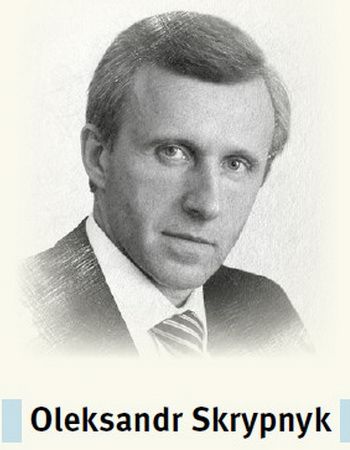 The author is sure that “the current mass expulsion of Russian diplomats could seriously disrupt Russia’s intelligence work, dismantle the vast majority of its spy networks, and lead to a dramatic reduction in espionage and disinformation operations against the West”. A number of foreign experts are convinced of this. In particular, commenting on the situation to The Washington Post, a retired CIA officer who oversaw the agency’s clandestine operations in Europe and Russia, Marc Polymeropoulos, said: “The intelligence war with Russia is at full swing. This… will prove to be a significant dent in Russian intelligence operations in Europe”. In other words, writes O. Skrypnyk, a serious disruption of the work of Russian intelligence in Europe can potentially be permanent, when “on the best occasion, the security services of many countries send Russians away”. It is important that in the article, in a separate section, the author tells about the so-called covert measures in the information space of other countries. It is about the work with the agents among pro-Russian foreign politicians, journalists, businessmen, and representatives of political parties. “Currently, curators expect from such paid agents, who have repeatedly justified the actions of the Russian leadership in Chechnya, Syria and other hotspots, that if they do not change the public opinion, they should at least soften the tone of statements, influence the formation of an alternative point of view, impose debates to divert attention from the realities of the Russian-Ukrainian war”, the author points out, giving examples of such activities of Russian special services.
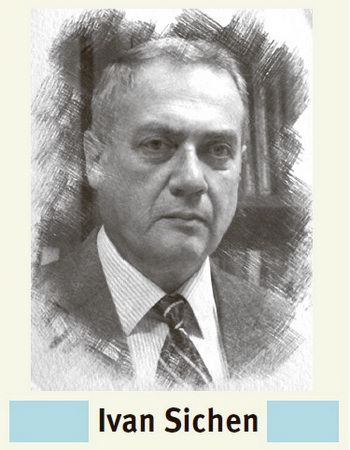 All the above-mentioned journal materials are somehow combined with the material of Military and Political Expert Ivan Sichen “Russia’s War Against Ukraine. History, Reasons, Conclusions and Lessons” which opens the journal. The author consistently and expertly explains the development of the most active phase of the Russian-Ukrainian war, lists the means and forces of the aggressor, defines his true general plans and explains how he tries to justify his cynical actions towards the Ukrainian population, whom he called “brotherly people” before the attack. In the end, it is enough to get acquainted with the military forces and means involved by the Kremlin to once again be convinced of the true intentions of our “benevolent neighbors”. The author writes in one of the sections of the article: “Moscow had in no way abandoned plans to return Ukraine to its sphere of influence. Moreover, after Putin came to power in Russia and began to pursue an open neo-imperial policy, actions to implement those plans became significantly more active”. And then he presents one of the many conclusions in the article regarding the Russian-Ukrainian confrontation: these actions of Russia were aimed at blocking the processes of Ukraine’s European and Euro-Atlantic integration, as well as creating conditions for the establishment of pro-Russian regime in the country. At this, the Kremlin’s main efforts were aimed at Ukraine’s complete giving up the idea to join the EU and NATO, its reorientation to Russia, leveling the national consciousness of the Ukrainian population and its Russification, and maximally weakening Ukrainian security forces.
 And finally, about our good old tradition of placing an interview with a guest visiting “BINTEL”. This time, we offer you to get acquainted with Anatolii Lopata, the first Chief of the General Staff of the Armed Forces of Ukraine. However, there is one nuance here — the conversation with the respected General took place on the eve of the active phase of the Russian-Ukrainian war, on February 22, 2022. But the answers, as well as the questions to the respected guest, do not lose their relevance, because one way or another, it is about what we observe every day on the territory of Ukraine.
By tradition, we post an abbreviated version of the interview on our website. And anyone who is interested will be able to read it on the pages of the journal under the heading “The State Exists As Long As There Is Someone to Defend It”.
Oleh MAKHNO
“BINTEL” Journal 1–2, 2022


