
 Myroslav Dnistrianskyi
Doctor of Geographical Sciences, Professor
Along with direct military actions, Russia’s aggression against Ukraine is combined with intentions to provoke or ignite military-political conflicts in different parts of the world, which could distract attention from Ukraine. The aggressor state is also making great efforts to block relations with neighboring states, supporting the activities of various anti-Ukrainian political forces in Poland, Hungary, Slovakia, and Romania. But in all these respects, the most difficult situation is in Moldova, which the Russian and Soviet regimes have always cynically viewed both as a “territorial resource” in the process of expanding the empire and as a springboard for realization of their interests in Central and Southeastern Europe.
Given the preservation of Russia’s positions in the political, economic and socio-cultural spheres, as well as the presence of a self-proclaimed pro-Russian entity — the Pridnestrovian Moldavian Republic, which is not controlled by the Moldovan authorities, Moldova, according to the Kremlin’s geopoliticians, is one of the weakest links in the chain of sovereign post-Soviet states, but at the same time strategically important, so it can and should be kept under its influence. To this end, Moscow has made and is making great efforts and investing considerable funds in promoting pro-Russian politicians in Moldova and discrediting the anti-Russian political environment, complicating the domestic political situation in the country.
Surprisingly, such dangers from Russian interference are not noticed in the EU and in neighboring Romania, in particular, they try to provide some support to Moldova, but it is quite obvious that such efforts are not enough. Therefore, today Moldova is turning into a complex geopolitical knot, untying of which can significantly affect not only the future fate of this country, but also the development of the situation in Ukraine, Russia, as well as in Central and Eastern Europe as a whole.
To determine possible options for further political development of Moldova, it is important to understand its aggregate geopolitical image, considering it as a combination of the most significant historical, ethno-cultural, religious, economic, regional and political features that determine the potential and place of the state in the territorial-political organization of the modern world.
From a retrospective point of view, it is obvious that Moldova has long historical and political traditions, because the independent Principality of Moldavia for a long time (14th–19th centuries) existed as both an independent and to some extent dependent subject of territorial-political relations in Eastern Europe. But on the other hand, the part of Moldova that in the 19th century got united with Wallachia into a single state, and the one that became part of the Russian Empire, in the process of further national-political movement, gave up the political identity of Moldova and unequivocally took the position of a single Romanian nation and a single state of Romania. There were some objective prerequisites for this, because the languages of the indigenous population of Wallachia and Moldova were almost identical, which ensured the creation of a new modern Romanian literature and culture in general.
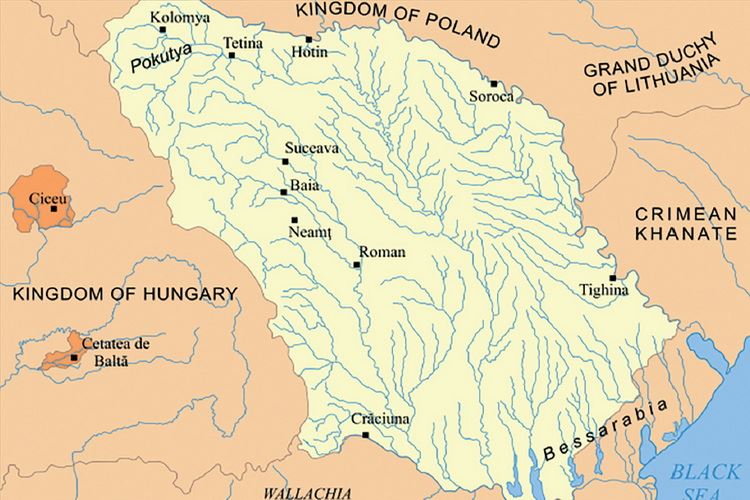 Principality of Moldavia during the reign of Ştefan cel Mare (c. 1500).
Source: https://www.ukrinform.ua/
At the same time, it is obvious that the Moldovan ethnicity, due to the peculiarities of its formation, primarily Slavic influences, still differed to some extent from the Wallachian. It was necessary to remember this, and therefore, when the opportunity arose to proclaim an independent state on the basis of the Moldavian SSR in the process of the collapse of the USSR, it would have been logical to develop the concept of a new Moldovan statehood as an option. This was also relevant in view of the heterogeneous ethnic composition of the former Moldavian SSR. But most of the leaders of the Moldovan national-patriotic forces at first unequivocally decided that there was no alternative to unification with Romania, which in many cases was negatively perceived not only by representatives of ethnic minorities, but also by ethnic Moldovans. Given the lack of support, the position of the “’unionists” has weakened in the future, although the issue of Moldova’s integration into Romania remains on the agenda.
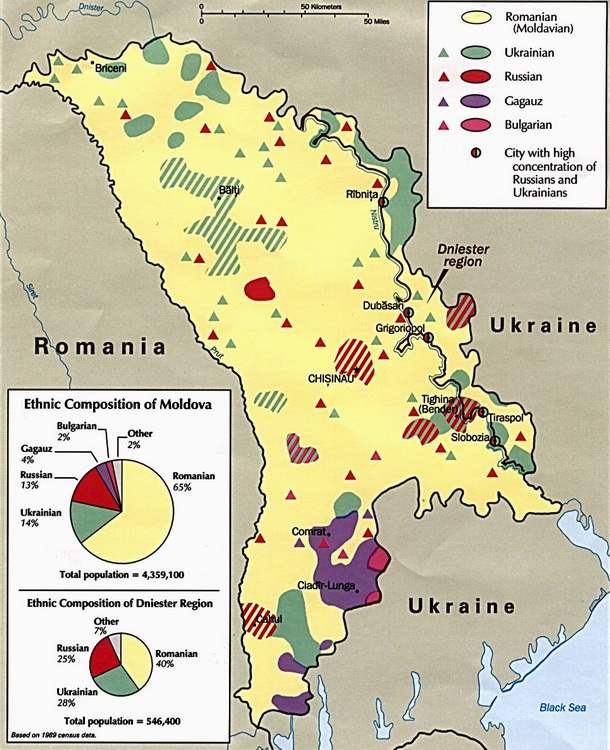 |
| Main ethnic groups of the population of Moldova (1991). Source: https://uk.wikipedia.org/ |
Thus, at the time of Moldova’s independence in 1991, one part of ethnic Moldovans identified themselves as Moldovans, the other, much smaller, — as Romanians. Their total share in the republic was about 65 %. The proportions of ethnic Ukrainians (about 14 %), ethnic Russians (about 13 %), ethnic Bulgarians (2 %) and a small indigenous Turkic-speaking people — Gagauz (about 4 %) were quite significant. It is important to note that ethnic minorities were in the majority in some areas, primarily in Transdniestria and in southern Moldova, in Gagauzia. For various objective and subjective reasons, their attitude to the idea of Moldova’s unity with Romania, that is, to the idea of Greater Romania, was negative.
The main territorial-political problem of Moldova for more than 30 years has been the presence of the self-proclaimed Pridnestrovian Moldavian Republic (“PMR”), which has a relatively significant demographic potential (about 500 thousand people) and certain transport, logistics and economic advantages. Its formation was inspired in 1990 by Moscow in order to prevent Moldova’s secession from the USSR. And as soon as Moldova proclaimed state sovereignty in 1991, Transdniestria declared its independence from Moldova immediately on command from Moscow. This development showed that the creation of self-proclaimed republics would become one of the instruments of Russia’s neo-colonial policy in the post-Soviet space. Since Transdniestria had been developing for a long time in cooperation with other Ukrainian lands and only in 1940 it became part of a separate Moldavian SSR, and ethnic Moldovans were a minority there, the idea of Transdniestria’s secession from Moldova was welcomed by the majority of the population of the region.
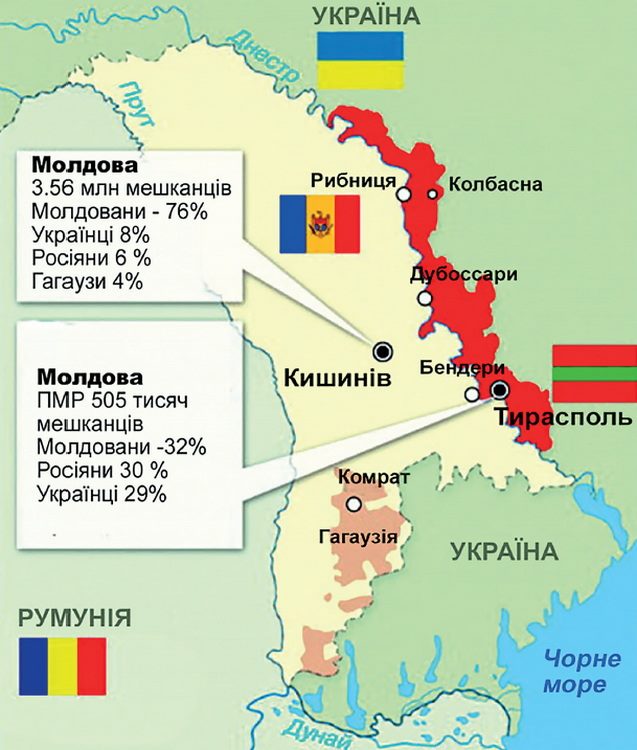 |
| The self-proclaimed Pridnestrovian Moldavian Republic (“PMR”). Source: https://topwar.ru/ |
Moldova’s attempt to integrate Transdniestria by force resulted in an armed conflict in 1992 between the security forces of Moldova and various military units that sided with the self-proclaimed Pridnestrovian Moldavian Republic, the victims of which were more than 1200 people on both sides. Decisive in the conflict was the participation of regular Russian military units deployed in the region on the side of Transdniestria, which forced Moldova to sign a peace agreement, recognizing the broad autonomy of the Transdniestria region and its right to decide its own fate in case of Moldova’s decision to integrate with Romania.
In the future, Transdniestria developed as an unrecognized quasi-state completely subordinated to Moscow, performing the function of constant pressure on Moldova’s foreign and domestic policy, also complicating the processes of delimitation and demarcation of the Ukrainian-Moldovan border. In addition, the presence of Russian troops in Transdniestria has been a constant source of threat to both Moldova and, to some extent, Ukraine. That is, even today Transdniestria remains a completely dependent on Russia entity with unpredictable political behavior.
Another lever of influence on Moldova’s policy in the early days of its independence was the development of events in Gagauzia — the southern region of Moldova with its center in the city of Comrat, where the majority of the population are representatives of the Gagauz ethnic group. Here, in the early 1990s, Moscow also tried to use the already tested approach to the creation of self-proclaimed republics. However, in the process of difficult coordination with the central Moldovan authorities and taking into account the relatively small demographic potential (about 150 thousand people), the Gagauz political organizations nevertheless abandoned the idea of independence and agreed to the autonomous status of the region. At the same time, in the political and economic life of Gagauzia, as well as in its cultural and educational sphere, for a long time, the leading positions were maintained not by Moldova, but by Russia.
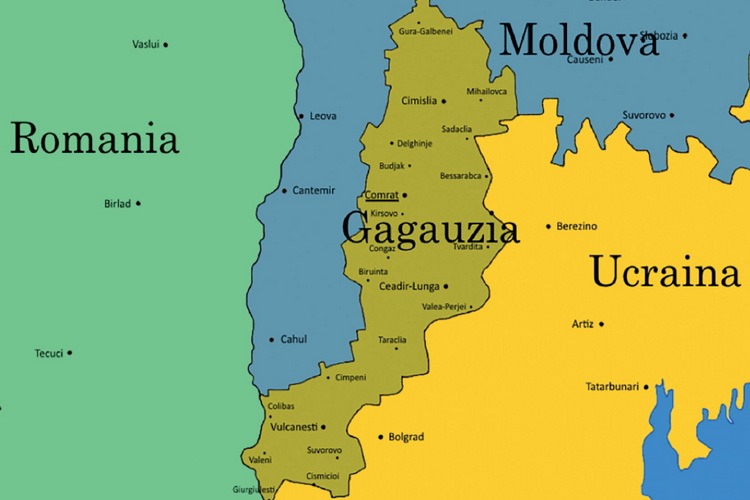 Gagauzia — an autonomous territorial entity in the South of Moldova.
Source: https://uk.m.wikipedia.org/
Perhaps the weakest point in the state-political development of independent Moldova, as well as of majority of other post-Soviet states, was the economy. Being an agrarian country with extremely limited mineral resources, Moldova faced many economic problems from the very beginning in the process of transition from the Soviet command-and-control system to a market economy (economic recession, job cuts, inflation, etc.). Since even before the proclamation of independence, in Moldova there was a high level of hidden unemployment, in the new economic conditions its reality was mass unemployment, which from the beginning of the 1990s affected most of the population. As a result, numerous Moldovan labor migrants went to work in Russia, forming an environment of people, geopolitically oriented on Russia.
Even more, Moscow managed to tie a significant part of the Moldovan comprador business to its interests, which began to actively finance pro-Russian politicians and political forces. An effective lever of Russia’s geopolitical pressure on Moldova has also become energy blackmail by gas supply, especially its cost. Concessions on the Russian side regarding the price of gas have always been combined with certain political demands.
The situation in the religious and confessional sphere does not add to the consolidation and strengthening of Moldovan society. Despite the fact that Moldova is a predominantly religiously homogeneous state (more than 90 % of the population are Orthodox Christians), a significant problem, as in Ukraine, is the church-confessional organization, primarily the subordination of church institutions. This is due to the fact that the largest denomination in the state, the Orthodox Church of Moldova, continues to be part of the structure of the Russian Orthodox Church, and continues to directly or indirectly carry out Russification and conduct pro-Russian propaganda among believers. In recent years, more and more believers of that church have moved to the Bessarabian Metropolis of the Romanian Orthodox Church, which firmly stands on unionist positions, which is not accepted by a significant part of Moldovans. Under such circumstances, the idea of a Moldovan autocephalous church could be constructive, taking into account, for example, the fact that a separate Moldavian Metropolis had long historical traditions.
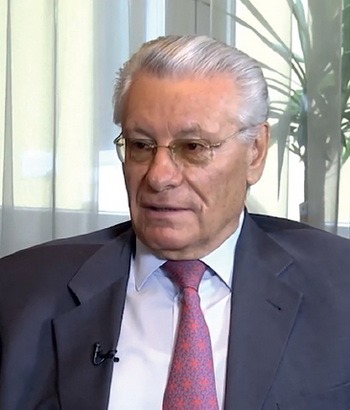
Thus, the combination of all the levers of Russia’s geopolitical pressure on Moldova (incitement of ethnic minorities, creation of self-proclaimed political formations, economic blackmail and bribery) was reflected in the correlation of Moldova’s political forces, trends in their transformation, in the formation of Moldova’s leadership and its foreign policy. Initially, Moscow in independent Moldova, as well as in Ukraine and some other post-Soviet states, relied on the Communist Party to create an environment of its influence, while at the same time working to split the largest national democratic force — the Popular Front of Moldova. This led to the fact that in 1997 the representative of the former communist nomenklatura Petru Lucinschi became the President of Moldova, who, however, did not meet all the expectations of the Kremlin, therefore, when as a result of the transformation crisis the standard of living of the population significantly decreased, then against the background of various political speculations and demagogic promises, the leader of the Communist Party Vladimir Voronin became the President of Moldova in 2001. But, having served two presidential terms, he failed to resolve the socio-economic problems of the country, or make at least a little progress towards the integration of Transdniestria into Moldova. Therefore, the position of the Communists in Moldova was shaken to a certain extent, and supporters of a pro-Western geopolitical orientation from the Alliance for European Integration won the parliamentary election.
 |
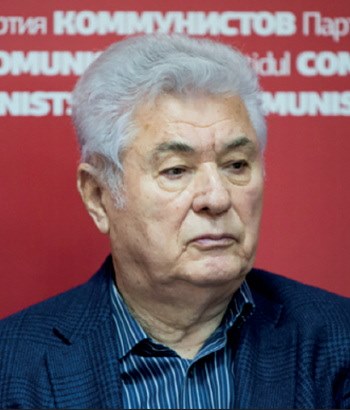 |
| Petru Lucinschi | Vladimir Voronin |
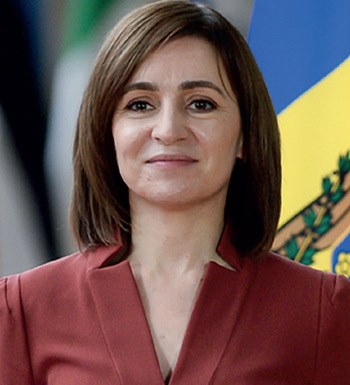
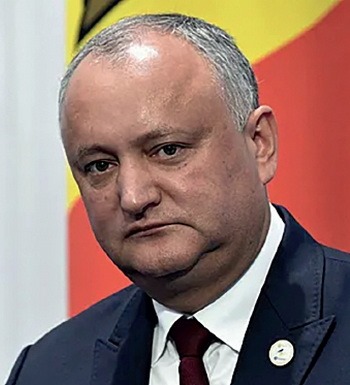
However, Moldova at the beginning of the second decade of the 21st century involved various financial and corruption scandals, which testified to the crisis of the political establishment as a whole. Under such conditions, in 2016, an openly pro-Russian politician Igor Dodon came to power in Moldova, and began to curtail almost all programs of cooperation between Moldova and the EU and NATO. Moreover, in order to please Russia, he even made a number of cynical anti-Ukrainian statements, in particular, about the alleged legality of Russia’s occupation of Crimea. Such a political position of Dodon caused indignation in the national-state environment in Moldova and sharp discontent in the West. This contributed to a new consolidation of pro-Western political forces, which eventually ensured the victory of their candidate, Maia Sandu, in the 2020 presidential election. The new President of Moldova has already announced her intention to move away from neutral status, and after Russia’s large-scale aggression against Ukraine, she initiated Moldova’s application to join the EU. She abandoned radical unionist views, took a firm position on comprehensive support for Ukraine, including transport and logistics, limited Russian propaganda in the country, and strengthened demands for the withdrawal of Russian troops from Transdniestria.
But such actions of the new Moldovan leadership caused not only indignation on the part of Moscow, but also a sharp reaction in order to destabilize the political situation in the country. Russian political provocations have intensified even more during the Russian-Ukrainian war. This is evidenced by the fact that the Moldovan topic in the interpretation of Russian propagandists always occupies one of the central places in the Russian media. The importance of the modern Moldovan context for Russia’s foreign policy is mostly due to the desire to preserve the so-called Pridnestrovian Moldavian Republic as an important bridgehead for pro-Russian influences, including the military presence, which is a direct threat to both Moldova and Ukraine. Moreover, in the Kremlin’s plan for the maximum expansion of the Russian Empire, Transdniestria, along with the South of Ukraine and Moldova, was to become part of it.
 |
 |
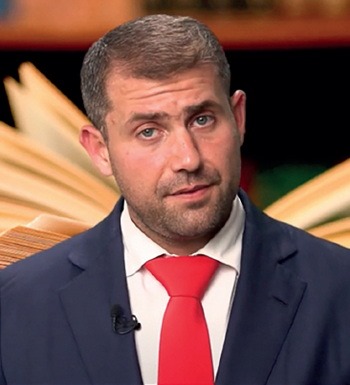 |
| Maia Sandu | Igor Dodon | Ilan Șor |
In the process of Russia’s current comprehensive geopolitical pressure on Moldova, all means were used again, in particular, street protests organized directly by Russian agents — the party of the pro-Russian adventurer Ilan Șor, and various actions of disobedience on the territory of Gagauzia, and again — gas blackmail. Russia has allocated huge funds to achieve what it wants in the latest local elections. And although its strategic goals did not become a reality, it still achieved some local successes.
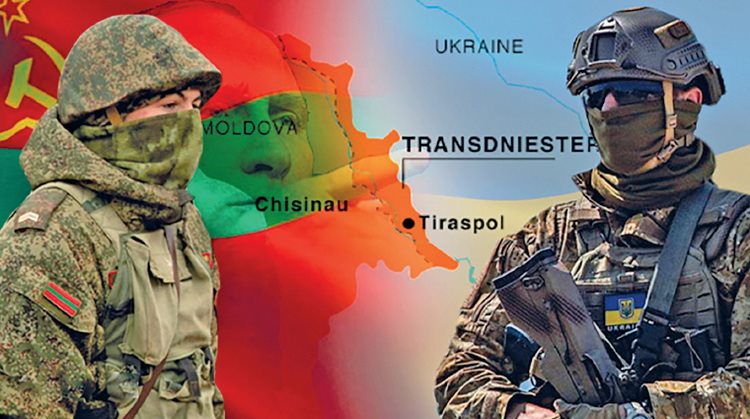
The difficult internal political situation in Moldova is due, first of all, to the provocations of pro-Russian forces, and therefore the country needs significant international support, especially from the EU. And not only economic, but also military, that is, in fact, the creation of new armed forces of Moldova. However, while Ukraine understands the threats that Moldova faces in the context of a broad and comprehensive Russian revenge, this is still not sufficiently noticed in the West and, in particular, in Romania, who are not taking adequate international diplomatic and economic steps to counter Russian expansion and to force Russian troops to withdraw from Transdniestria.
The full article you can read in the “BINTEL” Geopolitical Analytics Journal


