
 The USA, NATO and the EU cannot provide Ukraine with real military security guarantees because they are trying to avoid open armed conflict with Russia
Ivan Sichen
Foreign assistance in strengthening Ukraine’s security and defense remains strategically important for our country. Such assistance has been provided from the beginning of the formation of Ukraine as an independent state. However, it came to a new level after Russia’s attack.
Since the 1990s, support for Ukraine by its partners has been regulated by various bilateral and multilateral agreements. The most famous in the security sphere was the so-called Budapest Memorandum on Security Assurances of 1994, in which the United States, the United Kingdom and Russia guaranteed Ukraine security in exchange for its giving up nuclear weapons. However, the Budapest Memorandum did not restrain Russia from aggression against Ukraine. And today, certain political forces, in particular in the United States, either refuse to provide assistance in the future, or delay its allocation. Therefore, by their nature, security guarantees for Ukraine should be real, not virtual.
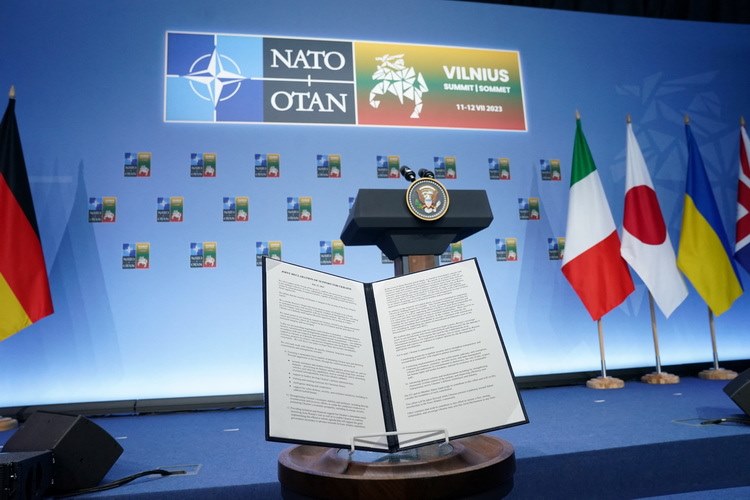
Some steps in this direction have already been taken. At the 2016 Warsaw Summit of NATO, the Comprehensive Assistance Package for Ukraine was endorsed. In fact, it became a continuation of the 1997’s Charter on a Distinctive Partnership between the NATO and Ukraine with specified spheres of cooperation of the parties. In September 2022, Ukraine signed with partners “The Kyiv Security Compact. International Guarantees for Ukraine: Recommendations”. Finally, in July 2023, at the NATO Vilnius Summit, the leaders of the Group of Seven (G7) signed a Joint Declaration of Support for Ukraine. Currently, steps are being taken to conclude bilateral agreements between Ukraine and guarantor countries. As for security guarantees for Ukraine, they are known, but this issue remains complicated and needs further study. Here’s what I mean.
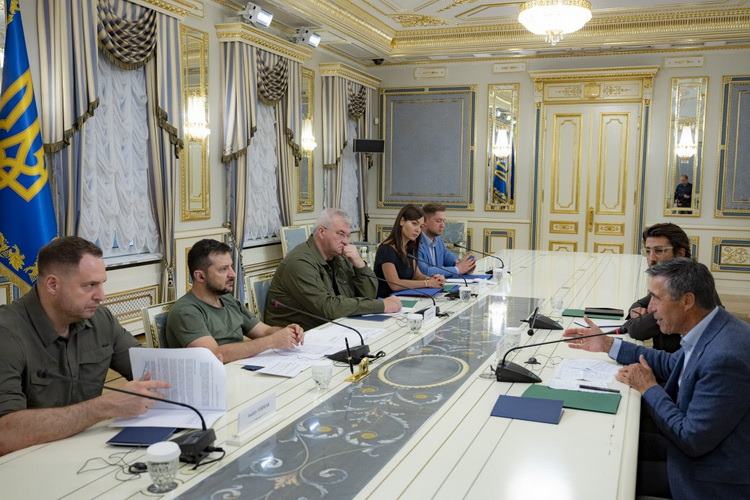
Let’s start, according to the chronology of events, with “The Kyiv Security Compact. International Guarantees for Ukraine: Recommendations”. As you know, it was developed by an international advisory group headed by the Head of the Office of the President of Ukraine Andrii Yermak and the former NATO Secretary General Anders Fogh Rasmussen. The document determines as the strongest security guarantee for Ukraine its capacity to defend itself against an aggressor under the UN Charter’s article 51. As stated in the Kyiv Security Compact, Ukraine needs:
- resources to maintain a significant defensive force capable of withstanding the Russian Federation’s armed forces;
- sustained investment in Ukraine’s defence industrial base, scalable weapons transfers and intelligence support from allies, intensive training missions and joint exercises under the European Union and NATO flags;
- solid and clearly formulated security guarantees that lay out a range of commitments made by a group of guarantors, together with Ukraine. They need to be binding based on bilateral agreements;
- a core group of allied countries together with Ukraine. This could include the United States, the United Kingdom, Canada, Poland, Italy, Germany, France, Australia, Turkey, and Nordic, Baltic, Central and Eastern European countries.
In fact, the Kyiv Security Compact became a prologue to the G7 leaders’ Joint Declaration of Support for Ukraine. The Declaration:
- reaffirms the unwavering commitment of partner countries to the strategic objective of a free, independent, democratic, and sovereign Ukraine, within its internationally recognized borders, capable of defending itself and deterring future aggression;
- affirms that the security of Ukraine is integral to the security of the Euro-Atlantic region. Based on this, are emphasized the partner countries’ intentions to continue to support Ukraine for as long as it takes;
- states the commonality of democratic values and interests of Ukraine and its partners, based on respect for the UN Charter and the principles of territorial integrity and sovereignty. They are what support for Ukraine is based on;
- announces the start of negotiations with Ukraine in order to formalize support for our state through bilateral security commitments and agreements;
- determines the ways to hold the aggressor accountable, as well as actions in case of future Russian armed attack on Ukraine.
For its part, Ukraine is committed to:
- contributing positively to partner security and to strengthen transparency and accountability measures with regard to partner assistance;
- continuing implementation of the law enforcement, judiciary, anti-corruption, corporate governance, economic, security sector, and state management reforms;
- advancing defense reforms and modernization.
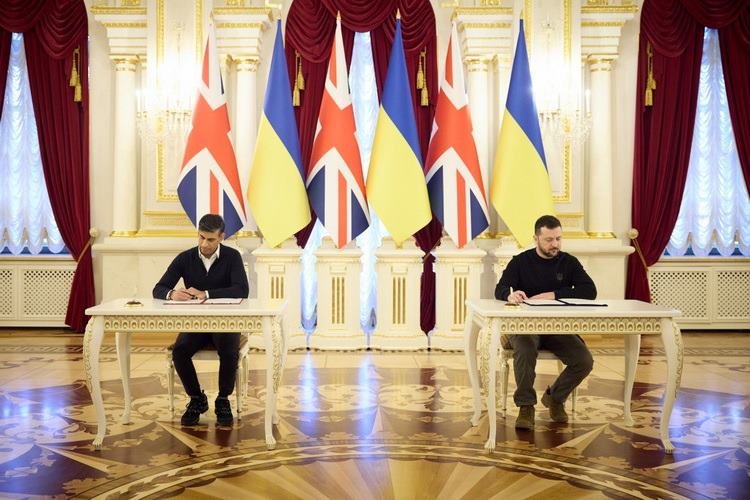
One of the first practical steps in the implementation of these plans was the signing in January 2024 of the Agreement on Security Co-operation between the United Kingdom and Ukraine (in the media it is also called “The Agreement on Security Guarantees for Ukraine”). The document formalizes the United Kingdom’s support to Ukraine, and contains a number of London’s commitments, the main of which are as follows:
- provision of comprehensive assistance to Ukraine for the protection and the restoration of its territorial integrity within its internationally recognized borders, including the territorial sea and free economic (maritime) zone, reconstruction of its national economy, and the protection of its citizens;
- prevention and active deterrence of, and counter-measures against, any military escalation and/or a new aggression by the Russian Federation;
- support for Ukraine’s future integration into Euro-Atlantic institutions, including by supporting Ukraine’s reform plans and interoperability with NATO;
- deepening cooperation with Ukraine in the military-technical sphere, production of weapons, training Ukrainian military, intelligence sharing and cooperation in the sphere of cyber security.
Besides, the United Kingdom has allocated the largest package (worth 2.5 billion pounds) of defense aid since the start of the large-scale war. The obligations and actions of the United Kingdom confirmed its role and importance as a stable partner of Ukraine and the opponent of Putin’s regime.
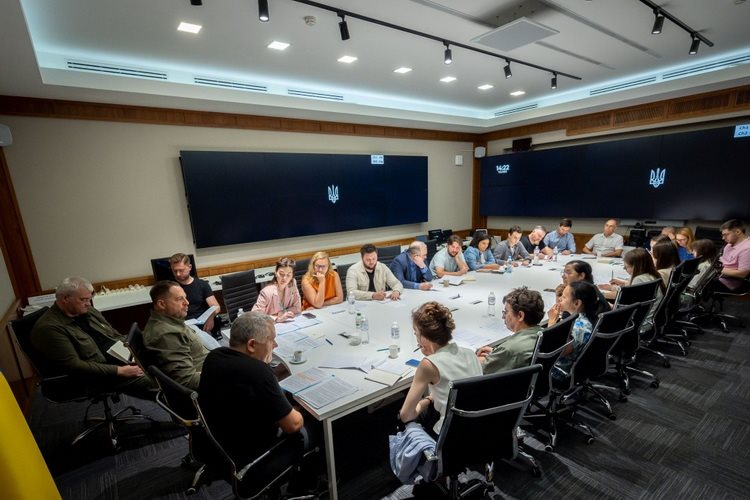
Negotiations and consultations are currently underway to conclude security agreements with the United States, Poland and other partners of our country. About 30 countries have already expressed their readiness for partnership with Ukraine on security guarantees. Given the capabilities and positions of each of them, bilateral cooperation formats will somewhat differ. In particular, they will also take into account the number and what types of weapons our partners can provide to Ukraine.
Plans to sign such agreements are closely linked to the issues of approval by the world community of Ukraine’s Peace Formula and its practical implementation. Its provisions are also known, although it is not superfluous to mention them here. Among other things, they include: guaranteeing radiation, nuclear, food and energy security; release of prisoners and deported persons; respect for the UN Charter and restoration of territorial integrity of Ukraine and the world order; withdrawal of Russian troops from Ukraine’s territory and cessation of hostilities; restoration of justice; ecological safety; prevention of escalation; confirmation of the end of the war. Currently, 32 countries have already supported Ukraine’s Peace Formula, agreeing to participate in the relevant international peace conference.
However, neither the signing of security agreements nor the approval of Ukraine’s Peace Formula will stop Russia. They will only help Ukraine by intensifying and expanding the extent of partners’ actions to provide it with military and technical assistance. Strengthening Western sanctions against Russia remains extremely important, which will further undermine the RF’s economy.
|
…Neither the signing of security agreements nor the approval of Ukraine’s Peace Formula will stop Russia… |
However, Western and other partners of Ukraine will never send their troops to defend our country, as they try to avoid the war against the nuclear state. For the same reason, the supply of weapons to Ukraine is limited. Besides, the USA and other NATO members (after the collapse of the USSR and with the reduction of international tensions) have significantly reduced their own production of weapons and ammunition, which is why they need some time to increase weapons production. However, Washington and Brussels consistently working on this problem.
In particular, by the beginning of March 2024, the EU plans to transfer to Ukraine at least half a million of the promised artillery shells. It is their shortage that is now a major problem for the Ukrainian military at the front. The allocation of EUR 50 billion by the European Union, which has become a significant contribution to the strengthening of our country’s security and, in general, of the entire Euro-Atlantic space, is actually resolved. In the near future, the decision to allocate 60 billion US dollars for the needs of Ukraine’s security can also be made by the US Congress.
In general, these circumstances allow to make the following conclusions regarding the interests of our country.
Western countries and international organizations continue to consider Ukraine one of the “cornerstones” of European security, as well as a significant factor in containment of Russia’s expansion. In view of this, partners of Ukraine strengthen their support for our state, including by the assignment of additional obligations to deepen security cooperation with Ukraine. At this, the West is in no way tired of Ukraine and is not going to abandon it.
|
…The only reliable security guarantees for Ukraine remain its Armed Forces and Ukraine’s future membership in NATO… |
However, the USA, NATO and the EU cannot provide Ukraine with real military security guarantees because they are trying to avoid open armed conflict with Russia. That is why their actions are limited to military, economic and political support to Ukraine, as well as deepening the cooperation in some other spheres.
In this case, the only reliable security guarantees for Ukraine remain its Armed Forces and Ukraine’s future membership in the North Atlantic Union. An important step in this direction is the creation of an International Task Force on Security and Euro-Atlantic Integration of Ukraine.


