
 Historical Lessons for Ukraine
Ivan Sichen
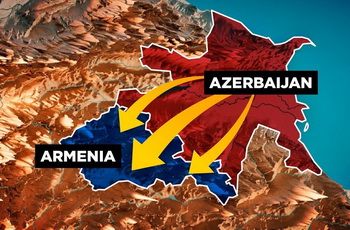
Our successes in the war with Russia open up prospects for the restoration of the territorial integrity of the Ukrainian state and directly threaten the existence of the “DPR” and “LPR”. As you know, Moscow created these self-proclaimed republics back in 2014, at the beginning of the armed aggression against Ukraine, as part of attempts to disintegrate the Ukrainian state. And now such plans of the Kremlin are approaching a completely logical failure. They were thwarted in a purely military way, which once again confirmed the impossibility of resolving the problems of separatism through peaceful negotiations. Especially when separatists are backed by states such as Russia, which uses them for its political interests. However, Moscow is increasingly losing such opportunities. Thus, in September 2023, as a result of a successful military operation, the Armed Forces of Azerbaijan eliminated the self-proclaimed Nagorno-Karabakh Republic, founded with the direct support of Moscow back in 1989. And Russia could not prevent Baku’s actions. That is, there is already a precedent, and let’s hope that Ukraine will repeat it.
To begin with, let us recall some events in the former USSR before its collapse and on the post-Soviet territories after it. After all, many do not remember or do not think about them, although they are directly related to Ukraine as well. But eventually they became the prerequisites for Russia’s full-scale war against our state.
|
…In the second half of the 1980s, Moscow provoked sharp manifestations of separatism in Azerbaijan, Georgia and Moldova… |
For example, in the second half of the 1980s, Moscow provoked sharp manifestations of separatism in Azerbaijan, Georgia and Moldova, which led to armed conflicts on their territories. In that way the leadership of the USSR, and then the ruling elite of Russia, tried to maintain their influence on those regions by intervening in such conflicts and supporting the actions of the separatists along with the creation of self-proclaimed state formations there.
In Azerbaijan, the “Nagorno-Karabakh Republic” (“NKR”) became such a formation, in Georgia — the “Republic of Abkhazia” and the “Republic of South Ossetia”, in Moldova — the “Pridnestrovian Moldavian Republic”. With the exception of the so-called Nagorno-Karabakh Republic, all of them are preserved to this day, fully controlled by Russia, which maintains them at its own expense and has deployed troops there in the format of “peacekeeping forces” and military bases.
Moscow resorts to a similar policy towards Ukraine. Back in the early 1990s, Russia tried to provoke an armed conflict in Crimea. However, Kyiv then managed to prevent it. Separatism in the Crimean Peninsula was suppressed by political measures that relied on the power of our state. Unfortunately, thanks to traitors in the person of V. Yanukovych and other protégés of the Kremlin and supporters of the “Russian world”, Moscow managed to implement its plans. As you know, in 2014, Russia occupied and annexed the Crimean Peninsula, and provoked an armed conflict in the Donbas, where it created the so-called Donetsk and Luhansk People’s Republics. Such actions of Moscow pursued the same goals as in relation to other countries that had an independent position from it, namely, the disintegration of Ukraine, the restoration of the Kremlin’s control over it and the final impossibility of its European and Euro-Atlantic integration. After Russia failed to implement its plans in a covert way, it launched an open and full-scale war against Ukraine.
We managed to deter Russia, albeit at the cost of temporary losses of our territories. But we are winning them back step by step. Currently, Azerbaijan has already liberated its territories, which were seized by Armenia with the support of Russia in the same military way. Let’s take a look at Baku’s experience in historical retrospect and up to the present.
|
…Russia provoked an armed conflict between Azerbaijan and Armenia on the basis of their historical contradictions around Nagorno-Karabakh… |
Again, let us recall the known, but, most likely, forgotten facts. Thus, with the beginning of “perestroika” in the former USSR, which was characterized by the weakening of its totalitarian regime, Azerbaijan together with Georgia became the centers of the national and state revival of the peoples of the South Caucasus. Of course, Moscow did not agree with this. That is why it provoked an armed conflict between Azerbaijan and Armenia on the basis of their historical contradictions around Nagorno-Karabakh. According to the well-known Russian practice, back in 1987, special services of the Soviet Union and leaders of the ruling Communist Party at that time began to provoke anti-Azerbaijani sentiments among the Armenian population of the region. At the same time, local separatists made public demands to include Nagorno-Karabakh into Armenia. And already in 1988, the then Soviet authorities of Nagorno-Karabakh and Armenia made decisions that satisfied those requirements. However, such a move only further exacerbated the problem. In Azerbaijan, Armenia, Nagorno-Karabakh, as well as in Russia itself, interethnic riots began with the participation of ethnic Armenians and Azerbaijanis.
This development of events really frightened the leadership of the USSR, which tried to take the situation into its own hands. In November 1988, a state of emergency was declared in Baku and Yerevan. Units of the armed forces and internal troops of the Soviet Union were deployed in the above-mentioned cities and in Nagorno-Karabakh. At the same time, the Kremlin’s next military steps not only did not stabilize the situation, but, on the contrary, exacerbated it even more. After all, what other consequences could be of the outrages of Soviet troops against local residents, regardless of on which side of the conflict they were…
In Baku, Soviet troops shot dead all the protesters. The corpses were then loaded onto barges and drowned in the Caspian Sea. In Nagorno-Karabakh, Soviet troops, allegedly carrying out a peacekeeping mission, shelled both Azerbaijani and Armenian villages. And what else could one expect if the basis of those troops were mobilized reservists from among the “Cossacks” from the North Caucasus! For them, both conflicting sides were enemies, and therefore the confrontation became even more widespread.
In contrast, in both Azerbaijan and Armenia, local activists began to create their own armed formations, which then became the basis of their armies. Then, in 1990, real hostilities began not only in Nagorno-Karabakh, but also along the entire Azerbaijani-Armenian border. In early 1991, they escalated into a full-scale war between Armenia and Azerbaijan.
Russia supported Armenia, so it won and seized Nagorno-Karabakh. Moreover, at that time in Azerbaijan, pro-Russian forces made an attempt to organize a coup d’état. The commander of the front that fought against Armenia, Colonel S. Guseinov, turned his troops around and sent them to Baku. His offensive was repulsed, but at the cost of losing territories. Armenian separatists who seized power in Nagorno-Karabakh declared its independence from Azerbaijan. And Armenia established control over it and deployed its troops there.
|
…Moscow made full use of its influence on Armenia and Azerbaijan to strengthen its position in the Caucasus… |
This gave Moscow plenty of opportunities to influence Armenia and Azerbaijan. And it made full use of this influence to strengthen its position in the Caucasus. This is how Russia drew Armenia into the Collective Security Treaty Organization and the Eurasian Economic Union. Also in Armenia, where the 127th Motorized Rifle Division of the former Soviet Army was located, the 102nd Military Base of the Russian Armed Forces was formed. The Division was reorganized into a Brigade. Together with it, a regimental-level aviation unit was deployed there, consisting of MiG-29 aircrafts, then Su-30SMs, as well as Mi-8 and Mi-24 helicopters.
At the same time, Russia provided military assistance to Azerbaijan. The motives were pretty clear. Baku paid real money, and all those who plundered the Russian army were ready to give everything for it. It is not surprising that out of 14,000 tanks that were at storage bases in the Russian Federation, in fact, no more than 5–6 thousand remained.
Azerbaijan alone received a brigade set of more than 100 T-72 tanks along with all the necessary equipment. Tanks and other armored vehicles, as well as missile and artillery systems, were supplied to everyone else who could pay for them, from Eritrea to North Korea. However, the most effective and efficient military assistance to Azerbaijan was provided by Turkey. First of all, this refers to the Bayraktar TB2 attack UAVs. It was they who played a decisive role in Azerbaijan’s repulsing another attack by Russia and Armenia in the autumn of 2020.
At that time, Moscow began direct preparations for the war against Ukraine and tested its strength in less significant regions of the former USSR. The provocation against Azerbaijan resulted in the loss of most of Nagorno-Karabakh for Moscow and Yerevan. For the first time, the course of hostilities was covered on television online, directly from UAV video cameras.
Bayraktar TB2 UAVs showed themselves when they destroyed the equipment and infantry of the Russian-Armenian troops with almost no resistance. At that time, Azerbaijan could have liberated all its territories immediately. But Moscow did not allow it to do this in the form of another cynical provocation against its own citizens and military personnel.
Near the conflict zone, Russian troops shot down their helicopter, which burned down along with the crew. And then Russia blamed Azerbaijan for this, forcing it to stop the offensive under the threat of an armed response. Moreover, Baku was forced to agree to deployment in Nagorno-Karabakh of Russian “peacekeepers”, de facto — occupation troops.
In the same 2020, Russia, in the same military way, intimidated Belarusians who then rose up against the Lukashenko regime after it falsified the presidential election. At that time, the 1st Tank Army of the Russian Armed Forces was deployed on the border between Russia and Belarus, allegedly to counter NATO’s plans to attack Russia’s ally. In fact, under this pretext, plans for a full-scale war against Ukraine were worked out, including its invasion from Belarusian territory. If we had helped Belarusians defend their freedom, it would probably never have happened…
And on the eve of the attack on Ukraine, in January 2022, Moscow held the last rehearsal of its “liberation campaign” to our country. For this purpose, Kazakhstan was chosen, where mass demonstrations against President Tokayev started. To suppress the protests, Russia deployed its troops under the guise of troops of the Collective Security Treaty Organization. However, even in this case, this fact was the first time that the CSTO was used as a military tool founded by Moscow in order to create a counterweight to NATO.
However, Russia did not forget about Azerbaijan either. In September 2023, against the background of failures in the war against Ukraine, Putin’s regime tried to take revenge in the Caucasus, but failed to achieve its goal. The Russian-Armenian troops were once again defeated within two days. The “Nagorno-Karabakh Republic” finally ceased to exist. On September 20, 2023, a day after the start of hostilities, the leadership of the “NKR” agreed to withdraw the remnants of the occupation troops from Nagorno-Karabakh, as well as to disband and completely disarm the “defense army” of the self-proclaimed republic.
|
…More than 100,000 people have become refugees and hostages of the Kremlin’s adventurism… |
On September 28, the leader of the “NKR” S. Shakhramanian signed a decree on the termination of the existence of the Nagorno-Karabakh Republic from January 1, 2024. President of Azerbaijan I. Aliyev personally guaranteed the security of the Armenian population of the “NKR” and held talks with representatives of its community. But most Armenians still preferred to leave Nagorno-Karabakh. More than 100,000 people have become refugees and hostages of the Kremlin’s adventurism.
|
…Armenia has turned from one of Russia’s closest allies into its enemy… |
And Armenia has turned from one of Russia’s closest allies into its enemy. Prime Minister of Armenia N. Pashinyan publicly acknowledged the fallacy of Yerevan’s hopes for help from Moscow. It wasn’t just a statement. From membership in the CSTO, Armenia has moved to active military cooperation with the United States and NATO. For the first time, the Armenian military unit joined the US-NATO exercise DEFENDER-Europe 23 in April-June 2023. And in September 2023, the joint Armenian-American Eagle Partner 2023 exercise was held in Armenia. Tasks were carried out focusing on bolstering interoperability and readiness via specialized peacekeeping operations training.
…In the same way, Donbas will be liberated by eliminating terrorist organizations called “DPR” and “LPR”. Unfortunately, not in two days, but by any means.


