
|
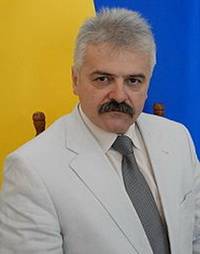
Bohdan Andrusyshyn Doctor of Historical Sciences, Professor at the National Pedagogical Dragomanov University |
“The Starting Point of the Ukrainian Statehood Can Be Different”
— Bohdan Ivanovych, in your scientific works you thoroughly analyze some l facts of our history, giving the answer to the questions: who we, Ukrainians, are? How had we been trying to create our own state for centuries? and having created it, why were we not able to save it? And, the most important question — are we not making the same mistakes that were made, say, a hundred years ago?
— Yes, in my scientific works, I paid attention to self-government of our state, formation of Ukraine as a subject of international law. For example, in one of my articles I pointed out that the starting point of the Ukrainian statehood can be different from the one accepted now.
— Not August 24, 1991, when the Act of Independence of Ukraine was proclaimed?
— Some of the famous lawyers claim that by then Ukraine had already been a subject of international law, a founder and a state–member of the UN. Historical facts of the Ukrainian statehood again are subject to manipulations. And this is being done during the armed conflict in the East of our country! Not accidentally have been “revived” the so-called DPR-LPR, and the facts are distorted in the context of the “Russian world”.
— Today referendums and elections are much talked about. The Crimea with the help of a “referendum”, “attaches” itself to Russia, in eastern regions of Ukraine the situation is loosened by a similar scenario…
— As we see, whatever happens — already was in the past… the above-mentioned Bolshevik Ukrainian People’s Republic in the elections for the All-Russian Constituent Assembly in 1918 was supported by only 10 % of the population (in Russia, the Bolsheviks had then 24 % of votes). In the elections for the All-Ukrainian Constituent Assembly, the Bolsheviks gained 19.18 % of votes, Ukrainian parties — 69.76 %. However, since then the Bolsheviks seized Kyiv, Ukrainian statehood could not be created by parliamentary means. The idea of Ukrainian constituent assembly was back in the days of the Hetmanate, and Directoria of the UPR. We know from history that the UPR has ceased to exist as a result of a large Red Army’s attack against Ukraine. But the million’s Red Army could not then keep Ukraine, because the Bolsheviks, flirting with the Ukrainian people, in January 1919 recognized the Ukrainian SSR’s independence and allowed it to have a power structures and to lead its own “independent” foreign policy. What happened later — is common knowledge.
— Bohdan Ivanovych, after World War II, Ukraine became a member of the UN. That is, although in that form, but it was still a sovereign state?
 — Formally, ever since its entry in 1922 into the Soviet Union, from the point of view of Law, the Ukrainian SSR has not stopped being a juridical personality. Ukraine formally retained its sovereignty with the right to secede from the USSR. But can you imagine in Soviet times, some of “fraternal” republics exercising their constitutional right to secede from the USSR?
— Your Russian colleagues-historians now zealously refer to historical facts of Ukraine’s unification with Russia, in particular, remind of the role of Hetman Bohdan Khmelnytskyi and Pereyaslavska Rada, of the deeds of the Orthodox Mazepa, who had made friends with the Swede-Protestant Karl XII, welcome the establishment on the Ukrainian land of monuments to Russian queens of foreign origin. Do you not think that they make public the historical facts not only non-objectively, but simply pull them out of the context of historical events?
— …As for the Pereyaslav Rada and Ukraine’s reunification with Russia, Professor Sergei Shelukhin believes that the state of Ukraine again appeared at the moment when in 1917 the Russian Tsar Nikolay II abdicated and the Russian Empire ceased to exist. After all, in the so-called reunification of Ukraine with Russia in times of Hetman Bohdan Khmelnytskyi, the Ukrainian people took the oath of allegiance only to the tsar, — not to the Russian state, not to the State Duma, not to someone else. (It would be appropriate to mention the fact that against the oath in 1654 were entire Cossack regiments, the population of Ukrainian villages and towns, because it is a big topic of conversation). And when the tsar died, the oath was cancelled, and Ukraine became an independent state again. S. Shelukhin argued that at the time there was no need even in the Universals proclaimed by the Ukrainian Central Rada (Central Council).
— Perhaps in that revolutionary time it was easier to declare independence by a Universal than to raise legal casuistry?
— Yes, it was easier and more understandable to the population. But this fact proves that sometimes it is very helpful to listen attentively to Professors… What is different about it is that at that time there were several centers of power — the Ukrainian Central Rada, the UPR government in Kyiv, the Bolsheviks’ government in Kharkiv. As I wrote a few years ago in my article, the question is which of these governments is recognized legitimate by international law and thus on which government version of the Ukrainian state we could be based.
— Is it so important?
 — For example, it is possible to obtain a basis for determining the boundaries of Ukrainian ethnic territories. Agree, today we are not putting forward territorial claims to our neighbours, though, as once pointed out by scientist F. Zastavnyi, more than 47 thousand square kilometers of Ukrainian territory are part of Romania, Poland, the former Czechoslovakia. Add another piece of Ukrainian land in Kursk, Bryansk, Oryol, Voronezh regions, where according to the census of the 1920s, there lived more than 5 million Ukrainians. Not to mention the Kuban and Rostov region, Eastern Don, or Belarus and Trans-Dniester.
When I raised this question at a conference, I was asked: why? This is the position of many of our authorities. You know, even the problem of de-communisation can’t be solved unless we cross our “t”’s and dot our “i”s. Who are we? “Children of those who attacked the white troops, who left steam locos, and went to the barricades…” or successors of the UPR? Having voted for independence in 1991, two weeks after the declaration of independence, we adopted a law on Ukraine’s legal succession. That single sheet of paper read that Ukraine remained within the administrative boundaries defined for the USSR, that the Verkhovna Rada (Parliament), and the government, including local governments are valid, and Ukraine confirms its international obligations, which it was entrusted in the days of the Ukrainian SSR. But in the historically-legal context — there were no explanations. What was it: resumption of independence or proclamation of it.
By the way, at the World Congress of Ukrainians, Ukrainian President L. Kravchuk declared that we are the heirs of the UPR. Ukrainian President in exile M. Plavyuk at a meeting of the Verkhovna Rada resigned his presidential powers and gave the kleinods (regalia) to Ukraine — the seal, the flag, the mace — which the Ukrainian government had taken with it when leaving for the West.
In times of V. Yushchenko, the attempt to create a museum of occupation of Ukraine had to show that the authorities in Ukraine in Soviet times were established by force. There was deportation of the population, there worked a powerful propaganda. The local residents, who did not recognize the Soviet regime, were subject to repressions. The rest had to accept, thus legitimizing the already imposed authorities.
— Does this not remind the current events in the East of our country, where the population of the territories captured by foreigners will later need to get used to life “in the new conditions?”
— Possibly. You see, all these so-called “hybrid” combat and propaganda activities can surprise someone, but not Ukrainian historians. The situation in the East — is the absolute vellum of 1917-1921 years! Only with different players.
— Once again we see that if the problem is not solved properly, in a civilized manner, it will re-emerge in the form of a new tragedy…
 — Exactly! Here is a classic example which reminds us of the so-called DPR, LPR. After signing in 1918 of the Brest agreement, when Ukrainian troops together with German and Austro-Hungarian ones had to take control of the Ukrainian territory, a DKR is proclaimed in the Donets basin in order to let know that the territory was not Ukrainian, and, thus, the German troops were not allowed to go there. But the so-called leader of the world proletariat, V. Lenin already then was aware of the danger of such a formation, calling it a separatist one (!). He was strongly against those artificial state formations and sent his functionaries to eliminate the “republic”.
— What about Khrushchev’s generosity, who gave Ukraine the Crimean Peninsula?
— It is not difficult to compare, what and why Ukraine at that time was given, and how much of its lands went to its “sisters”.
— Perhaps if each of the republics making the USSR had had its own army, the neighbors would have recognized its independence more readily? At least at the legal level.
— Army is one of the state attributes. In really democratic countries, the army is not so important as it is in an authoritarian formation. Example? In 1917-1920 the influence of the army in Ukraine manifested itself quite revealing, and was estimated differently. In general, the Socialists, who formed the basis of the Ukrainian Central Rada, believed that there could not be any interstate contradictions between socialist republics and therefore an army was not needed. But as for our history, let me point out that it was at that time that “indigenization” of the army began, that is, on the fronts of the ongoing World War I were formed military units on a national basis from units of the army of Tsarist Russia, which had been breathing its last. Then it became clear that the multinational Army does not guarantee its reliability. I repeat that the then leadership of the UCR did not understand the role of the army, and was not going to be engaged in its creation. Although about 4 million Ukrainians were “under arms” at that time! They could have coped, for example, with Muravyov’s units’ offensive against Kyiv.
On the other hand, there was an element of distrust in Ukrainian commanders, there were fears that they could take power into their own hands. It reads between the lines of the memoirs of the then military leaders, in scientific researches about individual military, for example, Yu. Tereshchenko’s monograph about Colonel Bolbachan. Note that during the Second World War, in the Red Army every fourth was Ukrainian, including many senior officers and generals. Therefore Stalin after the war did not dare to deport the Ukrainian population east of the Urals to Siberia, as he did with other peoples.
— As for Russia’s military aggression against Ukraine actually only twenty-five years after the collapse of the USSR, all is obvious here. After all, at the time of the collapse of the USSR, in the Russian Federation, except for the rear and cadred, there were not enough combat units. They were located in Soviet Western Military Districts in Ukraine, Belarus, Moldova for specific offensive operations in Europe. And in the Russian army already at the time of the collapse of the Soviet Union, there were more than two hundred thousand military servicemen of Ukrainian origin. Invasion of Ukraine then would have looked like Ukrainians’ returning home! Only now Russia could afford to declare to the whole world that it has the army, and to educate it on the ideology of the “Russian world”. You study church-state relations, why has this question become urgent now?
— Ukraine today has the best, at least in Europe, legislation that tolerates all our religious confessions. So, despite all sorts of attempts of “well-wishers”, we have relative religious peace. Especially if you do not take into account our internal church relations, or the fact that some church ministers side with our enemies, leading the fighting against Ukraine. In 1917, after the abdication of Nicholas II from the throne, in Russia Church Council was convened to elect the Patriarch. A similar Council was held in Ukraine. In 1918, when Muravyov captured Kyiv, Metropolitan Volodymyr was tortured to death. Exactly where there is a monument to soldiers–“Afghans”. Muravyov’s soldiers blamed the Ukrainians. Later, on the initiative of Hetman Skoropadsky, the one who actually committed the crime, was brought to court. And then it was announced that without an independent Ukrainian church Ukrainian state cannot be. This is the key phrase.
 — From your point of view of a scientist-historian: is unification of Orthodoxy possible today?
— The theme is quite deep. In his time, Andriy Sheptytskyi was offered to become the Patriarch of the Ukrainian Church, when he was in Kyiv in 1918. At that time, a very energetic work was on such a unification, in particular, there was an active correspondence between senior ministers of the church. Sheptytskyi saw that not all were willing to accept him in that role, so he did not hurry to give his consent. He wanted to be addressed with that proposal by the church council convened. And the council was attended by virtually all the higher clergy, who arrived from Russia, and in fact — not a single-Ukrainian bishop.
— Our current Presidents also dealt with this difficult issue, even met with Bartholomew.
— Now the Council has been convened, this had not happened for more than a thousand years. The subject is — orthodox questions. Not all representatives of Orthodox churches are present, in particular those from Russia, Georgia, Bulgaria, the Patriarchate of Antioch in Syria. So, the orthodoxy will remain, and that means that the confrontation will continue within the country, and the confessional one. That is, the confrontation will continue, resulting in unintended consequences, and even leading to armed confrontation. Unfortunately, this is one of the factors that leads to the escalation of conflicts, internal or external. Ultimately, religious wars are the most violent ones.
— What, in your view, is the basis of such actions?
— Remember, in one of the Strugatskyis’ novels “Hard to Be God” they pointed out that if the gray are in power, then after them the black will come, destroying everything radically. Here we have witnessed such events. Not only church events, but also the public ones.
 — Another issue: the situation we now have with the Poles on the events in the Volyn region during the Second World War. Some Polish political parties are preparing a draft law on the recognition of the events as genocide of Polish citizens. In your opinion, what will be the raising of this issue be continued?
— The initiative of those parties is financed by the Russian “Gazprom”, and that’s it. But at other levels — historical, social, domestic, and the like — it has long been answered, that page of our bilateral relations has been turned. Read the novel by V. Lis, “Century of Jacob” where almost all questions regarding the Volyn region during World War II are answered. As for Poland in general — we now consider it our most reliable supporter in Europe. Eventually, the Poles know that without an independent Ukraine their own independence is in question.
— Thank you for your honest answers to my questions.
Interview was recorded by Oleh Makhno
The interview to published in the next
2nd issue (2016) of the “BINTEL. Geopolitical Analytics Journal”

