
 Presentation of New Issue of the “BINTEL” Journal
Due to the accelerating world events caused by the Russian-Ukrainian war, the topics of the materials of the next, second in 2024, issue of the “BINTEL” Geopolitical Analytics Journal to some extent promptly reflect them. At least, the articles prepared by the authors deal with exactly what is important for Ukraine, in particular, its position on the political arena, its allies and opponents, and the near-term prospects of what is happening today in our country and in its neighbors — former republics of the USSR. In this context, we offer an article by our regular contributor Oleksii Volovych, the topic “Russia’s Aggression Against Ukraine and the Positions of Central Asian Countries and Their Partners”. The article is published under the heading “International Policy”. By the way, this section is also used for some other journalistic materials, which will be discussed below.
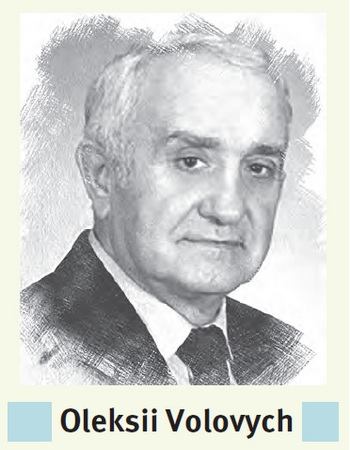
 So, Oleksii Volovych draws the readers’ attention to the fact that the geopolitics of Central Asian countries is somehow beginning to acquire political specificity, which was bound to happen, despite the previous political steps of their leaders. By the way, the author aptly specifies this in the first sentence of his text: “There is no common border between the countries of Central Asia and Ukraine, but there is something in their historical development that can unite them”. And then he describes and analyses the positions of the countries that relatively recently were in the role of “a new historical community, the Soviet people”. But when they gained independence as countries, they subsequently had to defend it, in particular, looking back at the Russian war in Ukraine. The author describes exactly how this happens, supporting it with specific facts and adhering to an objective point of view. The article (and this is the first part of it) deals with the events in Kazakhstan, Uzbekistan, Turkmenistan, Kyrgyzstan, and Tajikistan, and their reaction to Russia’s aggression against Ukraine. To assume that the reactions of these countries are the same, would be wrong, because the leadership of each country is trying to proceed from its own interests, from what can be beneficial to them and what, on the contrary, can increase problems due to the Russians’ possible discontent. This is what makes them sit on the political “twine”, which is not always possible to avoid due to various conditions, including (or primarily) those that arise in the cooperation with Russia. Suffice it to cite one of the many examples of cooperation with Turkmenistan, when the author describes its position on Russia’s full-scale invasion of Ukraine — “…From the moment of Russia’s full-scale invasion of Ukraine to the present day, Turkmenistan’s position remains unclear. Neither during diplomatic contacts nor in official statements do Turkmenistan’s leaders raise the topic of the war in Ukraine. Turkmenistan’s media do not mention Russia’s attack on Ukraine either”. The same position is taken by the leadership of Kyrgyzstan, where district courts in the capital Bishkek have banned all meetings and rallies against Russia’s war in Ukraine. The author explains that the basis of such a weak reaction is “…fearing the Kremlin and not daring to recognize it as an aggressor, or to take any step without its permission or to say something it does not like. This genetic fear was inherited by Central Asian leaders from the Soviet era, when all local leaders in the post-Soviet republics were obedient executors of orders from Moscow. These fear and obedience have been passed down from generation to generation, and today’s Russian propaganda is pushing the postulate that “national minorities without Russians are nobody and nothing”, even though people in some former Soviet republics are living much better than in the former metropolis with its vast natural resources”.
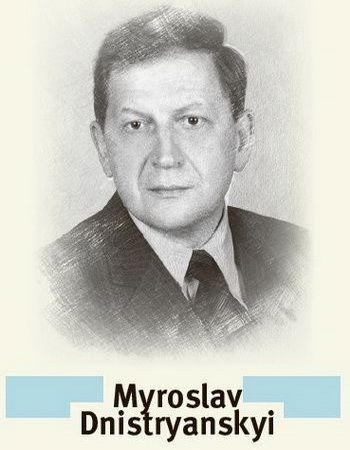 The approach to this topic is somewhat similar in the article by Myroslav Dnistrianskyi, published in the journal under the heading “School of Geopolitics” and entitled “The Caucasus as an Arena of Foreign Geopolitical Confrontation, Internal Ethno-Political Self-Determination and Competition”. At the beginning of the article, the author points out that “The Caucasus is characterized by enormous diversity, both in terms of ethnicity and religion. These realities are characteristic of most large mountainous regions, which, by limiting internal communications, have contributed to the preservation of ancient customs, traditions, and the entire way of life”. And what is happening there today, although we are well aware from the media, is not certain, since the real causes, along with their perpetrators or instigators, are not always identified. The author even considers it appropriate to remind us that the Caucasus consists of two parts — the North Caucasus and the South Caucasus — and considers it incorrect to call the South Caucasus Transcaucasus, as Moscow does, and explains in particular that the relatively recent creation of self-proclaimed states there has become one of the main instruments of Moscow’s policy aimed at keeping the South Caucasus in the orbit of Russian influence.
The author also recalls some tragic events of that time, including the 2008 war, when Georgia was defeated in the confrontation with the Russian attacker, as a result of which Abkhazia became Russia’s puppet, completely dependent on it politically and economically. But the worst consequence was, the author concludes, “that Russia’s aggression was not adequately condemned at the international level, and no sanctions were imposed against Russia, which set a dangerous international political precedent, freeing the Kremlin’s hands for new geopolitical adventures”. One of the biggest of these was the Russian-Ukrainian war, the active phase of which began with Russia’s attack in 2022. What will happen in the Caucasus next? Which major political players are ready to push (and are pushing) their interests? And what would be best for the inhabitants of those lands in the final geopolitical analysis? The author has an answer to these questions: “…The most optimal option for the future development of political events in the North Caucasus would be the creation of a Confederation of the Peoples of the North Caucasus as a sovereign Islamic but secular state. But events could go in a different direction, depending on the domestic political situation in Russia”.
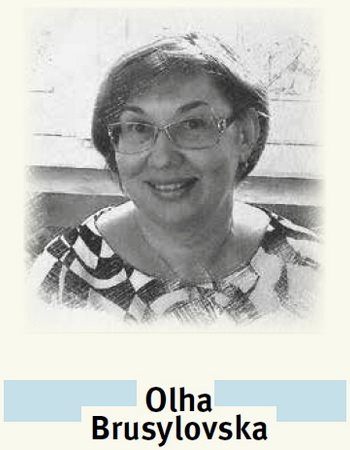 The authors of two other articles in the journal are united not only by the “International Policy” heading, but by Latin American topics as well. Both of our colleagues, who are well versed in political science, offer us their works: Olha Brusylovska, Doctor of Political Sciences — “Voting at the UN on the Ukrainian Issue: the Cases of Cuba and Nicaragua” and our regular author Kateryna Vakarchuk, Ph.D. in Politics — “The Russian Information “Landscape” in Cuba During the Russian-Ukrainian War”.
The attitude of South American countries to the Russian-Ukrainian war cannot be called unambiguous. Without going into explanations, it is enough to note that their policy was shaped by current and historical events, in which the Western countries (and not they alone) were quite active. That is why today we see some South American leaders trying to outline their own position, different from their neighbors, while selecting their own arguments. To some extent, it may depend on foreign information influence, economic achievements or problems, social traditions and plans for the future. An example is the positions of some of them at the Peace Summit in June 2024, when their representatives did not agree with the point of view of the majority in assessing the Russian-Ukrainian war. What can be the reason for such positions and what can help bring the truth to that continent — this is what the articles of respected authors tell. Here is just one excerpt from Olha Brusylovska’s article: “…The policy of most countries in the region is reserved, but it partially coincides with the policy of Western countries. Ivan Briscoe, Program Director for Latin America and the Caribbean at the International Crisis Group, believes that this position openly condemns unprovoked aggression, violations of international law and territorial sovereignty — all of which have been key to Latin American diplomacy over the past 200 years, which has helped the continent avoid armed interstate conflicts”.
As for the “radius of analysis”, the article refers to such countries as Mexico, Peru, Chile, Venezuela, Cuba, Nicaragua, Bolivia, Argentina, and Brazil. By the way, the article also mentions the Ukrainian diaspora in those countries, which cannot be ignored when defending Ukraine’s position on such an interesting continent. Ukrainians there can and should be involved in explaining to the locals what is happening in Ukraine and why. The author is convinced that at the beginning of the Russian aggression, all Latin American media lacked quality analytical materials on the events in Ukraine — “According to a survey published in late March 2014 in the Mexican newspaper Excelsior, only 28 % of respondents knew about the existence of Crimea…”
 As for the article “The Russian Information “Landscape” in Cuba During the Russian-Ukrainian War”, by Kateryna Vakarchuk, it is enough to read the subheadings to understand what the author means: “From Russian Propaganda — to Cuban Agitation”, “From “Soft Diplomacy”— to Principled Decisions”, “Back to the Future…”, “Once an Alley — Now a Mercenary. Or Vice Versa?”, “The Russian Orthodox Church — As a Cinema Hall for Propaganda”. Even from them, one can understand the extent of Russian influence on Cuban society and how this influence should be overcome so that it can objectively assess world events, including what is happening in Ukraine. As well as the last paragraph of the article, in which the author draws the following disappointing conclusion: “…As for Cuba, which is discussed in this article, I believe that relations with it have even worsened over the past two years. First of all, due to the fact that the Cubans are significantly dependent on Moscow. And breaking this “knot of dependence” in the near future is not an easy task, including for the Ukrainian Embassy in Havana”.
Under the heading “Geopolitics and National Security” we offer our readers historical research by Serhii Rudiuk, political expert. This time, his article is published under the title “Polish Law and Justice in the Past and Present”, which can be used to define its content in general. The author mainly talks about war crimes and the states’ responsibility for them and how this can affect international relations. For example, he addresses the issue of state recognition of the Holodomor of 1933 in Ukraine. It has already been recognized as an act of genocide by 28 countries of the world, while others are studying or discussing it, determining their position, which sometimes raises questions. The author even sharply points out what he means — that “The efforts of the political elites of individual states to shift their guilt before the Ukrainian people onto the Ukrainians themselves are more like slander. Historical facts confirm this thesis. For example, about Ukrainian-Polish relations in the period from the second half of the 19th to the beginning of the 21st century”.
 The article also has subheadings that help to see what it is about in order not just to draw the reader’s attention to certain historical events, but also to explain the true nature and background of the actions of their participants. For example, in the first chapter, “Halychyna As Part of the Austrian Empire”, the author reminds us about the rights of the residents if they were not Austrians or Hungarians. The author describes the curial electoral system, the autonomy of Halychyna when it became part of the empire, the introduction of Polish as the official language, and the difficulties of forming a Ukrainian intelligentsia, whose number was catastrophically small and could not increase for certain subjective reasons. The author gives the following example, which can explain much of what happened in Halychyna at the beginning of the last century: “In 1900, 95 % of Ukrainians in Halychyna lived from agriculture. Of those, 80 % were land-poor, as 45 % of the arable land belonged to about 2,400 Polish landowners, and the remaining 55 % of the farmland was distributed among thousands of tiny peasant farms. Landlessness caused massive emigration of Ukrainians from Halychyna to America and Canada”.
The author also analyzes the events that took place in Halychyna during and after the First World War, mentions the known 1920 Polish-Ukrainian march on Kyiv, and those responsible for the termination of the existence of the Western Ukrainian People’s Republic and the Ukrainian People’s Republic, as a result of which the ethnic territories of the Ukrainian people were divided among their neighbors, and Ukrainians were subject to new waves of terror from foreign occupiers.
Next parts of the material are presented under such subheadings as “Pacification and Its Consequences”, “The Polish Underground and Its Allies”, “Mutual Exchange of the Population”, Operation “Vistula”.
 In the interview in the section “Visiting “BINTEL”, former military historian, Doctor of Historical Sciences, retired Colonel Ivan Mukovskyi answers our questions. The title of the interview includes statement that not only summarizes the topic of the interview, but also testifies to its relevance, especially since the conversation with the author took place on the eve of May 8, when Day of Remembrance is celebrated, when the victims of World War II are honored: “Today we saw for ourselves how our neighbors try to conceal the true goals of the war waged against us”.
Traditionally, the shortened version of the interview will later be published on the website of “Borysfen Intel”, but even so, the reader will be able to learn about research activities in Ukraine since its independence, when activists began to determine the contribution of its citizens to the Victory, in particular, their irreversible losses. By the way, the author of several books on such events, which are widely known in our society, has added to their number one more, which tells about such research activities when there were attempts to “correct” them for reasons that were known then (as now). This conversation with Ivan Mukovskyi is relevant because some of our neighbors deny the sacrifice of Ukrainian citizens, taking credit for all the victories in that war. But what really happened back then and how it happened, today cannot be hidden by slogans or various “studies” conducted by some “scientists” or ideologues who, through their political activities, seek to join the true heroism of our ancestors. This is what Ivan Mukovskyi points out in the very first sentence of his interview: “…The fact is that people refer to past historical events in two cases: either when they want to change them, that is, manipulate them, or, on the contrary, to learn the truth. During the time of Ukraine’s independence, a great deal of research work was done on the Second World War to find out the real human losses of our Ukrainian society, which are presented on the pages of “Ukraine’s Book of Memory”. And it is sad to hear from the Russians that they could single-handedly defeat the German-fascist attacker in that war”.
We hope that the interview will be of interest to our readers, especially today, when Ukrainian society is proving its true colors on the frontline of the Russian-Ukrainian war.
Oleh Makhno
“BINTEL” Journal, № 2–2024


