
 Under any regime the Kremlin will do its best to destroy our state
Ivan Sichen
The beginning of this year’s summer was full of events, crucial for both the world and Ukraine. These included J. Biden’s first visit to Europe as President of the United States, the meeting of G7 leaders in the United Kingdom, NATO and the USA-EU summits in Brussels, and the personal meeting of the Presidents of the United States and Russia in Geneva. The results of these events allow us to draw conclusions about the prospects of the world situation, peculiarities of relations between the world’s leading states and their alliances, as well as the role and place of Ukraine in the system of international relations. All this directly affects the interests of Ukraine and requires more detailed analysis.
Needless to retell what issues were discussed during these events and what decisions were made. They are all well known from the media. I would just like to remind you of the general background against which these events took place.
Its main peculiarities are: continuation of the COVID-19 pandemic; gradual recovery of the world economy; a new outbreak of confrontation between Russia and the West; resumption of dialogue between the United States and China while maintaining tensions between the parties; Russia’s intensified military activity around Ukraine.
Besides, relevant have become issues related to the nuclear programs of Iran and North Korea, armed conflicts in some regions of the world, which are at the intersection of US-Russian and US-Chinese interests, international terrorism, and global climate change.
|
…Russia deployed its troops in the North-Western and South-Western directions, in fact, — created two fronts against the US/NATO and Ukraine… |
All this is accompanied by large-scale demonstrations of military force by Russia and the United States/NATO. For example, from March to April this year, under the pretext of preparing strategic command and post exercise “West-2021”, Russia deployed its troops in the North-Western and South-Western directions, in fact, — created two fronts against the US/NATO and Ukraine. And immediately after J. Biden arrived in Europe on June 9, 2021, Moscow announced the beginning of the active phase of the exercise.
At the same time, the United States/NATO has launched the main phase of the DEFENDER-Europe 21 strategic military exercise. During the exercise were effectively created the same two fronts against Russia in the Black Sea and Baltic regions, including with US troops deployed from the mainland.
These processes and trends have become key topics of international meetings in June of 2021. At this: the G7 leaders mainly addressed world-class issues; NATO summit — prospects for the development of NATO and threats to transatlantic security; the US-EU summit —economic cooperation between America and Europe; meeting of J. Biden and V. Putin — problems in US-Russian relations, including the situation around Ukraine. The results of the discussion of these issues and problems allow us to draw some conclusions:
|
…The resumption of the global confrontation between Russia and the West is accompanied by the emergence of a new line of tensions between America/Europe and China… |
In recent years, the situation in the world has indeed become much more complex, even than it was during the last Cold War. For example, while at that time the main threat to strategic security of the world was the confrontation between the US/NATO and the USSR, now the resumption of the global confrontation between Russia and the West is accompanied by the emergence of a new line of tensions between America/Europe and China.
The COVID-19 pandemic continues to be a global danger for humanity, recognized by leading Western countries. At this, it is a separate factor influencing international relations, including between the West and China. Thus, the G7 leaders have in fact accused China of having artificially created the COVID-19 virus. In turn, at the initiative of Beijing, the World Health Organization called on all countries not to politicize the situation around the pandemic. A certain compromise in this matter was the G7’s decision to increase assistance to the most affected countries, in particular, by supplying them with coronavirus vaccines.
 |
| The COVID-19 pandemic continues to be a global danger for humanity |
|
…World GDP growth up to 5.6 % will be the strongest post-recession pace in 80 years… |
Despite the continuation of the COVID-19 pandemic, the world economy is beginning to actively recover. The G7 leaders agreed with the World Bank’s forecast for the possibility of accelerating world GDP growth from 4.1 % to 5.6 %. This will be the strongest post-recession pace in 80 years. First of all, this figure will be provided by accelerating the development of the world’s largest economies, namely — the United States by 6.8 % and China by 8.5 %. But for developing countries, the forecast has been lowered to 2.9 %. For Ukraine, this figure in 2021 is expected at 3.8 %.
The “collective West”, led by the United States, is restoring its position in the world, which was violated as a result of the isolationist policy of former US President D. Trump. The G7, NATO and US-EU summits demonstrated the unity of their approaches to resolving international problems, as well as the commitment of leading Western countries to common civilizational values and readiness to defend them.
In addition to strengthening transatlantic solidarity, economic ties between the United States and Europe are expected to deepen as part of a free trade area. The first step towards this was the mutual tariffs suspension;
As a result, the West is once again leading the world and gaining the ability to determine world politics. This confirms the idea of the supremacy of democratic norms over the principles of totalitarianism, which allows the West to talk to its opponents from a position of strength.
 |
| The “collective West” is restoring its position in the world and ability to determine world politics |
The United States will not “reset” relations with Russia as it did in 2009, but will continue to press hard on it to stop its aggressive actions against the West and its partners, especially Ukraine.
In contrast to the time when the United States and Europe “forgave” Russia for its attack on Georgia, the redistribution of Yukos money among Russian oligarchs and the arrest of its founder M. Khodorkovsky, as well as other manifestations of Moscow’s violation of international law and democratic principles, Russia’s annexation of Crimea and occupation of the Donbas have become “red lines” for the West.
 |
| The United States will not “reset” relations with Russia as it did in 2009. Russia’s annexation of Crimea and occupation of the Donbas have become “red lines” for the West |
|
…The growing threat from Russia and China has been a major factor in the consolidation of the Western world around the United States… |
US allies in both Europe and Asia support US policy toward Russia and China. Moreover, the growing threat from them has been a major factor in the consolidation of the Western world around the United States. Thus, at the international events involving the United States, the G7, NATO and the EU, Moscow’s malicious behavior and its destabilizing role in the world, which include interference in the democratic systems of other countries, were mentioned.
In turn, China’s economic expansion, which is accompanied by increasing military capabilities and building up armed forces in various regions of the world, has been defined as the main threat. With this in mind, the G7 leaders agreed for the first time on a plan to counter China in Asia, Africa and Latin America. In particular, by 2035 about 40 trillion US dollars are going to be allocated to develop transport and energy infrastructure in those regions, which should be an alternative to the Chinese “Belt and Road” initiative.
US/NATO military plans to deter Russia and China are becoming final and irreversible. According to the draft of the new NATO 2030 strategic concept, which is planned to be adopted this year, countering these countries is one of the main tasks of the Alliance. In preparation of the Concept, the NATO summit identified a number of key spheres of the Alliance’s activity, including strengthening collective defense and deterrence, deepening cooperation with the EU, Latin America and the Asia-Pacific to strengthen international order and capacity building support to those regions.
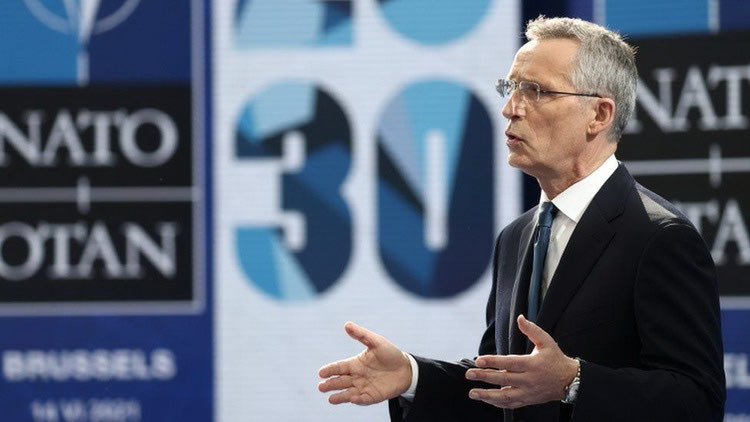 |
| US/NATO military plans to deter Russia and China are becoming final and irreversible |
Despite the negative impact of Western sanctions, Russia’s current ruling elite will not make concessions but will continue to confront the West to the last opportunity. At this, Russia will continue to pursue an anti-Western policy in cooperation with China and other “third world” countries that have their own differences with the United States and the European Union, as well as continue subversive actions against the West and demonstrations of military force.
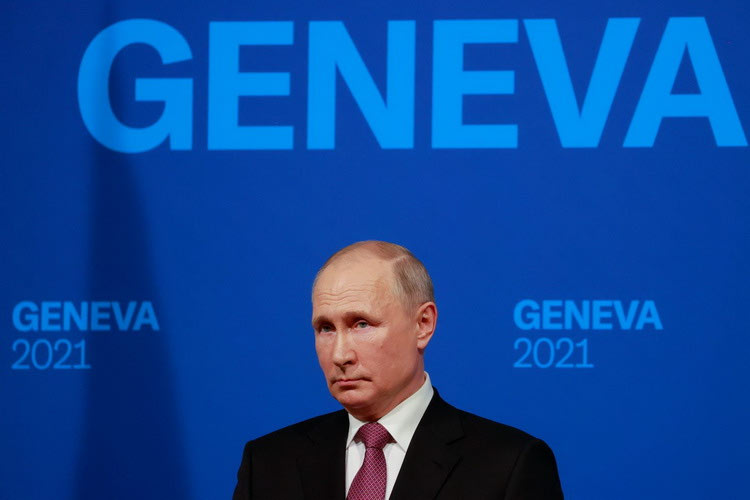 |
| Russia will continue subversive actions against the West and demonstrations of military force |
Given the persistence and apparent further intensification of the US/NATO/EU’s confrontation with Russia and China, the parties will try to refrain from excessive exacerbation of their relations, let alone an armed conflict. Some compromises between them on individual issues of mutual interest, in particular, in the sphere of global security, are not excluded either.
|
…The most important result is that Ukraine will continue to be at the center of the confrontation between Russia and the West… |
What does all this mean for Ukraine? The most important result is that Ukraine will continue to be at the center of the confrontation between Russia and the West, which is due to the role of our state as one of the decisive factors influencing the balance of power in Europe.
That is why Ukraine continues to be of strategic importance for the United States and NATO as an “outpost” of the West in deterring Russia and one of the “cornerstones” of European security. As a result, the United States, NATO, and the EU will continue to actively support and assist Ukraine in the political, economic, and military spheres.
|
…Ukraine continues to be of strategic importance for the United States and NATO as an “outpost” of the West in deterring Russia and one of the “cornerstones” of European security… |
This is confirmed by practical actions of our Western partners. In particular, in March 2021, the United States allocated 125 million US dollars for the purchase of Mark VI patrol boats for Ukraine, counter-artillery radars, counter-unmanned aerial systems, secure communication gear and electronic warfare equipment. And in June 2021, in the preparation of the meeting between J. Biden and V. Putin, the United States allocated another 150 million US dollars as military aid to Ukraine, including for the improving of the operational safety and capacity of Ukrainian Air Force bases.
Moreover, Ukraine is already effectively included in US/NATO operational plans in Central and Eastern Europe and the Black Sea region. Evidence of this is Ukraine’s involvement in US/NATO military exercises in those regions, including DEFENDER-Europe 21.
At this, NATO remains open for Ukraine, which was officially enshrined in the Alliance’s final declaration. In addition, the Alliance’s position on Russia’s having no veto power over NATO decisions, including on the admission of new members, was reaffirmed.
 |
| NATO remains open for Ukraine, which was officially enshrined in the Alliance’s final declaration |
Western countries will continue to side with Ukraine in resolving the problem of settling the conflict in the Donbas. Despite Moscow’s attempts to present it as a “civil war” in Ukraine, the United States and Europe unequivocally consider Russia a party to the armed confrontation in the East of our country.
|
…Ukraine will not become a member of the Alliance in the nearest future, nor will it even be granted with the Membership Action Plan. Therefore, the most important are the political will of the leadership of our state in deterring Russia, as well as a clear understanding of the impossibility of reaching any constructive arrangements with it… |
However, given the reluctance of European countries to engage in direct military confrontation with Russia, Ukraine’s lack of consensus on its membership in NATO, delayed reform processes, shortcomings in fighting corruption and other similar issues, it will not become a member of the Alliance in the nearest future, nor will it even be granted with the Membership Action Plan.
Therefore, Article 5 of the North Atlantic Treaty on collective defense will continue not to apply directly to Ukraine. As a result, we must first and foremost rely on our own strength. Especially since Ukraine will continue to be subject to Russia’s aggression. In this regard, the most important are:
- the political will of the leadership of our state in deterring Russia, as well as a clear understanding of the impossibility of reaching any constructive arrangements with it. As historical experience and current events show, Russia has always been and remains Ukraine’s main enemy, and under any regime the Kremlin will do its best to destroy our state;
- strengthening the Armed Forces of Ukraine, intelligence and other special services. They are the main guarantors of the security of our state and its citizens. Because of this, no action to reduce Ukraine’s security services, under pretext that the war with Russia is over, is inadmissible. In fact, the war is now unfolding in full force;
- suppression of internal enemies in the form of: oligarchs, for whom Ukraine is only a source of their own enrichment; corrupt officials of all ranks, who not only undermine the Ukrainian economy, but are also the main instruments of Moscow’s policy against Ukraine; pro-Russian opposition, which openly betrays Ukrainian interests in favor of Russia.
In general, this is already being implemented in practice, which is the main achievement of Ukraine in its state development.


