
LAST WEEK’S KEY FACTORS AND MAIN TRENDS
IN THE DEVELOPMENT OF THE SITUATION AROUND UKRAINE
(March 13–19, 2017)
I. Major-Profile Events in the Development of the Situation around Ukraine
Last week, the major-profile event in the development of the situation around Ukraine was the 3rd anniversary of Russia’s annexation of the Ukrainian Crimea on March 18, 2014 (the date of V. Putin’s signing the presidential decree to include the Crimean Peninsula into Russia). In the context of this event, the EU, the USA and other Western countries confirmed the invariability of their negative attitude to Russia’s armed aggression against Ukraine.
Thus, on 13 March 2017, the Council of the European Union prolonged (for another 6 months) the sanctions against Russia over the RF’s military aggression and occupation of the territory of Ukraine. The reason for this decision was the absence of any arguments for changing the sanctions regime. At the same time, on 16 March 2017, the European Parliament adopted a Resolution “Ukrainian Political Prisoners in Russia and the Situation in the Crimea”. The Resolution calls on the Council of the EU to support Ukraine’s suit against Russia in the UN International Court of Justice, confirms the illegality of the annexation of the Ukrainian Crimea by Russia, and also recognizes violations of human rights in the Crimean peninsula. Besides, the European Union’s High Representative for Foreign Affairs and Security Policy, Federica Mogerini, called on all UN Member States to join sanctions against Russia.
|
|
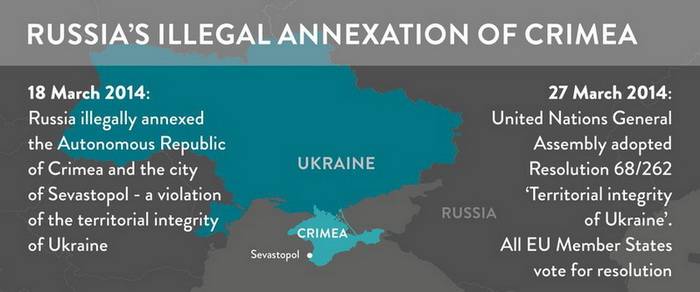
The US leadership’s position on Russia remains firm. March 16, 2017, the US Department of State made a special statement condemning Russia’s annexation of the Crimea and oppressing the freedoms of citizens in the Peninsula, and also stressed Washington’s firm position to maintain sanctions against Russia until the Crimea is returned to Ukraine. This position was confirmed by US senators during the committee hearings in the upper house of the US Congress on the topic “Assessing US Sanctions against Russia — the Next Steps”. According to the representative of the Center for Sanctions and Prevention of Illegal Financing E. Lorber, the main reason for this is “…Moscow’s hostile activity, which is a threat to the interests of the United States”. As examples of such activity were mentioned the following: Russia’s annexation of the Ukrainian Crimea and the provocation of the conflict in the East of Ukraine, the support to the Assad regime in Syria, and interference with the presidential elections in the United States.
In turn, on 15 January 2017, the Office of the United Nations’ High Commissioner for Human Rights released a report on the observance of human rights in Ukraine, which states that there are significant problems in this area in the occupied territories of the Donbas and in the annexed Crimea.
In general, these circumstances yet again have proved the failure of Moscow’s attempts to influence the USA and EU’s policy. With this in mind, the Russian leadership is moving to a new stage of the “hybrid” war against Ukraine by taking steps along the lines of recognizing the “DPR” and “LPR” as a means of pressure on Ukraine and its Western partners.
In particular, recently there has been done the following: Russia’s recognition of “passports” and other “documents” of the self-proclaimed republics; “nationalization” of Ukrainian enterprises in the occupied territories; beginning of deliveries of coal from “DPR” and “LPR” to Russia. In addition, the government of the Russian Federation is implementing a plan to attract large enterprises of the Russian metallurgical industry to cooperate with profile factories that are under control of the self-proclaimed republics. In early March 2017, such proposals were made to the leaders of the Russian holdings of Metalloinvest and Severstal.
At this, Moscow resorts to direct blackmail of Ukraine. Thus, according to the Representative of the Russian Federation to the OSCE A. Lukashevich’s statement of March 17, 2017, Russia can cancel its decision to recognize the “DPR” and “LPR”’s documents if Ukraine “has implemented the Minsk Agreements”, including the termination of the ATO, granting special status to the self-proclaimed republics, and termination of the blockade of the Donbas.
In fact, within the framework of these actions, Russia repeats the scenario implemented by Moscow in relation to Abkhazia and South Ossetia, namely: providing military assistance to self-proclaimed republics, incorporating them into the economic system of the Russian Federation, recognizing quasi-state entities and establishing relations with them on the basis of political, economic and military treaties.
Apart from this, Putin’s regime is actively taking measures to destabilize the situation and provoke a political crisis in Ukraine. For this purpose, they use the ambiguous attitude of the Ukrainian public and the world community to the decisions of the Ukrainian leadership about the temporary suspension of transport communication with the occupied territories of the Donbas, as well as the introduction of sanctions against Russian banks operating in Ukraine. On the basis of this situation, a powerful information campaign is underway to split the Ukrainian society, as well as to discredit Ukraine in the eyes of the West.
At this, the leadership of the Russian Federation admits the significant negative consequences for Russia of the above-mentioned decisions of Ukraine, which badly damage the Russian financial system. According to experts, Ukraine’s sanctions against Russian banks can lead to the loss of about $5 billion, and to undermine those banks’ image in other countries. Given this, on 17 March 2017, President V. Putin held an emergency meeting of the Russian Security Council to determine possible directions for responding to Ukraine’s actions.
Besides, Moscow is seeking new “points of contact” with the USA and the EU, as well as opportunities to influence their positions using the “fighting international terrorism” factor. Thus, on 17 March 2017, commenting on Russia’s foreign policy priorities, Russian Foreign Minister S. Lavrov once again expressed Moscow’s being interested in “creating a broad anti-terrorist coalition on an international legal basis for a politico-diplomatic settlement of crises and conflicts, especially in the Middle East”. He also spoke for “the practical implementation of the USA and EU’s statements on the need to unite the world’s efforts to combat international threats”.
In this regard, a new direction of Moscow’s actions may be Libya. Last week the leaders of the Libyan opposition addressed Russia with a request to provide assistance to counteract terrorists. At this, the American Intelligence has pointed out the deployment of special forces of the RF Armed Forces on the territory of Egypt near the border with Libya. In October last year, a unit of the airborne troops of the Russian Federation (up to a company from the 106th Tula Airborne Division plus an operational group) was already sent to Egypt for joint antiterrorist exercises.
|
Note: An analysis of the available information shows that the Kremlin is concerning the possibility and preparation of a joint military operation with Egypt in the region (Middle East and North Africa), most likely in Libya, with the temporary deployment of a limited contingent of the RF Armed Forces. With the help of such an operation on the territory of Libya, V. Putin will try to shift the emphasis from the political support to B. Assad in Syria to efforts to combat the ISIS in the region. Besides, the Kremlin will have an opportunity to develop its traditional rhetoric about the efforts to stabilize the situation in the countries where the situation has got out of control, as Russia says, “…as a result of US policy”. In case of some EU countries’ (possibly France or Italy, etc.) possible joining the operation, the Kremlin will also have a chance to declare about Russia’s being not isolated and about the “breakthrough” in relations with the EU. According to Borysfen Intel’s experts, such Russia’s foreign-policy “dribbings” in the region are aimed at creating competition with the United States, as well as creating confrontational situations that would allow Moscow to divert attention from the events in Eastern Europe (including around Ukraine), to strengthen Russia’s positions in negotiations with Washington, and ultimately — to reach an agreement with the USA on distribution of zones of influence in the world. |
II. The Situation in the Conflict Zones in Ukraine
The development of the situation around the conflict zones in Ukraine fully meets Moscow’s policy towards our State.
2.1. The East of Ukraine (the ATO zone)
Thus, during the regular meeting of the Trilateral Contact Group in Minsk on 15 March 2017, representative of the Russian Federation B. Gryzlov again raised the question of using the so-called Steinmeier’s formula to settle the conflict in the Donbas (in Moscow’s interpretation, it provides for Ukraine’s implementation of the political part of the “peace plan” before the withdrawal of Russian troops from the occupied territories of the Donbas). At this, the decision of the National Security and Defense Council of Ukraine of March 15, 2017 on the temporary suspension of transport communication with the occupied territories of Donetsk and Luhansk regions was regarded as a “violation of the Minsk Agreements”.
In response, Ukraine confirmed its position on the inadmissibility of using the “Steinmeier formula”, as such that fundamentally contradicts Ukraine’s interests. Besides, we stressed the unacceptability of actions of Russia and the leaders of the self-proclaimed republics in terms of recognizing the “documents” of the “DPR” and “LPR”, as well as the “nationalization” of Ukrainian enterprises in the occupied territories. At the same time, Ukraine expressed its readiness to continue discussing the issue of withdrawing troops from the front line. Because of the sides’ disagreements on the main issues of the talks, the meeting once again ended without a result.
Against this background, the Russian-terrorist troops continued active shelling of the ATO forces’ positions and civilian settlements (first of all Avdiivka) with a peak intensity of more than 100 per day. By the already constant “tradition”, the main peak of shelling was on the day of the meeting of the Trilateral Contact Group in Minsk.
2.2. The Crimean Peninsula
The third anniversary of Russia’s annexation of the Ukrainian Crimea was widely used by Moscow as an opportunity to confirm the “legality of the Peninsula’s returning to the Russian Federation”, as well as the “positive consequences” of this act. At this, in the celebrations were involved foreign representatives, in particular, members of the European Parliament and of legislative bodies of a number of European countries, including the Federal Republic of Germany, Great Britain, the Czech Republic and Serbia. As always, they represented all sorts of radical, nationalistic, pro-Russian and Euro-skeptic parties. Through this, despite the firm positions of the vast majority of countries about non-recognition of the Crimea’s “belonging to Russia”, V. Putin’s regime tried to create the impression of “Moscow’s policy being supported by the world community”.
|
|
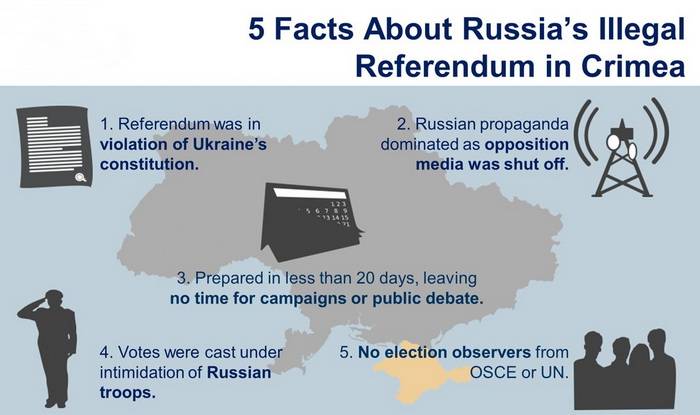
Against the background of general euphoria about the “Russian Crimea”, a number of Russian mass media (including pro-governmental ones) acknowledged the complication of socio-economic problems in the Peninsula, including: rising of the prices for housing and basic types of goods to a level higher than in Moscow; fall of real incomes of the population (in particular, of the employees in the budgetary sphere); deterioration of the investment climate in the Peninsula, which significantly complicates the development of the Crimean economy.
March 17, 2017, the human rights organization Amnesty International released a report on human rights violations in the Crimea. The report points out the creation of obstacles in the work of the media, pressure on lawyers, and persecution of activists who advocate freedom of speech and assembly in the Peninsula. According to human rights activists, political repressions in the Crimea are worse than in the territory of the Russian Federation itself.
At this, in the context of activization of the activities of the opposition forces of Russia, the Crimean issue is becoming one of the factors for the resumption of political confrontation in the Russian Federation. Thus, unlike previous years, the Communist Party of Russia refused to celebrate the anniversary of the annexation of the Crimea. According to the Communist Party’s leader G. Zyuganov, “the Communists do not intend to play along with the authorities” and are for changing the socio-economic course of the country. At this, the Communist Party planned to hold the action under the slogans of the resignation of the government of the Russian Federation, but the Moscow authorities did not give it permission for such an event.
2.3. Other Aspects of the Russian Federation’s Actions Against Ukraine and the West
As part of its demonstration of military force, Russia is actively conducting operational and combat training of the RF Armed Forces.
 |
 |
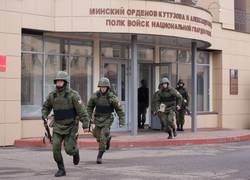 |
| Unannounced inspections of combat readiness of the RF Armed Forces and Rosgvardia | ||
For example, on 14 March 2017, there began another training of the Strategic Missile Forces with combat patrolling of the Topol-M and Yars missile systems. Nine regiments of the Strategic Missile Forces were involved in the training in Ivanovo, Novosibirsk, Sverdlovsk regions and in the Altai Territory. They mastered bringing to field positions the missile systems, their engineering equipment and the guard.
Besides, on 13 March 2017, there started an unannounced inspection of the combat readiness of the troops of the Southern Military District of the RF Armed Forces, including in the Stavropol and Krasnodar Territories, in Astrakhan and Volgograd Regions, Chechnya, Karachay-Cherkessia and Adygea, as well as in Armenia and Abkhazia. Approximately 6,000 servicemen and 1,500 units of weapons, combat and special equipment will be checked on. More than 20 headquarters and other management bodies are engaged in the inspection.
There was also a sudden inspection of the 14th Air Force and Air Defense Army, which is operatively subordinated to the Central Military District of the RF Armed Forces. Within the framework of the inspection, were mastered the tasks of withdrawal of the tactical aviation (MiG-31 fighters and Su-24 front bombers) from under the conventional enemy’s strike and its relocation from airfields of permanent deployment in the Perm Krai and Chelyabinsk region to the Volga region and Western Siberia.
In turn, on 13 March 2017, as part of the preparation of the leadership of the Russian Federation for the protests of truckers and farmers (scheduled for March 27, 2017), there began the checking the combat readiness of Rosgvardia’s units and groupings in the Southern and Central Federal Districts of Russia (for the first time since its inception). They are mastering struggle against “terrorist and extremist groups”, as well as strengthening the protection of important state bodies and objects of energy, industrial and transport infrastructure.
Actions are also continuing to build up a grouping of the RF Armed Forces near the border with Ukraine and in the Black Sea region. Thus, the RF Defense Ministry has confirmed plans to deploy a new 8th Combined Arms Army with the headquarters in Novocherkassk, Rostov Region, as part of the Southern Military District of the RF Armed Forces. In 2017, the Army’s headquarter and the Control and Communication Brigade will be created. According to preliminary information, the 150th Motorized Infantry Division will be subordinated to the 8th Army. The Division was deployed and reached operational readiness in 2016 in the vicinity of Novocherkassk.
Along with this, according to Georgia’s leadership, since the beginning of this year, the S-300 anti-aircraft missile system has been deployed on the territory of Abkhazia occupied by Russia.
Against this background, the Russian leadership continues to use new forms of economic pressure on Ukraine. Thus, the Russian “Sberbank” has introduced additional restrictions on the withdrawal and transfer of funds of Ukrainian customers in Ukraine and abroad. According to the new rules, legal entities cannot transfer more than 3 million Hryvnyas per day to accounts in other banks. Besides, within 24 hours one cannot withdraw from a card account more than 20 thousand Hryvnyas.
III. Ukraine, International Organizations and Leading Western Countries
3.1. International Organizations
The European Union. Along with the political support for Ukraine, the leadership of the European Union continues to provide financial assistance to our state. According to the head of the EU Delegation to Ukraine, H. Mingarelli, in early April 2017, Ukraine will receive a second credit tranche in the amount of 600 million Euros. These funds have been allocated within the framework of the EU’s decision of April 2014 on the provision of 11 billion Euros to Ukraine, including: 1.6 billion — in loans; 1.4 billion — in grants; 5 billion — from the European Bank for Reconstruction and Development; 3 billion Euros — from the European Investment Bank.
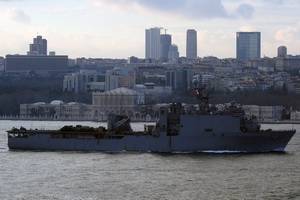
NATO. According to the Alliance’s political decisions on the military deterrence of Russia, the NATO’s command is taking measures to ensure the permanent presence of the NATO’s Joint Navy Force in the Black Sea region. March 16, 2017, a French La Fayette missile frigate entered the Black Sea. At the same time, on March 17, 2017 American amphibious ship Carter Hall entered the Black Sea. These ships will participate in the Spring Storm-17 joint exercise with Romania, which will take place near the Romanian city of Constanta from 18 to 21 March, 2017.
|
Note: French La Fayette missile frigate built on Stealth technology. The frigate is armed with modern anti-ship missiles Exocet with a range of 70 km and the anti-aircraft missile system Crotale Naval. The last time the ship went to the Black Sea in 2015 and, in particular, paid a visit to the port of Odessa. USS Carter Hall belongs to a series of amphibious landing ships and was commissioned in September 1995. The ship has a crew of up to 400 people, can take on board 500 marines with military equipment and weapons. Means of delivery ashore — two amphibious assault craft ships, small amphibious ships, tanks, landing helicopters. |
 |
 |
|
French frigate La Fayette (F710) and American amphibious dock landing ship |
|
Besides, on 17 March 2017, the first unit of the British Armed Forces (130 military servicemen) arrived in Estonia, which will become the core of NATO’s Battalion Tactical Group (BTG) in Estonian territory. The total number of the BTG will be 1.2 thousand military personnel, including from the Armed Forces of Great Britain (800 people), as well as from France and Denmark. Next week, the military equipment is due to arrive, including the Challenger 2 tanks, the Warrior infantry fighting vehicles and AS-90 self-propelled howitzers.
3.2. Leading Western Countries
The USA. As part of the adoption of the US state budget for the next financial year (beginning on October 1, 2017), the administration of D. Trump demonstrates the invariability of its priorities aimed at ensuring the security of the United States of America. Thus, according to the draft of the main financial document, promulgated by D. Trump on March 16 this year, it is expected that the US defense spending will increase by 30 %, due to the reduction of expenses for the support of other countries.
Along with this, the USA’s leadership has confirmed the decision to provide an additional $54 million in assistance across various sectors. The additional assistance will support anti-corruption efforts, agriculture and public procurement reform, and increased energy security.
|
|
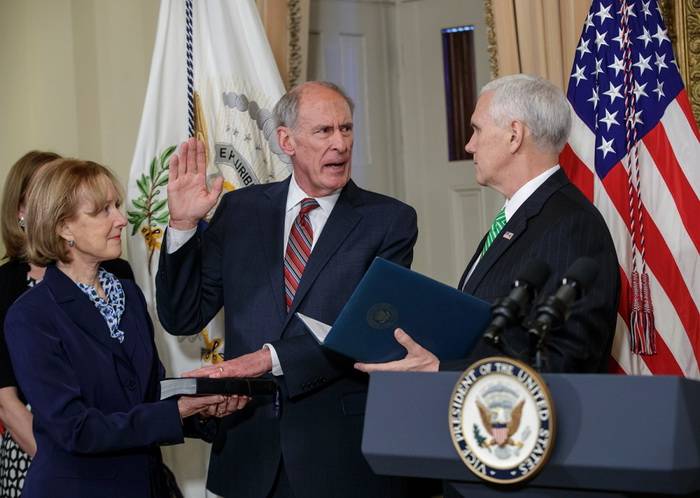
Against this background, the process of forming a new US administration continues. March 15, 2017, the US Senate approved the decision to appoint D. Coats (ex-senator from the Republican Party) to the post of Director of the National Intelligence of the United States of America. During the parliamentary hearings, D. Coats was assigned a task to investigate into Moscow’s interference with the presidential elections in the United States.
Germany. The development of the situation around Ukraine was a separate topic of the first meeting between US President D. Trump and Federal Chancellor of Germany A. Merkel. As a result of the talks, the sides expressed their common position on the need for a peaceful settlement of the conflict in Ukraine. According to A. Merkel, it is only under such conditions that normalization of relations between the West and Russia is possible. In turn, in the context of increasing threats to transatlantic security, D. Trump confirmed the strong support to NATO and stressed the need for all the member countries of the Alliance to fulfill unconditionally their obligations to finance the defense sphere.
The United Kingdom. Great Britain fully shares the position of the United States as the main power to deter Russia. Thus, on the day of the 3rd anniversary of Russia’s annexation of the Crimea, the Ministry of Foreign Affairs of Great Britain made a special statement on this issue in which it condemned the actions of V. Putin’s regime, supported the territorial integrity of Ukraine, and called for unconditional returning the Crimean Peninsula to Ukraine.
France. As the presidential elections in France are coming nearer (April–May of this year), the authorities of the country are increasing pressure on pro-Russian candidates for the post of the President. March 16, 2017, after the completion of the preliminary investigation, the French Prosecutor’s Office opened a criminal case against the candidate from the Republican Party F. Fillon. The politician is accused of plundering state funds and complicity in their misuse.
|
|
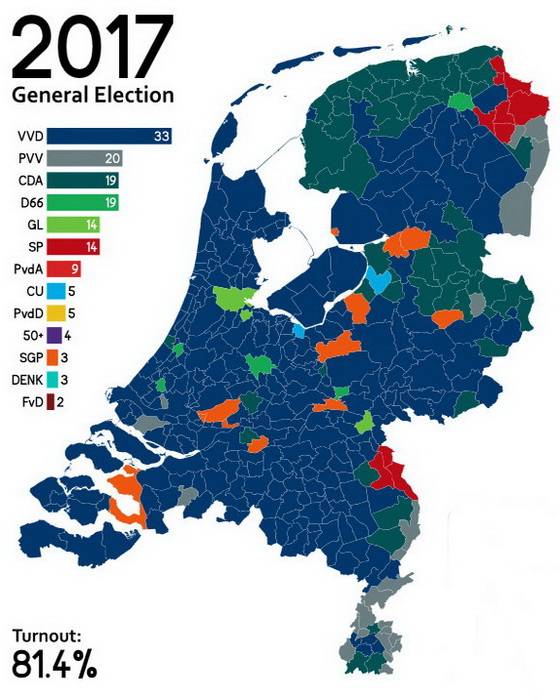
The Netherlands. The results of the parliamentary elections in the Netherlands has confirmed the trend of failure of Moscow’s attempts to influence political forces in the EU countries and, accordingly, their attitude to Russia.
For example, according to the results of voting on 15 March 2017, the elections were won by the People’s Party for Freedom and Democracy (VVD), led by Prime Minister M. Rutte, who supports European values and advocates for closer integration of the EU. The second was G. Wilders’ ultra-right Party for Freedom. According to Dutch experts, the new ruling coalition in the Dutch Parliament will include the VVD, as well as the Christian Democrats, Democrats-66, Christian Union and the GroenLinks, which will in general determine the immutability of the country’s policy, including on the issue of voting in the Senate of the Netherlands (tentatively, in April of this year) for the draft law on ratification of the Ukraine-EU Association Agreement.
Turkey. Despite Moscow’s expectations for Ankara’s support to its actions, the Turkish leadership remains firm on the Crimean issue. Thus, last week the Turkish government decided to terminate the ferry communication with the Crimean Peninsula, and also forbade any Turkish vessels to visit the occupied Crimea. Prime Minister of Turkey B. Yildirim confirmed Ankara’s position on condemning the Russian annexation of the Crimea, and also supported the territorial integrity of Ukraine. In addition, he pointed out the Ukrainian government’s efforts aimed at solving the problems of the Crimean Tatars.
IV. Other Important Trends and Developments that Will Have an Impact on Ukraine’s National Interests
|
|
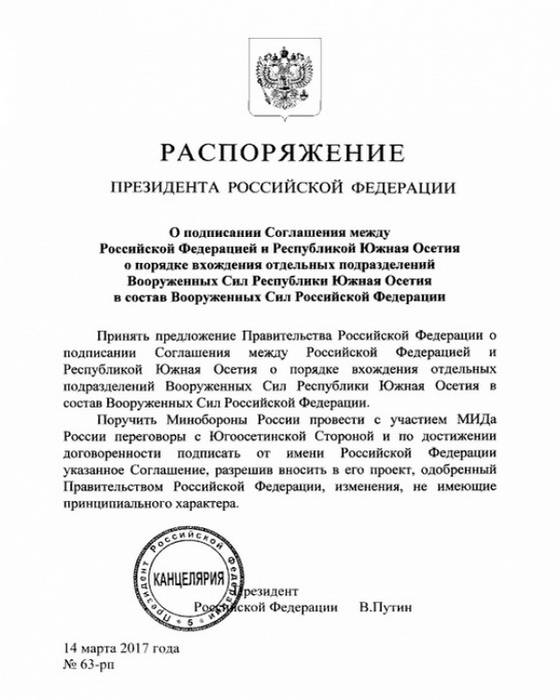
The Russian Federation. March 14, 2017, Russian President Putin approved by his order the government’s proposal that the units of the so-called armed forces of the self-proclaimed South Ossetia should become part of the Russian army. In other words, illegal armed formations of the illegally torn away territory of sovereign Georgia will receive the legal status as parts of the regular Army of another state — Russia. That is, Russia actually legitimizes the occupation of the territory of Georgia.
To date, neither the European Union nor the United States and the world community as a whole have not demanded from Moscow immediate explanations. (The European Union, however, demanded an explanation from Ukraine about the decision to establish an official blockade of the ORDLO, while the US State Department stated that they closely monitor the situation related to the transport blockade of the occupied districts of the Donbas by the Ukrainian authorities). That is, according to independent experts, the West “has swallowed” yet another provocative escapade of the V. Putin regime without any specific reaction, like the previous ones (legalized “passportization” of the “DPR” and “LPR”, subsequent “nationalization” of Ukrainian enterprises in the ORDLO, “counter blockade”, announced by Zakharchenko, etc.).
Not without reason, experts ask: what will be Putin’s next trick? After all, in such a situation, we can’t rule out Moscow’s recognition of the self-proclaimed “DPR” and “LPR”, especially since there were already statements by Zakharchenko and Plotnitsky about the preparation of referendums in both the “DPR” and the “LPR” about their accession to the Russian Federation.
And what, in this case, will be the level of “concern” of the current post-Brexit EU and the current USA under Trump?
Georgia. Recently, the internal situation in Georgia has deteriorated again. Thus, on 11–12 March 2017, in the Georgian city of Batumi (Adzharia), there were mass riots, related to the public’s protests against the toughness of the actions by the local police. During the riots, an attempt was made to storm the building of the Batumi police department, the infrastructure of the central street of the city was damaged.
According to Georgia’s leadership, the riots were organized by the opposition forces of the country with the aim of undermining the positions of the current government. A number of independent experts do not exclude Russia’s involvement, which is consistently trying to destabilize the situation in Georgia in order to create obstacles in the process of its European integration. The evidence of this can be the beginning of the riots in Batumi immediately after the EU’s visa liberalization for Georgia.
V. Major Trends in the Development of the Situation around Ukraine in the Future
5.1. Key Events and Trends that Will Be Most Important for Ukraine
According to Western and independent Russian experts, V. Putin’s regime is gradually losing resources for continuing Russia’s neo-imperial policy and maintaining stability in the country, which is due to the negative impact of Western sanctions on the Russian economy. This problem is especially acute in the context of the intensification of various kinds of opposition and protest movements in the Russian Federation, which plan to begin mass actions at the end of March this year.
These circumstances once again confirm the extreme importance of the Ukrainian issue to Russia, which is trying to resolve this issue in its favour as soon as possible. In this regard, we should expect Russia’s using new forms of blackmailing Ukraine and putting pressure on it, including further steps aimed at demonstrating the possibility of recognizing the “DPR” and “LPR”. Also, Moscow will continue active actions to destabilize the situation and provoke a political crisis in Ukraine on the basis of differences in the Ukrainian society over the ways of resolving the conflict in the Donbas and other important issues.
The Russian leadership obviously understands the impossibility of a rapid restoration of the pro-Russian government in Ukraine, which would be able to take advantageous for Russia decisions. Taking this into consideration, in the current situation, the internal instability in Ukraine will be used by Moscow for allegations about “the inability of the Ukrainian authorities to comply with the Minsk Agreements”, and as a result — “no grounds for prolongation of sanctions against the Russian Federation”.
5.2. Prospects for the Development of Events in the Conflict Zones in Ukraine
Based on the strategic interests of the V. Putin’s regime, Moscow will continue its consistent actions to maintain tension in the conflict zone in the East of Ukraine. This will pursue the goal of putting pressure on Ukraine and depleting its resources, and further aggravating disagreements in the Ukrainian society over the Donbas issue. Besides, Russia will try to get additional justifications for accusing Ukraine of “violations of the Minsk Agreements”.
Thus, despite the possibility of achieving new peace agreements, the Russian-terrorist forces will not stop shelling the ATO forces’ positions and civilian settlements. At this, in order to provoke the Ukrainian Armed Forces’ retaliatory strikes, such firings will continue from residential areas of towns and villages in the occupied territories. And through its representatives in the OSCE Special Monitoring Mission in the Donbas Russia will try to persuade Western countries and international organizations that “Ukraine does not fulfill its international obligations”.
It is also possible that Moscow could prepare for larger-scale actions against Ukraine. This is evidenced by the intensification of operational and combat training measures of the Armed Forces of the Russian Federation on the Ukrainian and European directions (including the carrying out of sudden inspections of the troops of the Southern, Western and Central Military Districts of the RF Armed Forces), as it happened on the eve of the beginning of the RF’s armed aggression against Ukraine in 2014.
5.3. Other Important Events that Will Have an Impact on Ukraine’s Interests and Security
Early parliamentary elections in Bulgaria are scheduled for March 26, 2017.
|
|

According to sociological researches, five parties can enter the new Parliament of the country, the main ones being Citizens for European Development of Bulgaria (GERB, is strictly pro-European) and the Bulgarian Socialist Party for Bulgaria (almost 30 percent rating, stands for lifting of sanctions and the resumption of relations with Russia). It is believed that the results of the parliamentary elections can consolidate the victory of the socialists (after the election of Bulgarian President R. Radev in November 2016) or weaken their positions if pro-European parties obtain majority in the Bulgarian Parliament.

