
LAST WEEK’S KEY FACTORS AND MAIN TRENDS
IN THE DEVELOPMENT OF THE SITUATION AROUND UKRAINE
(January 30–February 05, 2017)
I. Major-Profile Events in the Development of the Situation around Ukraine
Despite its obligations under the Minsk Agreements and the cease-fire arrangements, last week Russia went to another escalation of the armed conflict in the Donbas, which was the largest scale one since the beginning of 2015. Thus, fighting with an epicenter near Avdiivka, was almost along the entire front line.
This step is a continuation of Moscow’s tactics of cyclic intensification of the fighting in the East of Ukraine with a further putting forward new terms and demands to resolving the situation. At this, at this stage, these demands include Ukraine’s agreeing to “Steinmeier’s formula”, which provides for the implementation by our State of the political aspects of the Minsk Agreements in parallel with resolving (in the Russian sense — before the resolving) the security issues.
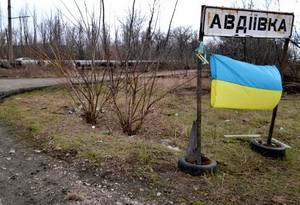 At the same time Russia and its puppets in the Donbas are trying to prevent consolidation of the success of the ATO forces achieved by them lately as a result of the Russian-terrorist forces’ losing of a number of their positions on the front line (in particular near Avdiivka, on Svitlodarsk Arc and in the south of Donetsk region).
But Moscow’s deeper strategic goals include testing the West’s reaction to Russia’s actions against Ukraine after the election of Donald Trump the US President, as well as bringing him to the Kremlin’s side. In this regard, illustrative was the fact of Russia’s intensification of the hostilities in the Donbas immediately after Putin’s telephone conversation with D. Trump on 28 January. Besides, direct evidence of these intentions of Moscow is the statement of the Russian President’s Press Secretary D. Peskov who called the events in Avdiivka — “another pretext for an early resumption of cooperation between Russia and the United States in the interests of resolving the Ukrainian crisis”. Thus, Putin’s regime intends to implement in Ukraine the “Syrian” scenario. At this, Moscow is trying to exclude Ukraine from the process of international negotiations to address the problems around our State.
As always, Russia’s actions in terms of aggravation of the armed conflict in the Donbas are accompanied by an aggressive politico-informational campaign to shift onto Ukraine the responsibility for the intensification of hostilities in the conflict zone. As part of this campaign, Ukraine is traditionally accused of “violation of the Minsk Agreements”, “beginning a large-scale offensive on the DPR and LPR” and “deliberate shelling of residential areas of Donetsk and Russian journalists”.
However, the outright mendacity of the Russian leadership, and of the controlled by it media can no longer hide the real nature of events in Eastern Ukraine. Thus, the UN, EU, NATO, PACE and OSCE, as well as the governments of the USA, Germany, France, Great Britain, Canada and several other countries have expressed deep concern because of the escalation of the conflict in the Donbas. In the vast majority of cases, it was Russia on whom the responsibility for violation of the Minsk Agreements was put.
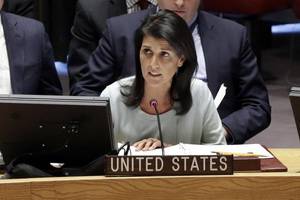 Thus, despite the Putin regime’s expectations for changes in Washington’s policy, the USA took a strong position to support Ukraine. In particular, during the UN Security Council’s emergency meeting on 2 February 2017, the US Ambassador to the United Nations N. Haley sharply criticized the actions of the Russian occupation forces in the Donbas. In turn, the United States Mission to the OSCE made a special statement in which it accused Moscow and separatist forces under its control of the initiation of violence in Avdiivka, which led to a significant number of victims. Based on this, the United States called on Russia to stop shelling and the attempts to capture new territories, as well as to withdraw heavy weapons from the front line.
During the meeting of Chief of the General Staff of the Army of Ukraine and Commanding General for the US 7th Army Training Command, Brigadier General Tony Aguto agreed to continue the training of Ukrainian servicemen within the Joint Multinational Training Group, with the participation of American instructors. Tony Aguto reconfirmed the US stance concerning joint training activities and stressed, “Our support to the Armed Forces of Ukraine and joint plans are firm”.
Against this background, the issue of Western sanctions against Russia has become actual again. Thus, the US State Secretary R. Tillerson, US Ambassador to the United Nations N. Haley, Head of the European Commission Jean-Claude Juncker and NATO Secretary General J. Stoltenberg have spoken for the continuation of the policy of sanctions against the Putin’s regime. US President D. Trump also has confirmed the maintenance of the US sanctions against Russia.
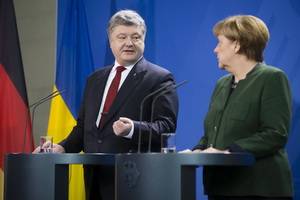 Full support for the positions of our State was expressed also by Germany’s leadership during President of Ukraine Petro Poroshenko’s visit to Germany on 30 January 2017. Besides, German Chancellor Angela Merkel expressed its intention to contribute to the USA’s deeper participation in resolving the situation around Ukraine.
 In this situation, Russia has moved to the usual techniques of its actions, namely: demonstration of “readiness for a ceasefire” while continuing the armed confrontation. For example, during an emergency meeting of the Trilateral Contact Group in Minsk on 1st February 2017, as well as within the framework of the Joint Control and Coordination Center in the conflict zone in the Donbas, agreements were reached on the complete ceasefire along the line of disengagement of the parties. Despite this, Russian-terrorist forces have not stopped attacks on the positions of the Armed Forces of Ukraine and shelling peaceful settlements.
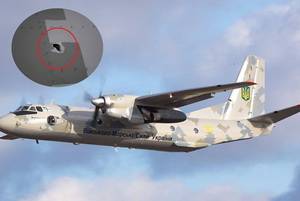
Besides V. Putin’s regime has moved to armed provocations against Ukraine in the Black Sea region, posing a threat of an armed conflict in that area as well. Thus, on 1st February 2017, in the area of the Odessa gas field (captured by Russia during its occupation of the Crimea in 2014), AN-26 aircraft of the Ukrainian Navy received fire from the board of a small anti-submarine ship of the RF Black Sea Fleet. In fact, these Russia’s actions were a reaction to the trainings of the Ukrainian Navy in the northern part of the Black Sea and at the training sites in Mykolaiv and Odesa regions. In the autumn of 2016, during the Ukrainian air defense exercises in Kherson region, Russia already threatened to use military force against our State.
Moscow’s armed provocations in the Black Sea region also increase the risk of military conflict between Russia and NATO. Thus, the attack on the Ukrainian plane was timed to the beginning on 1st February 2017 in the eastern part of the Black Sea of NATO’s “Sea Shield” exercise with the participation of Ukraine.
In this situation, of great importance for Ukraine is the beginning of our country’s presidency in the UN Security Council from February 1, 2017. It gives Ukraine whole new opportunities to defend its interests, in particular in terms of attracting global attention to the actions of Vladimir Putin’s regime. Thus, Ukraine has already scheduled a thematic sessions on conflict resolution in Europe and the protection of critical infrastructures.
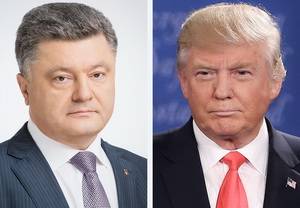 Against this background, on February 4 was held a telephone conversation between the President of Ukraine P. Poroshenko and US President D. Trump. The main topics of the talks was the conflict in the Donbas and the prospects of the US-Ukrainian relations. D. Trump “expressed concern” about the worsening situation in Avdiivka area and confirmed the US intention to actively work with Russia, Ukraine and other countries to restore peace along the border between Ukraine and Russia in the framework of the conflict settlement.
The two interpretations of the conversation (by the American and Ukrainian sides) there are a few points that show the changing political rhetoric in general. The main emphasis — Russia is not mentioned as the initiator of the new escalation of the conflict. The general direction of the conversation — it’s time to stop the war by diplomatic (rather than military) methods. The only difference is that to achieve this, as D. Trump said, he would cooperate with Russia. That is, in two words this conversation between D. Trump and P. Poroshenko can be interpreted as peaceful line! In fact, by this conversation D. Trump showed that he supports Ukraine not in the war with Russia, but in seeking peaceful resolving of “the Ukraine’s conflict with Russia” (as it sounds in the White House’s statement) in the Donbas. Besides, the theme of US sanctions against Russia and issues of funding Ukraine were not discussed at all.
Against this background, on 2nd February, 2017, the Lower House of the US Congress received for consideration a bill H.R. 830 “Support for Stability and Democracy in Ukraine”. The document provides for granting Ukraine assistance and continuation of sanctions against Russia.
II. Russia’s Armed Aggression against Ukraine
2.1. The East of Ukraine (The ATO zone)
Combat actions in the conflict zone in the Donbas showed the growing capabilities of the Armed Forces of Ukraine to counteract Russia’s aggression. Evidence of this is the enemy’s having lost some of its positions, as well as a significant number of fighters and mercenaries.
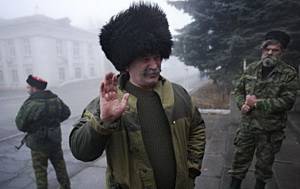 However, the situation in Avdiivka confirmed Moscow’s direct participation in the armed conflict in the Donbas. Thus, the Russian-terrorist forces in Donetsk region have been strengthened by officers and units of regular troops, who arrived from Russia. A lot of ammunition and fuel has also been delivered for the needs of the enemy troops. In addition, to compensate for the losses incurred, they announced an additional enlisting of mercenaries for operations in the Donbas. The “districts” of the so-called “Grand Don Army” are enlisting “volunteers” to be sent to the occupied territories of Ukraine. We remind you that the “Cossack” groups from Russia has actively participated in combat actions in the Donbas in 2014–2015.
2.2. The Crimean Peninsula
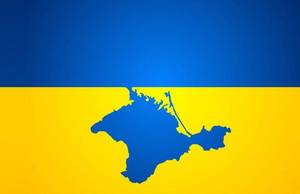 The occupation authorities of the Crimea are enhancing the scale of repressions against the Peninsula’s residents maintaining ties with Ukraine. Thus, after a series of new arrests of activists of the Crimean Tatar movement, they now began prosecution of the Crimean businessmen who get loans in Ukrainian banks. Under various pretexts difficulties are created for their businesses, including by arrest of their property.
In turn, there remain significant problems in the Crimean energy-supply system. In particular, it concerns the growth of the power shortage in winter, despite Russia’s so-called energy bridge to the Peninsula. To solve this problem, the “government” of the Crimea is taking steps to reduce the burden on the local power network by disconnecting consumers alternately.
2.3. Other Aspects Russia’s Actions against Ukraine and the West
Russia’s increasing aggression against Ukraine is accompanied by intensification of Moscow’s actions to undermine the unity of the EU and NATO. A manifestation of this was Russian President V. Putin’s visit to Hungary on 2nd February 2017.
During V. Putin’s meeting with Hungary’s Prime Minister V. Orban, they discussed joint projects in the trade and economic sphere, as well as the situation in the Middle East (Syria) and in the Donbas. As a result of the negotiations, they signed a comprehensive program of interregional cooperation for 2017–2022 and the plan of consultations between the Foreign Ministries of the two countries for 2017–2022.
Putin’s visit to Hungary was widely commented by the Russian media as “a symbol of the beginning of a new economic policy for Europe”. In this connection, great attention was paid to V. Orban’s positions as “a consistent right-wing and Euro-skeptic politician” and “the enemy of European sanctions against Russia”. Besides, were stressed “Russia’s guaranteeing stable gas supplies to Hungary after the end of the agreement with Ukraine on the transit of Russian gas to Europe”.
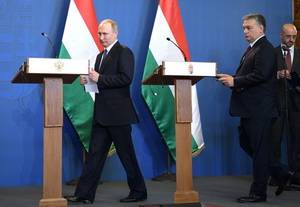 V. Putin used his visit to Hungary as the next opportunity to justify Russia’s actions against Ukraine and to discredit our country. Thus, during the final press conference, the Russian President accused Ukraine of “deliberately provoking tensions in the conflict zone” in order to “create preconditions for establishing relations with the new US administration and to get funds from the EU”, and “to distract the Ukrainian population from the failures of the government’s economic policy”.
At the same time, Putin’s visit to Hungary was accompanied by mass demonstrations of the Hungarian people against Russia’s aggressive and anti-democratic policy.
At this, the Russian political circles’ positions are becoming more and more politically radical, demonstrating the claims for “all the Russian lands within the former Soviet Union”. Thus, according to the statement of the so-called MP from the Crimea to the Russian State Duma P. Shperov during the “round table” with participation of representatives of the Russian parliament — “The Kremlin must regain control of the entire territory of Ukraine and Kazakhstan”. A similar idea was propounded by Deputy Chairman of the Federation Council’s Committee for International Affairs V. Dzhabarov, who stressed the need for “Lithuania to return Vilnius region to Russia”.
At the same time, in the situation of degradation of the Russian Federation’s scientific and technological potential, the Russian leadership continues “poaching” trained personnel from Ukraine. Thus, on 28 January 2017, Vice-Prime Minister of the Russian Government D. Rogozin visited the Voronezh Aircraft Company (manufactures components and assembles “AN” aircrafts), where he got acquainted with the problems of the enterprise. At this, he declared Russia’s being ready to accept aviation designers from the Ukrainian “Antonov” Company. By this, D. Rogozin acknowledged Russia’s being unable to establish an independent production of modern aircrafts (in 2015 Ukraine stopped military-technical cooperation with Russia, and the “Antonov” group withdrew from the “UAC-Antonov” Russian-Ukrainian enterprise).
Against this background, there continue active measures for operational and combat training of the RF Armed Forces, including their nuclear missile component. Thus, on 2nd February 2017, there began regular trainings of the Strategic Rocket Forces of Russia. They are mastering the elimination of consequences of the enemy’s use of weapons of mass destruction in the areas of deployment of the RSMF units and groupings.
III. Ukraine, International Organizations and Leading Western Countries
3.1. International Organizations
The European Union. February 3, 2017, in Malta there was an unofficial EU summit at the level of the leaders of member states of the Organization. Were discussed the issues of counteracting further exacerbation of the “migration” crisis in Europe. A number of decisions were taken to intensify the struggle against illegal immigration to the EU from the Middle East and North Africa.
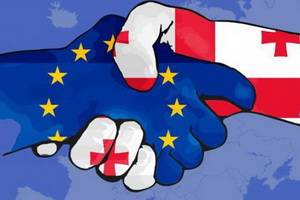 At the same time, the European Union continues the implementation of the policy of “Eastern Partnership” in terms of rapprochement with former Soviet countries of Democratic Choice. February 2, 2017, the European Parliament by a majority of votes supported the introduction of a visa-free regime for Georgia. This confirms positive prospects for a similar decision on Ukraine.
According to Georgia’s Foreign Minister M. Janelidze’s statement, visa-free regime will be offered to residents of Abkhazia and South Ossetia, which are integral parts of the Georgian state. This should increase the interest of the population of the breakaway republics in reintegration with Georgia. It is reasonably believed that the possibility of free entry of Ukrainian citizens to the EU would help increase the interest in reintegration with Ukraine of the Ukrainian residents of the annexed by Russia Crimea and occupied areas of the Donbas.
NATO. As part of NATO’s commitment to Ukraine, the Alliance leadership is taking consistent measures to provide assistance to our country in reforming its defense sector. February 2, 2017, this issue was discussed at a meeting of the Joint Working Group Ukraine-NATO in Brussels. In particular, they discussed the results and ways of further implementation of the NATO program to provide assistance to the State Border Guard Service of Ukraine in the protection and defense of our State’s borders in the situation of Russia’s armed aggression.
At the same time, in response to the growing military threats from Russia, NATO countries and their partners continue to conduct active operational and combat training in the East (in the Black Sea and Baltic regions).
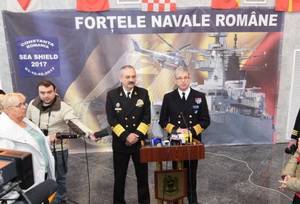 February 1–10, 2017, in the eastern part of the Black Sea there was the “Sea Shield” naval exercise with the participation of the Navy of the USA, Canada, Greece, Spain, Turkey, Romania and Bulgaria, as well as Ukraine. All in all in the exercise participated 2.8 thousand military servicemen, 16 surface ships, one submarine and ten aircrafts. They mastered dealing with an air, underwater and surface attacks. The exercise involved the US Navy destroyer “Porter”, equipped with “Aegis” multi-functional missile defense system.
In turn, after the Allied “Bison-2017” exercise, which took place February 23 to January 2, 2017, near the Polish city of Drawsko Pomorskie, the units of the 3rd US Armored Brigade (arrived in Poland earlier) were sent to multinational Battalions of the Alliance in Lithuania, Latvia and Estonia. According to preliminary data, each Battalion will include two American tank companies.
3.2. Leading Western Countries
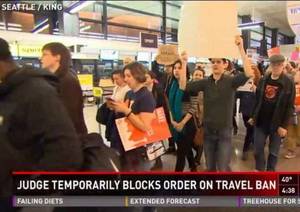 The USA. D. Trump’s first steps in the post of the US President caused quite a controversial reaction of the United States and of the whole international community. First of all, it concerns his decree on the temporary suspension of the reception of refugees from Syria, Iraq, Iran, Libya, Somalia, Sudan and Yemen. This decision caused protests of representatives of the immigrant community of the US population, and was condemned by the mayors of a number of US cities, members of Congress and leaders of the most powerful countries, including the United States of America’s closest allies. At this, about 900 employees of the US Department of State signed an official memorandum against D. Trump’s migration policy. Taking into consideration the situation, the Federal Court of Seattle (Washington State) has suspended D. Trump’s decree until the consideration of the relevant claim by the local prosecutor’s office.
This issue has indirect impact on the interests of our country. On the one hand, the aggravation of the situation around immigration and D. Trump’s other decrees distract his attention from Ukraine, but on the other — it gives political opponents of the new US President more leverage over him including on the Ukrainian issue.
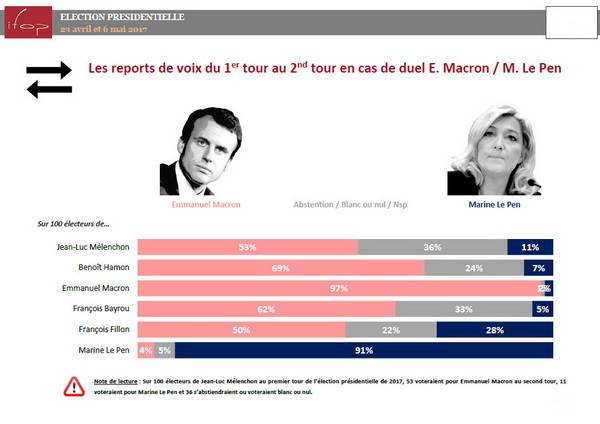 France. Within the framework of preparation for the presidential elections in the country, in early February 2017 the procedure for nomination of candidates for the post of the head of the French state has been completed. The pre-election list includes: E. Macron (“Moving Forward”; supporter of European integration and globalization); M. Le Pen (“National Front”, an active supporter of Putin’s regime); F. Fillon (Republican Party, demonstrates pro-Russian attitudes); B. Amon (Socialist Party, has a populist program of social-liberal orientation); Y. Jadot (Party of the “Green”; a moderate centrist); J. Melenshon (Communist Party, speaks in favor of closer ties with Russia).
According to recent polls, into the second round of elections can go E. Macron and M. Le Pen. At this, today, E. Macron has a slightly higher rating. The pre-election situation in France is influenced by the law enforcement agencies’ actions to investigate cases of involvement in corrupt activities of the main pro-Russian candidates — namely, M. Le Pen and F. Fillon. This has already led to weakening of their pre-election positions.
IV. Other Important Trends and Developments that Affect Ukraine’s National Interests
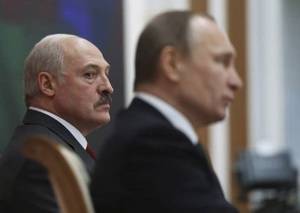 Belarus. V. Putin’s regime’s aggressive and cynical policy undermines Russia’s relations even with its closest allies and partners, in particular — with Belarus. Evidence of this is another escalation of disagreements between the two countries in trade and economic sphere, more and more turning into a political and military ones.
Thus, in early February 2017, the leadership of the Russian Federation decided to strengthen the protection of the Russian-Belarusian border, which had been virtually open until recently. By order of Director of the Russian Federal Security Service A. Bortnikov, measures are being taken to establish the border zone in bordering on Belarus (Smolensk, Bryansk and Pskov) regions of Russia.
Such Russia’s actions caused an extremely negative reaction of the President of Belarus A. Lukashenko, who has accused Moscow of undermining the principles of the construction of the Eurasian Economic Union. In response, A. Lukashenko ordered to withdraw Belarus’ representatives from the EurAsEU’s customs bodies. Besides, the President of Belarus spoke against the deployment of the RF Armed Forces’ airbase on the territory of Belarus.
Against this background, Belarus began an inspection of its Armed Forces’ readiness to repel a “sudden external attack”.
Moldova. The new President of Moldova I. Dodon’s pro-Russian policy leads to further growing of disagreements in the country’s leadership, which creates prerequisites for the possibility of the government and parliamentary crisis. Thus, the Ministry of Foreign Affairs of Moldova made an official protest to the Russian Federation due to the opening in the capital of Russia of an “office” of the self-proclaimed Trans-Dniester Moldavian Republic. However, according to preliminary data, during his visit to Moscow I. Dodon actually agreed with the federalization of the Moldovan state.
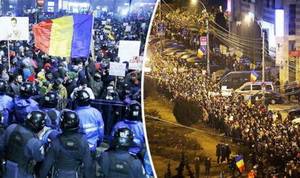 Romania. The Romanian government’s decision on the amnesty for those convicted for corrupt practices, led to a sharp increase in protests in the country. Throughout the week, in Bucharest and other Romanian cities there were mass protests with a peak intensity of up to 500 thousand participants. These actions are openly supported by the country’s President K. Johannis.
In the course of meetings and demonstrations have been put forward demands for resignation of the Government and Parliament of Romania, headed by the Social Democratic Party (which is for pro-rapprochement with Russia). At this, we can already see signs of a possible government crisis in the country. Thus, due to the disagreement with the decisions of the government, Romanian Minister for Business Environment, Commerce and Entrepreneurship F. Jianu has resigned.
According to some estimates, anti-corruption investigations against the pro-Russian candidates for the post of President of France and anti-corruption protests in Romania may be a result of the implementation of the EU program to counteract Moscow’s measures to strengthen Russia’s influence in Europe.
V. Major Trends in the Development of the Situation around Ukraine in the Future
5.1. Key Events and Trends that Will Be Most Important for Ukraine
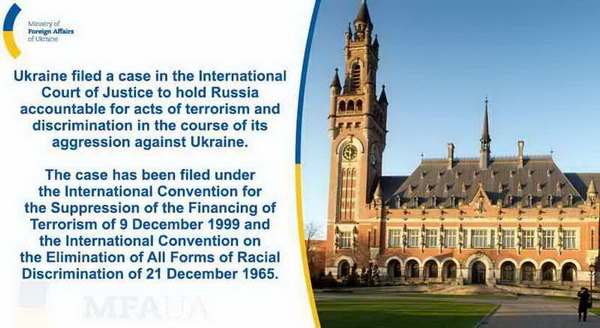 In March 2017 the UN International Court of Justice in the Hague plans to begin action proceeding of Ukraine’s claim against Russia because of Moscow’s violations of the Conventions to ban the financing of terrorism and racial discrimination (the essence of the claim is the Putin regime’s actions for the annexation of the Crimea and occupation of the Ukrainian Donbas). As additional evidence of the Kremlin’s aggression and violation of international law, the Court received the materials about Russia’s intensifying the armed confrontation in the Donbas from January 29, 2017, as well as about the shelling of the Ukrainian aircraft over the northern part of the Black Sea on 1st February 2017.
Taking into consideration the attitude of the major part of the international community to the situation around Ukraine, with a high degree of probability we may expect the court’s support to our country. Thus, in late 2016, Prosecutor of the International Criminal Court (the Hague Tribunal) F. Bensouda in her annual report already defined Russia’s occupation of the Ukrainian Crimea as Moscow’s armed aggression against Ukraine. At this, the fact was confirmed of the use of the regular Armed Forces of Russia to capture Ukrainian territory. At the same time, the fact of Russia’s armed aggression against Ukraine was recognized in the UN General Assembly’s Resolution “The Human Rights Situation in the Autonomous Republic of the Crimea and Sevastopol (Ukraine)”, adopted in December last year.
These circumstances open direct perspectives for the UN International Court opening criminal cases against the leaders of Russia for war crimes. In turn, this could create an entirely new legal situation with the regime of V. Putin in terms of the official emergence of the international legal framework for the continuation of the sanctions against the Russian Federation. At this, the very fact of the UN International Court’s considering the case against Russia will weaken positions of Moscow and its apologists in the USA and the EU, demanding to lift the sanctions against Russia.
In the context of this situation, an additional blow to the regime of V. Putin will be the Warsaw’s intention to send a claim to the UN International Court because of Moscow’s refusal to transfer to the Polish side the wreckage of the Tu-154, crashed in 2010 near the Russian Smolensk with Polish President L. Kaczynski on board.
5.2. Prospects for the Development of Events in the Conflict Zones in Ukraine
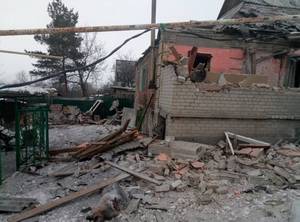 Despite reaching the agreements on a cease-fire near Avdiivka, we should expect Russia’s continuing active combat operations both on the Donetsk direction, and in other parts of the front line. At this, politically Moscow will continue to use the fact of deterioration of the situation in the Donbas as proof of “the need to establish direct co-operation between Russia and the United States to solve the Ukrainian problem” (of course, in favor of the Kremlin).
At the same time, Moscow will be trying to prevent further withdrawal of Russian-terrorist forces from the occupied positions and to restore the front line. This does not rule out the enemy’s local offensives near Avdiivka, on Svetlodarsk Arc and in the south of Donetsk region.
5.3. Other Important Events that Will Have an Impact on Ukraine’s Interests and Security
Russia’s intensifying the armed confrontation in the Donbas increases the importance of considering the Ukrainian issue in a number of international forums scheduled for the nearest future. First of all, it concerns the meeting of the Foreign Ministers of the EU countries on 6 February 2017 and of NATO countries’ Defense Ministers on 15–16 February 2017. In addition, the situation around Ukraine will quite obviously be one of the central themes of the Munich Security Conference on 17–19 February 2017.
These activities will show the attitude of the leading countries of the world to Ukraine and to Russia’s actions against our country, as well as the future policy of the EU and NATO towards Ukraine. Besides, the results of the summits of the European Union, NATO and the Munich Conference can have an impact on the position of the UN International Court in the Hague in the consideration of Ukraine’s claim against Russia.

