
LAST WEEK’S KEY FACTORS AND MAIN TRENDS IN THE DEVELOPMENT OF THE SITUATION AROUND UKRAINE
(November 07-13, 2016)
I. Major-Profile Events in the Development of the Situation around Ukraine
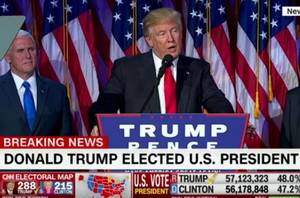
Key world-class event that directly affects the interests of Ukraine, is the representative of the Republican Party of the USA — billionaire D. Trump’s victory in the presidential election in the United States on November 8, 2016.
D. Trump’s having been elected US President has caused a very mixed reaction both, in the United States and around the world, and has become a real “shock” for the part of American society, the Western countries and international organizations that had expected that the Democratic Party’s candidate H. Clinton would win.
 The reason for this is the “odious” character of the new US president, who, on the one hand, is a supporter of hard totalitarian methods of action, and on the other — is widely known as an adventurer, capable of unforeseen steps and ready to use all possible methods and ways to implement his interests, including corrupt business schemes.
The display of this was D. Trump’s election campaign, which had a purely populist style and included promises to cut taxes, to increase spending for social needs, to ensure greater freedom of business activity in the country, and to introduce tougher rules for foreign migrants entering the country. Besides, D. Trump demonstrated very contradictory approaches to the US foreign policy. For example, he positioned himself as a supporter of strengthening the role of the US and its international positions and, at the same time, expressed the intention to limit the support to partners and allies of the United States of America.
Similarly controversial was the demonstrated by D. Trump approach to the Russian Federation. In particular, in his campaign statements, he repeatedly spoke in support of V. Putin’s regime, including about lifting the sanctions from Russia and cancelling the plans to strengthen the NATO military presence in Eastern Europe. However, after Moscow’s having breached the Armistice Agreements in Syria and Ukraine in September-October 2016, that caused considerable negative publicity in the United States and European countries, D. Trump changed his public positions and turned to condemning the Kremlin’s actions, acknowledged the need to strengthen the Alliance, as well as to strengthen its role in ensuring the security of the countries of Central and Eastern Europe and the Baltic states.
Based on this, political experts provide a wide range of diametrically opposite forecasts about D. Trump’s future foreign policy — from expectations of a complete change of Washington’s policy in the direction of rapprochement with Russia and refusal to curb Putin’s regime within the framework of NATO (which is called the Kremlin’s geopolitical victory) — to substantially growing confrontation with the Russian Federation due to the conflict of personal ambitions of the leaders of the two countries.
How do you assess this situation? Of course, D. Trump will not be able to radically change the US policy in favor of the Russian Federation. He is a representative of the US Republican Party, which won a majority in the Senate and House of Representatives of the US Congress during the last parliamentary elections (held simultaneously with the presidential ones) and is for maintaining a tough position regarding Russia. In this regard, D. Trump will have to follow the general policy of the party, especially because he has already announced his intention to appoint Republicans to key positions in the new administration.
However, at the initial stage D. Trump can make an attempt to reach a compromise with Russia on the most problematic issues between the two countries, especially over Ukraine and Syria. In the case of Ukraine, the result of such a compromise may be the USA and Russia’s joint pressure on our State’s leadership to accelerate the “settlement” of the situation in the Donbas actually on Russian conditions.
Also, we should not rule out the possibility of the new US President’s decreased attention to the issues of European security in the context of support for the unity of the EU (including over the Ukrainian and Russian issues), and to NATO’s transformation, within the framework of the response to the growing threats from Russia.
At the same time, a purely private issue for the United States may be complications of the domestic situation in the country as a result of significant amount of top businesses’ and many citizens’ being not happy with the results of the elections.
This fully meets the interests of V. Putin’s regime, which counts exactly on such developments. However, according to some experts, such expectations have quite illusive prospects. Thus, the policy and practice of Russia (which does not fulfill its obligations, treats its partners with indignity, is prone to vile and provocative actions) with a high probability may lead to a further deterioration in relations between Washington and Moscow.
II. Russia’s Armed Aggression against Ukraine
2.1. The East of Ukraine (The ATO Zone)
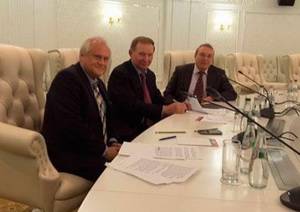 Against the background of D. Trump’s being elected US President, the Russian Federation’s leadership increases the pressure on Ukraine in order to make our state agree to the Russian approach to the “settlement” of the conflict in the Donbas — namely — to Ukraine’s implementation of the political part of the Minsk Agreements without resolving the security problems. Thus, during the meeting of the Tripartite Contact Group (TCG) in Minsk on November 9, the Special Representative of Russia in the negotiations raised the question of the need for Ukraine to agree to the so-called “Steinmeier’s formula”, which provides for granting of “special status” to the “DPR” and “LPR” for the period of the elections in the breakaway republics. This question is on the agenda for the next meeting of the TCG on 23 November, 2016.
For its part, Ukraine expressed a firm position on the possibility of holding legitimate elections in the occupied territories only according to the Ukrainian legislation. However, during a meeting of the TCG, Ukraine and the OSCE pointed out the intensification of the armed conflict in the Donbas, which makes it impossible to disengage the sides’ forces near the village of Stanytsya Luhanska.
Evidence of the above-mentioned trend is an increase in the number of the Russian-terrorist forces’ attacks on the positions of Ukrainian troops and civilian settlements with the peak intensity over 50 attacks per day before and during the meeting of the Tripartite Contact Group. Russia does this all the time to put pressure on Ukraine.
A manifestation of this pressure was also the speech by Russia’s representative to the OSCE A. Lukashevich at the meeting of the Permanent Council of the Organization at the beginning of November 2016, in which he accused Ukraine of “non-compliance with the Minsk Agreements”. The reasons for this he called the “demands to Ukraine from abroad” (he obviously had in mind the USA and the EU), “the Ukrainian authorities’ desire to get additional revenues from gray corruption schemes” and “nationalist intoxication of Ukraine’s leadership”. Referring to the above-mentioned, A. Lukashevich called on Western countries to increase pressure on Ukraine in order to force it to implement the “Steinmeier’s formula” on the entry into force of the law on the “special status” of the self-proclaimed republics for the election period, unlocking the law on amnesty of militants, as well as carrying out constitutional reform.
Besides, the Russian diplomat warned of the need to prevent a humanitarian catastrophe in the Donbas and its further isolation from the rest of Ukraine due to “Kyiv’s continuing humanitarian blockade of the region”. At the same time, A. Lukashevich called to speed up the work of the OSCE Special Monitoring Mission on preparing a report on the shelling of civilian settlements in the Donbas for the period of the “conflict” in Ukraine.
2.2. The Crimean Peninsula
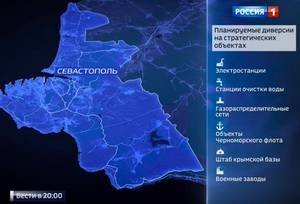 Directly related to the results of the presidential elections in the United States is also Russia’s another provocation against Ukraine in the Crimea. Thus, on the 10th of November 2016, the FSB detained in Sevastopol some Ukrainian citizens who have been declared “Ukrainian intelligence subversive group”. According to the FSB’s statement, “…these individuals had weapons, explosives and schematic maps of military facilities in Sevastopol, which confirms their intention of committing acts of sabotage in the city”.
The above-mentioned was used by Moscow to accuse Ukraine of “continuing the policy of state terrorism”. In this situation, the apparent aim of the Putin regime’s mode of action is to discredit Ukraine before the new US leadership, as well as to justify Russia’s annexation of the Crimea, as a “preventive measure for the protection of the Crimean population from the Ukrainian authorities”.
Besides, according to the head of the Mejlis of the Crimean Tatar people R. Chubarov, Putin’s regime has stepped up measures to “squeeze out” from the Crimea Crimean Tatars and Ukrainians, preserving a negative attitude to Russia’s occupation of the Crimean Peninsula. The main instruments of such actions are repressions against the said categories of citizens within the framework of prosecutions, as well as creating obstacles to their business activities. At the same time Russia is implementing the “resettlement program”, which provides for the resettlement in the Crimea of loyal to the Putin regime domestic residents of the Russian Federation’s hinterland.
2.3. Other Aspects of the Russian Federation’s Actions against Ukraine and the West
 Cyberspace has increasingly become a new area of confrontation between Russia and the United States. Thus, after the break-ins of the servers of the US Democratic Party on the eve of presidential elections in the United States, immediately after the vote, cyber attacks were carried out from Russia on several US analytical centers. One such target was the US Council on Foreign Relations (includes former US diplomats and makes recommendations to the State Department).
The current, for today, US administration is considering several options for the response — from conducting a special public prosecutor’s investigation — to exercising their own attacks on Russian computer networks. In particular, in this regard, exemplary character had the simultaneous DDoS attack (9 November 2016) from the territory of 30 countries (mainly from the United States, India, Taiwan and Israel) on the servers of five largest banks in Russia.
Against this background, Russia continues to conduct military operations to provide support for B. Assad’s regime in Syria. After rebels’ refusal to withdraw from Aleppo, airplanes of the Russian Aerospace Forces have resumed active bombing of the city, causing casualties among the civilian population. In addition, they began flights over Syria of fighters from the board of the heavy aircraft-carrying cruiser “Admiral Kuznetsov” (at the beginning of November 2016, entered into the Mediterranean at the head of the naval aircraft-carrying strike group of warships of the Northern Fleet of the Russian Federation).
III. Ukraine, International Organizations and Leading Western Countries
3.1. International Organizations
The European Union. According to the EU Representative for Foreign Affairs and Security Policy, F. Mogherini, the European Union’s policy towards Ukraine will not change, despite the election of D. Trump the United States’ President. Evidence of this is the continuation of the EU’s coherent sanctions policy against Russia. Thus, last week the EU Council on the Economy and Finance, decided to impose additional restrictions on the individual persons involved in Russia’s armed aggression against Ukraine. Besides, they consider plans to continue the basic package of sanctions against Russia in December 2016 — before D. Trump’s inauguration (scheduled for January 2017).
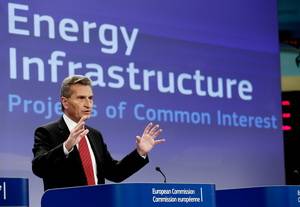 In turn, within the framework of actions to support Ukraine’s reducing its energy dependence on Russia, the Council of Ministers of the EU Energy Community has included into the list of “Projects of Energy Common Interest” four Ukrainian energy projects, namely the construction of the “Brody /Ukraine/ — Adamova Zastava /Poland/” oil pipeline; construction of the “Ukraine-Poland” gas interconnector; creation of infrastructure for transportation of gas from Hungary to Ukraine; and the restoration of the 400 kV “Mukachevo — Velke Kapušany /Slovakia/” overhead power line. Implementation of these projects will expand Ukraine’s opportunities for getting gas from Europe, and to deepen Ukraine’s integration into the European energy system.
NATO. The leadership of the Alliance has expressed the intention to continue the implementation of previous decisions on strengthening NATO’s military presence in the countries of Central and Eastern Europe and the Baltic states, despite the election of D. Trump the United States President. The above-said has been confirmed by NATO Secretary General J. Stoltenberg and the US Department of Defense. The preparations continue for the redeployment to Europe of the 3rd Armoured Brigade of the 4th Infantry Division of the US Armed Forces. In particular, to the German port of Nordenham they have already delivered munitions for it which will be stored in warehouses in Bruchmühlbach-Miesau (Germany).
3.2. Leading Western Countries
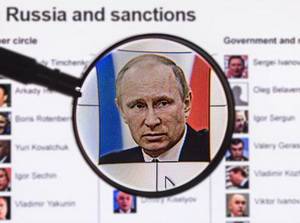 The USA. In response to Russia’s speculations about D. Trump, the acting US administration confirms the immutability Washington’s sanctions policy toward Russia. According to the Deputy Speaker of the US State Department, M. Toner’s statement of November 9 2016, Washington will maintain sanctions against V. Putin’s regime until the Crimea is returned to Ukraine.
Preserving the importance of Ukraine to the United States has also been confirmed by the United States’ Ambassador to Russia J. Tefft (in 2000-2003 headed the US Embassy in Lithuania, in 2005-2009 — in Georgia, in 2009-2013 — in Ukraine). According to him, the issue of settling the situation in and around the Donbas and the Crimea has greater priority for the United States than Syria. At the same time, J. Tefft pointed out the possibility of normalization of relations between the USA and Russia only if the above-mentioned questions of restoration of Ukraine’s territorial integrity have been resolved.
In turn, the leader of the Republican Party faction in the Senate M. McConnell has warned V. Putin’s regime about the inevitability of the dangerous consequences for Russia in case of the latter’s attack on one of the NATO countries.
Germany. In order to remove the historical problems in the relationship with our State, the Parliament of Germany is considering the adoption of the Resolution “On Germany’s Historical Responsibility to Ukraine”. The draft document provides a clear definition of the position of Germany to support Ukraine’s independence and territorial integrity. According to experts, in case of adoption of the Resolution, it will have the same meaning as “the Act of Supporting Democracy and Stability”, adopted by the US Congress with regard to Ukraine in the autumn of 2015.
IV. Other Important Trends and Developments that Affect Ukraine’s National Interests
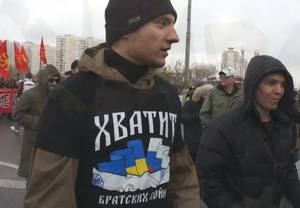 The Russian Federation. The negative consequences of Moscow’s policy of confrontation with Ukraine and the West are causing a growing discrepancy in the Russian society’s attitude to V. Putin’s regime’s policy. Thus, on 4th November 2016, as part of the celebration of the “Russian National Unity Day”, in Moscow there was a pro-government march “We are United”, with the participation of V. Putin’s supporters.
In turn, November 5, 2016, in the Lublin District of Moscow there was held an alternative event — a “Russian March” under the slogans “Russia without Putin”, “Putin — the traitor and enemy of the Russian people”, “Stop the Russian world’s wars”, “Russia should mind its own business and stop conflicts with the West, USA and brotherly Ukraine”. At the same time, an anti-Putin picket was organized in the center of Moscow. According to statements of the participants of the actions, they will continue to take to the streets until the power is changed in the country. The march and picket were held under Russian and Ukrainian flags.
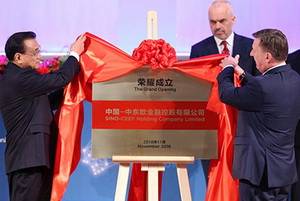 China. China’s leadership is taking active measures to strengthen its economic presence in other countries, in particular in Central and Eastern Europe (CEE). To this end, the Chinese government has established a special holding company Sino-CEEF with a capital of 10 billion Euros for the development of cooperation with Chinese partners in the CEE. First of all, it is expected to invest into projects aimed at improvement of the infrastructure in the region, and at development of high-tech industries and consumer industries. China’s main investor in Sino-CEEF is the Industrial and Commercial Bank of China.
At the same time, as part of plans to create a so-called New Silk Road, China has initiated the establishment of a free trade zone with Ukraine. Implementation of this project will make a positive difference for Ukraine in terms of getting the possibility of attracting large volumes of Chinese investments into the Ukrainian economy, and our State’s coming to the PRC’s market. Besides, China has once again demonstrated its absolute unwillingness to support Russia’s interests concerning Ukraine and the countries of Central and Eastern Europe.
V. Main Trends in the Development of the Situation around Ukraine in the Future
5.1. Key Events and Trends that Will Be Most Important for Ukraine
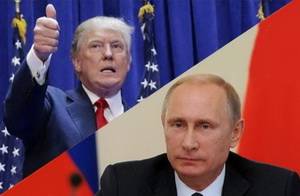 Changes in the US leadership will be the main factor of influence on Ukraine’s interests in the short and longer term, at least for three to four years. For example, taking into account D. Trump’s positions, V. Putin’s regime may initiate the process of “resetting” relations with the USA in order to resume full cooperation between the two countries (as it was done after Russia’s attack on Georgia in 2008).
However, taking into consideration the expected by Russia changes in the policy of the USA, and Washington’s being distracted by internal problems due to the transfer of power in the country, Putin’s regime with a high probability will intensify actions to achieve its goals with regard to Ukraine. In this respect, Moscow will increase pressure on Ukraine on all directions for a final resolving of the “Ukrainian issue” in its favor.
First of all, this pressure will be aimed at forcing Ukraine to make the convenient for Russia decisions that would “freeze” the conflict in the East of Ukraine on Moscow’s terms and create preconditions for lifting the United States’ and European Union’s sanctions against Russia. At the same time Moscow will intensify its actions to restore the pro-Russian government in Ukraine, which will include a large-scale destabilization of the situation in our country, undermining the positions of the current Ukrainian authorities, as well as providing general support to pro-Russian and other political forces, controlled by Moscow. Through such forces Moscow will initiate the issue of holding early parliamentary and presidential elections in Ukraine as early as 2017, with the expectation of Russian supporters’ winning.
Destabilization of the situation in Ukraine will be used by Russia to demonstrate in front of D. Trump “the Ukrainian leadership’s inability to ensure stability in the country” and “the Ukrainian authorities’ losing the population’s support”. According to information from a number of sources, Russia is planning to launch a special operation in the second half of 2016. At this, we should not rule out the possibility of the Russian special services’ terrorist attacks in major Ukrainian cities, including on critical infrastructure facilities.
Besides, the Putin regime’s great efforts will be aimed at weakening and undermining the unity of the EU, using the probability of the USA’s decreased attention to the situation in the EU. In particular, in this context, Moscow will intensify its bilateral relations with individual countries of the European Union who have expressed interest in resuming bilateral cooperation with Russia, as well as contacts with the nationalist (right- and left-wing) and pro-Russian forces in Europe.
Russia will also activate actions to influence the results of the parliamentary elections in Germany and of the presidential elections in France, which are planned for 2017. To this end, Moscow uses all its capabilities to undermine the position of German Chancellor A. Merkel and French President F. Hollande. Thus, according to the available data, it is Russia that is behind the initiative of a number of deputies of the French Parliament to prepare the French President F. Hollande’s impeachment on charges of “serious violations of his duties, particularly in the defense and security spheres”.
Russia will also make greater efforts to make a split between Ukraine and Poland, which is one of the main allies of our State in its confrontation with Russia, as well as the main advocate of Ukraine’s interests in NATO and the EU. One of directions of such Moscow’s policy is to support the nationalist (the so-called “Kresovy”), openly anti-Ukrainian organizations in Poland. In particular, On 11 November 2016, during the “March of Independence” in Warsaw, members of these organizations desecrated and burned the flag of Ukraine.
5.2. Prospects for the Development of Events in the Conflict Zones of Ukraine
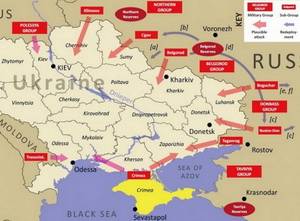 As part of the Kremlin’s anti-Ukrainian policy, Moscow can resort to building up military pressure on Ukraine by intensifying the armed conflict in the Donbas. At this we should not rule out the resumption of Russia’s offensive actions, including conducting offensive operations — from local to large scale ones. Evidence of this is Russia’s building up its troops and weapons in the occupied territories of Ukraine, as well as an increase in the number of attacks on the positions of the ATO forces and civilian settlements, which have been taking place lately.
Besides, in order to discredit Ukraine before the new US leadership, as a country that “leads a policy of state terrorism” and “is responsible for the continuation of the conflict in the Donbas”, Russia can conduct a number of resonant provocations in terms of terrorist attacks in the Crimea, “DPR” and “LPR”, as well as in Russia with further accusing our State of conducting them. In fact, the Putin regime has already started such actions, the latest manifestation of which is the “the FSB’s detention of Ukrainian saboteurs in Sevastopol” — immediately after ad D. Trump’s victory in US elections.
5.3. Other Important Events that Will Have an Impact on Ukraine’s Interests and Security
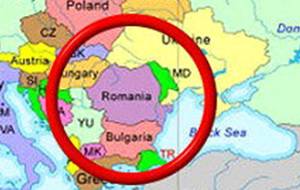 In the nearest future, another factor of influence on the interests of our State, may be the results of the presidential elections in Moldova and Bulgaria. The second round of elections in both countries was held on 13 November, 2016. At this, in the first round in Moldova (October 30, 2016), and in Bulgaria (November 6, 2016) the winners were representatives of left-wing pro-Russian forces, namely the leader of the Socialist Party of Moldova I. Dodon (47.98 % of the vote) and a representative of the Bulgarian Socialist Party R. Radev (25.44 %). Second were the candidates from pro-Western parties in those countries — the leader of the Moldovan “Action and Solidarity” Party M. Sandu (38.71 %) and a representative of the Bulgarian ruling party GERB, the Speaker of Parliament T. Tsacheva (21.96 %).
The final victory of the representatives of pro-Russian forces in the presidential elections in Moldova and Bulgaria will have negative consequences for Ukraine. First of all, high is the probability of I. Dodon’s abandoning the course of Moldova’s European integration and his turning to pro-Russian positions. In turn, R. Radev may join the EU countries speaking in favor of lifting the sanctions from Russia, and that would lead to a further weakening of the EU’s unity over this issue.

