
LAST WEEK’S KEY FACTORS AND MAIN TRENDS IN THE DEVELOPMENT OF THE SITUATION AROUND UKRAINE
(August 15-21, 2016)
I. The Highest-Profile Events in the Development of the Situation around Ukraine
During the week, the main factor to influence the situation around Ukraine was the consequences of the resonance Russian provocation in the Crimea. In fact, they have created the prerequisites for the armed aggression of Putin’s regime against our Country moving to a new level — in terms of Moscow’s possible giving up the Minsk Agreements. The above-mentioned was demonstrated by the Kremlin as part of the cancellation of its proposal to hold a meeting of the “Normandy Four” on the sidelines of the G20 summit in China and expressing doubts about “the advisability of holding such meetings in the nearest future”.
All this is used by Russia as a powerful lever of influence on Ukraine and its Western allies with the aim of forcing them to accept Russian conditions of settlement of the conflict in the Donbas. At the same time, Putin’s regime is counting on the USA and the EU’s strengthening pressure on Ukraine on the issue due to the West’s increasing concern about the possibility of further intensification of the armed conflict in the East of our State that poses a direct threat to the interests and security of the European Union.
 Against the background of the above-mentioned events, Russia is unfolding its political-diplomatic and information campaign of accusing Ukraine of “state terrorism”, which is held at all levels with the involvement of Moscow’s Western partners and is becoming a large scale. In the course of this campaign Moscow uses fictitious and fake facts (including the testimony of detained “terrorists” and the deaths of Russian military personnel as a result of different incidents) which “confirm” the Russian version.
With the help of this, Moscow is trying to discredit Ukraine and to undermine the credibility of international organizations and Western countries, as well as to show the “aggressive nature” of the policy of Ukraine’s leadership, which supposedly is “responsible” for the escalating conflict in the Donbas and the failure of the Minsk Agreements.
In general, these Russia’s actions are the practical implementation of Moscow’s strategic plan to achieve its goals regarding Ukraine (first of all, disintegration of our State and restoration of Russian control over it) while assuring the USA and EU that there are “no reasons” for maintaining sanctions against the Russian Federation.
The successful implementation of this plan is of particular relevance for the Putin regime as the preliminary revision of sanction policy against Russia (October this year) is coming nearer and of more and more negative consequences of Western sanctions for the Russian economy. Besides, a separate purpose of Russia’s actions for aggravation of the situation around Ukraine is the distraction of the Russian population’s attention from the country’s internal problems on the eve of elections in the Russian Federation to the State Duma (September 18, 2016).
II. Russia’s Armed Aggression against Ukraine
2.1. The East of Ukraine (The ATO Zone)
 The development of the situation in the ATO zone confirms Russia’s plans to intensify combat actions in the Donbas before and during the celebration of the 25th anniversary of Independence of Ukraine. The number of shelling of the positions of Ukrainian troops and civilian settlements is growing again (70–100 or more per day). The enemy’s greatest activity is maintained near Donetsk, Luhansk and Mariupol.
Besides, Russia continues sending heavy weapons and ammunition for the needs of the Russian-terrorist forces in the occupied territories of Ukraine. Quite characteristic are the actions of the Russian military command to deploy new complexes and systems of electronic intelligence systems and electronic warfare, not only in the “DPR” and “LPR”, but also near the border with Kharkiv, Sumy and Chernihiv regions of Ukraine (including in Belarus).
There are also signs of Russia’s preparations for large-scale provocations in the Donbas, with further shifting responsibility onto Ukraine. In particular, according to several reports, special units of the RF Armed Forces have received a few hundred sets of Ukrainian military uniforms and military equipment with Ukrainian symbols, which had been captured in the Crimea.
2.2. The Crimean Peninsula
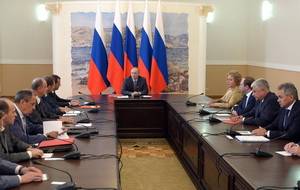 In order to make Russian provocations in Crimea “loud”, and as part of the election campaign in Russia, on the 19th of August 2016, Russian President V. Putin visited the Crimea. While in the occupied territory of Ukraine, the leader of the Russian Federation held a meeting of the RF Security Council provocatively themed “taking additional measures to strengthen the safety of residents and guests of the Crimea”.
During the meeting, V. Putin again accused Ukraine of “preparing a terrorist attack in the Crimea”, which allegedly was intended to “destabilize the situation in the region to disrupt the Minsk Agreements”. Thus, the Russian President actually confirmed his own plans to block the negotiation process on the settlement of the situation in the Donbas, and to shift onto Ukraine the responsibility for the aggravation of the situation in the conflict zone.
At the same time, in order to hide his own intentions, as well as to create a positive image of Russia, V. Putin expressed Russia’s readiness to develop trade and economic cooperation with Ukraine. He pointed out, “…Russia is not going to stop relations with Ukraine, despite the unwillingness of the current authorities in Kiev to maintain full diplomatic relations with Moscow”.
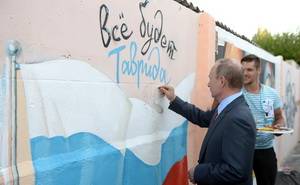 Special attention was paid by V. Putin to improving the image and increasing the credibility of the Russian authorities in the Crimea by showing “Russia’s real steps” to address socio-economic problems in the Peninsula. Thus, the Russian President set the task to the Russian government and the occupying authorities of the Crimea to focus on “increasing the incomes of the Crimean population and improving the housing and communal services”. At the same time, additional funds for this have not been allocated.
Within the framework of the implementation of the RF Security Council’s decisions, the Russian side has strengthened the protection of the Crimea’s administrative border with Kherson region. According to reports, this includes 10 helicopters and 20 unmanned aircrafts that carry out reconnaissance flights, including over the territory controlled by Ukraine. Besides, additional checkpoints are being established and coastguard boats’ actions have intensified near the territorial waters of the continental part of Ukraine.
2.3. Other Aspects of the Russian Federation’s Actions against Ukraine and the West
During the week continued a series of maneuvers and exercises of the Armed Forces of Russia near the borders of our State.
August 16, 2016, in preparation for the Strategic Command Post Exercise (SCPE) “Caucasus-2016” (scheduled for September, 2016), exercises were started in southern Russia and in the occupied Crimea to master the logistics of units of the Land Forces, Air and Space Forces (VKS) and the Navy of the RF Armed Forces during the “localization of an armed conflict”. 2.5 thousand military servicemen and 350 pieces of equipment are involved in the exercises.
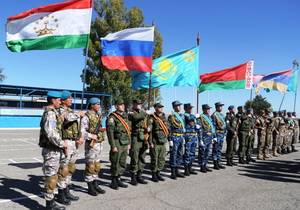 Besides, from August 13 to August 20, 2016, at training fields in Pskov and Leningrad regions of the Russian Federation were held Command Post exercises (CPE) of the Collective Rapid Response Forces (CRRF) of the Collective Security Treaty (CSTO) “Cooperation-2016”.
From August 23, 2016, at training fields in Belarus near the borders of Ukraine and Poland (near Baranovichi), they plan to hold Russian-Belarusian peacekeeping exercises “Enduring Brotherhood-2016” (aimed at practicing the peacekeeping units’ actions to force warring parties to ceasefire).
Along with this, last week, in the territory of Trans-Dniester region of the Republic of Moldova, were held joint exercises of law enforcement agencies of the self-proclaimed Trans-Dniester Moldavian Republic and the Operational Group of Russian Forces (OGRF) in Moldova.
Based on the current situation in Ukraine, we can’t exclude holding of these exercises as part of a single intention and a single plan of Russia’s actions against Ukraine, as it was in 2013 on the eve of Russia’s military aggression against our Country.
At the same time, as the disagreements between Russia and the USA and other western countries on the objectives and forms of the military operation in Syria remain, the Russian Federation’s leadership takes demonstrative steps to deepen cooperation with Iran in solving the Syrian problem in their favor. In particular, Moscow and Iran have reached an agreement on the possibility of Russia’s using the Iranian Hamedan air base for basing strategic bombers Tu-22M3 and Su-34 of the Russian VKS, which are involved in missile and bomb strikes on rebels’ positions in Syria. All this allows Russia to strengthen its positions in the Middle East, as well as to increase the effectiveness of its actions to assist the Syrian regime of B. al-Assad in his struggle against his opponents, especially the moderate opposition and the rebels.

At the same time, Russia’s military actions in Syria lead to an increase in the number of civilian casualties and destruction of civilian infrastructure. In particular, according to the Syrian Observatory for Human Rights (stationed in the UK), as a result of the bombing of the Syrian city of Raqqa in mid-August, at least 30 people were killed and 70 injured, children included. At this, the city water-supply system was completely set out of operation.
III. Ukraine, International Organizations and Leading Western Countries
Russia’s large-scale provocations in the Crimea and the growing threat of further intensification of fighting in the Donbas increase the international organizations and Western countries’ concern about the development of the situation around Ukraine. At this, the USA and EU continue supporting our State and putting pressure on Russia on the “Ukrainian issue”. Evidence of this was the West’s actual refusal to recognize Ukraine’s responsibility for “acts of terrorism” in the Crimea and the demonstration of intent to maintain sanctions against Russia.
At the same time, some members of the European Union have expressed readiness to deepen the dialogue with V. Putin’s regime and call on Moscow and Kyiv to “be reasonable”. The latter reflects a continuation of the rather cautious position of the European Union which refrains from excessive deterioration of relations with the Russian Federation.
3.1. International Organizations
The European Union. Taking into consideration the threat of Russia’s actions against Ukraine for the entire system of European security, the EU leadership pays special attention to the course of events around our State. August 17, this question was considered in Brussels at the meeting of the EU Political and Security Committee. Representatives of the EU Member States supported the territorial integrity of Ukraine, and condemned Russia’s actions for the annexation of the Crimea and provoking tension in the Donbas. At the same time, they once again asked Moscow and Kyiv to take all possible measures to prevent the escalation of the conflict.
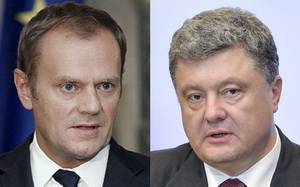 A more clear position in support of Ukraine was demonstrated by the President of the European Council D. Tusk. In particular, he openly questioned the accuracy of Russia’s allegations about “Ukraine preparing terrorist attacks in the Crimea”, as well as the “Ukrainian comandos’ attempts to break through into the peninsula”.
OSCE. Most of the OSCE member states preserve solid position regarding the non-recognition of the “Russian” status of the Crimea. Thus, the OSCE Office for Democratic Institutions and Human Rights (ODIHR) has refused to send its observers to monitor the elections to the State Duma of the Russian Federation in the Crimean Peninsula. According to the ODIHR’s Representative J. Petersen, the reason is Russia’ s illegal occupation of the Crimea that cannot be ignored by the Organization.
3.2. Leading Western Countries
The USA. In the situation around Ukraine, the USA maintains the most clear position on deterring Russia’s aggressive policy. According to the former US Ambassador to Ukraine Geoffrey Payette, the USA will continue supporting the policy of sanctions against Russia, which aims to demonstrate the inevitability of the Kremlin’s responsibility for the aggression against Ukraine. Moreover, according to G. Payette, in connection with the intensification of the armed conflict in the Donbas and increased tension around the Crimea, the USA considers the plans of increasing pressure on Moscow. The American diplomat openly accused Russia of not fulfilling the Minsk Agreements. In view of this, G. Payette announced the USA’s plans to give Ukraine the next batch of military equipment.
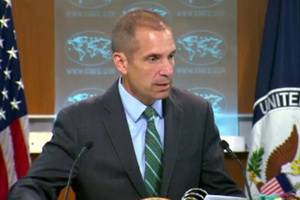 At the same time a new factor in the deterioration of relations between Russia and the United States have become Moscow’s above-mentioned actions for the use of a military base in Iran. August 17, the official representative of the US State Department M. Toner expressed doubts about the legality of such actions of Russia, which actually contradict the UN Security Council’s Resolution № 2231 (adopted in July 2015, it limits military cooperation with Iran). Besides, the United States have accused Russia of strikes against moderate opposition and peaceful settlements, leading to an increase in the number of civilian casualties.
These statements were rejected by the Ministry of Defense of Russia, which, in turn, has accused Washington of “misunderstanding of the content of the UN Security Council’s Resolution № 2231” and of “unwillingness to cooperate with Moscow in the fight against Islamic extremism in Syria”.
Against this background, Washington’s ability to provide real support to Ukraine and to counteract Russia is complicated by sharpening of pre-election campaign in the United States, including with the use of dirty information technologies. In particular, on 15th August 2016, the hackers posted on the Internet the next batch of internal documents of the Democratic Party (DP) of the United States, concerning the methods of the presidential campaign. According to representatives of DP, which are supported by the materials of the US special services’ investigations, the organizer of hacker attacks against the data base of the Democratic party is Russia, which is trying to influence the election results in the United States in favor of D. Trump.
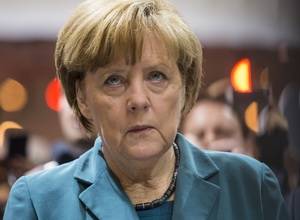 Germany. Russia’s provocations around the Crimea and their consequences have been the subject of recent statements by the Federal Chancellor A. Merkel. The leader of Germany confirmed her position on non-recognition of the legitimacy of Russia’s annexation of the Crimea, and called on Ukraine and Russia to prevent the escalation of the conflict. At the same time, A. Merkel sees no reason to cancel the European Union’s sanctions against Russia because Moscow has not fulfilled all its obligations within the framework of the Minsk process. She stated this in an interview with the publishing association Redaktionsnetzwerk Deutschland, published on Friday, August 19, 2016.
The Head of the Government of Germany reminded that it was Russia that had led to the crisis, having annexed the Crimea in 2014, and by supporting the separatists in Eastern Ukraine. “Europe must react to this violation of fundamental principles”, — said A. Merkel.
The complication of the situation in the Donbas and in the Crimea was also discussed during a special meeting of the Minister of Foreign Affairs of Germany F. Steinmeier and Russian Foreign Minister S. Lavrov in Yekaterinburg on 15 August, 2016. F. Steinmeier urged Russia to fulfill the Minsk Agreements as the main precondition for easing sanctions against Russia. At the same time, he expressed the German side’s desire to get clear and transparent results of the investigation of the incidents that have lately occurred in the Crimea. F. Steinmeier also pointed out Berlin’s readiness for dialogue with Moscow and expressed hope for rapprochement between the two countries.
IV. Other Important Trends and Events Related to the National Interests of Ukraine
One of the main factors of influence on Russia’s plans and actions against Ukraine remains the complex of problems related to the economic and social development of the Russian Federation.
 According to forecasts of Moody’s US rating agency, a further escalation of the conflict between Russia and Ukraine will finally undermine the Russian economy, after which it will not be able to recover. Thus, according to US experts, the increase in tension around the Crimea and the intensification of fighting in the Donbas will lead to introduction of the United States’ and the EU’s new sanctions against Putin’s regime. In turn, the consequences of this will be increase in the outflow of capital from Russia, weakening of the ruble and decrease in the credit rating of the Russian Federation. All this will cause social complications, and therefore political problems in the country.
Evidence of this is negative trends in the Russian economy and social sphere.
Thus, despite the optimistic statements made by the Russian Ministry of Labor on the reduction of unemployment in the country, independent Russian experts point out a significant decrease in the number of jobs in Russia — namely, by 6.8 million over the past three years. At this, in January-May 2016 the number of liquidated companies exceeded the number of registered ones by 12,100 or 6 %. First of all, the reduction affected the manufacturing industry, as well as the retail trade and services.
 At the same time, the inequality in incomes of the Russian population grows. In particular, in the first half of 2016, 10 % of the wealthiest citizens counted for 29.4 % of total cash income, while the poorest — for 2.1 %. Real incomes have also fell — by 5 % per year. According to experts, the above-mentioned circumstances pose a real threat of social unrest in Russia.
In such circumstances, the Russian President V. Putin continues taking steps to strengthen his power through personnel changes in the country’s decision-making bodies. In particular, instead of S. Ivanov to the post of the Head of the Russian Presidential Administration he appointed A. Vaino, who is considered a devoted to Putin person, not related to various clans and nomenclature groups. In 2008-2011 A. Vaino headed Putin’s unit in the Russian government, and proved to be a confident leader who could firmly defend Putin’s interests.
V. Main Trends in the Development of the Situation around Ukraine in the Future
5.1. Key Events and Trends that Will Be Most Important for Ukraine
Proceeding from these circumstances, the last week of August 2016, and especially — during the celebration of the 25th anniversary of Ukraine’s Independence — will be most dangerous in terms of the possibility of substantial intensification of Russia’s military-provocative and subversive and terrorist activities against our State.
The above-mentioned will be aimed at thwarting the main Ukraine’s holiday (which is an open challenge to Moscow’s neo-imperial ambitions), demonstration of “inferiority of Ukraine as a sovereign state, which cannot ensure its own security, even after 25 years of its existence”, as well as intimidation of the Ukrainian nation and undermining its credibility in the country’s leadership. All this quite obviously will add to Russia’s policy of forcing our State to carry out Russia’s conditions of the “settlement” of the situation in the Donbas.
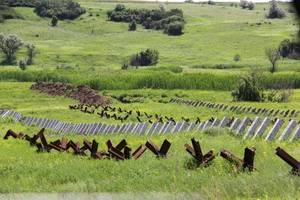 In this context Russia could go both, to the sharp intensification of shelling of the positions of Ukrainian troops and civilian populated areas in the conflict zone in the Donbas, and to conducting limited or larger-scale offensive operations. At this, apart from the offensive of Russian troops from the “DPR” and “LPR” controlled by Russia, there can also be individual offensive operations from the territory of the occupied Crimea.
At the same time, as part of maneuvers and exercises, Russia will demonstrate its force, so provocations are possible on other parts of eastern, northern, southern and south-western borders of Ukraine (from Russia, Belarus, the occupied Crimea and Trans-Dniester). To this end, in addition to the aforementioned planned activities of operational and combat training of the RF Armed Forces, there can be carried out unannounced inspections of the Western, Southern, and other military districts of the Russian Armed Forces, including with carrying out tasks of operational throwing military units to the Ukrainian border.
In the interest of a cover and justification for such actions, Russia can implement a number of new resonance provocations in the conflict zone in the Donbas, Crimea, as well as on its own territory, of which provocations it will again accuse Ukraine. In this context, Putin’s regime will rely on the effects of the already implemented provocations that caused another wave of anti-Ukrainian sentiments in the Russian society, and also showed the West’s reaction limited exclusively to political statements.
Besides, during the celebration of the 25th anniversary of Ukraine’s independence, Russia can arrange a series of high-profile terrorist attacks in Kyiv and other cities of our State in order to destabilize the situation in Ukraine.
5.2. Prospects for the Development of Events in the Conflict Zones of Ukraine
Apart from the Russian Federation’s above-mentioned actions, we may expect also Putin’s attempts to use the summit of “Big Twenty” in China (September 3-4, 2016 in Hangzhou) to persuade Ukraine’s western partners to support Russian approaches to the “settlement” of the situation in the Donbas and to exert pressure on our government on this issue.
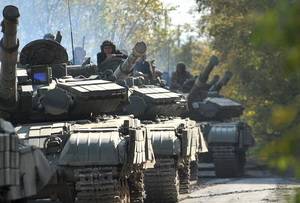 To this end, Russia will use provoked by it aggravation of the situation in the conflict zone in the Donbas and provocations in the Crimea, which will be presented by the Russian side as evidence of “Ukraine’s aggressive policy” and its “responsibility for failure of the Minsk Agreements.” However, taking into consideration the US and EU positions, with a high probability they will reject Moscow’s claims that will cause Putin regime’s further pressure on Ukraine and its partners.
Against this background, a positive factor for Ukraine is that EU continues caring about the European development of our Country and other countries of the former USSR. September 3 2016, at the initiative of Slovakia, is planned an informal meeting of Foreign Ministers of the EU “Eastern Partnership” Program’s member countries. In the course of this meeting they will discuss prospects for deepening cooperation between the EU and Ukraine, Moldova, Belarus, Georgia, Armenia and Azerbaijan, as well as the development of the situation around our Country.

