
LAST WEEK’S KEY FACTORS AND MAIN TRENDS IN THE DEVELOPMENT OF THE SITUATION AROUND UKRAINE
(August 01-07, 2016)
I. The Highest-Profile Events in the Development of the Situation around Ukraine
Russia’s obvious preparation to enlarging the scale of the armed aggression against Ukraine significantly increases the relevance of the issue of Western allies and partners’ support to our Country. In this connection of special importance for Ukraine will be the results of the US presidential elections in November 2016.
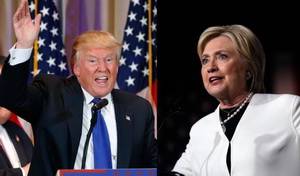 After the official nomination of the US presidential candidates from the Republican and Democratic Parties — namely D. Trump and H. Clinton, — the campaign in the United States entered its active and final stage. At this, one of the main issues used by both candidates in their political programs, is the situation around Ukraine. As before, D. Trump and H. Clinton hold diametrically opposite positions in relation to Russia’s armed aggression against Ukraine, as well as its consequences for the global and European security.
Thus, at the beginning of August 2016, D. Trump made regular resonant statements about the possibility of the USA’s revising the sanctions policy toward Russia and recognition of “the Crimea’s belonging to Russia”, as well as “the threat of a third world war in case of the USA’s military actions to return the Crimean Peninsula to Ukraine”. Besides, D. Trump questioned the United States’ fulfillment of its obligations to NATO members to provide them with assistance in case of Russia’s attack.
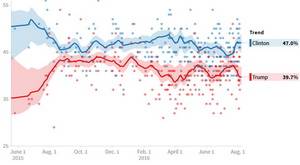
Unlike him, H. Clinton demonstrates clear intentions to preserve the immutability of the US foreign policy, including on the provision of assistance to Ukraine in its confrontation with V. Putin’s regime. H. Clinton’s position is supported by the US President B. Obama, and today, by most of the American population as well. According to recent sociological researches, after D. Trump’s scandalous statements, H. Clinton has resumed its leading position in the pre-election ratings and is ahead of her rival, already by 9 %.
These circumstances confirm D. Trump’s inadequate policy, which is purely populist in nature and is designed for marginal and underclass strata of the American population. In this regard, he is almost similar to the former President of Ukraine V. Yanukovych, who also relied on a similar part of the Ukrainian society, as well as on criminal structures that were under his control.
The main consultant of V. Yanukovych and D. Trump’s campaigns was and now still is an American lobbyist Paul Manafort. Taking into consideration the catastrophic consequences of his consultations for both V. Yanukovich himself and Ukraine in general, they are thought to have no less negative effect for D. Trump and the United States.
II. Russia’s Armed Aggression against Ukraine
2.1. The East of Ukraine (The ATO zone)
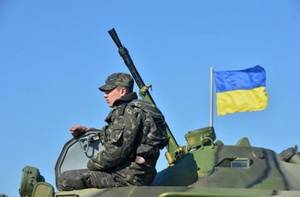 The situation in the conflict zone in the East of Ukraine maintained a very high level of tension due to the Russian-terrorist forces’ active shelling of the positions of the ATO forces and peaceful settlements with the peak intensity of more than 70 attacks per day. At this, as in the previous week, the enemy’s most intense actions were observed near Donetsk (Avdiivka, Nevelskyi, Zaitseve, Nyzhnye Lozove, Opytne, Luhanske), Mariupol (Vodyane, Krasnohorivka, Hranitne, Novotroitsk, Maryinka, Starohnativka, Shyrokino) and Luhansk (near Svetlodarsk arc).
At the same time Russia and its allies in the Donbas use special information events, aimed at justifying their actions to intensify the armed conflict in the East of Ukraine. In particular, the rumors are being spread about the preparation of Ukraine’s large-scale offensive, which can supposedly start in the period from August 8 to 12. The spread of these rumors is accompanied by the “DPR”/”LPR” leaders’ threats “…to provide an adequate response to Ukraine’s violations of the Minsk Agreements”.
Besides, transportation of additional heavy weapons (including armored vehicles and multiple launch rocket systems) for the Russian-terrorist forces to the occupied territories of Ukraine continues. The Russian terrorists are also building up the capacity of the hospital fund to receive the wounded. Thus, in Horlivka and other cities of the self-proclaimed republics, all medical institutions are being turned into surgical ones.
In this situation, Moscow’s indicative step was the admission by the representatives of the Russian Federation in JMCC (Joint Centre for Monitoring and Coordination) of the fact of the militants’ using heavy weapons “…in response to the Armed Forces of Ukraine’s attacks”. This way they are forming additional reasons to justify possible expansion of the armed confrontation in the Donbas by Russia.
Against this background, on the 3d of August 2016, another meeting of the Trilateral Contact Group took place in Minsk. As before, the negotiators paid the main attention to the ceasefire, withdrawal of the parties and exchange of prisoners of war. Expectedly, no specific decisions were made. This once again confirms the complete inefficiency of the Minsk format of negotiations, which is used by Russia exclusively to procrastinate the process of settling the conflict in the East of Ukraine, as well as to impose on our Country and the world community Moscow’s vision of the situation in the Donbas. Evidence of this was the statement by the Russian representative in the Tripartite Contact Group B. Gryzlov about the need within the framework of the Group to take decisions on a special status of the “DPR” and “LPR”.
 The next meeting of the Tripartite Contact Group is scheduled for August 26, 2016. In the situation of the expected intensification of hostilities in the Donbas, in the course of that meeting, the Russian side may put forward a new ultimatum to Ukraine, first of all, regarding recognition of the breakaway republics, consent to the holding of elections in the “DPR” and “LPR” on Russia’s terms, as well as providing amnesty to militants.
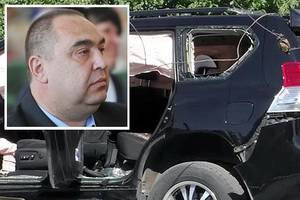
In the context of the above-mentioned trends, a resonant event in the occupied territories of Ukraine was 5 August, 2016 attempt on the so-called head of the “LPR” I. Plotnitskyi’s life. The cause of this can be both, sharpening of the struggle for power in the breakaway republics, and the separatist leaders’ getting out from under Moscow’s control, so the latter started their selective elimination. But anyway this fact will be used by Moscow and separatists to accuse Ukraine of terrorism and increased hostilities in the conflict zone.
2.2. The Crimean Peninsula
The RF leadership’s actions to eliminate the Crimea’s autonomy are accompanied by Moscow’s measures to strengthen control over the information space of the Peninsula, which is intended to prevent strengthening of anti-Russian sentiments among the Crimean population. In particular, from the beginning of August, 2016 another series of electronic sites (“Krym. Realii”, TRK “Chernomorskaya” and “Sobytia Kryma” included) has been blocked in the Crimea. Simultaneously, a rotation of combat units of the RF Armed Forces is taking place on the border between the occupied Crimea and Ukraine’s Kherson region. In particular, July 27–30, 2016 from Krasnodar Territory of the Russian Federation to the Crimea was moved battalion tactical group from the 247 Airborne Assault Regiment of the 7th Airborne Assault Division (Novorossiysk), which replaced the battalion tactical group of the 11th Separate Airborne Assault Brigade (permanently deployed in Ulan Ude (Buryatia). However, the true goal of Russia’s actions can be hidden strengthening the grouping of Russian troops in the North of the Crimean Peninsula in preparation for Russia’s full-scale offensive against Ukraine.
2.3. Other Aspects of the Russian Federation’s Actions against Ukraine and the West
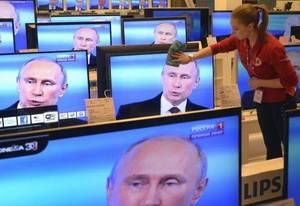 As part of the policy of confrontation with the West, Russia is increasing the scale of its information impact on European countries. Since the beginning of this year, Moscow’s spending on the Kremlin’s information projects has increased by 100 million pounds. First of all, these funds have been spent on the opening of the office and organization of broadcast of programs by Russian TV and radio channels “Russia Today” and “Sputnik” in London and Edinburgh. According to British experts, this was largely the reason for greater Euroskeptic moods in the UK, which eventually led to the country’s exit from the European Union.
The Russian Federation is using new directions in its information war against Ukraine. In particular, in order to discredit our Country in the eyes of international community, the media of the Russian Federation and Western countries’ media controlled by Russia, spread information about the involvement of Ukrainian security services in the assassination of one of the Russian opposition leaders B. Nemtsov.
Moreover, Russia continues its provocative actions against the NATO countries in the Baltic region. Another manifestation of such Moscow’s actions was the violation by a Russian submarine of Latvia’s exclusive maritime economic zone August 4, 2016.
III. Ukraine and International Organizations and Leading Western Countries
3.1. International Organizations
The European Union. The European Union’s leadership has expressed deep concern about Russia and Turkey’s plans to resume implementation of the project of construction of the “Turkish Stream” gas pipeline under the Black Sea, bypassing Ukraine. According to representatives of the governing bodies of the European Union, the above-mentioned poses a real threat of the EU countries’ greater dependence on Russian energy carriers.
3.2. Leading Western Countries
Leading Western countries keep showing their positive attitude to Ukraine. At this, in most cases pro-Russian actions of some political forces in these countries are condemned or blocked at the governmental or parliamentary level.
The USA. Of particular importance for Ukraine is the recovery of the American society’s special attention to Russia’s aggression against our Country. This change has occurred after the statements of candidates for US president regarding their views on the development of the US-Russian relations. Thus, on 31 July, 2016 in his interview with US news agency “ABC” D. Trump made a statement on the main directions of foreign policy, which he would lead if elected. In particular, D. Trump demonstrated a friendly attitude to Russia and announced his intention to recognize Russia’s annexation of the Crimea.
 In this regard, on the 2nd of August, 2016 US President B. Obama declared about the United States’ invariable intention to demand from Russia implementation of the Minsk Agreements and termination of its aggression against Ukraine. The lack of tangible results on these issues, according to the US President, results in “difficulties” in the US-Russian relations.
Against the background of growing pro-Russian orientation of D. Trump’s campaign and the current US leadership’s support to H. Clinton, the gap in the ratings of the candidates for the US presidency was restored in favor of the candidate from the Democratic Party. According to recent opinion polls, H. Clinton is by about 9 % ahead of D. Trump.
France. Despite the existence of pro-Russian sentiments in the country, the leadership of France continues advocating preservation of the territorial integrity of Ukraine within its internationally recognized borders. August 2, 2016 the French Ministry of Foreign Affairs confirmed the Crimea’s belonging to Ukraine and denied the official Paris’ having anything to do with the visit of a group of French parliamentarians to the occupied Crimean Peninsula July 29–31, 2016. The actions of the representatives of the French Parliament were considered completely contrary to the position of the government.
Italy. Italia’s leadership’s official position is similar. August 3, 2016 the House of Deputies of Italy adopted a resolution on “Directions of Italy’s European and Foreign Policy in the Context of Recent Events in the World,” which recommends to the government to take all necessary measures to ensure the implementation of the Minsk Agreements. At the same time, they rejected the opposition “Movement of 5 Stars” party’s draft resolution calling on the leadership of Italy to immediately lift sanctions against Russia.
IV. Other Important Trends and Developments Relating to Ukraine’s National Interests
 Russia. Despite the RF leadership’s official statements about “overcoming the crisis in the country”, the economic situation in Russia keeps becoming more complicated. According to analysts of the Higher School of Economy, the results of the first half of 2016 showed a fall of the Russian economy by 1.5 % in annual terms. The figure is much larger than the forecast by both Russian and Western experts. At this, they point out the acceleration in the reduction of Russia’s GDP from 1.2 % in the first quarter — to 1.4 % in the second.
Besides, Russian experts have downgraded the forecast in terms of reduction of the Reserve Fund of the Russian Federation. Thus, these funds decreased by 32.5 % in the first half of 2016. Taking this into account, the total exhaustion of the Reserve Fund of the Russian Federation is expected not in 2017, as expected earlier, but already this year. These trends suggest preservation of significant problems in the Russian economy and make it difficult for Moscow to implement its goals in relation to Ukraine.
Against this background, a rather broad resonance in Russia was caused by the second anniversary of Russian President V. Putin’s Decree of August 6, 2014 on the introduction of counter-sanctions against foreign countries which had applied sanctions against the Russian Federation. On the one hand, the above-mentioned Moscow’s actions continue finding support among representatives of state authorities of the Russian Federation, who call them “an adequate response to the West”; on the other — they cause growing dissatisfaction among the Russian population due to rising food prices and a reduction in their assortment.
Thus, under the decision of “Rosselkhoznadzor”, within the framework of Putin’s Decree mentioned above, since the beginning of this year, 7.5 thousand tons of foreign-made food have been destroyed in Russia. At the same time, in the Russian Federation, consumer prices have risen by 24 %, while the food prices within the past two years have grown by about 30 % (including the prices for meat and milk have increased by 20 %, fish products — by 40 %, fruits and vegetables — by 30 %, cereals and legumes — by 65 %, sunflower oil — by 55 %, sugar — by 40 %). At the same time, is confirmed Russia’s being unable to ensure full and proper import substitution of food products.
 Terrorism and Extremism. The problems of terrorism and extremism remain urgent for both, leading countries, and those of the “third world”. Since the beginning of August 2016, there has been a new series of manifestations of these problems, including: the attack of a young man of Syrian origin on passers-by in the center of London (one person died and five were injured); the explosion in the Turkish city of Antalya during a rally in support of the incumbent President T. Erdogan (two people were injured); the capture of a group of tourists by Islamic extremists in Afghanistan (ten people were killed), as well as the shelling of the parliament building in Kosovo.
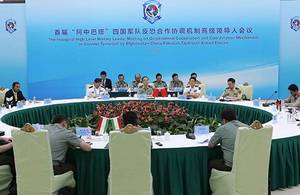
In this situation, China, Pakistan, Afghanistan and Tajikistan took the initiative to create a joint anti-terrorist alliance, which was tentatively titled “Quadrilateral Cooperation and Coordination Mechanism”. The relevant agreement was signed on August 4, 2016 during a meeting of Defense Ministers of the four countries in north-western China’s Xinjiang province. The main task of the new association is to strengthen the fight against Islamic extremism, which is becoming a significant problem for all countries in the region.
V. Main Trends in the Development of the Situation around Ukraine in the Future
5.1. Key Events and Trends that Will Be Most Important for Ukraine
The Russian Federation. In the nearest future the main factor of influence on the national interests and security of Ukraine will be Russia’s actions in preparation for the possibility of expanding the scale of its military intervention in our State. Thus, in August-September this year, the Armed Forces of the Russian Federation plan to hold large-scale events of the complex operational and combat training, which, under certain circumstances, could develop into open aggression against Ukraine (and not against Ukraine alone!).
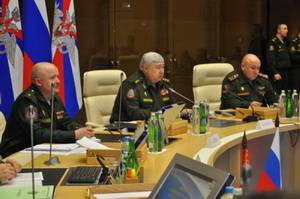 The main of these measures is planned to be the Strategic Command Post Exercise (SCPE) “Caucasus-2016” in the Southern Military District of the Russian Federation Armed Forces (close to the conflict zone in the Donbas). In 2008, such trainings became the prologue of Russia’s armed aggression against Georgia.
Within the framework of preparation of SCPE “Caucasus-2016”, for August 15 is scheduled the beginning of trainings in material-technical supporting the Russian troops during the offensive on the South-Western strategic direction.
In the future, SCPE “Caucasus-2016”, which are scheduled for September this year, will be preceded by a series of separate but interconnected by the single operational background and purpose, exercises, maneuvers and trainings in communication, logistics, intelligence, electronic warfare, air defense, other combat arms and so on.
Aggression against Ukraine in the autumn of this year, with causing maximum losses to Ukrainian Armed Forces can be carried out by Russia also with the aim of demonstrating the success of the Kremlin policy on the eve of parliamentary elections in Russia (elections for the Russian Federation’s State Duma are scheduled for September 18, 2016), and discrediting the current US administration’s “disastrous Ukrainian policy” in order to help D. Trump win presidential elections (presidential elections in the United States are scheduled for November 8, 2016).
Besides, the distraction of the US leadership’s attention to domestic issues related to the presidential elections, will create favorable conditions for the implementation of Russia’s plans towards Ukraine.
 Russia-China-BRICS. The Russian Federation’s leadership will pay particular attention to strengthening the country’s positions in counteracting Western sanctions within the framework of preparations for the summit of “Big Twenty” (G20) in early September 2016 in China. In this context, Moscow has expressed hope for deepening the strategic partnership with China, both at the bilateral and multilateral (international) level, in terms of strengthening cooperation between the two countries in solving global problems in the economic and security spheres.
In particular, in this context there is a trend of termination of the decrease in trade turnover between Russia and China (started in 2014 due to the West’s sanctions against the Russian Federation), as well as developing of the cooperation between China and the Eurasian Economic Union with the prospect of the creating a joint free trade zone. Apart from this, the Kremlin is happy with Beijing’s position as the latter refuses to join the US and EU’s sanctions against Russia and opposes the policy of pressure on Moscow.
In view of this, Putin’s regime pins considerable hopes to the meeting of leaders of Russia and China, as well as the BRICS group, to be held on the sidelines of the G20 summit in China.
We should also expect the RF’s attempts to use the G20 summit to justify the Kremlin’s policy towards Ukraine, as well as to shift its “responsibility for the violation of the Minsk Agreements” onto our country. This way Moscow will try to influence the positions of the EU Member States on the eve of the next (interim) EU’s revision (in October, 2016) of the sanction policy toward Russia.
The USA. The USA’s leadership maintains a clear position on the support of Ukraine and deterring the Putin regime. According to the US President B. Obama (August 1, 2016), Washington under any circumstances will continue assisting Ukraine and preserving loyalty to the cause of protecting allies in NATO in terms of Russia’s aggressive actions. The USA will remain the center and the main unifying force of the North Atlantic Alliance as the strongest alliance in the world.
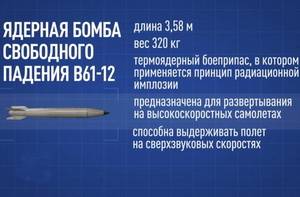 These Washington’s intentions are accompanied by practical measures to strengthen the combat potential of the country’s armed forces, including their strategic nuclear missile potential. For example, the US National Nuclear Security Administration started production of the advanced nuclear bomb V61-12. According to the plans of the US Defense Department, it will allow to preserve the nuclear parity with Russia in the situation of Moscow’s deployment of new mobile missile complexes “Topol-M”.
At the same time, B. Obama did not rule out the possibility of enhanced cooperation between the USA and Russia on the issue of the fight against the “Islamic State” in Syria. The reason for this was called the intensification of terrorist activities of Islamic extremists all over the world, including in the United States, which requires joint efforts of the international community in combating this threat.
5.2. Prospects for the Development of Events in the Conflict Zones of Ukraine
The above-mentioned trends and factors increase the risk of further deterioration of the armed conflict in the Donbas in the nearest future: at the end of the first decade of August 2016 — on the eve of the 25th anniversary of Ukraine’s independence. Such Russia’s actions will be aimed at inflicting moral damage to the patriotic feelings of the Ukrainian society, as well as at the preparations for a large-scale offensive into the territory of Ukraine this autumn.
 All this can be carried out by Russia under the pretext of “rejecting Ukraine’s attacks” on the “DPR”/“LPR” or of the “humanitarian” or “peacekeeping operations”. To create the impression of aggression on the part of our State, Moscow can arrange large-scale armed provocations in the conflict zone in the East of Ukraine, including shelling of residential areas of peaceful settlements controlled by the militants. All this will be accompanied by loud rhetoric of the Russian leadership at all levels, including in the UN Security Council and other international organizations, with accusations of Ukraine of violating the Minsk Agreements.
At the same time, according to Western intelligence agencies, the head of the Chechen Republic R. Kadyrov is leading the preparations of resonant terrorist acts in Moscow, Kyiv and the Crimea. The responsibility for them will rest with the citizens of Ukraine from among the Crimean Tatars, and will cause massive “cleansing” in the Crimean Peninsula. At this, the Crimean Tatars will be opposed to Ukraine, which will significantly complicate our State’s support to them. Besides, the resonant terrorist attacks in Moscow and other Russian cities, as well as in the Crimea committed by citizens of Ukraine, can be used by V. Putin’s regime as another “excuse” for the expansion of the scope of the armed aggression against our Country.

