
LAST WEEK’S KEY FACTORS AND MAIN TRENDS IN THE DEVELOPMENT OF THE SITUATION AROUND UKRAINE
(June 27-July 3, 2016)
I. The Main Resonance Events in the Development of the Situation around Ukraine
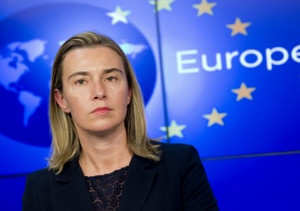 June 28 this year, participants of the EU Summit at the level of the Heads of Member States of the Organization made a unanimous decision on the extension of political and economic sanctions against Russia till the end of January 2017. According to the Federal Chancellor of Germany A. Merkel, the reason for this step was V. Putin’s regime’s failure to fulfill the Minsk Agreements as the main prerequisites for revising the EU’s sanctions policy towards the Russian Federation.
This way our State’s European partners have actually preserved the key factor to deter Moscow from a large-scale armed aggression against Ukraine. Depending on the situation, the sanctions against Russia may be revised in October 2016.
Besides, the Summit of the European Union adopted the Global Strategy for Foreign and Security Policy of the EU: “A Shared Vision, Common Action: A Stronger Europe,” submitted by the High Representative of the Union for Foreign Affairs and Security Policy, Federica Mogherini. In the Document, Russia’s actions in Ukraine are recognized as a direct violation of international law that is a challenge to the whole system of collective security in Europe. At this, they point out the illegality of Russia’s annexation of the Ukrainian Crimea, as well as the unacceptability of the V. Putin regime’s policy to destabilize the situation in the Donbas.
Taking into consideration the above-mentioned circumstances, the EU expressed the intention to continue joint efforts to uphold the rights of each country to choose its own future freely, including to develop relations with the European Union. It is expected that the EU will continue assisting in the strengthening of its eastern neighbors, as well as increasing their ability to counter Moscow’s aggressive policy. These principles are planned to be the basis of the European Union’s relations with Russia. At the same time, the EU is ready to continue selective cooperation with the Russian Federation on issues of mutual interest.
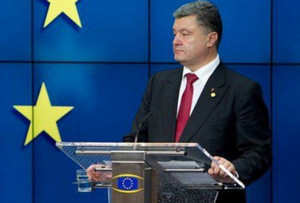 Despite the pro-Russian sentiments being widely spread in the European Union, the results of the mini EU-Ukraine Summit of June 27 this year, with the participation of Ukrainian President P. Poroshenko did help make the above-mentioned decisions. During the meeting, the Ukrainian President notified the EU leaders of peculiarities of the situation in the Donbas region, including the facts of Russian efforts to provoke an armed confrontation in the region.
Ukraine’s position on this issue was fully supported by the European Union. Besides, the EU leaders gave a positive assessment of the Ukrainian government’s efforts in the constitutional reform in the country and strengthening anti-corruption measures. Considering this, leaders of the EU member states expressed their firm intention to continue supporting Ukraine. In particular, within the framework of this support, it was agreed to grant the next tranche of EU’s macro-financial assistance to Ukraine.
At the same time, the leaders of the European Union member states did not reach an agreement on the ratification of the Association Agreement between Ukraine and the EU. The reason for this was the position of the Netherlands, which demanded to introduce into the Document some legally binding changes regarding the exclusion from it of the guarantees of Ukraine’s membership in the EU. Due to the distraction of the EU leadership’s attention by other issues (first of all by the results of “Brexit”), they also postponed the decision on another issue important for Ukraine — cancelling of the visa regime with the European Union.
II. Russia’s Armed Aggression against Ukraine
2.1. The East of Ukraine (The ATO Zone)
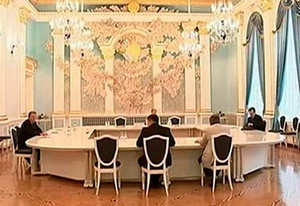 June 28-29 this year Minsk hosted a regular meeting of the Trilateral Contact Group, which discussed the issues of strengthening security in the conflict zone and the establishment of transport links between the main part of Ukraine and the occupied districts of Donetsk and Luhansk regions, as well as the prisoners exchange issue.
Besides, the Ukrainian side pointed out the negative trend of increased hostilities in the Donbas, and demanded explanations regarding the actions of the illegal government of the “DPR”/“LPR” of “privatizing” (actually capturing) Ukrainian property on their territory. In their turn, representatives of the self-proclaimed republics expressed interest in the opening in the “DPR”/“LPR” of additional offices of the Pension Fund of Ukraine in order to “repay debts and to simplify payments”.
As a result of the negotiations, the parties achieved some progress in addressing the issue of removal of equipment and personnel by the parties, including in the areas of the cities Zolote and Petrovske. They also agreed upon the plans to restore rail freight through the demarcation line in the Donbas. Besides, a preliminary agreement was reached to discuss the issue of returning to Ukraine the control of its eastern border.
The results of the meeting showed Russia’s use of new strategy, which provides for certain concessions to Ukraine (through the “DPR”/“LPR”) while maintaining the inviolability of Moscow’s positions on the main issues related to its interests. Confirmation of the latter was the Russian Foreign Ministry’s statement about the necessity of “parallel solution of political and security issues” (referring to the conduct of elections in the Donbas on Russian conditions), as well as continued pressure on Ukraine by blocking the exchange of prisoners and escalation of the armed conflict in the Donbas.
For example, on the eve of the last meeting in Minsk, the Russian-terrorist forces traditionally intensified firing on positions of the ATO forces and peaceful settlements in all major areas with peak intensity of more than 70 attacks per day. At this, they used weapon systems prohibited by the Minsk Agreements, including 152 mm caliber cannons.
Besides, June 29, 2016, units of the Russian-terrorist troops tried to make an offensive from the area of Debaltsevo towards Svetlodarsk. The ATO forces repelled the attack with considerable losses to the enemy. In fact, the Russian side repeats the scenarios of the attacks near Maryinka last year and near Avdiivka this year, which also took place before and during important international meetings.
At the same time, the Russian Federation’s leadership keeps taking measures to create pro-Russian sentiments among the population of the occupied territories and to train new fighters, first of all from among the region’s youth. In particular, in June 2016, the Russian Defence Ministry’s “Gvardeec” (“Guardsman”) paramilitary camp near Nizhny Novgorod organized training for groups of Luhansk schoolchildren, in the course of which there were classes on “patriotic education” and military training.
In this situation, the FRG’s support to our state is very important. June 27 this year, German Chancellor A. Merkel pointed to the impossibility of holding elections in the occupied territories of Donetsk and Luhansk regions prior to the termination of the armed conflict in the region. At this, she pointed out that Russian troops and weapons should be withdrawn from the East of Ukraine. Thus, A. Merkel actually eliminated Moscow’s hopes to attract leading European countries to activities aimed at putting Russia’s pressure on Ukraine.
2.2. The Crimean Peninsula
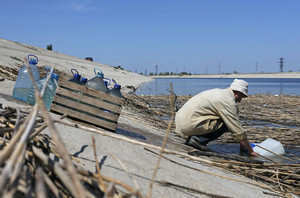 The main problem of the Crimea remains its unresolved economic problems, reduction of financing of the Crimea’s socio-economic sector and the Russian side’s being unable to effectively use its tourism potential.
At present, the RF Ministry of Finance proposes to reduce financing of the social and economic development of the Crimea. First of all, it concerns financing government programs and the main directions of federal budget spending in 2017-2019. Thus, it is proposed to cut by more than twice the funding of programs for social and economic development of the Crimea: from 149.3 billion rubles in 2016 to 65.98 billion rubles in 2019.
At the same time, lack of resources leads to a complication of implementation of a number of important programs for economic and social infrastructure development of the Crimea, which are financed from the federal and local budgets. In particular, in Simferopol they suspended the work on the reconstruction of the First Aid and Emergency Medical Centre, which had begun before Russia’s annexation of the Crimean Peninsula. There are problems with water supply of some areas of the Crimea, which has already caused protests of the local population, including June 26 in Yalta. Besides, the Association of Tour Operators of Russia has recognized a decrease in the number of those wishing to holiday in the Crimea despite previous expectations.
In order to divert public attention from these issues, the Russian leadership of the Crimea continues to use the factor of the “Crimean Tatar threat”. In particular, “the Vice-Premier of the Crimean government,” Ruslan Balbek again accused the organizer of the transport blockade of the Crimea Lenur Islyamov of “preparing acts of sabotage in the Kerch Strait”. At the same time the occupation authorities of the Crimea have stopped the work of “SimSitiTrans” transport company (provides bus service), which is owned by L. Islyamov.
Against this background, on June 27 this year, the European Court of Human Rights opened the first case of Russia’s confiscation of Ukrainian assets in the Crimea. The court accepted for consideration the claim of Feodosia More Shipbuilding Company of a violation of rights as a result of the illegal nationalization of its assets in the territory of the Crimean Peninsula.
III. Other Factors in the Development of the Situation around Ukraine, Affecting Its National Interests and Security
The Russian Federation. In response to the European Union’s continuing sanctions against Russia, on June 29 this year, President V. Putin signed a decree on the extension from 6 August 2016 to 31 August 2017 of a ban on the import of food of western production into Russia.
At the same time, the Russian leadership uses to its advantage the UK plans to exit from the EU. According to the Russian President V. Putin, the implementation of these plans will create favorable conditions for the restoration of Russian-British relations, which “will have positive consequences for both countries”. Russians are trying to use the “British precedent” to cause an additional split between the EU member states.
Besides, there are certain signs of Russia’s actions in preparation for the possible annexation of the occupied territories of the East of Ukraine. June 28 this year, the Communist Party of the Russian Federation (part of the so-called “systemic opposition”, which in fact complies with the Putin regime), proposed to the Russian State Duma a draft law on simplification of procedures for granting Russian citizenship to persons who reside or resided on the territory of Donetsk and Luhansk regions.
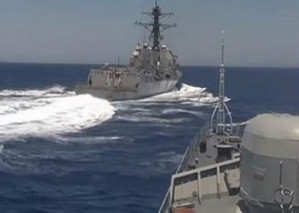 Russia-the USA/NATO. Against this background, Russia continues putting pressure on the USA and NATO by organizing provocations with elements of demonstration of its military force. In particular, June 30, 2016 patrol ship “Yaroslav Mudryi” (“Yaroslav the Wise”) from the Baltic Fleet of the Russian Navy came up too close to the ships of the US Navy escorting the aircraft carrier “Dwight Eisenhower” — namely, the missile cruiser “San Jasino”. The previous similar incident occurred on June 17, when the “Yaroslav Mudryi” made a similar close approach to the US destroyer “Gravely” crossing the latter’s course. According to estimates of the American military command, such Russia’s actions, which have got intensified lately, significantly increase the threat of armed incidents with unpredictable consequences.
IV. Ukraine and Its Allies and Partners
The USA. The US leadership has clear positions where it comes to putting pressure on Russia and supporting Ukraine. According to the US Ambassador to Russia J. Tefft’s statement of 27 June 2016, Moscow is directly responsible for the violation of the Minsk Agreements as it keeps its troops in the occupied territories of Ukraine and continues armed provocations in the Donbas. With this in mind, he confirmed the intention of the US Administration to extend sanctions against Russia and to help Ukraine, despite the problems in the EU, including Great Britain’s intention to withdraw from the Organization.
In terms of practical implementation of this policy, on June 28 this year, the Upper House of the US Congress passed a bill that provides for allocation of 500 million US dollars to finance the defence needs of Ukraine within the framework of the Pentagon’s budget for 2017 fiscal year.
The European Union. The main event in the European Union’s activity was the EU Summit at the level of the leaders of the EU member states on 28-29 June this year in Brussels. Besides the Ukrainian issue, the main topic on the agenda was the discussion of the situation around the UK plans to leave the European Union (previously, this problem has been addressed in a variety of formats, including during meetings: of the leaders of the FRG, France and Italy in Berlin; of Foreign Ministers of Poland, Romania, Bulgaria, Greece, Hungary, Slovakia, Slovenia, Spain, Austria and the United Kingdom in Warsaw; of Foreign Ministers of Poland, the Czech Republic, Slovakia and Hungary /Visegrad group/ and Germany in Prague; the emergency session of the European Parliament).
Within the framework of these activities was pointed out the need to preserve the unity of the European Union in all circumstances. At the same time, the leaders of the EU member states called on the UK to immediately launch the procedure of the country’s leaving the European Union, which should minimize the negative consequences of such a step by the United Kingdom and to stop speculations surrounding this matter. A significant difficulty of implementing these plans was recognized due to the need for denunciation of about 50 different agreements, which procedure would take at least two years.
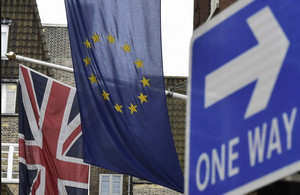 The intentions of the UK to withdraw from EU were also the main topic of debate in international expert circles. Taking into consideration the complexity of the issue, the estimates were ambiguous, and in some cases mutually exclusive. In general, they included several key theses: from “the EU leadership’s being able to keep the stability of the Organization despite growing Euroskeptic moods in some European countries” to “exit from the European Union of individual countries with the preservation of the EU’s core from among the most stable members” and “the EU’s complete disintegration.”
Representatives of the state leadership of the United Kingdom have their own point of view in the situation. According to the Prime Minister D. Cameron, in the nearest future the British government and the Parliament as well as regional authorities will start consistent and coordinated measures for the preparation of all necessary procedures for the UK’s leaving the EU.
At the same time, D. Cameron expressed his country’s intention to continue to cooperate fully with the European Union and NATO. In his turn, the British Ambassador to Ukraine J. Gough reaffirmed London’s commitments on political and economic support to the Ukrainian state, as well as assisting to Ukraine in implementing reforms.
Against this background, the UK’s plans to leave the EU lead to more complicated political and economic situation in the country, as well as have a negative impact on the British and global economy. In particular, the British currency has fallen by 9 % compared to the US dollar. At the same time, global stock markets have lost about 3 trillion US dollars.
Besides, the Scottish Parliament has expressed the intention to block the results of the referendum in the UK. In particular, such an opinion was expressed by the First Minister of Scotland — the leader of the Scottish National Party (which has a majority in the local Parliament) N. Sturgeon.
In their turn, a number of British MPs made an appeal to the country’s leadership to hold a second referendum on the UK’s membership of the EU (a petition has already been signed by more than 4 million British citizens).
The results of the referendum in the UK on June 23 this year became a catalyst for revitalization of Euroskeptic forces in a number of other EU countries. In particular, the idea of holding similar plebiscites has been voiced by the Party of Freedom (the Netherlands), National Front (France) and the People’s Party (Slovakia). So far, the calls of the above-mentioned political forces do not find support in national parliaments of their countries. However, in case of complications of the political and economic situation in the EU, “the British syndrome” may get further spread.
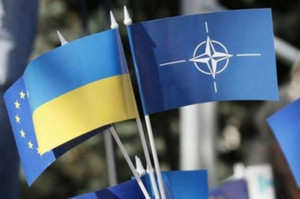 NATO. On the eve of NATO Summit in Warsaw, on June 8-9, 2016, the leadership of the Alliance specifies development trends, as well as possible changes in the role and place of NATO in the system of Euro-Atlantic security after the UK leaves the EU. Consideration of these issues was the subject of a special meeting of NATO on June 27 this year.
Commenting on the results of the meeting, US Secretary of State J. Kerry and NATO Secretary General J. Stoltenberg pointed out the increase in the importance of the Alliance in the new political situation in Europe, as the main coordinating body of European countries’ actions in the security and defence sphere. Besides, they expressed confidence in the fact that the UK’s exit from the EU will not affect the decision of the forthcoming summit of the Alliance.
In turn, according to the Vice-President of the Parliamentary Assembly of NATO P. Alli, Russia’s fulfillment of the Minsk Agreement is not the final condition for lifting of the West’s sanctions against Russia. They will be fully canceled only in case if Moscow returns the Crimea to Ukraine.
Poland-“Visegrad Group”. In the situation of growing pro-Russian and Euroskeptic moods among some political forces in a number of European Union’s countries, Poland remains one of the most consistent partners of Ukraine.
June 27 this year, Speaker of the Seim (Parliament) of Poland M. Kuchciński initiated creation of the Assembly of “Visegrad Group” (Poland, Hungary, Czech Republic and Slovakia) with Ukraine and Romania. According to him, the cooperation will strengthen the countries of Central and Eastern Europe in terms of joint counteracting Russia’s aggressive policy. Poland intends to bring this matter to the Economic Forum in the Polish city of Krinitse in September 2016.
Georgia. July 1-5, 2016, in Tbilisi is taking place the 25th Annual Session of the OSCE Parliamentary Assembly. The main issues on the agenda include a discussion of the situation in the conflict zones in Georgia and Ukraine, as well as the possibility of the deployment of the OSCE Armed Police Mission in the Donbas.
V. Key Trends in the Development of the Situation around Ukraine in the Future
5.1. Key Events that Will Be of Great Importance for Ukraine
Warsaw NATO Summit. The following week a key event in the development of the situation around Ukraine, which will significantly influence the interests of our country in the long run, will become NATO Summit in Warsaw (July 8-9, 2016). This event is of particular relevance in the face of the deteriorating problems in the EU as a result of the UK plans to leave the Organization, which is taking place in the situation of increasing threats to Europe from Russia.
In such circumstances, the main task of the Summit is to demonstrate the preservation of the unity of the Euro-Atlantic security system and its ability to counteract Moscow’s aggressive policy. Proof of this should be the adoption by member countries of the Alliance of the previously planned decisions on reform and development of NATO, despite the UK’s intention to leave the EU.
In this context, it will be important to adopt plans to strengthen the military presence of the Alliance in the countries of Central and Eastern Europe and in the Baltics, as well as to assist to Ukraine. Besides, according to the President of Slovakia A. Kiska, the Alliance’s adequate response to Russia’s actions could be confirmation of NATO’s openness to new countries, including from the former USSR.
According to the United States Permanent Representative to NATO D. Lute, in dealing with the issue of strengthening support for Ukraine, NATO expects from Kyiv full and accurate information on the situation in the Donbas and on the progress of Ukrainian reforms in the security and defence sector. Such information may be transferred to NATO during the US Secretary of State J. Kerry’s visit to Ukraine on 7 July 2016 — on the eve of the NATO Summit.
Commenting on the agenda of NATO Summit in Warsaw, NATO Secretary General J. Stoltenberg identified three main themes, namely: everything that is connected with the issues of the coalition (collective) NATO security; NATO’s cooperation with the European Union; ensuring stability in the neighboring countries of the Alliance.
Besides, during the Warsaw Summit of NATO there will be a meeting of the Ukraine-NATO Commission.
5.2. Prospects for the Development of the Situation in the Conflict Zone
In the Donbas. Given the strategic importance of Debaltsevo for the “DPR”/“LPR” (as a key transportation hub between Donetsk and Luhansk), in the nearest future we should expect a concentration of major combat operations exactly on this direction. At this, Russian-terrorist forces would try to “push” units of the ATO forces as far away from Debaltsevo as possible to prevent the emergence of threats to transport communications between the two self-proclaimed republics. At the same time, the enemy can do some distracting actions in other areas, in particular in the areas of human settlements such as Shyrokino, Avdiivka, Maryinka, Pisky (Donetsk airport), Stanytsya Luhanska.
All this will enhance the threat of further development of the negotiation process to resolve the conflict in the Donbas. This can complicate the preparation of the meeting of the Humanitarian Group on July 4, 2016 (it is planned to discuss issues of prisoner exchange) and the Tripartite Contact Group July 12-13 (one of the items on the agenda should be consideration of the prospects for creation of a new sub-group to address the issue of returning the eastern border of Ukraine under Kyiv’s control). In particular, representatives of the Russian leadership have already begun expressing their negative attitude to the possibility of creating this subgroup.
5.3. Other Events that Will Influence Interests of Ukraine
Consequences of “Brexit”. In the nearest future, important factors of influence on the process of European integration of Ukraine can be a situation related to the UK’s plans to leave the EU, and the Slovak Republic’s Presidency in the Council of the European Union from July 1 this year.
Thus, the problems around the UK will be objectively distracting EU’s attention from Ukraine and enhancing differences in the European Union on the Ukrainian issue, including on ratification of the Association Agreement between Ukraine and the EU. At this, the most problematic aspect will be the Netherlands’ demand to amend the document.
In turn, Slovakia’s Presidency in the EU Council could lead to possible negative consequences for Ukraine in terms of weakening the support to our state in the European Union decision-making bodies. The reason for this is Slovakia’s very little “political weight” in the EU, as well as some pro-Russian sentiments in the leadership of that country.

