The analysis of the events around Afghanistan makes suggests a conclusion that today the struggle of Europe, Russia and the United States for influence on the Taliban in the future of Afghanistan is continuing and gaining momentum. At this, the official Kabul, the United States and Germany will try to help a split of the Taliban in order to force them to peace and signing an agreement. The movement has come close enough to actually getting the status of “liberation movement” and become a subject of the international process and official negotiations. The article is available in Ukrainian
More >>Category: Middle East
Iran: Playing on the Brink
Just a few days ago, we mentioned the new stage in the escalation of the military-political situation in the Persian Gulf region. Less than a week — another event: the IRGC Air Force shot down an American drone. US President D. Trump made a decision about air strike, but later he called off the strike. The question arises: “How long will the period of threats last, where is the limit of such an escalation, why and in whose way does Iran stand?” Today, despite tense muscles and promises to punish, all the parties to the conflict, without exception, have come close to the “red line”, but do not dare to cross it. It is easy to start a war, but how much and what…
More >>Strengthening China’s Positions in Afghanistan
Roman Kot While the United States, against the background of the escalation of its relations with Iran, is dwelling on how to get rid of the consequences of another protracted conflict in Afghanistan by withdrawing its troops from Afghanistan, China more and more bluntly demonstrates willingness to fill in this “vacuum”. On the 20th June, 2019, the Ministry of Foreign Affairs of the PRC issued a statement on the Taliban delegation’s visit to Beijing. At the meeting, Chinese experts discussed establishing a peace process in Afghanistan and combating terrorism. It would seem that the level of such a meeting cannot be considered the highest since it was a working visit. China’s long-standing ties with the Taliban, mainly through the intermediary of Pakistani…
More >>Israeli-Lebanese confrontation on the Eastern Mediterranean shelf
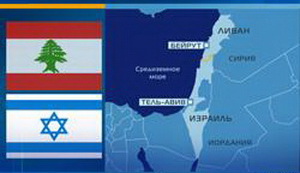
Oleksiy Volovych The natural gas and oil deposits in the Lebanese energy basin in the Eastern Mediterranean, discovered by the American oil and gas company Noble Energy Mediterranean in 2009–2010, have become almost at once exploration and development target for the countries of the sub-region — Egypt, Israel, Lebanon, Syria, Cyprus, Greece and Turkey. In 2010, the US Geological Survey previously estimated reserves of hydrocarbons in the Levantine Basin at 3.45 trillion cubic metres of gas and 1.7 billion barrels of oil. According to other data, the potential of the region…
More >>Persian Gulf: a New Stage of Escalation?
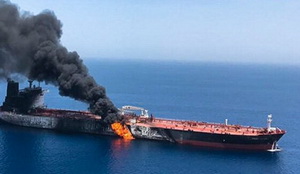
Vadim Volohov June 13, 2019, in the Gulf of Oman There Was an Attack on Two Tankers: “Kokuka Courageous” under the Panamanian flag (owned by Japan) and “Front Altair” under the flag of the Marshall Islands In fact, this can already be perceived as a war at sea, and in response, one should expect nothing less than an action against the country that unleashed this war. On the same day, June 13, US Secretary of State Mike Pompeo at a press conference accused Iran of “provocative actions that greatly…
More >>Parliamentary Crisis in Israel: Reasons and Possible Consequences
Oleksiy Volovych In late May, sensational news came from Israel: the Israeli Parlament (Knesset) approved a law on its early dissolution In late May, sensational news came from Israel: the Israeli Parlament (Knesset) approved a law on its early dissolution. It happened a month and a half after the early parliamentary elections held on April 9. Due to the uncertainty of some potential coalition partners, Prime Minister Benjamin Netanyahu and his “Likud” party failed to form a ruling coalition (within six weeks according to the law) by May 29.…
More >>Middle East: a Footstep Away From the “Point of No Return”
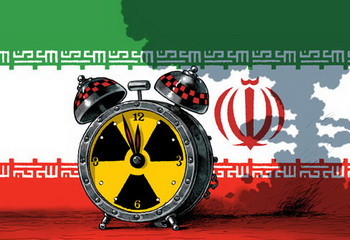
Iran has officially abandoned a series of the 2015 “nuclear deal” commitments Vadym Volokhov May 8, 2019, a predicted and anticipated event took place: the Islamic Republic of Iran officially informed Ambassadors of the United Kingdom, China, Germany, France and Russia that Iran would stop complying with parts of the 2015 “nuclear deal”. Today, the further development of the situation in the region will depend on Europe’s reaction. But we should not lay great hopes on the EU. Europe has shown “concern”, but it will hardly actively interfere with the conflict between the United States and Iran. In general, Tehran’s actions can be called a…
More >>Iran — US: A New Cycle of the Crisis in the Middle East
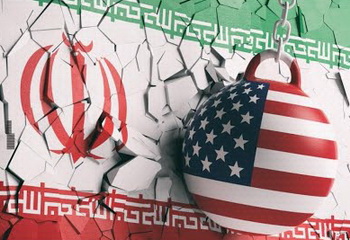
Today, the main question is important: when and how will the opposing parties cross the “red line”? Vadym Volokhov Washington decided to deploy the USS Abraham Lincoln Carrier Strike Group, as stated on 5th May by the US National Security Advisor John Bolton. In his view, Tehran should receive this “clear and unmistakable message” if it did not fully understand the White House’s decision on “oil sanctions” against Iran. John Bolton, in particular, pointed out that the United States was not seeking war with the Iranian regime, but was fully prepared to respond to any attack, whether by proxy, the Islamic Revolutionary Guard Corps, or regular Iranian forces. It…
More >>A New Round of Civil War in Libya
Oleksiy Volovych April 4, 2019 the Libyan National Army under the command of Marshal Khalifa Haftar launched an offensive against the capital of Tripoli. The declared by H. Hafthar aim of the attack was supposedly to “clean the Tripoli from islamists and terrorists”, although the true aim of this offensive is, in fact, to drive away the Government of National Accord (GNA) of Libya led by Kh. Haftar’s longtime opponent, Prime Minister Fayez al-Sarraj, supported by some western countries and the UN. Estimating the parties’ chances to win, it should be noted that the chances of the Commander of the LNA to win…
More >>Ukraine, Syria and Venezuela
The Multipolar World as a Source of Crises and Conflicts Victor Hvozd The objective consequence of the formation of a new multipolar world is the growing problem of relations between different centers of power. Today, the sharpest of these are the contradictions between the West (the USA and Europe) and Russia, which are turning into another “Cold War”. At this, like the previous “Cold War” between the Western and Eastern blocs, it is accompanied by armed conflicts in the centers of intersection of interests of the world leading powers. Ukraine Ukraine has become the object of a…
More >>