Germany’s Reaction to Berlin’s Refusal to Provide Military Assistance to Ukraine

COULD GERMANY HAVE DONE MORE IN SUCH AN IMPORTANT ISSUE FOR UKRAINE?

Serhiy Polyovyk

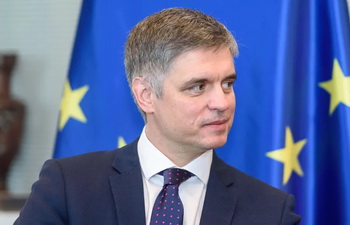
Interview with Foreign Minister of Ukraine Vadym Prystaiko for German agency Redaktions Netzwerk Deutschland (RND) about Germany’s refusal to provide military assistance to Ukraine has come as a surprise to European experts. And European media, including the German RND, Spiegel, N-tv.de, Frankfurter Allgemeine Zeitung, etc., have even found it necessary to react to it. Thus, the RND has taken V. Prystaiko’s statement as a direct request to Germany to provide such assistance

More >>

How the Partners in the “Normandy” Format Are Getting On: Germany

THE INTERNAL POLITICAL DYNAMICS AND SCENARIOS OF THE DEVELOPMENT OF EVENTS

Roman Kot

The Paris meeting in Normandy format on the 9th of December 2019, undoubtedly was just the first step towards resolving the conflict between Ukraine and Russia, and it is obvious that this process will take years. The effectiveness of Ukraine’s further efforts to force Russia to peace under this format will depend not only on Ukraine’s efforts, but also on the level of Berlin and Paris’ support for Ukrainian initiatives. This, in turn, is directly related to the domestic dynamics in Germany and France. So, let’s analyze what is happening within these two countries

More >>

NATO Is Responding to Russia’s Preparations for War

ON THE ACTIVITY OF RUSSIAN SUBMARINES IN NORTH ATLANTIC

Serhiy Polyovyk

A few days ago, some European media, including the German Handelsblatt and the Austrian Die Presse, reported about Russian submarines’ unusual activity in North Atlantic.
Purposeful in nature, publication of such information took place after the London Summit of NATO. There were also reports of testing new Russian ground, sea and airborne missile systems, the use of Russian combat aviation in Syria, unprecedented concentration of heterogeneous troops and weapons of the Russian Armed Forces in Crimea, the planned testing of submarines and training of the Russian Navy in the ocean.

More >>

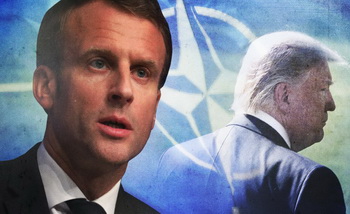
France’s Role in NATO Does Not Suit Macron, Does It?

DOES EUROPE REALLY NEED STRATEGIC AUTONOMY?

Serhiy Polyovyk

Recently, French President Emmanuel Macron announced his intention to visit Moscow next May. Independent European analysts have long noted E. Macron’s affection for Russia. And his statement about participation in the Moscow parade once again testifies to the dominance of the nuclear leader’s own interests over the principles of democracy, over observance of conditions of collective security in Europe and solidarity within NATO.

More >>

Middle East: the Era of Controlled Chaos

IRAN WILL REMAIN AN ACTIVE PLAYER IN THE MIDDLE EAST GEOPOLITICAL PUZZLE

Vadym Volokhov

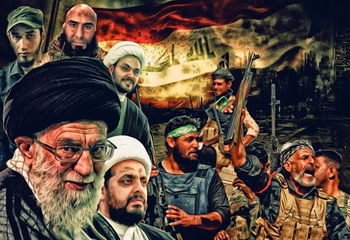
According to an old tradition, which was not invented here, at the end of the year, achievements summarized and plans for the future are made. Not to break the practice, we will talk about the Middle East, its role in the Islamic Republic of Iran on the eve of 2020 and in the near future.

More >>

Elements of China’s Vulnerability

THE SCOPE OF SUSTAINABILITY OF XI JINPING’S POLITICAL SYSTEM

Serhiy Polyovyk

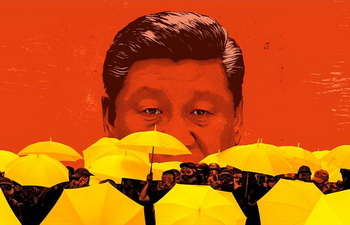
European media and analysts specializing in geopolitics have recently paid attention to China’s expansionist policy. Some disturbing trends can be observed in today’s China. The ruling Communist Party of China, led by Xi Jinping, has suddenly begun to notice facts of an internal partial recession in the economy, and ambiguous political challenges in the society.

More >>

A Step to Peace or a Sign of a Truce?

RESULTS OF THE MEETING OF THE “NORMANDY FOUR” IN PARIS

Victor Hvozd

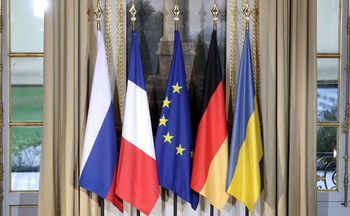
On December 9, 2019, the first for the last three years meeting of the leaders of Ukraine, Russia, France and Germany, the so-called “Normandy Four”, took place in Paris. At the official level, it was highly estimated by both, Ukraine and Russia, and by Western countries, as well as by international organizations, including the UN, EU, NATO and OSCE.

More >>

Hungary and Russia

A NEW STAGE OF PARTNERSHIP AGAINST UKRAINE

Ivan Sichen

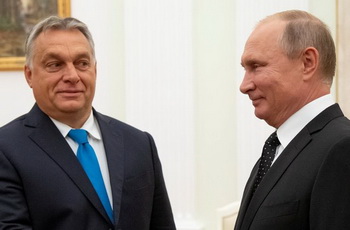
…Again, the “second front” has been opened against us. Because how else can one comment on Russia and Hungary’s another attack on Ukraine? Having united, they opposed our state, and, in fact, the European Union. This is clearly evidenced by the new “series” of Moscow and Budapest’s coordinated actions in the political and informational sphere aimed at putting pressure on both Ukraine and its Western partners on the eve of the meeting of the leaders of the “Normandy Four” in Paris on December 9, 2019.

More >>

EU Trade Agreements as a Tool to Protect the Interests of Member Countries

ECONOMIC PRAGMATISM REMAINS THE DOMINANT LEVER IN SHAPING WORLD POLITICS

Serhiy Polyovyk

The European Union has signed 42 treaties with 73 countries in different regions of the world to reduce tariffs and facilitate business. In Europe, however, attempts are being made to resist some of these signed or planned agreements. The criticism of free trade opponents in some aspects is good, but short-sighted activists do not notice that these agreements offer not only economic but also serious political benefits.

More >>