Iran — US: A New Cycle of the Crisis in the Middle East
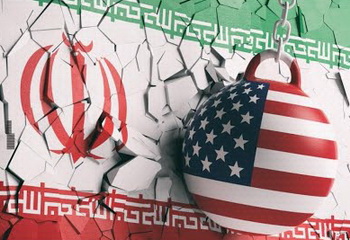
Today, the main question is important: when and how will the opposing parties cross the “red line”?   Vadym Volokhov Washington decided to deploy the USS Abraham Lincoln Carrier Strike Group, as stated on 5th May by the US National Security Advisor John Bolton. In his view, Tehran should receive this “clear and unmistakable message” if it did not fully understand the White House’s decision on “oil sanctions” against Iran. John Bolton, in particular, pointed out that the United States was not seeking war with the Iranian regime, but was fully prepared to respond to any attack, whether by proxy, the Islamic Revolutionary Guard Corps, or regular Iranian forces. It…

More >>

Peculiarities of the Region of East Asia, As One of the Centers of World Power

Global and Regional Dimensions and Influence on the Interests of Ukraine   Olha Ratkovych, Bratislava Today, the region of East Asia has such peculiarities as strengthening of China’s role, unresolved territorial demarcation, the desire to eliminate interstate conflict situations through diplomatic negotiations, without the use of armed forces. Also, the countries of the region are participants of the ASEAN, the World Trade Organization, and China is a permanent member of the UN Security Council and cooperates (as well as Japan) in the International Monetary Fund. It should also be noted that the states of East Asia are among the leaders who own and develop…

More >>

The Crimea on the Chessboard of Geopolitics — the Crimean Evening

President of “Borysfen Intel” Victor Hvozd on the Radio “Crimea. Realities”   How has the world system changed five years after the annexation of the Crimea? Should we expect a global war because of the confrontation in Ukraine? How long can the occupation of the Peninsula last? And what should Ukrainian government do in order not to lose the Crimea forever? These topics are being discussed in the studio of the Radio “Crimea.Realities” in the talk show “The Crimean Evening” by radio host Serhiy Hromenko, and a Ukrainian military, ex-head of the Foreign Intelligence Service…

More >>

Authority of Austria’s Intelligence — In Ambiguo

The Role and Risks of the Activities of National Intelligence Services of the EU Countries in Achieving Political Goals   Serhiy Polyovyk The scandal caused by the Austrian intelligence services remains front and centre in the mind of European analysts in security, defense and special services of the EU. It broke into the open when European counterparts put forward reasonable suspicions against the Office for the Protection of the Constitution and Counterterrorism (BVT) because of Austria’s over-loyalty to Russia. These suspicions are also confirmed by links between the right-wing radical parliamentary Freedom Party…

More >>

Aggravation of the Crisis in Sudan

Roman Kot April 11, 2019, a military coup took place in Sudan, during which Omar al-Bashir, the country’s President, was removed from his post. Besides, the Sudanese military disbanded the Cabinet and the Parliament of the country — the National Assembly, and also announced a three-month state of emergency to be followed by a two-year transitional period. Also, state Sudanese media reported that all political prisoners, including the leaders of the protests taking place in the country, were released from prison. This is the end of the thirtieth year of Omar al-Bashir’s staying in power…

More >>

Prospects for the Development of the Situation in Sudan

Sudan and the Interests of the United States, the PRC and the RF   Oleksiy Volovych On April 11, 2019, a military coup took place in Sudan. The Command of Sudan’s Armed Forces arrested and removed from all posts the country’s President, Omar al-Bashir (75 years old), who came to power in 1989 after a military coup. Thus, O. al-Bashir, left his post in the same way as he came to it — as a result of a military coup. It is already the eighth military coup after the declaration of Sudan’s independence on January 1, 1956. All in all, between 1952…

More >>

Five Years of the Annexation of the Crimea

Consequences for the World, Russia and Ukraine   Victor Hvozd March 18, 2014, an agreement was signed in the Kremlin on the “accession” of the Crimea and Sevastopol to Russia, which became the official date of their annexation. Since then, every anniversary of this event has traditionally attracted attention to the Crimean problem in Ukraine, Russia, and throughout the world. As it should have been expected, in March 2019, the world’s reaction to this issue was very wide, and in covering it, media emphasized the so-called five-year jubilee of the Russian annexation of the Peninsula. For example, the problem of Russia’s annexation of the Crimea was…

More >>

To Fight Against Terrorism in a New Way

Roman Kot The new security realm in the current, multifaceted world keeps generating new threats and challenges, including in the fight against terrorism. This, in turn, obliges relevant special services to constantly modify and change the forms and methods of their work in order to minimize the risk of a terrorist threat. Ukraine in this regard is no exception: on March 5, 2019, Ukrainian President P. Poroshenko approved the new Concept of the Fight Against Terrorism.   What caused the need for change? …The need to revise the principles of the fight against terrorism in Ukraine has been spoken about…

More >>

The Indian-Pakistani Conflict

A War Between Nuclear Powers and Its Consequences for the World   Victor Hvozd One of the notable consequences of the formation of a new multipolar world, taking place in recent years, is the actual violation of the whole system of international relations, which was formed after the end of the “Cold War”. In this regard, the most dangerous is the loss of effectiveness of nuclear arms control agreements, concluded between the USA and the USSR, and then — Russia. As we have already pointed out, the reason for that was the obtaining of such weapons by countries that are not…

More >>