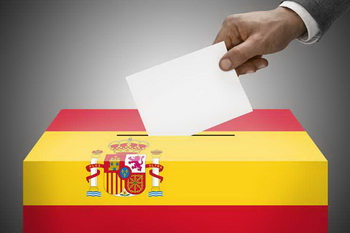
Will the Anti-Russian Consensus Survive in the Spanish Establishment? Roman Kot The dynamics of political processes in the EU countries after the migration crisis is accompanied by tectonic changes, which gradually, but inevitably, bring about the coming to power of the right-wing populist forces. This is manifested, in particular, in the fall in the ratings of traditional centre-right, and, especially, centre-left parties. At the same time, the forces that dragged on this electorate have not yet gained enough popularity (with the exception of the Italian ones) to form a majority and a government. All of this often leads…
More >>Category: Politics
Authority of Austria’s Intelligence — In Ambiguo
The Role and Risks of the Activities of National Intelligence Services of the EU Countries in Achieving Political Goals Serhiy Polyovyk The scandal caused by the Austrian intelligence services remains front and centre in the mind of European analysts in security, defense and special services of the EU. It broke into the open when European counterparts put forward reasonable suspicions against the Office for the Protection of the Constitution and Counterterrorism (BVT) because of Austria’s over-loyalty to Russia. These suspicions are also confirmed by links between the right-wing radical parliamentary Freedom Party…
More >>Cooperation of Intelligence Services
Austrian Intelligence Feels Isolated at the International Level Serhiy Polyovyk The popular German periodical, weekly Der Spiegel, on the 1st of April 2019 published an editorial with reference to mfh/dpa about Germany’s being concerned with the development of right-wing extremist tendencies in Austria. The question is: is it advisable to continue to co-operate with some representatives of the Austrian government, who share extremist and nationalistic views? To the earlier concerns about Austrian policy, are added the European partners’ fears regarding the neighbouring Austria’s special services’ excessive dependence on Russia. In the European…
More >>Russia Relying on Eurasia as a Basis of Power
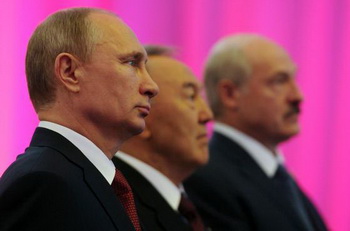
Geopolitical Trends Serhiy Polovyk Leading European analysts and experts are thoroughly analyzing the materials of the recent summit of the EU, which completed its work in Brussels. If nothing else, the summit discussed the future of the European Union after the Brexit, consolidation in counteracting China’s “soft power” on the European continent, problems and threats from the total spread of digital technologies and the degree of their influence on the configuration of internal and interstate relations, security policy and methods of counteracting cybercrime, etc. The authoritative Swiss periodical, the Neue Zürcher Zeitung (NZZ),…
More >>The PRC’s Economic Problems
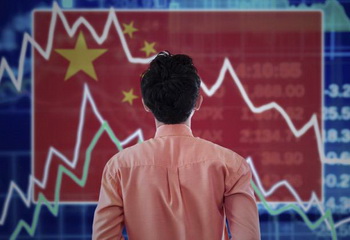
Reasons and Consequences for the World and Ukraine Victor Hvozd Despite the growing disagreements between the leading powers of the world in the new multipolar system of international relations, they maintain significant interdependence in the economic sphere. At the same time, they also have a significant impact on the overall economic situation in the world, which is the result of the deepening processes of world globalization. To date, one of the main subjects of such influence is China, which is the second after the United States in the world by its economic potential, and even leaves it behind by a number of indicators. Thus, according to the…
More >>Libya: Instability in Tripolitania and Fezzan
(January – beginning of February 2019) Oleksiy Volovych The article is available in Ukrainian
More >>Thoughts on Hybrid Flirtation and Hybrid Alliance
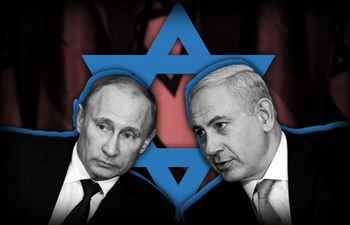
Oleksiy Volovych The hybrid Russian-Israeli flirtation (or rather, the flirtation between Putin and Netanyahu) is perceived with great irritation in Damascus, Tehran and Ankara. Against this background, the coalition RF — TR — IRI looks hybrid, unstable, contradictory, and therefore — transient. It seems that in the political sense, for the Russian leadership, relations with Israel are more important than with Iran and Turkey. The article is available in Ukrainian
More >>Donald Trump’s “Equator”
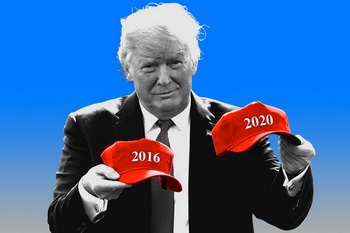
The Beginning of the US Election Campaign and Its Consequences Victor Hvozd January 2019 marks exactly two years since D. Trump’s official becoming US President. In fact, this is the “equator” of his presidential term, which is usually the peak of the activities of the Master of the White House and the start of preparations for the new election (scheduled for 2020). However, unlike most other US Presidents, D. Trump’s “equator” coincided with a significant complication of the political situation in the United States, which is turning into a rigid confrontation between the two branches of power in the country. An example of this was the so-called “shutdown” — D. Trump’s next…
More >>Visiting BINTEL – M. S. Dnistryanskyi
“Russian Propaganda Has Mounted the Idea that Ukraine Is a Temporary Artificial Formation…”
More >>Дещо про територіальні проблеми України з її сусідами
Сергій Рудюк
Наш історичний досвід свідчить, що формула «Мир в обмін на території» для українського народу неприйнятна
More >>