
 How Ukraine Responds to Russia’s Massive Aerial Attacks
Ivan Sichen
Recently, Russia has intensified massive air strikes on the entire territory of Ukraine, including on the capital of our state. The scale of such strikes is increasing, including the simultaneous use of up to 18 Tu-95M and 4–5 Tu-22M3 strategic bombers, 3–5 MiG-31K fighter jets, as well as Shahed-type UAVs. The reasons for Moscow’s fury (although it has been furious long before today) are well known. Russia cannot defeat Ukraine on the battlefield, and therefore is trying to undermine our economic and military potentials and intimidate the population of Ukraine. These goals have become especially important for Putin’s regime in the context of the approaching presidential election in Russia. Of course, the Kremlin, as always, will falsify its results. However, it needs at least some legitimacy of voting. Therefore, V. Putin seeks to increase his rating at the expense of at least some victories, although there are none and definitely there will be none. Moreover, Russian air strikes on Ukraine do not go unanswered, and retaliatory strikes are becoming harsher and more painful for the enemy. Unlike at the beginning of the war, we already have the necessary forces and weapons for this.
As you know, at the end of last year and the beginning of this year, Russia inflicted at least four powerful air strikes on Ukraine, which significantly exceeded the average level of Russian air attacks, in particular:
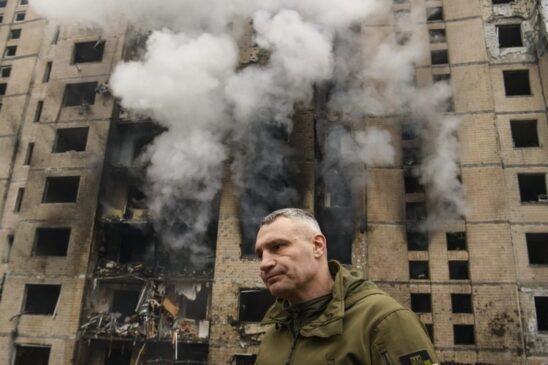 December 29, 2023, 36 Shahed UAVs, about 90 Kh-101/Kh-555/Kh-55 cruise missiles from Tu-95M aircraft, eight Kh-22/Kh-32 missiles from Tu-22M3 bombers, five Kh-47M2 Kinzhal missiles from MiG-31K fighter jets, 14 S-300/S-400/Iskander-M missiles were used during the attack on the territory of Ukraine. The launches were carried out from the Caspian and Azov regions, from the airspace of Kursk and Astrakhan regions, from ground-based launchers in Belgorod region, as well as from the occupied Crimea. More than 40 people were killed and another 150 were injured in Ukraine;
- January 2, 2024, the Russians launched 35 Shahed UAVs, at least 70 Kh-101/Kh-555/Kh-55 missiles, 10 Kh-47M2 Kinzhal missiles, 12 S-300/S-400/Iskander-M missiles and three Kalibr missiles (from ships of the Black Sea Fleet). The launches were carried out from the above-mentioned areas, as well as from the Black Sea. Seven people were killed and 115 were injured;
- January 8, 2024, the Russians used eight Shahed UAVs, about 24 Kh-101/Kh-555/Kh-55 missiles, eight Kh-22/Kh-32 missiles, four Kh-47M2 Kinzhal missiles, and three S-300/S-400/Iskander-M missiles. Several people were killed and about 30 were injured;
- January 13, 2024, about 40 means of air attack were launched at Ukraine, including three Shahed UAVs, 12 Kh-101/Kh-555/Kh-55 missiles, eight Kh-22/Kh-32 missiles, six Kh-47M2 Kinzhal missiles, seven S-300/S-400 missiles.
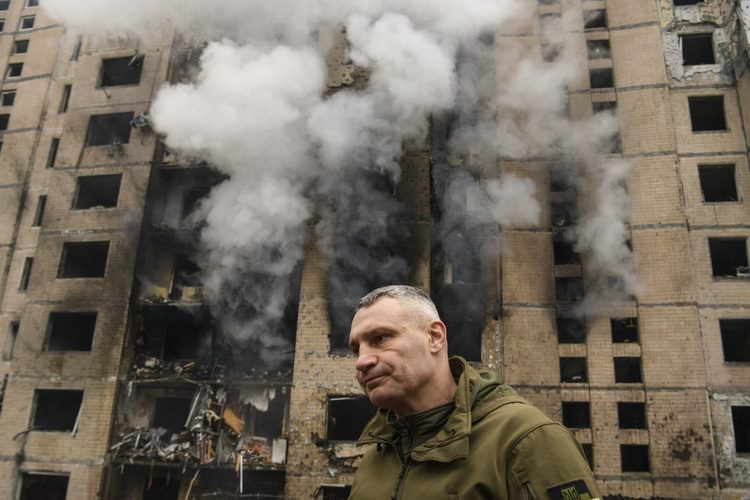
And these are just a few examples, as Russia constantly attacks Ukraine using UAVs, various types of missiles, as well as long-range MLRS and barrel artillery. As always, outside the front line, Russian strikes mainly target civilian targets, namely residential buildings, port and other infrastructure, grain storage facilities and warehouses with humanitarian aid, energy infrastructure, some civilian enterprises and shopping centers. Given the onset of cold weather, Ukraine’s energy facilities have once again become priority targets for Russian air attacks.
That is, such strikes are purely terrorist in nature, although Moscow is trying to hit the rear military bases and factories of the defense industry of Ukraine. At the same time, it takes into account the decision of the leadership of our state to increase the volume of arms production by our own defense industry.
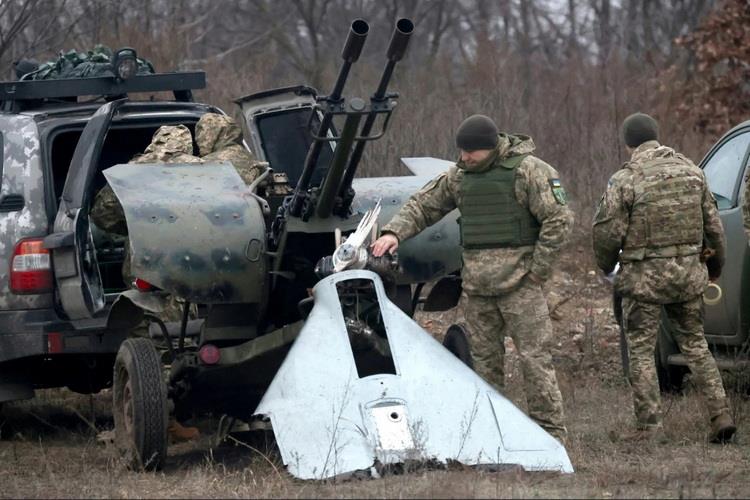 At the same time, the implementation of Moscow’s plans is thwarted by our air defense, which shoots down up to 90 % of unmanned aerial vehicles and 60–70 % of missiles. The results achieved exceed the effectiveness of air defense even of Israel, which has been in a state of permanent war with Hamas and other Islamist groups for decades and has considerable experience in repulsing their air attacks.
However, no matter how powerful the air defense system is, it is not capable of destroying all air targets, especially in cases of large-scale enemy attacks. There are also problems with falling debris. Such problems can only be dealt with by moving away the enemy’s air attack lines deep into its territory. Unfortunately, this is currently impossible due to Ukraine’s not having a sufficient number of long-range air defense systems, multipurpose fighter jets and other necessary equipment.
Although, no matter how difficult these problems are, the military-political leadership of Ukraine continues to make efforts to improve the air defense of our country. And Russia’s massive air strikes on Ukraine further convince the United States, Europe and the entire civilized world of the need to strengthen Ukraine’s air defense.
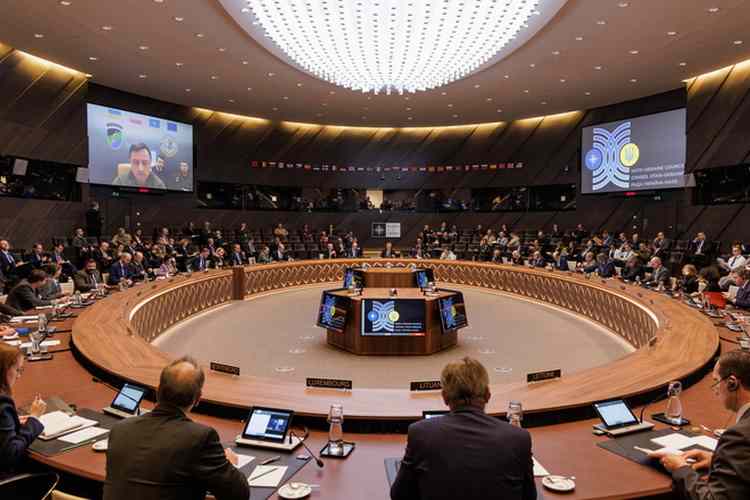 So far, many of Ukraine’s partners have agreed to provide us with additional radar stations, anti-aircraft missile systems and ammunition for them. Opportunities to improve and build up our country’s air defense became a central topic at the meeting of the NATO-Ukraine Council on January 10, 2024. The participants of the meeting agreed to intensify practical measures of the North Atlantic Alliance to increase Ukraine’s ability to resist Russian air attacks. In particular, they considered the plans for the implementation of a joint project with NATO to build integrated air defense in Ukraine.
Already this year, Ukraine may receive F-16 multipurpose fighter jets. They will become an important component of Ukrainian air defense and will make it possible to shoot down Russia’s air targets over the RF’s territory. The first groups of pilots and technical personnel have been trained. Airfields and other infrastructure necessary for the basing of F-16 in Ukraine are being equipped.
Besides, Ukraine received modern and highly effective electronic warfare equipment from Western partners. It was they who played the main role in repelling the enemy’s air attack by Ukrainian air defense on January 13, 2024. Thanks to the work of electronic warfare, 20 out of 40 Russian missiles exploded in the air or fell in the fields. Several more did not explode, which clearly proves the low quality of products of the present-day Russian defense industry. And the “achievements” of the vaunted Kh-47M2 Kinzhal missiles, worth a million dollars each, were limited only to the death of a dog in one of the villages of Poltava region. Unlike for almost a thousand Russian invaders who died at the front on the same day, I do feel sorry for the dog. In fact, the Russian air attack on January 13, 2024, was the most unsuccessful in the entire war, which was a certain turning point.
The key thing here is that Ukraine is not limited to the defense of its airspace, but also strikes in response to a depth of more than 800 km on the enemy’s military and other objects on Russia’s territory, as well as on the occupied Ukrainian lands. Our UAVs and missiles reach Moscow and Moscow region, Pskov, Novgorod, Saratov, Orel and Volgodonsk, Voronezh and Rostov-on-Don, not to mention cities such as Belgorod, Bryansk and Kursk. The temporarily occupied Crimea and the Russian-occupied areas of Donetsk, Luhansk, Zaporizhzhia, and Kherson regions of Ukraine are under constant fire. It is worth to mention a few of the most typical examples of such strikes.
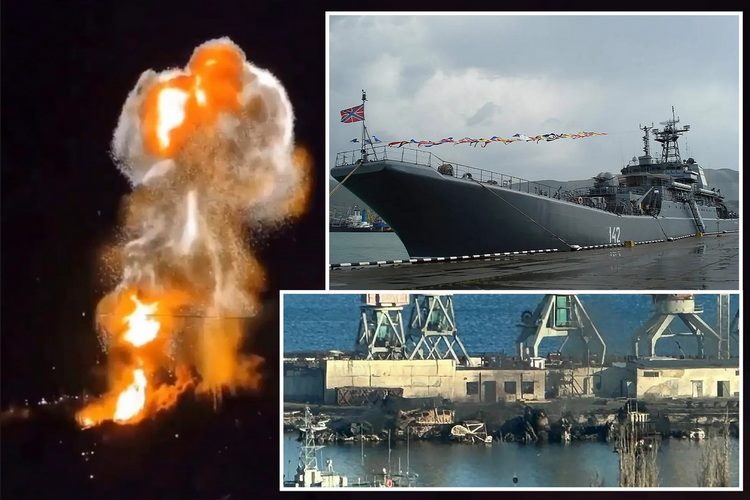 Thus, on December 26, 2023, in the Crimean port of Feodosia, a missile strike destroyed the large landing ship Novocherkassk from the Black Sea Fleet of the Russian Federation, which was transporting ammunition, including Iranian Shaheds. More than 70 crew members were killed and more than 20 were injured.
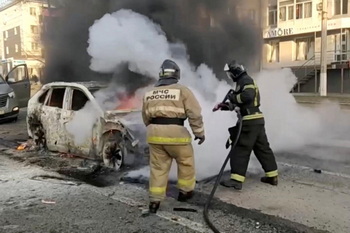
December 30, 2023, the Russian city of Belgorod was once again hit. The Defense Forces of Ukraine struck at the areas of deployment of Iskander operational-tactical missiles north of this city. According to the Ministry of Defense of the Russian Federation, all Ukrainian missiles were shot down, and their wreckage fell in the center of Belgorod. Along with them, the wreckage of Russian anti-missiles fell. As a result, three private and 37 apartment buildings were damaged in the city.
January 4, 2024, strikes were inflicted on Russian military facilities near the cities of Sevastopol, Yevpatoria and Balaklava in the occupied Crimea. The occupiers’ command post near Sevastopol was destroyed. At least 13 high-ranking Russian officers were killed. Another control point, which coordinated the work of the air defense of the Crimean Peninsula, was destroyed near Yevpatoria.
Systematic retaliatory strikes are also inflicted on the positions of Russian troops in the border areas of Belgorod, Kursk and Bryansk regions, from where Ukrainian territory is being shelled.
In an attempt to counter Ukrainian strikes, the Russian military command is hastily strengthening its air defense in the Ukrainian direction. Air defense systems are being redeployed to western regions of the Russian Federation and the occupied territories of Ukraine from other Russian regions, including Kaliningrad region, which borders NATO. And this is also quite indicative, as it testifies to Moscow’s inability to quickly increase the production of air defense systems to compensate for the lost and to increase the combat capabilities of its troops. Therefore, Russia is regrouping its existing air defense forces to cover the most important areas and facilities. In particular, in Crimea, the main attention is paid to improving the security of the following objects:
- the bridge across the Kerch Strait, which is a key element of the logistics route between Russia and the Crimean Peninsula;
- Sevastopol Bay, where Kalibr missiles are loaded onto ships and submarines of the Black Sea Fleet of the Russian Federation;
- sites for launching UAVs at Cape Chauda;
- aviation infrastructure.
Of course, such measures allow the air defense system of the Russian Armed Forces to increase destruction rate of Ukrainian missiles and UAVs. However, they do not make it possible to destroy them all. Moreover, in 2024, Ukraine intends to significantly increase the production of drones — up to a million UAVs. In addition, as it is always the case with Russia, everything it does en masse is accompanied by confusion and chaos. Usually, Russian air defense does more damage to its own cities and villages than air strikes by the Defense Forces of Ukraine.
It has already been mentioned above about how this happened in Belgorod at the end of 2023. This is not a coincidence at all, but a systemic problem and everyday reality. Fragments of anti-aircraft missiles are constantly falling both on the regional center and on neighboring villages, in particular, on the village of Razumnoe, which, in fact, has already been destroyed. On January 9, 2024, fragments of Russian missiles again fell on Belgorod and five other villages in Belgorod region. According to a number of estimates, the reasons for this can be both objective and subjective, including the unsuccessful deployment of air defense systems, low training of crews, the inability of Russian commanders to effectively command air defense forces and establish interaction between them.
Therefore, the administrations of the regions of Russia adjacent to Ukraine are taking additional steps to increase their security by civilian methods. The greatest attention to such issues is paid by the authorities of the city of Belgorod and Belgorod region, where the situation is the most dangerous. For example, residents of Belgorod and border areas are invited to move to temporary accommodation centers in the region and other regions of Russia. To date, eight such temporary accommodation centers have been deployed in Novooskolsky, Korochansky and Gubkinsky districts of Belgorod region. However, they do not have enough rooms, so people are taken into the depths of Russian territory.
In schools in Belgorod region, the winter holidays have been extended for three weeks. Schoolchildren are evacuated and placed in recreation centers and sanatoriums in relatively safe areas of the region, as well as in Voronezh, Kaluga, Tambov, Yaroslavl, Lipetsk, Penza and Tula regions of the Russian Federation and in the occupied Crimea (allegedly it is much safer there than in Belgorod region).
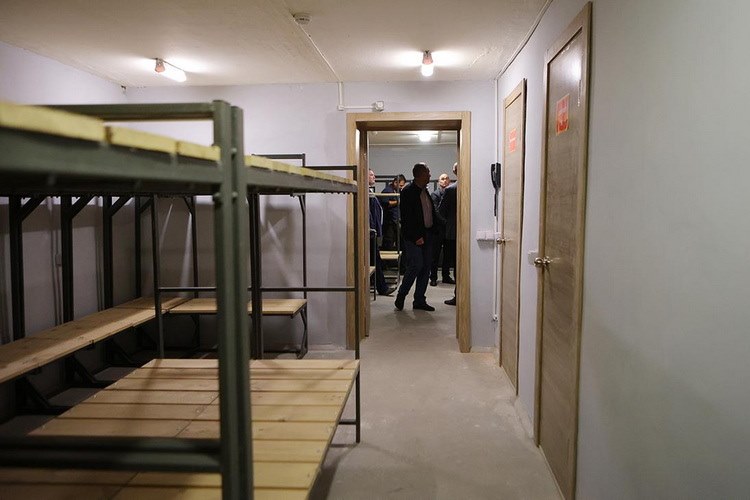
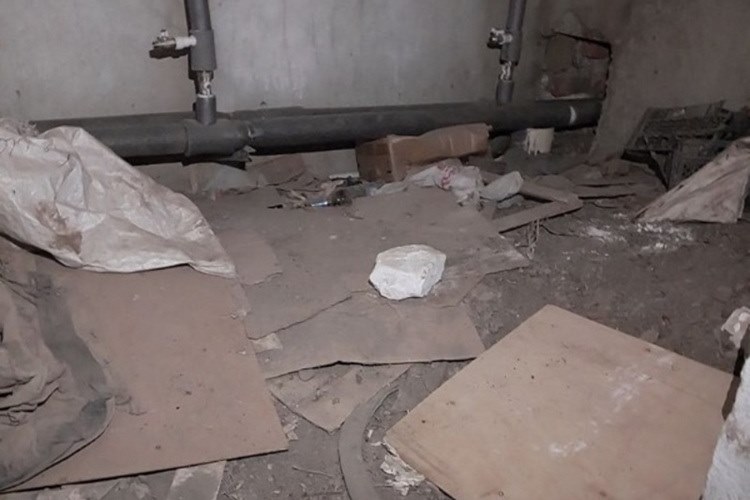
In Belgorod itself, additional bomb shelters are being set up. As a rule, in empty basements. In addition, residents of the regional center are asked to urgently seal the windows with tape in case of new missile attacks. According to the decision of the administration of Belgorod region, when an air alert is announced, intercoms will be turned off in apartment buildings to prevent the possible penetration of “terrorists” into entrances, basements and lofts. Besides, it is planned to expand the scale of first aid trainings. At the first stage, all public sector employees will be involved. At the second stage — employees of commercial enterprises.
Work on expanding the network of shelters is also underway in the city of Bryansk and in Bryansk region. In 2023, more than 100 million rubles were allocated for these purposes. And this year, more than 25 million rubles have been allocated from the regional budget for the purchase and storage of material and technical means intended to meet the needs of civil defense. Currently, their reserves in Bryansk region in monetary terms amount to about 110 million rubles.
 |
 |
At the same time, the local authorities of the regions of Russia bordering on Ukraine have not been able to resolve a number of important issues related to the protection of the civilian population. As in the summer of 2023, most temporary accommodation centers are set up in virtually uninhabitable premises such as gyms, where there are several rows of bunk beds, and there are no separate rooms for families.
When air raids are announced, many of the bomb shelters remain closed and people cannot get in there. Especially when people are already on the streets, and the entrances of the houses where the shelters are located are also closed. Although, this may not be of any decisive importance, since alert systems are unable to warn people in advance about the threat of shelling. Usually, in the border areas of Russia, sirens are turned on after explosions.
During air attacks in border areas of Russia, work at manufacturing enterprises, in agriculture, at trade facilities and in medical institutions stops by 70–90 %, transport also stops. And due to shelling and lack of funds, work on the restoration of destroyed housing and infrastructure is practically not carried out.
|
…Russia will continue to receive retaliatory strikes. Moreover, they will become more and more powerful and large-scale… |
Moscow cannot help being aware of the negative consequences of these problems, but it does not pay attention to them, continuing to shell Ukraine. As a result, Russia will continue to receive retaliatory strikes. Moreover, they will become more and more powerful and large-scale as Ukraine receives long-range and advanced Western weapons, establishes the production of its own missile systems and UAVs.
Let’s hope that at least this will make the Russians come to their senses and think about what is happening. Because it is useless to expect this from Putin’s regime.


