
 Ukraine at the Center of the World’s Attention
Ivan Sichen
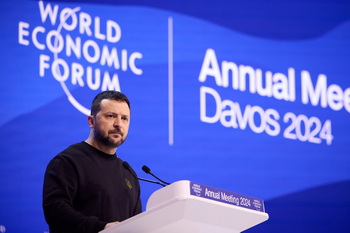
Russia’s war against Ukraine, as one of the main challenges of the 21st century, has significantly influenced the world’s global processes, in the economic sphere included. For example, there were significant changes in the structure of the world economy, which resulted from the mutual sanctions of the USA/EU and Russia and reorientation of their trade and economic relations. In one way or another, such changes affected other countries that sided with the West or with Moscow, or even chose a neutral position. Such facts have quite ambiguous consequences. In particular, Europe has actually got rid of its energy dependence on Russia, and this contributed to the increase of its economic security, and with it — the economic security of the entire Western world. At the same time, a number of new challenges and threats to economic stability in the world have emerged, both local and comprehensive. First of all, reorientation of financial flows from peaceful to military purposes undermines development of individual countries and, in general, the world economy, increases instability in the world markets, and exacerbates humanitarian and food problems. This, in one way or another, concerns the key interests of the world community, and therefore draws its special attention. The World Economic Forum in Swiss Davos with the participation of business leaders, influential politicians, experts and journalists remains the main playground for discussing key economic challenges of the present. The 54th Annual Meeting of the World Economic Forum took place on January 15–19, 2024. Given that discussion of the situation in Ukraine was one of the key topics, it should be analyzed in more detail.
Final reports, documents and key speeches of the participants of the World Economic Forum in Davos were widely covered in the media. We will remind that more than one hundred officials and about a thousand representatives of partners of the World Economic Forum and experts participated in the event.
The meeting was convened under the theme “Rebuilding Trust” to provide the crucial space to step back and focus on the fundamental principles driving trust, including transparency, consistency and accountability
The Forum program touches upon four main topics, including: “Achieving Security and Cooperation in a Fractured World”, “Creating Growth and Jobs for a New Era”, “Artificial Intelligence as a Driving Force for the Economy and Society”, “A Long-Term Strategy for Climate, Nature and Energy”. Let us immediately turn to the conclusions concerning Ukraine.
1. Despite some differences, a joint vision of global security challenges is maintained in the business, political and expert environment of the democratic world. First of all:
- Russia’s war against Ukraine; Islamists’ attacks on Israel; tensions over Taiwan with China, and other security risks. They destroy global trade and economic relations, interfere with the work of financial markets, undermine political stability, and pose a threat to human security worldwide. In this context, significant risks are determined: Russia’s ability to earn revenues from export of energy and other resources, which allows it to continue the war and pursue aggressive foreign policy; spread of pro-Russian or neutral sentiments in the countries of Central and Eastern Europe, which reduces their motivation in further support of Ukraine; weakening Washington’s ability to assist Ukraine as a result of a complication of the political situation in the United States ahead of the presidential election there;
- external influence on electoral processes in in several economies of the world with the use of information manipulations and misinformation based on the use of modern technical means. These include the use of artificial intelligence that no longer require a special set of skills, but have already created the possibilities of massive information influence or even information violence. Therefore, attention is focused on the fact that over the next two years, about three billion people have to participate in elections in countries with growing economies, namely in the USA, India, the United Kingdom, Mexico and Indonesia. According to some estimates, intentional and even unintentional misinformation in such electoral processes may undermine the legitimacy of newly elected governments and, as a consequence, lead to political unrest, manifestations of violence and terrorism;
- restoration of Russian imperialism, which seeks to set the world on fire thirty years after the collapse of the USSR. Today, this world has witnessed the greatest military conflict since the Second World War with the killings of civilians, the shelling of civil infrastructure, torture and execution of prisoners, provocations of famine in different world regions and other violations of international law.
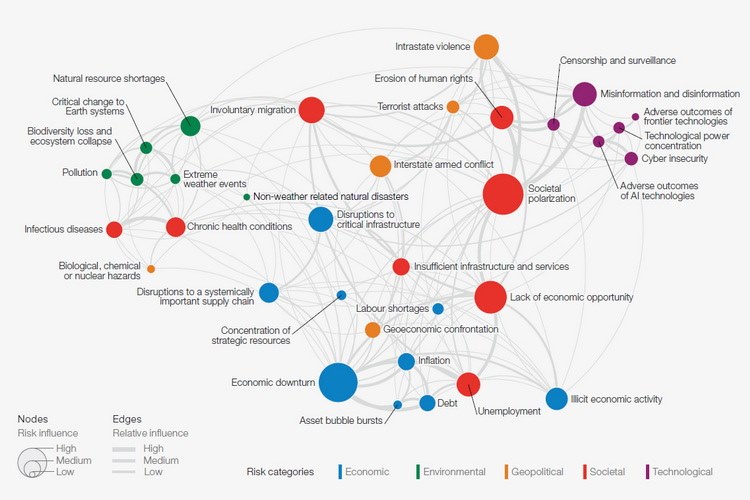 Global Risks Landscape: An Interconnections Map.
Source: World Economic Forum Global Risks Report 2024
Unfortunately, Putin’s aggression against Ukraine forms a “coalition of evil” in the world, and the model of world security, which had been created for years, is now being destroyed. Russia, if it wins, will not stop in Ukraine. Moreover, this will give the strength to other aggressors, and the next victims of Russia’s aggression can be the countries of Eastern Europe, the Caucasus or Central Asia.
2. Western countries and international organizations fully support Ukraine’s Peace Formula. In Davos, the key points of the Ukrainian Peace Formula were discussed: withdrawing Russian troops from the Ukrainian territory and termination of hostilities; restoration of justice; ensuring environmental safety; preventing escalation and repetition of aggression; confirmation of the end of the war.
Minister of Defense of Ukraine Rustem Umerov and Lithuanian officials presented the work of the working group on the item “Withdrawal of Russian troops and termination of hostilities”. In particular, it is proposed to create an international working group at the level of defense ministers and national security advisers of Ukraine’s partner-countries. Its main task is to develop and ensure an international agreement calling on Russia to completely cease hostilities and withdraw its troops from Ukraine.
Representatives of the Netherlands and the Prosecutor General of Ukraine Andrii Kostin presented the work of the working group on the item “Restoration of Justice”. They noted that efforts to ensure Russia’s accountability are based on five important components: ensuring effective investigations at the national level; securing accountability for the crime of aggression; continuing strategic partnership with international justice mechanisms; fostering bilateral and multilateral interstate partnership; and ensuring payment of reparations to Ukraine and the Ukrainian people by Russia in line with international law.
The meeting emphasized the importance of not only increased sanction pressure on the aggressor country, but also of the creation of a compensation mechanism for damages and restoration of Ukraine. It was also agreed to include in such a mechanism three main elements: International Register of Damage, Compensation Commission, and Compensation Fund, which should be filled with Russian sovereign assets.
Environmental safety topic was discussed by the First Deputy Prime Minister of Ukraine Yulia Svyrydenko and representatives of Germany, Finland and Bulgaria. The main focus was on the harm to ecology as a result of the war, including increasing carbon dioxide emissions, Russia‘s blowing up the Kakhovka HPP dam and occupation and destruction of nature reserves. In view of this, they emphasized the need to unify the methods of calculating losses and introduce the definition of “ecocide” into international law, which is now being done by the International Working Group on the Environmental Consequences of the War.
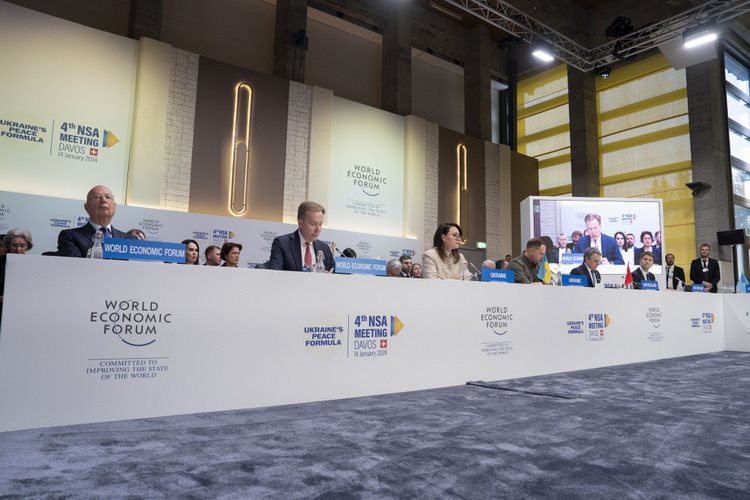
Head of the Presidential Office Andrii Yermak and a representative of the United Kingdom presented the item “Preventing the escalation of war and repetition of aggression”. It was about the project of the Kiev Security Treaty, which was the basis of the G7 Joint Declaration of Support for Ukraine, approved in July 2023 in Vilnius. It is known that the provisions of the document were expanded under the security agreement between Ukraine and the United Kingdom. It covers all the most important aspects of cooperation between the two countries, and is an example for 30 other signatories to the G7 Joint Declaration. As stated at the World Economic Forum, it is important that people of Europe and North America understand that a rigid aggressive war that Russia has unleashed against Ukraine has global consequences and affects all countries in the world.
Similarly global, in fact, has become Ukraine’s Peace Formula. The whole world is already using the experience of Ukraine, learning our lessons, and also uses our tools and ready -made solutions. The G7 Joint Declaration of Support for Ukraine has become the basis for a new comprehensive system for preventing escalation of war and recurrence of aggression.
Of great importance is the position of Peace Formula on the “Confirmation of the end of the war”. As mentioned at the World Economic Forum, Ukraine has repeatedly tried to negotiate mutual relations with Russia and draw up a relevant international agreement, and each time Russia would stop fulfilling it and simply ignored it. Ukraine has made a conclusion from past mistakes. The treaty that will confirm the end of the war will be based on the Peace Formula, it will be multilateral (signed not only by Ukraine and Russia, but also by the guarantor countries), and will pay attention to all spheres affected by the war.
Special attention was paid to food security in the world. Ukraine managed to break through the Russian blockade of its ports and restore grain supply to the world markets. At the end of 2023, our country managed to reach almost the pre-war volume of agricultural supplies. For example, in December 2023 Ukraine sent 7 million tons of agricultural products to the world markets and is not going to stop there. An important task is to ensure the safety of navigation in the Black Sea from Russia’s aggressive actions.
Commissioner of the Verkhovna Rada of Ukraine for Human Rights Dmytro Lubinets and lawyers of international organizations at the special session on humanitarian issues considered the problems of forcible displacement and deportation by Russia of Ukrainian children, illegally abducted and imprisoned civilians and prisoners of war. The main task was determined — to return every and each one.
3. Our partners’ assistance to Ukraine in military confrontation with Russia will continue despite the attempts of individual countries or political forces to stop it. During the World Economic Forum, representatives of the European Union and NATO provided positive signals about this. In fact, this signal was made by the United States too.
Representatives of the EU, NATO and the United States voiced similar intentions both in their speeches and at meetings with President of Ukraine Zelenskyi and other officials. The participants confirmed the support Ukraine’s desire to join NATO. And Switzerland agreed to accept the global summit on Ukraine’s Peace Formula. Details of future negotiations are still being worked out. According to President Zelenskyi, Ukraine is open to all countries that respect its sovereignty and territorial integrity. Representatives of the so-called Global South were also invited to the global summit on Ukraine’s Peace Formula.
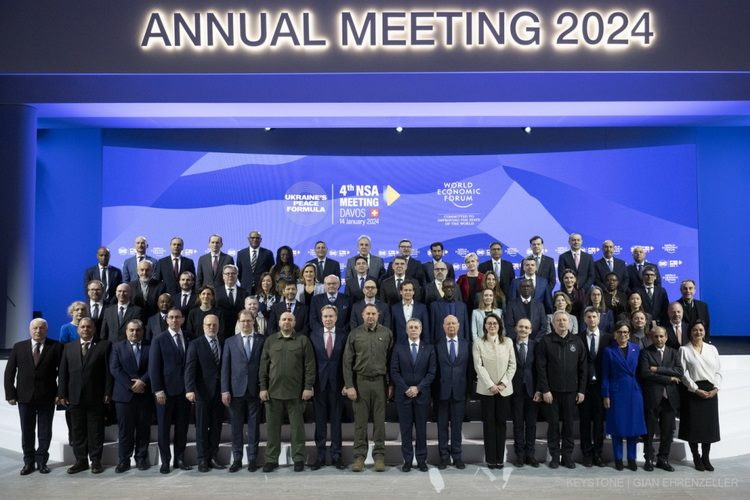
In Davos, Ukraine’s Peace Formula was discussed at the level of national security advisers from more than 80 countries. The participants of the meeting from the Western partners of Ukraine and the countries that adhere to neutrality discussed the ways to put an end to the war.
As it should be expected, there was no Russian delegation in Davos, and Putin at the same time again openly confirmed the conquering goals of Russia’s war against Ukraine.
4. After a certain period of fluctuations, the civilized world finally became convinced of the need to defeat Russia and ensure the victory of Ukraine as the main prerequisite for long-term international security. Such conclusions were drawn during a Ukrainian Breakfast in Davos. According to Minister of Foreign Affairs of Ukraine Dmytro Kuleba, Ukraine’s plans for the coming months are to fight and to win. At this, he pointed out Russia’s ability to bypass Western sanctions, which is the result of the USA and the EU’s insufficient attention to this issue. Thus, much of the components to Russian weapons is still western in origin. As a result, the West pays twice. First, when it helps Ukraine, and again — when it has to pay with its reputation.
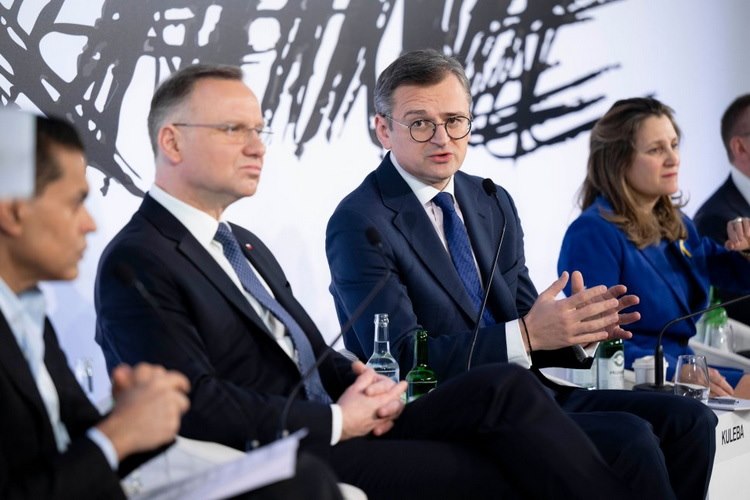
Dmytro Kuleba also urged Western countries not to be afraid of the escalation of war. Russia has already brought it to the highest level, which it could achieve. Therefore, Ukraine needs increased military support, especially in air defense, which consists of SAMs, aircrafts and electronic warfare systems. According to Dmytro Kuleba, some of the partner countries have been debating assistance to Ukraine for too long, meanwhile Ukrainian citizens die every day.
Based on this, the Ukrainian official emphasized that Western experts need to sit at the negotiation table and agree on plans for interaction in the field of defense industry, since none of the countries can independently produce the needed number of weapons and military equipment to meet the needs of war. He also emphasized the importance of transferring frozen Russian assets to Ukraine. It is only at the expense of the funds stored in bank accounts in the UK, Luxembourg and Switzerland, that Ukraine can restore all its infrastructure. And if Ukraine is allocated the 180 billion Europe stored in the Euroclear depository in Belgium, they will be enough to buy needed equipment and to restore destroyed hospitals and schools.
According to Canada’s Minister of Finance Chrystia Freeland, Putin hates the whole world, because he loses in it. Therefore, he wants to go back to life that was characteristic of the 19th century, when countries were competing militarily. At the same time, the Russian president is indifferent to human lives. This position threatens the world. Therefore, successful Russia is a danger to it. According to Chrystia Freeland, all countries of the civilized world must be grateful to the Armed Forces of Ukraine that defend them from the aggressor.
In his turn, UK Secretary of State for Foreign, Commonwealth and Development Affairs David Cameron criticized those who believe that the war in Ukraine is going “in the wrong direction”. In general, the so -called special military operation has become a strategic catastrophe for Moscow, as it did not give any achievements except for the occupation of some of the Ukrainian territories. More than 300,000 Russian troops are dead, 20 % of the Black Sea Fleet are lost, so the Russians were forced to retreat from more than half of the lands of Ukraine captured by them since the beginning of the war. Our state successfully resists the attacker. Therefore, Ukrainian partners should be patient and keep providing their assistance.
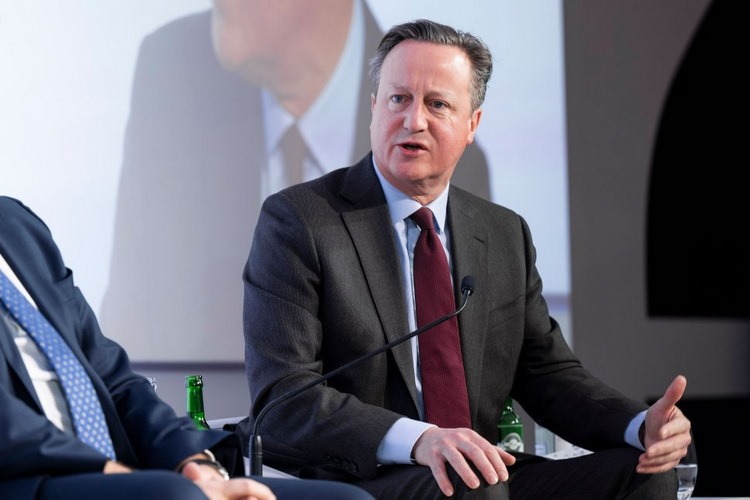
Moreover, according to David Cameron, the economy of EU countries and the United States is 25 times more powerful than Russia’s, which allows the West to concentrate enough resources for the proper support of Ukraine. And the process of “reconciling” with Russia will in no way put an end to Russian aggression, as it can recover with greater force in several years. Since 2022, the United States spent only 10 % of its military budget to assist Ukraine, which resulted in destroying of 50 % of Russian military equipment.
Of course, apart from the situation in Ukraine, the participants of the Davos Forum also considered other topics, including the development of artificial intelligence, overcoming global recession, eliminating the problems of global climate change, green transition. All these topics are important, but do not relate directly to Ukraine’s concerns today. The main result of the World Economic Forum in Davos was the confirmation of the fact that Ukraine remains at the center of international attention, and its partners will continue to provide comprehensive assistance to us. And Russia, in fact, found itself in even greater international isolation. None of its more or less influential representatives even received an invitation to the Davos Forum.


