
 Francisco Lobo
Every Chilean knows the story about how Chile secured the organization of the 1962 FIFA World Cup. The rival delegation boasted to have all the resources and infrastructure ready to go literally the next day. Chile’s delegate, Carlos Dittborn, made a different pitch. Coming from an impoverish country — one that only a few years later, in 1960, would be hit by the biggest earthquake on record to this day — he assured FIFA’s executive board of Chile’s commitment to the game, offering a climate of political stability and sportsmanship that would promote football in a less-developed country pursuant to FIFA’s own Statutes. He concluded his speech with the famous words that, whether true or not, became legend: “Because we have nothing, we want to do it all”. Chile won the bid, and the organization of the 1962 World Cup became one of the country’s most important achievements in soft power.
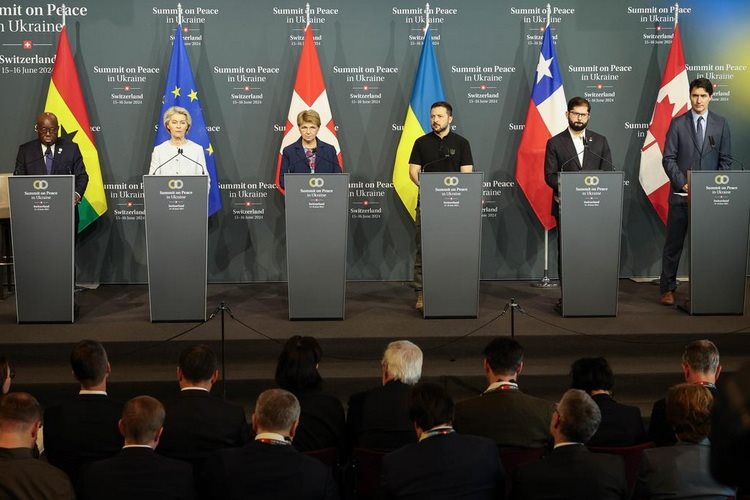
On the last day of the 2024 Summit on Peace in Ukraine held in Switzerland, another remarkable achievement for Chilean soft power took place: President Gabriel Boric shared the stage with a select group of world leaders — including the President of Ukraine as well as the Canadian Prime Minister, the President of the European Commission, the President of Ghana, and the Swiss Federal President — to deliver a few closing remarks. Yet, despite the presence of a South American and an African leader on such a momentous occasion, the truth is that the Global South was far less committed than expected in the procedures. As The Kyiv Independent reports, not only was China notoriously absent from the summit; several Global South nations that attended did not sign the joint final communique, including Armenia, Bahrain, Brazil, Colombia, India, Indonesia, Libya, Mexico, Saudi Arabia, South Africa, and the United Arab Emirates.
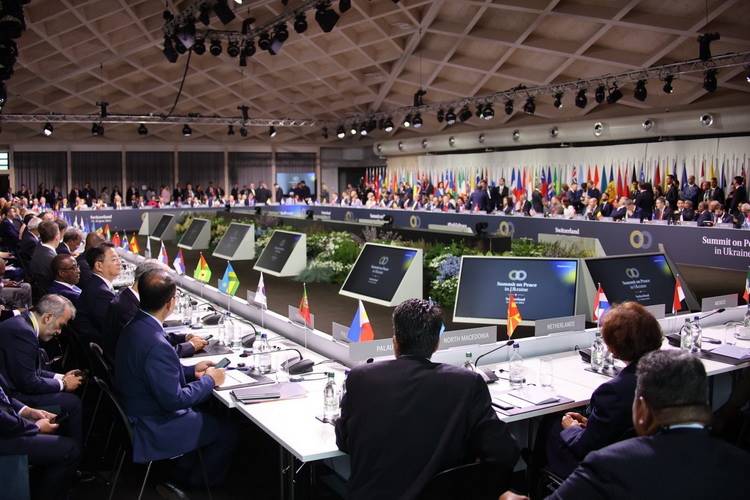
Should this be interpreted as a failure to appeal to the Global South in Ukraine’s diplomatic efforts to put an end to Russia’s war of aggression? This is a question worth pondering today as similar diplomatic efforts will likely continue to take place until the conflict is resolved. The answer to the question will depend on the metric used to measure success in these initiatives. Quantitatively, the fact that over one hundred delegations attended the summit and that over eighty of them signed the joint communique should be counted as a positive indicator. In more qualitative terms, the concept of the “Global South” is so hard to define and operationalize that its use to measure the success of any diplomatic endeavor guarantees permanent disappointment. As Comfort Ero recently argued in Foreign Affairs, Western countries should be very careful about the use of this ambiguous label: “Policymakers in the West risk losing sight of the diversity the term encompasses. When they regard the global South as a more or less cohesive coalition, they can end up simplifying or ignoring countries’ individual concerns”.
One of these countries, Chile, is a very interesting case in point that proves the Global South is not a unidimensional monolith, but rather a disperse collection of individual nations with multi-dimensional views and interests. One of the main reasons analysts believe the so-called Global South is not as supportive of Ukraine as expected is due to the West’s hypocrisy when it comes to assisting Israel in its war against Hamas. As it turns out, Chile has managed to be both supportive of Ukraine and openly critical of Israel basing these apparently incompatible views on one and the same argumentative fulcrum: international law.
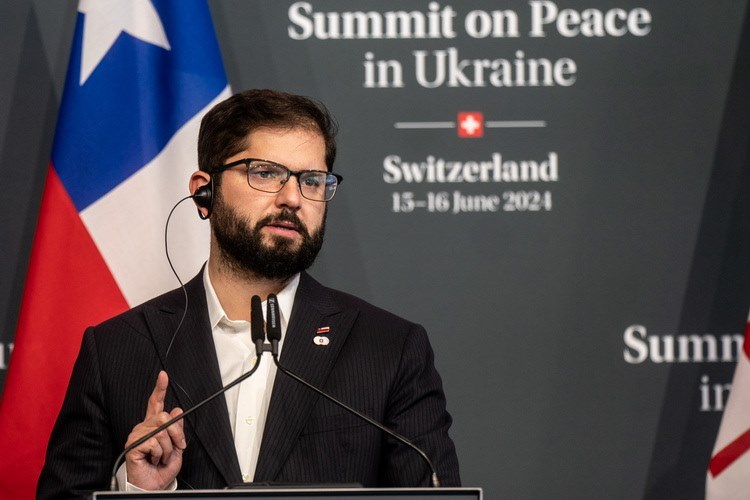
Indeed, respect for international law, otherwise known as the rules-based international order, is one of the key principles upon which Chilean foreign policy is built, including respect for sovereignty and territorial integrity, as well as espousing the peaceful resolution of disputes. Hence its support of Ukraine’s lawful self-defense against Russia’s expansionist and aggressive war. At the same time, the promotion of democracy and human rights is another core principle in the Chilean foreign policy toolkit. Accordingly, President Boric has denounced consistently the human rights violations being committed in Gaza as a result of Israel’s campaign against Hamas, including at the peace summit, where he delivered his main speech explaining why such a small and faraway country like Chile would support Ukraine and international law: “Only the respect of international law and human rights can guarantee peace. The same applies to the conflict in Gaza. We do not accept to choose between the barbarism of Hamas or the massacre that the Israeli government led by the war criminal Mr. Netanyahu is doing nowadays. We choose humanity and the civilizatory advances that we, together as united nations, have achieved. Today is Ukraine and Palestine; tomorrow it could be any one of us”.
Beyond its firm commitment to international law, democracy and human rights, Chile’s standing as a country charting its own path through complex, multi-dimensional diplomacy can be further observed in its active participation in free-trade agreements since the 1990s, culminating in its membership in the Comprehensive and Progressive Trans-Pacific Partnership (“CPTPP”), one of the world’s largest free-trade initiatives bringing together both Global North and Global South nations, including Australia, Brunei, Canada, Chile, Japan, Malaysia, Mexico, New Zealand, Peru, Singapore, and Vietnam, with the UK and China currently applying for membership as well.
This multi-dimensional diplomacy displayed by a country with its own voice and its own views rather than those of an imagined bloc of perfectly aligned sensibilities is also the result of the internal dynamics of such a vibrant democracy as Chile, a country that has struggled with economic and political crises throughout its history, including a brutal military dictatorship led by Augusto Pinochet. And an integral part of the internal dynamics that have resulted in this multi-dimensional diplomatic capacity is the type of leadership that Chile has produced in the twenty-first century as a rejuvenated democracy, from its commendable opposition to the invasion of Iraq in 2003 when it had a seat at the UN Security Council, to President Boric’s even-handed treatment of the main international crises of our times, all of which demonstrate that virtue and prudence are essential for good governance at home and abroad.
On a more personal note, I met President Boric when we were both students at the University of Chile’s Law School. We were both lucky enough to study International Human Rights Law under the guidance of José “Pepe” Zalaquett, one of Chile’s most prominent human rights defenders. One time Pepe invited his teaching assistants to a session to discuss Immanuel Kant’s classic “Perpetual Peace”. Both President Boric and I attended. We discussed one of Kant’s propositions concerning the difference between a “moral politician” and a “political moralist”. The moral politician is a leader who strives to reconcile the dictates of morality with political prudence, whereas the political moralist bends morality to suit his own political goals. At the time I remember asking Boric, who was then a young leader involved in university politics: “So, what are you, Gabriel? A ‘moral politician’ or a ‘political moralist’?” He smiled at me and replied: “Moral politician”.
As I watched him on TV at the peace summit this year, I was glad to see he has not changed, and that world leaders, including President Zelensky and his allies, can continue to engage this moral politician by appealing to his principles rather than the place where he was born.
|
About the author: Francisco Lobo — Doctoral candidate, Department of War Studies, King’s College London. LLM in International Legal Studies, New York University. |


