
Corneliu PIVARIU
15 March 2015 marked four years since the beginning of the Syrian popular uprising against the dictatorial regime of Bashar al-Assad, an uprising that gradually turned into a civil war with the support of the international community. The “Geostrategic Pulse” reported on the developments in Syria and after a special issue of the magazine in 2008, it included articles on the theme in almost every issue, including in its supplements dedicated exclusively to the developments in this country. Ever since 2012, our sources in Damascus insisted on the fact that Bashar al-Assad’s regime would survive, but, in spite of their credibility and based on our extended experience (leaving aside modesty) and knowledge of the region, we considered the remarks as being exaggerated. Nevertheless, on 20 March 2015, four years and five days after the beginning of the “Syrian Arab spring”, we must admit that they were right, at least to this day.
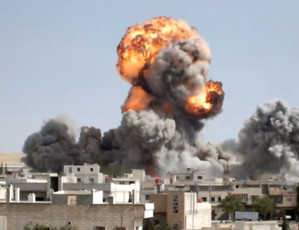 What kind of country is Bashar al-Assad “ruling” – a person that was lately interviewed in the most important international media without saying anything interesting and repeating the same story so that we wonder what is he trying to achieve by insisting to be interviewed without saying anything?
With a population of 23 million people in 2011, Syria currently has about 17 million citizens – including refugees. According to some March figures, more than 220,000 people died in conflict (100,000 in 2014) and more than a million have been wounded. As for the refugees, their number increased every year, from almost 6 million in 2013 to about 12 million in January 2015 (25% – almost 4 million – being refugees abroad). Bashar al-Assad’s regime controls about 50% of the country’s territory (including the capital and the entire shore region); the rest of the territory is divided under the control of various paramilitary groups, some of the most important ones being Daesh (IS) – mainly the basin of the Euphrates; the forces of the Kurdish opposition – in three enclaves without connection between them in the north, at the border with Iraq and Turkey, Al-Nusra front – small enclaves particularly in the north and south; the forces of the Syrian opposition – approximately 15% of the territory in north-west, center and south of the country. In fact, there is a “Lebanonization” of Syria.
This situation led to a dramatic degradation of economy, Assad’s regime having lost almost all its economic resources (it lost most of the oil resources, the commercial routes to Iraq and Turkey), depending heavily on the economic and financial support of Iran (3.6 billion dollars, a credit plans and others) and Russia. The data for 2013 indicate a level of inflation of 59.1%; from 47 Syrian pounds (SP)/1 US dollar it got to 200 SP in 2013 and keeps at around 200SP/1US dollar at present. The Syrian oil sector lost 27 billion dollars (40% of the Gross Domestic Product before 2011).
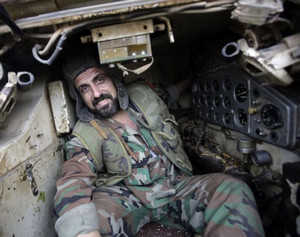
The Syrian security system changed drastically during the Syrian civil war. The army, comprising mostly insufficiently trained forces and old equipment, as well as the security forces, have gradually fallen under Teheran’s control, with the Revolutionary Guards Corps, not only because of the financial and material assistance provided, but also because of an important number of Quds forces in Syria. Together with the forces of the Lebanese Hezbollah in Syria, we may say that they carry out the war efforts in Syria. The weakness and limited acting capabilities of the Syrian army and security forces is proven also by the creation of paramilitary groups allied to the regime, out of which the most important is Shabiha (the ghosts), militias that in the recent years have started to implement their own rules in the controlled areas and set up check points and an individual system of collecting taxes.
 What is significant for the situation in Syria is Alep – one of the oldest cities permanently inhabited in the history of mankind, which survived along its millenary existence numerous difficult times, currently divided in two regions: the western region controlled by the Syrian regime and the eastern region controlled by the armed opposition. This city is the most affected by the conflict. Only 40,000 people remained in the city, as compared to almost a million in 2011, with no electricity and no running water. The trees in the parks and the furniture in schools have been cut and used for fire. In brief, the situation in Alep reminds of Leningrad’s siege in the Second World War.
The outcome of this civil war is difficult to predict. Even if Assad’s regime (which is no longer referred to as “Assad must leave” but “maybe Assad must not leave immediately”) manages to install peace by claiming “victory”, this state will be weak, with few resources, huge foreign debt and a population that continues to be more and more dissatisfied with the big sacrifices it has to make to keep Bashar al-Assad’s leadership. The entire international community proved unable to solve the Syrian crisis, which in time builds up even more critical consequences, at least for the developments in the region.
See the original publication: Geostrategic Pulse №187 http://www.ingepo.ro/en/materials/795/consideration-to-geostrategic-pulse-no-187-syria-after-four-years-of-civil-war


