
 The Latest Issue of “BINTEL” Journal for 2023 Has Been Published
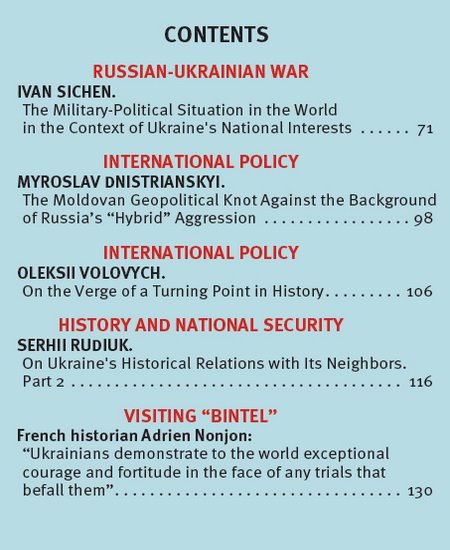 According to the long tradition, the issue of the “BINTEL” Geopolitical Analytics Journal, which is published at the end of each year, contains materials where the authors summarize the important events of the last twelve months. So, this issue deals with the most relevant geopolitical topics, which, in one way or another, concern our country, which has been in a state of war with our Russian neighbor for many years. Actually, our experts analyze the Russian-Ukrainian war, its impact on events in Ukraine and the reaction to them in the world.
The first article in this issue is “The Military-Political Situation in the World in the Context of Ukraine’s National Interests”, by Ivan Sichen, military and political expert. In the very first paragraph, the author points out that in Russia’s war against Ukraine, the year 2023 was the second year — and was no less difficult than the previous one, when our country had to defend its independence. To defend it at the cost of thousands of human lives and significant economic losses that fall daily on the shoulders of our society. It is clear that it is not so easy to do, because Russia has attracted all available resources, while sparing neither Russian citizens who are dying en masse at the front in Ukraine, nor the economy of the country, which is increasingly plunging into a deep crisis.
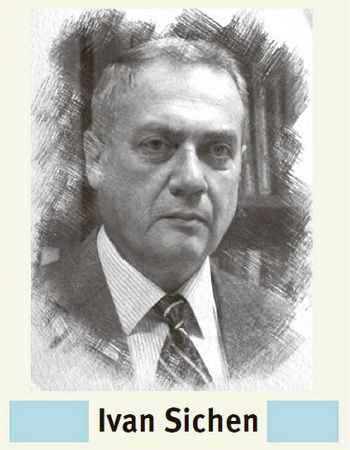 The article further provides a complete list of Russia’s loses, which is a consequence of Putin’s policy. Just look at the subtitles: “Strategic and Operational Aspects of Russia’s War Against Ukraine”, “Geopolitical Situation Around the Military Confrontation Between Russia and Ukraine”, “Partners and Adversaries of Ukraine”, “Individual Factors of Influence on Military-Political Processes Related to the Russian-Ukrainian War”, “Main Aspects of the Military-Strategic Situation in the European, Northern and Pacific Theaters of Operations”, “Conclusions and Forecasts”. Giving strong examples, based on reliable facts, the author depicts the whole picture of events in Ukraine, paying attention to the position of other countries of the world, which try in one way or another to help our state. Of course, the article does not miss the positions of some states that have decided to support the Russian attacker or deny the need for Ukrainians’ military confronting the aggressor. This is also well known today, and the article describes the grounds for such a shameful position of the leadership of such states, which is guided solely by personal, not the society’s interests.
As for the aforementioned aspects of war, the author defines their aims (both, Ukraine’s and Russia’s), the peculiarity of well-known military operations in such directions as Kupiansk-Lyman, Bakhmut, Avdiivka-Marinka, Melitopol-Berdiansk as well as analyzes the quality and quantity of equipment and weapons used on both sides of the front, reliability of defense lines and positions of military formations. In particular, the author points out that “The strengthening of Ukraine’s air defense with the help of Western partners has reduced the effectiveness of Russian strikes on Ukrainian territory. Most Russian missiles and drones are destroyed by Ukrainian air defense. In addition, Ukrainian army, in response to Russia’s actions, began to actively strike at criminal decision-making centers, military facilities, oil depots and military enterprises deep in Russian territory”. In the temporarily occupied territories, the process of forming Russian authorities continues. They are staffed by officials arriving from Russia. They gradually replace Ukrainian collaborators who agreed to serve the occupiers. At the same time, Russia practically does not care about the restoration of the normal functioning of the local economy. As a result, the social situation in the temporarily occupied regions has become significantly complicated. Especially in destroyed cities and districts, in particular, in Mariupol.
The author also points out that as a result of Russia’s war, disagreements between democratic and totalitarian countries over the main principles of international relations and world order are deepening. This is evidenced, first of all, by their attitude to Russia’s full-scale military attack on Ukraine, as one of the main geopolitical challenges of recent years. As a confirmation, Ivan Sichen cites a virtually complete list of geopolitical events of 2023, in the focus of attention of which was comprehensive support for Ukraine: the summits of the UN General Assembly, the Group of Twenty (G20) and the Group of Seven (G7), as well as the European Union and NATO. For example, “one of the main topics of the 78th United Nations General Assembly in September 2023 was Russia’s war against Ukraine. And the speeches of President of Ukraine V. Zelenskyi, of President of the United States Joe Biden and of NATO Secretary General Jens Stoltenberg were decisive in this regard”.
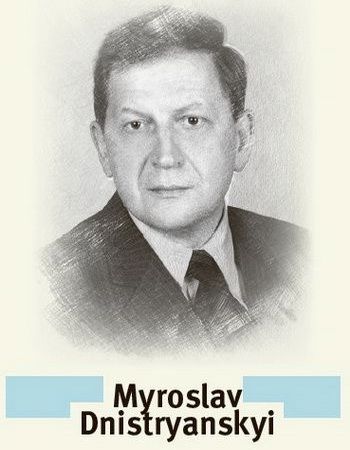 Another journal publication is the work by the famous Professor Myroslav Dnistrianskyi, “The Moldovan Geopolitical Knot Against the Background of Russia’s “Hybrid” Aggression”. Let me remind you that in one of the previous issues of the “BINTEL” journal, he touched upon a similar topic in his article, but with respect to Finland. Like last time, the author consistently expresses his point of view on the events concerning one of our neighbors, and makes it clear to the reader how important for Chisinau can be political decisions and their consequences. Here is just one paragraph from the article: “Along with direct military actions, Russia’s aggression against Ukraine is combined with intentions to provoke or ignite military-political conflicts in different parts of the world, which could distract attention from Ukraine. The aggressor state is also making great efforts to block relations with neighboring states, supporting the activities of various anti-Ukrainian political forces in Poland, Hungary, Slovakia, and Romania. But in all these respects, the most difficult situation is in Moldova, which the Russian and Soviet regimes have always cynically viewed both as a “territorial resource” in the process of expanding the empire and as a springboard for realization of their interests in Central and Southeastern Europe”.
By the way, those who are interested in this theme can take note that the editorial board of the journal will publish the mentioned journal articles on our site, however, in the shortened version. The reason is quite simple: the interested reader will in this way understand what the article is about, and if necessary, he can buy the needed journal issue, directly contacting the Independent Analytical Center for Geopolitical Studies “Borysfen Intel”. We also note that we continue the tradition of publishing on the pages of the journal of studies of students and teachers of higher education institutions, who are not just interested in geopolitics, but work on certain topical issues the educational process.
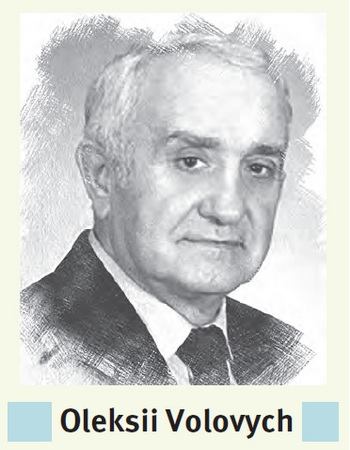 “On the Verge of a Turning Point in History” — is another serious study by our permanent author — Oleksii Volovych, Ph.D. in History. This time, he describes and at the same time analyzes current events in the light of wars, which are on not only in Ukraine (although the theme of the Russian-Ukrainian war is undeniable in its importance). In order to understand what is being said and what the author pays attention to in his serious work, it is enough to visit our site, where the article was published in the last days of December 2023. In the journal, the theme is analyzed in more detail, with more examples and facts, illustrations and thorough conclusions.
The text contains subheadings that specify its subjects: “The USA Between Ukraine and Israel”, “Ukraine and the “Mexican Border Wall”, “Ukraine Between Biden and Trump”, “Is There an Alternative to NATO?”, etc. They are enough to understand the content of this work, and to make the reader get interested in the view of the scientist known to our readership for his publications in domestic and foreign media. By the way, among his analytical studies there are many works devoted to events in the Middle East, and the proficiency of several Middle Eastern languages gives the author the opportunity to track the latest publications and draw appropriate conclusions and give advice to scientists of our younger generation.
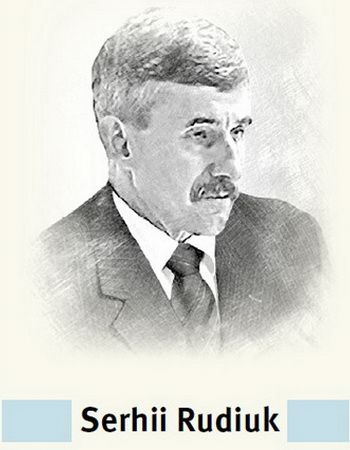 Under the heading “History and National Security”, we continue the publication of political expert Serhii Rudiuk’s large article “On Ukraine’s Historical Relations with Its Neighbors”. The first part of the article is in the previous, third issue of the journal, and also draws the reader’s attention to how Ukraine had to find common ground with them, and what was the real reason for misunderstandings with them, why and how it all affected our state-building (but then, as it affects the relationships right now, during the Russian-Ukrainian war). The previous, first part, was about historical development in the territory of our country, the geopolitical situation of Ukraine in the 19th and early 20th centuries, its former and present borders, about territorial problems, in particular, on southwestern and southern borders.
In the second part of the article, the author describes complicated relations with our western neighbors, including Poland, which has its own peculiarities of the geopolitical movement, shows the reason for the loss of Ukrainian Western territory, the desire of some modern Polish politicians and historians to present in a favorable light all the events that occurred on the eve and during the Second World War, despite the undeniable facts and the long-made conclusions. Turning to this theme is quite important, especially today, when there is a common Russian threat to the two peoples — the Ukrainian and the Polish, and it is very important for these two peoples to find or make a joint vision and union. The author also breaks his article with subtitles, reading which can give general understanding of what the article is about: “Difficult Brotherhood” or Traditional Calculations?”, “Military Colonization of Western Ukraine”, “History Serving Politics”, “Does the Struggle Against Ukrainian Nationalism Differ from the Struggle Against Ukraine’s Independence?”, “Who Actually Collaborated with German Nazis”, etc. We hope that those who are interested in the history of that period will find the theme for understanding.
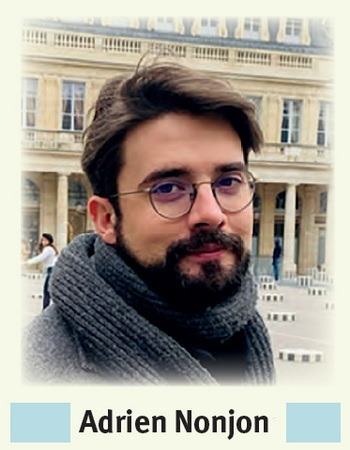 And finally, about the material under the heading “Visiting BINTEL”. This time, we chose Adrien Nonjon, a young French historian who agreed to tell about his studies in Ukraine and what prompted him to put them in a monograph that he recently presented in Paris. His book is entitled “The Azov Regiment. Ukrainian Nationalism at War”. The author cannot be considered a random person in such a case — in the pre-war period he repeatedly visited Ukraine, researched the issues of its geopolitics, meticulously studied the formation of the Ukrainian society and the consequences of political decisions of the Ukrainian leadership. It is important that he is from the young generation of French scientists who have new, impartial approaches in science that are not “hung up” on former historical and scientific narratives and always defend their views acquired in the modern world. It must be for this reason during our communication, he said the words which became the headline of his interview: “Ukrainians demonstrate to the world exceptional courage and fortitude in the face of any trials that befall them”.
I am sure that Ukrainians will be interested to get acquainted with his work, but to do this can only those who know French. It may happen that it will be translated into Ukrainian and then our specialists will be able to appreciate it. Although even the author’s answers themselves are interesting, useful and instructive.
Oleh Makhno
“BINTEL” Journal, № 4–2023


