

The Next Issue of “BINTEL” Geopolitical Analytics Journal Has Been Published
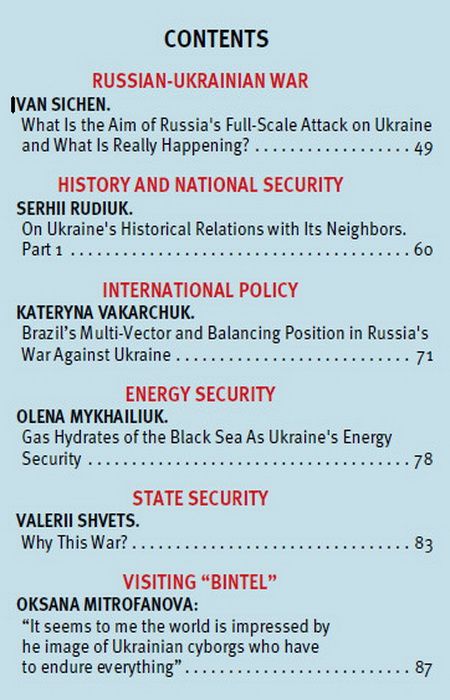 The materials of the next issue of “BINTEL. Geopolitical Analytics Journal” correspond to the previous ones, which analyze current events in Ukraine and other parts of the world, not to mention the war that continues on our territory.
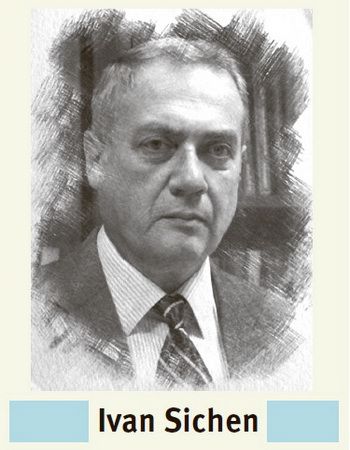 And this time, under the heading “Russian-Ukrainian War”, our expert Ivan Sichen presents his views on the confrontation of the Armed Forces of Ukraine with Russian attackers in the article “What Is the Aim of Russia’s Full-Scale Attack on Ukraine and What Is Really Happening?” It is mainly about the turning point in Russia’s war against Ukraine in the summer of 2023, when the Russians failed to achieve what they wanted in their offensive, which began back in January 2023, with the aim of capturing the entire territory of Donetsk and Luhansk regions. The reason is that the Defense Forces of Ukraine began their counteroffensive in the eastern and southern directions, which the Russians failed to deter. The author believes that in this way, the largest battle since the beginning of the full-scale invasion unfolded on the fronts in Ukraine, which will determine the consequences of the war. And he draws conclusions about what Russia was trying to achieve by starting the war against Ukraine, and what picture is emerging now. This will allow to predict the Russian Federation’s ability to implement its geopolitical plans and, in general, the situation in the world and around our country.
For example, he points to the propagandistic cover of Russia’s true intentions, which are much deeper in nature, and lists them in paragraphs with subheadings: “Russia Between “I Want” and “I Can”, “The Rights of Each Country Are Indisputable”, “Alliance Barrier for Russia”, “The EU’s Role in Countering the Russian Threat”, “Domestic Political Ratings of the Russian Leadership”, “What Ukraine Would Russia Want?”, “How the “Demilitarization” of Ukraine Is Going On”, “War Ceases to Be Local Hostilities”, “Russia’s Economy: Will It Get Stronger or Collapse?” And at the end of his analysis, the author draws conclusions about the true goals in Russia’s war against Ukraine, as well as whether the attacker will be able to achieve them in this way.
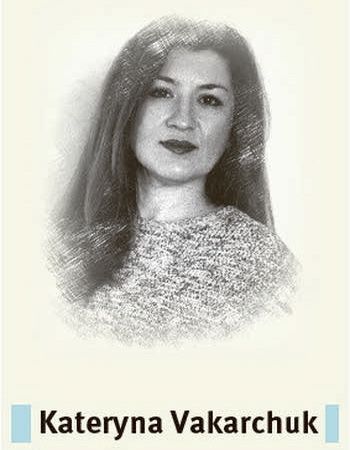 This time under the heading “International Policy” are published the articles by our regular authors Kateryna Vakarchuk and Serhii Rudiuk. The first is known as an analyst who is well versed in events in Latin American countries and, accordingly, in their politics. Her work is about Brazil, a country that is quite noticeable on the political world stage today, and its leader is trying to adhere to his own, specific views on the role of Russia not only in Europe, in particular, regarding its attack on Ukraine, but also on other continents.
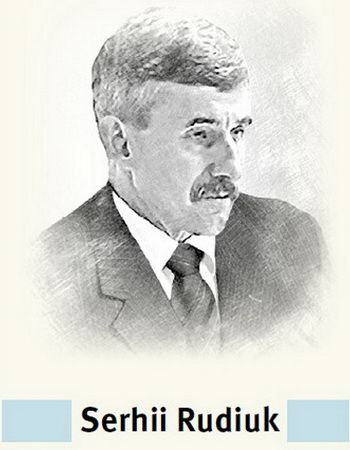 Serhii Rudiuk‘s article “On Ukraine’s Historical Relations with Its Neighbors” draws attention to the events in Ukraine at the beginning of the last century, which are now again making themselves felt due to the current policies of neighboring countries. Some readers will be interested in how the author compares and contrasts them, while warning against repeating historical mistakes, especially today, when Ukraine needs political and material support to provide a military rebuff to the Russian Federation. He begins his article with the topic of the population of Ukraine in the times of Trypillia, pointing out that Ukrainians are closely connected with other European nations, no matter how hard the Kremlin “historians” try to deny it now. And then he moves on to how Ukraine was formed in the 20th century, when its lands were taken over by our neighbors, including some seaports, which are now being shelled by Russian troops.
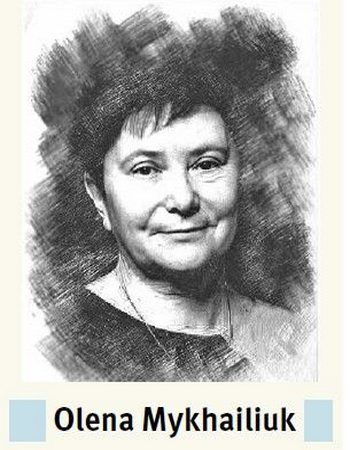 Also in the journal under the heading “Energy Security” the reader is offered an article by Olena Mykhailiuk, a scientist at the Odesa National Economic University. She describes the latest technologies, thanks to the development of which our country will be able to get out from energy dependence forever. Last year, we already raised this issue in one of the publications of her colleagues, and today we again draw attention to it, since its relevance, so to speak, is eternal. How or by what means can such energy independence be achieved?
A certain answer can be found in the headline — “Gas Hydrates of the Black Sea As Ukraine’s Energy Security”. As well as in the first paragraph, which deserves to be quoted: “The events of the last two years testify to the significant danger of the “Russian theory of energy connectors”, developed for domination in Europe. If successful, this should have led to catastrophic losses of energy security by the countries of the region. Therefore, there is an urgent need for new alternative energy sources. One of such potential, and to some extent even hypothetical, is the technical ability and economic feasibility of using the energy potential of the resource of the Black Sea bottom — methane hydrates”.
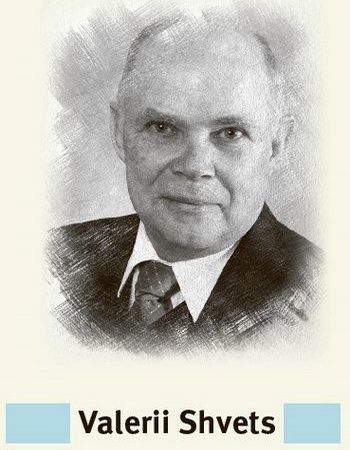 An original article on the topic is by another of our respected authors, Valerii Shvets, “Why This War?” It even echoes what Serhii Rudiuk writes about in his above-mentioned article. And we can say that the scientist, remaining faithful to the topic of his research, gives an answer to topical questions about the origin of the Slavs, about their “genetic marker”, in particular, about the basic haplogroup-mutation of the chromosome. And stressing the dependence of a human being on natural conditions, he draws attention to how the ancestors of Ukrainians had to adapt to them, gaining a foothold in our current Ukrainian spaces, which are unreasonably encroached upon today by our northeastern neighbors.
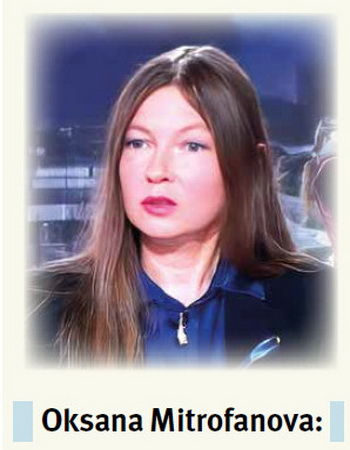 This time, the guest “BINTEL” for the interview is Oksana Mitrofanova, our colleague, the author of quite a few articles published in our journal, as well as on our website. Today she is in France, where she teaches at the university for the second year in a row. At the same time, she is often invited to the French television and were she talks about the hostilities in Ukraine, as well as the importance of the European Union’s providing material and technical assistance to the Armed Forces of Ukraine. Interestingly, she sees Europe, so to speak, from the inside and is able to compare the points of view, in particular, of French politicians on events not only in Ukraine, but also in neighboring countries. It should be noted that not everything is so clear in those views. They sometimes fall under the influence, including (or even primarily) of Russian propaganda, which is not easy to resist in Europe. But it is necessary to. Oksana Mitrofanova also had the opportunity to discuss in the studio with French military analysts. Her views, sometimes surprising the audience, did not coincide with the views of her colleagues present in the studio, but later became clear to the audience thanks to the objective facts provided by the Ukrainian scientist. The title of the interview was Oksana Mitrofanova’s phrase which sets the tone of our conversation: “It seems to me the world is impressed by the image of Ukrainian cyborgs who have to endure everything”.
We hope that our readers will look through the pages of the journal with interest and will find a lot of useful things for themselves.
Oleh Makhno, Chief Editor of the “BINTEL” Geopolitical Analytics Journal
“BINTEL” Journal, № 3–2023


