
 The United States, NATO and the EU will not leave Ukraine on its own, no matter how much Moscow hopes
Ivan Sichen
In my previous article “The “Hot” June of 2021. The USA, China, Russia, the EU, NATO and Ukraine”, I analyzed the main political events in the world at the beginning of this summer. Based on this, a conclusion was made about the qualitative changes in the system of international relations, which is determined by the final resumption of the new Cold War between the main centers of power. First of all, it concerns the actual return of the West and Russia to the military plans of mutual deterrence that existed before the collapse of the USSR. At the same time, relations between the West and China have deteriorated, including in the military sphere. At this, all participants in such confrontations maintain the rigidity of their positions, which makes the situation even more acute and dangerous.
As before, Ukraine remains at the center of the confrontation between the West and Russia, in addition to its involvement in the US/Europe conflict with China. Given the above-mentioned circumstances, all of these issues remain highly relevant for our state.
|
…In attempt to hide it’s failure in the international arena, when the whole Western world has rebelled against it, Moscow is trying to go on the offensive… |
The development of the situation in the world after the G7, NATO and US-EU summits, as well as the meeting of J. Biden and V. Putin fully confirms the conclusion that the confrontation between the West and Russia has reached the level of a new Cold War. The results of the above-mentioned events still cause rather ambiguous assessments, which in some cases are obvious elements of Russia’s information war against Ukraine. Moreover, in attempt to hide it’s failure in the international arena, when the whole Western world has rebelled against it, Moscow is trying to go on the offensive.
In particular, a number of Russian politicians continue to express hopes for the possibility of “resetting” relations between the United States and Russia, which allegedly was shown by the meeting of the Presidents of the two countries in June 2021. In this regard, it is pointed out that agreements were reached between J. Biden and V. Putin on the conclusion of a new arms control agreement, as well as the return of the US and Russian ambassadors to Moscow and Washington. Besides, it is emphasized that the meeting “was praised” by J. Biden (this is how such meetings were once assessed by D. Trump).
In the same way Russia assessed the position of US President J. Biden on Russia’s Nord Stream 2 gas pipeline, as well as the fact that NATO leaders refrained from inviting Ukraine to the Alliance’s summit in June 2021, and granting it with the Membership Action Plan.
Similarly, — as the West’s readiness to make concessions to the Kremlin — was seen Federal Chancellor of Germany A. Merkel and the President of France E. Macron’s proposal to invite V. Putin to the summit of the European Union.
Based on this, Moscow is already showing confidence in the West’s “agreeing” to return Ukraine and other post-Soviet republics to the sphere of Russian influence. For example, in V. Putin’s words in the video address to the participants of the IX Moscow Conference on International Security on June 23, “Russia never forgets its responsibility for the security and prosperity of neighbouring countries, with which we are brought together by inextricable historical, cultural and human ties”.
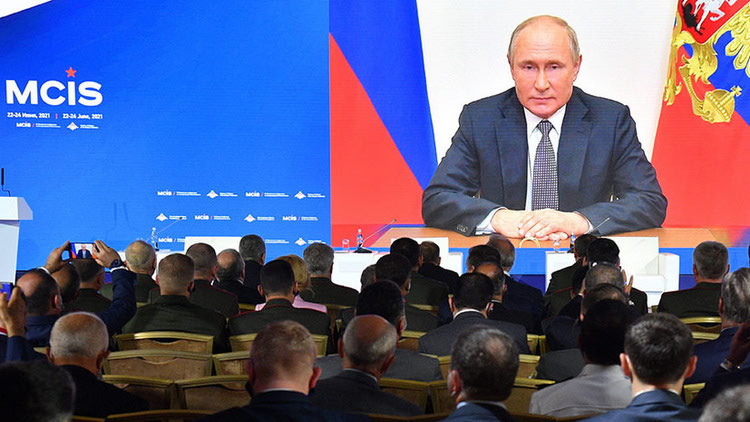 |
| V. Putin’s video address to the participants of the IX Moscow Conference on International Security |
Translated from “Putin’s” into common language, this actually means the Kremlin’s declaration of its “rights” to the post-Soviet space, including the possibility of determining the future of the former Soviet Union and interfering in their internal affairs. Moreover, during the conference, V. Putin again accused the West of pursuing an anti-Russian policy in the region and opposing Russia’s legitimate interests. At this, he did not say a word about Moscow’s aggressive actions against Ukraine and other neighboring countries, which is the real essence of what Russia is doing.
|
…Moscow’s hopes for “resetting” relations with the West remain only hopes, without any real grounds for this… |
However, Moscow’s hopes for “resetting” relations with the West and its agreement on a new division of the world with the restoration of Russia’s exclusive zone of influence remain only hopes. At this, without any real grounds for this. Evidence of this is the recent practical steps taken by the United States, NATO and the EU to contain the Putin regime.
For example, on June 25, 2021 US Under Secretary of State for Political Affairs V. Nuland reaffirmed Washington’s readiness to respond quickly to any attempts by Moscow to aggravate or intimidate the situation around Ukraine. A separate statement on US support for Ukraine’s independence, sovereignty and territorial integrity was also made by the US Embassy in Kyiv.
Biden’s outspoken political move was the appointment of former Deputy Assistant Secretary of Defense with responsibility for Russia, Ukraine, Eurasia M. Carpenter as US Representative to the OSCE. Of course, the former Chargé d’Affaires at the US Mission to the OSCE, C. Austrian, was also quite harsh on Russia, but was mostly limited to political declarations condemning its aggressive policy. In turn, M. Carpenter clearly states that the only way to ensure the security of the United States and NATO is only through Russia’s nuclear deterrence. At this, he also insists on the need to protect the partners of the United States. According to him, in any case, the United States must raise the price for Russia in response to its aggressive actions so much that it is unacceptable to it.
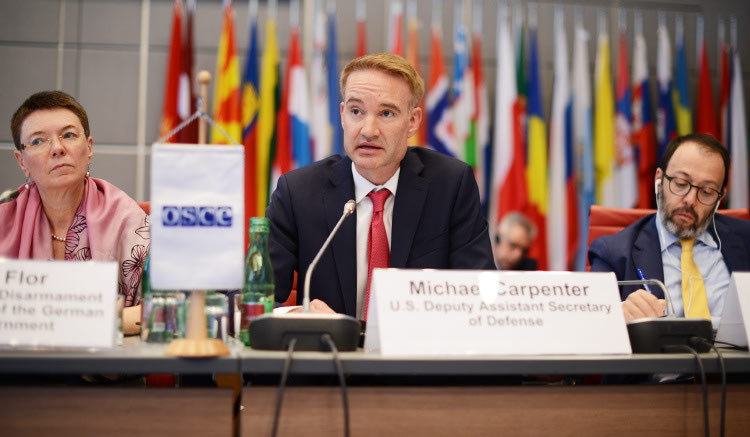 |
| Michael Carpenter, Nominee for US Representative to the Organization for Security and Cooperation in Europe (OSCE) |
Today, such a price for Russia is politico-economic sanctions by the West, supported by US and NATO steps to increase their military presence in Europe and demonstrations of military force (especially in the Baltic and Black Sea regions).
In particular, in June 2021 the United States and the European Union extended sanctions against Russia for another year for the annexation of Crimea. Sanctions for provoking Moscow’s conflict in the Donbas are also expected to continue.
Besides, despite J. Biden’s decision to waive US sanctions on Russia’s Nord Stream 2 project, the US leadership continues to oppose the construction of the pipeline and imposes new sanctions on companies involved in its construction. Among other things, this issue was raised by US Secretary of State A. Blinken during his joint press conference with German Foreign Minister H. Maas on June 23, 2021 in Berlin. According to the US Secretary of State, Nord Stream 2 is ultimately a Russian geopolitical project, through which Moscow is trying to gain additional leverage on Europe and Ukraine. With this in mind, the United States will make efforts to prevent such a possibility, as well as seek to establish a mechanism to ensure Ukraine’s energy security once Nord Stream 2 goes operational.
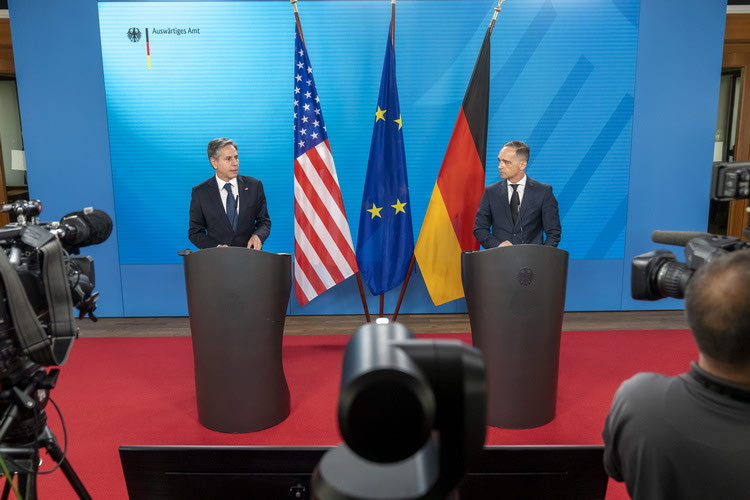 |
| US Secretary of State A. Blinken with German Foreign Minister H. Maas at a Joint Press Availability |
Along with this, the United States is preparing additional sanctions against Russia in connection with the poisoning and imprisonment of anti-Putin opposition leader A. Navalny. Commenting on the plans, US National Security Adviser, J. Sullivan, expressed Washington’s firm intention to respond harshly to all human rights abuses in Russia and Moscow’s hostile actions against the United States and its allies (cyber attacks and election interference included).
The same position on Russia is taken by the EU leadership and leading European countries. In particular, on June 25, 2021 summing up the EU summit, European Commission President U. von der Leyen called on the members of the Organization to prepare for further deterioration of relations with Russia and to conduct a dialogue with it exclusively from a position of strength. For her part, German Chancellor A. Merkel took the initiative to create a mechanism for joint response of EU member states to Russia’s hybrid attacks. By the way, V. Putin has not been invited to the European Union summit. The same can be said of the Parliamentary Assembly of the Council of Europe, which some consider to be a “pro-Russian” organization. At the end of June 2021, the PACE adopted a resolution condemning Russia’s actions in the annexed Crimea, namely politically and religiously motivated repressions against the local population.
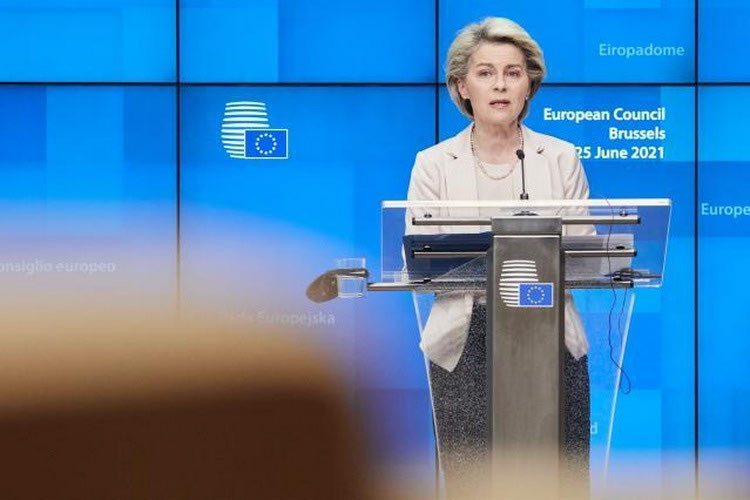 |
| Ursula von der Leyen, European Commission President |
Against this background, the United States and NATO continue to take measures to counter Moscow’s aggressive policy, including by military means. In general, they are well known, so let’s focus only on most resonant events that took place in the early summer of this year.
For one, in June 2021 the USA began installing the Aegis Ashore anti-ballistic-missile system in northern Poland. The complex includes SM-3 ground-based interceptors, SPY-1D radar arrays and fire control system (FCS) and allows to detect Russia’s launches and intercept ballistic missiles, which can be launched in the direction of the United States and Europe. A similar facility is currently operating in Romania.
Also, the US Department of Defense decided to redeploy to the Russian direction eight Patriot anti-missile batteries, which were previously stationed in Jordan, Iraq, Kuwait and Saudi Arabia. The THAAD tactical missile defense system is also being redeployed from Saudi Arabia to Europe.
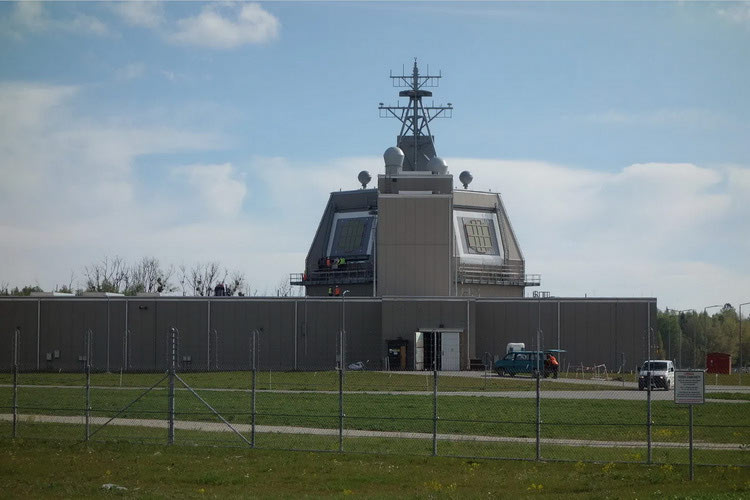 |
| In June 2021, the USA began installing the Aegis Ashore anti-ballistic-missile system in northern Poland |
We should also emphasize J. Biden’s decision to resume systematic patrols of US Navy Aegis-equipped warships in the Black Sea (in early June 2021, J. Biden suspended such patrols, which was due to his meeting with V. Putin). In particular, on June 11, 2021 the destroyer USS Laboon (DDG-58) from the 6th Fleet of the US Navy entered the Black Sea. The destroyer can carry up to 56 Tomahawk cruise missiles with a range of 1.6 thousand km, which exceeds the missile potential of the entire Russian Black Sea Fleet. June 26, 2021 a similar destroyer, the USS Ross (DDG-71), entered the Black Sea to replace it.
June 14, 2021 the UK warship HMS Defender (D36) and the Dutch guided missile frigate HNLMS Evertsen (F805) from the naval strike group led by the aircraft carrier HMS Queen Elizabeth (R08) of the British Navy entered the Black Sea. June 18, 2021 destroyer HMS Defender went to the port of Odesa, where joint trainings were held with the participation of special operations forces of Ukraine, Britain and the United States.
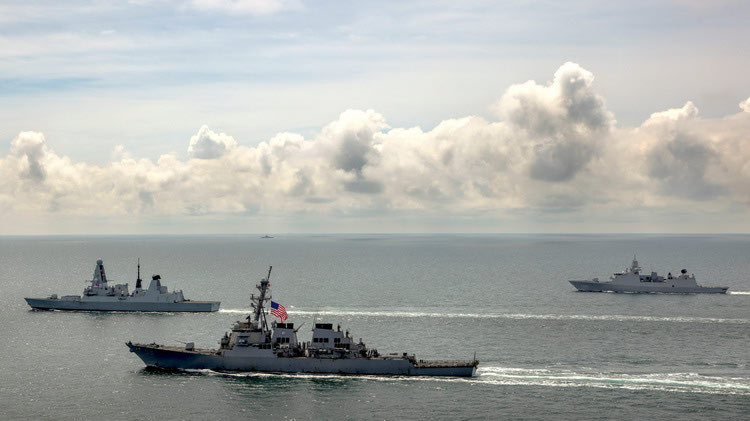 |
| The UK warship HMS Defender, destroyer USS Laboon of the US Navy and Dutch frigate HNLMS Evertsen in the Black Sea on June 17, 2021 |
|
…Deepening cooperation with Ukraine allows the USA/NATO to secure their advanced military presence in the immediate vicinity of Russia’s southwestern border… |
These US and NATO activities in the Black Sea are part of the DEFENDER-Europe 21 strategic exercise, which rehearsal countering Russia’s possible armed aggression. As you know, this year most of the exercise is held in the Mediterranean and Black Sea regions. At this, the exercise declared by the US and NATO leadership as a demonstration of readiness to protect their allies and partners from the Russian threat.
This also applies to Ukraine, which is of strategic importance to the transatlantic community as an advanced “outpost” in curbing Moscow’s expansion. Moreover, deepening cooperation with Ukraine allows the United States and NATO to secure their advanced military presence in the immediate vicinity of Russia’s southwestern border. These are the main reasons for the inviolability of the US, NATO and EU positions in support of Ukraine and giving assistance to it in the political, economic and military spheres. Forms of such assistance have been repeatedly covered by the media and do not need special attention. Therefore, again, we will focus only on the current actions of our Western partners to help strengthen Ukraine’s security. Especially as after the final resumption of the Cold War between Russia and the West, these actions are reaching a qualitatively new level.
In particular, on June 21, 2021 a Memorandum of Implementation (MOI) for naval partnership projects between a consortium of the United Kingdom industry and the Ukrainian Navy was signed on board the UK warship HMS Defender. As part of the memorandum, the United Kingdom confirmed plans to build eight fast missile warships for Ukraine, and to sell two mine countermeasure vessels to Ukraine. Last year, London already allocated more than one billion Euros to Kyiv for the development and creation of naval bases in Ochakiv and Berdyansk.
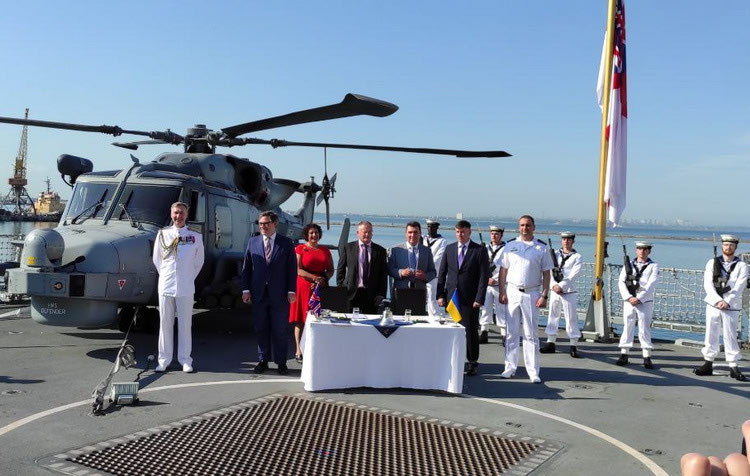 |
| On June 21, 2021 a Memorandum of Implementation between the United Kingdom and the Ukrainian Navy was signed |
Together with the US commitment to hand over 16 Mark VI patrol boats with weapons and related equipment to Ukraine, this will contribute to the revival of Ukrainian Navy. Both, in the Black Sea and Azov regions. In addition, two more patrol boats for the Coastal Guard of the Border Guard Service of Ukraine are to be delivered by France.
However, the most significant is the joint military exercise Sea Breeze 2021 with the participation of Ukraine, the United States, NATO and other partners of our country, which is held from June 28 to July 10 this year. Today, this exercise is the largest since 1997. In total, more than 5,000 troops from 32 countries are taking part in the exercise. Besides, it involves 32 warships (including from the 6th Fleet of the US Navy), up to 40 aircrafts and helicopters, as well as about 100 pieces of armored vehicles and artillery. The exercise takes place at a number of training grounds in Odesa, Mykolaiv and Kherson regions, near Ochakiv, in Dniester estuary, Kinburn spit, Zmiiny and Pervomaisky islands and in the Danube delta.
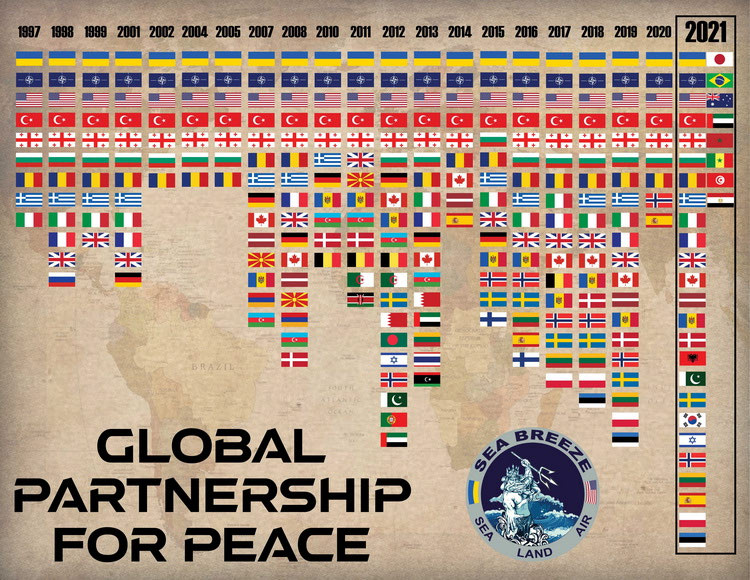 |
| Joint military exercise Sea Breeze 2021 is the largest since 1997 |
All this makes it virtually impossible for Russia to implement its geopolitical plans to establish its dominance in the Black Sea region, as it has already done in the Sea of Azov. Consequently, Moscow is taking retaliatory measures, which mainly include military and nuclear blackmail of the United States and Europe, and with them Ukraine.
We and other media have repeatedly written about how Russia did this in the spring of this year by provoking military tensions around Ukraine. In June 2021 such provocations were supplemented by Moscow’s direct threats to use nuclear weapons against its Western opponents. In particular, they were voiced by the Chief of the General Staff of the RF Armed Forces V. Gerasimov during the above-mentioned Moscow Conference on International Security. According to him, Moscow reserves the right to be the first to use nuclear weapons.
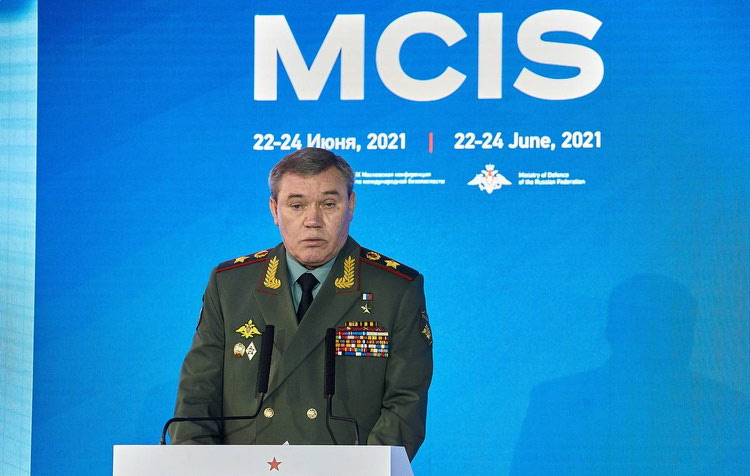 |
| The Chief of the General Staff of the RF Armed Forces V. Gerasimov at the IX Moscow Conference on International Security |
And then Moscow, in fact, launched open hostilities against the US/NATO in the Black Sea. On 22nd June, 2021 during the planned crossing of the UK warship HMS Defender in a commonly used and internationally recognized transit route from Ukraine to Georgia, Russia attacked it near Cape Fiolent in Crimea. At 12:06 and 12:08, a Russian border vessel fired warning shots. And at 12:19 the Su-24M dropped four high-explosive fragmentation bombs on the way of the British warship. However, no matter how hard Russia tried to intimidate its opponents, it did not succeed. According to Prime Minister of the UK B. Johnson, no military provocations by Moscow will stop his country. As in all other cases, Britain was fully supported by the United States.
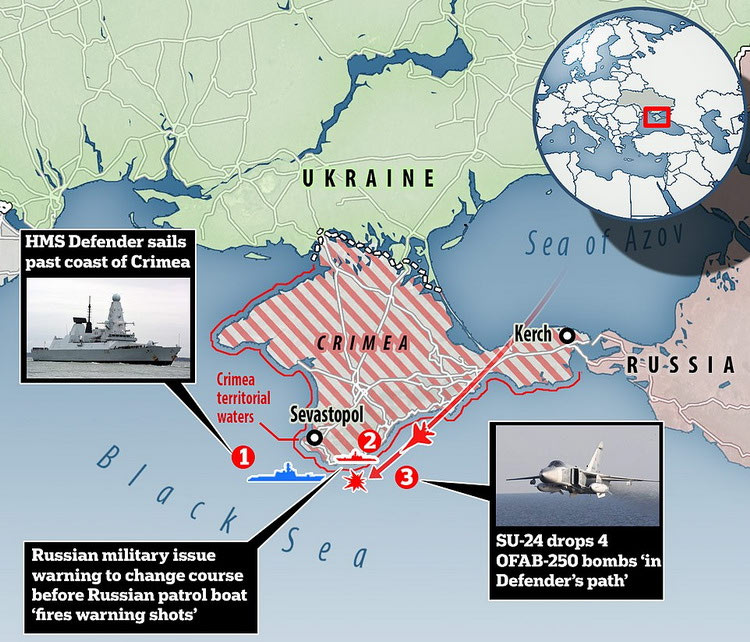 |
| Provocation against the British warship HMS Defender off the coast of the Russian-occupied Crimea |
What does this mean for Ukraine? We have repeatedly asked this question and answered it. Unfortunately, not everyone still understands this and is being “misinformed” by Russia.
The United States, NATO and the EU will not leave Ukraine on its own, no matter how much Moscow hopes. Ukraine is not a member of NATO yet and was not even granted with the Membership Action Plan. But it is already effectively integrated into the military structures and plans of the North Atlantic Alliance.
And the US/NATO military presence on Ukrainian territory in the form of military exercises, training missions and the use of our ports by their warships, in fact, extends to Ukraine the 5th article of the North Atlantic Treaty on collective defense.


