
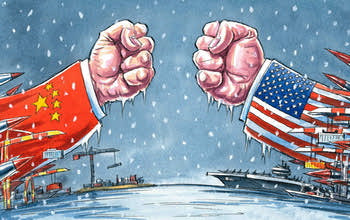
 The Geopolitical Infrastructure of the New Cold War Is Emerging in the Indo-Pacific region
The United States favors the priority of strategic partnership, while China prefers to use economic ties, and it cannot be said that tensions between the two superpowers have been eased. Who will win the global confrontation — the question remains open.
While the European Union is trying to cope with the coronavirus pandemic, the Germans, in particular, are arguing about the feasibility of celebrating Easter and are focusing on gender issues, in Asia, namely in the Indo-Pacific region, there is, as it is recently called, “geopolitical infrastructure of the new Cold War”. After all, the conflict lines between the United States and China are becoming more acute. In its confrontation with its main rival, the United States has focused mainly on strategic partnerships, while China relies first of all on economic ties. The question is which of these strategies will eventually prove to be appropriate.
The confrontation between China and the rest of the world keeps escalating. Beijing is not worried about the change of leaders in the United States, does not care about the views of the EU and NATO. China continues to put pressure on the world community in an effort to advance its own geopolitical interests, and will not stop using military force or violating human rights or other universally recognized values. The confrontation between the coalitions of states led by the United States and China, namely QUAD and RCEP, only exacerbates tensions in the world.
The article is available in Ukrainian


