Returning Russia’s Rights in the PACE
A Catastrophe or a Warning for Ukraine?   Since 2014, the support of our state by Western countries and international organizations in the confrontation with Russia is critically important for Ukraine. First of all, this concerns the USA, the EU and NATO’s actions to contain the aggressive policy of Moscow through sanctions and increasing of military presence in Europe, as well as financial, economic and military technical assistance to Ukraine. In general, our Western partners’ attitude to Russia’s aggression against Ukraine remains unchanged. But lately, some European countries have been making attempts to reach agreement with Moscow, including at the expense of certain concessions in its favor.…

More >>

Observing Some German-Language Media on the Eve of the G20 Summit in Japan

Serhiy Polyovyk   At the end of June 2019 (on the 28–29, to be exact), G20 leaders are traditionally meeting at the highest level — it will be the 14th G20 summit, which will be held for the first time in Japan, in Osaka. European and the world leading analysts are waiting for this event because they are well aware of its level and, in particular, of the current relationship between the leading countries-participants of the Summit, first of all, between the United States and China. European media, and especially German, Swiss…

More >>

Iran: Playing on the Brink

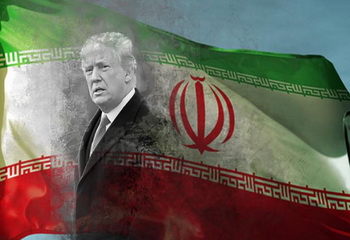
Just a few days ago, we mentioned the new stage in the escalation of the military-political situation in the Persian Gulf region. Less than a week — another event: the IRGC Air Force shot down an American drone. US President D. Trump made a decision about air strike, but later he called off the strike. The question arises: “How long will the period of threats last, where is the limit of such an escalation, why and in whose way does Iran stand?” Today, despite tense muscles and promises to punish, all the parties to the conflict, without exception, have come close to the “red line”, but do not dare to cross it. It is easy to start a war, but how much and what…

More >>

Strengthening China’s Positions in Afghanistan

Roman Kot While the United States, against the background of the escalation of its relations with Iran, is dwelling on how to get rid of the consequences of another protracted conflict in Afghanistan by withdrawing its troops from Afghanistan, China more and more bluntly demonstrates willingness to fill in this “vacuum”. On the 20th June, 2019, the Ministry of Foreign Affairs of the PRC issued a statement on the Taliban delegation’s visit to Beijing. At the meeting, Chinese experts discussed establishing a peace process in Afghanistan and combating terrorism. It would seem that the level of such a meeting cannot be considered the highest since it was a working visit. China’s long-standing ties with the Taliban, mainly through the intermediary of Pakistani…

More >>

Protests in Georgia. And Lessons for Ukraine

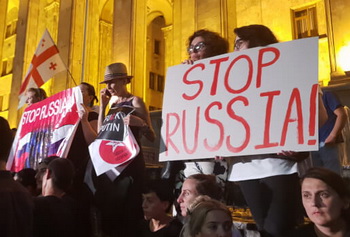
Victor Hvozd In Georgia, like in Moldova, Moscow is rehearsing technologies of influence on post-Soviet countries   This year, a series of sharp political crises and conflicts resumed in a number of post-Soviet countries. For example, in May–June 2019, this was observed in Moldova, which barely escalated into mass disorder. Today, the same situation arose in Georgia. At this, there is a lot in common in Moldovan and Georgian events caused by internal problems provoked by Russia. Thus, the protest in Georgia arose because of the Russian State Duma deputy from the Communist Party of Russia, the President of the Inter-Parliamentary Assembly on Orthodoxy S. Gavrilov’s statement in the Georgian Parliament. The…

More >>

Israeli-Lebanese confrontation on the Eastern Mediterranean shelf

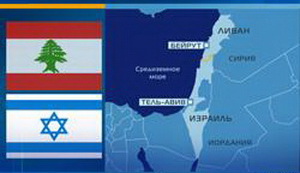
Oleksiy  Volovych The natural gas and oil deposits in the Lebanese energy basin in the Eastern Mediterranean, discovered by the American oil and gas company Noble Energy Mediterranean in 2009–2010, have become almost at once exploration and development target for the countries of the sub-region — Egypt, Israel, Lebanon, Syria, Cyprus, Greece and Turkey. In 2010, the US Geological Survey previously estimated reserves of hydrocarbons in the Levantine Basin at 3.45 trillion cubic metres  of gas and 1.7 billion barrels of oil. According to other data, the potential of the region…

More >>