
LAST WEEK’S KEY FACTORS AND MAIN TRENDS IN THE DEVELOPMENT OF THE SITUATION AROUND UKRAINE
(May 30-June 5, 2016)
I. Peculiarities of the Development of the Situation in the Conflict Zones in Ukraine and around Our State
1.1. The East of Ukraine (the ATO zone)
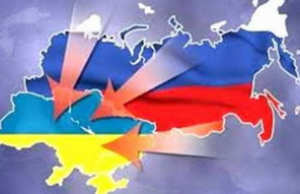 Since last week the situation in the conflict zone in the East of Ukraine has significantly deteriorated. Russian-terrorist forces have intensified shelling positions of Ukrainian troops to more than 50 times per day, including using weapons prohibited by the Minsk Agreements. Their snipers and sabotage and reconnaissance groups’ activity intensified which has lead to losses among Ukrainian military servicemen.
The enemy’s main efforts are focused on Shyrokino, Avdiyivka and Stanytsya Luhanska. Besides, there got intensified the attacks on strongholds of Ukrainian troops in the area near the Donetsk airport, Pavlopolya, Talakovka, Vodyane, Hnutovo and Novotroitsk on Mariupol direction.
At the same time, steps are being taken to strengthen the units of the Russian-terrorist formations in certain areas, for example, additional armored vehicles (including BMP-1 and BTR-80) have been moved to Dokuchayevo, and the motorized infantry battalion has been strengthened with an artillery group. To justify such actions, Russian-terrorist side spreads information about Ukrainian troops’ preparations for an attack in this direction.
Recently about 20 tanks, 24 armored personnel carriers and infantry fighting vehicles and tens of thousands of tons of ammunition and fuel have been brought to the occupied territories of the Donbas. Reconnaissance and sabotage activities against the ATO forces are getting more intensified. The number of flights of UAV (including striking ones) has increased, the enemy’s sabotage and terrorist groups’ restarted their attempts to break through into the rear of the positions of Ukrainian troops.
The Russian side is trying to cover up its actions by obstructing the work of the Special Monitoring Mission (SMM) of the OSCE. In particular terrorists blocked the passage for the international observers from the village of Stanytsya Luhanska to the occupied Luhansk. Cases of UAV shelling of the OSCE Mission have become more frequent.
Against this background, the main political event in the development of the situation around the armed conflict in the Donbas became the meeting of the Trilateral Contact Group on June 1, 2016, in Minsk, which discussed the cessation of hostilities, exchange of prisoners, enhancing the security of the observers of the OSCE SMM, the local elections, restoration of railway communication in the Donbas and ensuring stable work of checkpoints on the contact line of the sides.
However, due to Russia and “DPR”/“LPR”’s destructive position, no concrete decisions were taken. As a rule, the meetings of the Trilateral Contact Group are accompanied by Russia and its puppets’ activation of the armed conflict in the Donbas, in order to put pressure on Ukraine.
In this context, rather demonstrative was the Russian Federation’s Foreign Minister S. Lavrov’s statement on June 4 on “Russia 1” the TV channel, where he confirmed Russia’s refusal to place armed OSCE observers on the border with Ukraine: “… This is what we never agreed on”. According to him, Russia will agree to it (armed OSCE mission in the Donbas and Ukraine’s regaining full control over its Eastern border) in exchange for amendments to the Constitution of Ukraine: “…as long as there is no amnesty, no law on the special status that will actually guarantee additional rights to these territories, as long as these rights within the framework of a special status are not enshrined in the Constitution of Ukraine on a permanent basis, it is difficult to expect that Donetsk and Luhansk will agree “in advance” to do what according to the Minsk Agreements must be the completion and not a precondition of the political process“.
At the same time, the question of maintaining/lifting of sanctions against Russia is becoming more important for Moscow in the situation of increasingly negative trends in the Russian economy. Thus, according to the Ministry of Economic Development of the Russian Federation, during January-April this year Russia’s GDP shrank by 1.1 % at an annual rate. More negative forecasts are being given by the international Organization for Economic Co-operation and Development (OECD), which expects the fall of the Russian economy in 2016 at the level of 1.7 % (the previously expected decline was 0.4 %).
1.2. The Crimea
 Despite Moscow’s measures to ensure the Crimean Peninsula’s energy independence from Ukraine by the construction of the so-called “Kuban-Crimea” energy bridge, since May 31 widespread power outage in the Crimea and Sevastopol can be observed again. The above-mentioned confirms the inability of the Russian Federation’s leadership to implement the plans, which were supposed to have been completed by May 2016.
The reason for this was the lack of funds in Russia due to complications of the financial and economic situation as well as the misuse of those funds both by Moscow and the occupation authorities in the Crimea. They have already reported about the postponing of the construction of the bridge from the Taman Peninsula in the Krasnodar Krai of Russia to Kerch Peninsula in the Crimea at least for several years.
The leadership of the Russian Federation actually recognizes these problems, which and keeps cutting expenditures for the needs of the Crimean Peninsula. June 1, 2016, the Ministry of Economic Development of the Russian Federation published a draft decree to reduce the amount of financing the “Federal Target Program for the Development of the Crimea and Sevastopol until 2020” by 3.5 billion Rubles. In 2016 the Program is expected to be reduced by 226.48 million Rubles planned for “Rosavtodor” for the construction of a bridge across the Kerch Strait, and by 300 mln Rubles — for reconstruction of the Peninsula’s air and sea connection with Russia. Russia is also cancelling a number of other programs for the economic development of the Crimea.
Under these circumstances, Moscow and the Russian authorities in the Crimea are trying to divert attention of the population of the Crimea from socio-economic problems of the region through intimidation of citizens with false issues of “activation of the Crimean Tatar extremism”. Thus, “the Ministry of Internal Policy, Information and Communication of the Crimea” issued a report on “… threats of the Crimean Tatar extremists’ resuming their activities on Checkpoints between the Crimea and Ukraine”. Simultaneously the North Caucasus District Military Court in Rostov-on-Don started the proceedings in the case of four Crimean Tatar residents, who are accused of allegedly belonging to Islamic terrorist organization “Hizb ut-Tahrir.”
1.3. Ukraine and Its Allies and Partners
 The leaderships of leading countries and international organizations continue to speak in support of Ukraine and the need to maintain sanctions against Russia to its full implementation of the Minsk Agreements and leaving the Crimea.
Germany. Germany’s position on this issue was confirmed by German Chancellor Angela Merkel on June 3 at the regional party congress of the Christian Democratic Union (CDU) in the federal state of Mecklenburg-Vorpommern. The head of the German government stressed that one cannot give up one’s own principles against the background of Russia’s real actions in Ukraine. Ukraine, said Merkel should finally regain access to its borders. “If that happens, then we can immediately lift the sanctions”, assured the Federal Chancellor.
Besides, today the Government of Germany is completing a new national security strategy. The “White Book” project developed by the Ministry of Defence has passed the processing by other agencies responsible for security policy. It is expected that the final document will be approved by the government in the first half of summer.
According to the draft of the new document, Germany at this stage sees 10 main risks to its safety. Among them first of all there is terrorism, the threat of cyber attacks and the Kremlin’s policy. As pointed out in the draft document: “Russia is no longer a partner”, it has turned into a “rival” for Germany. After the annexation of the Crimea and actions in the East of Ukraine, Moscow “… has publicly questioned the European peace order, which was reached after the “cold war”. This situation, as further stated in the project, could have serious consequences for Germany. The German authorities are particularly concerned about Russia’s increasingly using “hybrid instruments for purposeful blurring of boundaries between war and peace” and “undermining the basic principles of other states”. “Without a fundamental change of the Russian Federation’s course, within the forecasted time Russia will be a challenge for security on our (read — European) continent”, reads the draft “White Paper”.
Other threats to German safety are considered the incapable states in North Africa and the Middle East, uncontrolled immigration, radical nationalism, the arms race, threats to the ways of supply of raw materials, including from terrorists and pirates, climate change, growing risks of epidemics because of population growth on the planet.
Poland. The leadership of Poland keeps supporting Ukraine. According to Deputy Foreign Minister of Poland K. Shymanskyi, in an interview with Reuters, the European Union must not soften the sanctions against Minsk until Russia’s fulfillment of the Minsk Agreements because lifting the sanctions would weaken the EU’s positions in negotiations with Moscow. In this regard, he rejected the possibility of linking the issue of Russia’s releasing N. Savchenko with the West’s concessions to V. Putin’s regime.
Japan. Demonstrative was also the Ambassador of Japan in Ukraine S. Shigeki’s statement of May 31 about the G-7 intentions to extend sanctions against Russia. At this he stressed on the common position of the “Group of Seven” on the matter due to Russia’s blunt non-fulfillment of the Minsk Agreements and Moscow’s continued armed aggression in the Donbas.
Greece. The position of the leadership of Greece is quite different, as it speaks against the automatic extension of sanctions against Russia and insists on the need to review the issue “… taking into account the new realities”. At this, they state that “… there is some progress in settling the conflict in the Donbas”. This opinion was expressed by Greek Deputy Foreign Minister N. Ksidakis in an interview with the Russian RIA Novosti.
The European Union. Despite the condemnation of V. Putin’s regime’s actions by the majority of the EU member states, a certain change can be observed the in the EU leadership’s attitude and approach to Russia. June 2, 2016, during the meeting of the Head of the European Parliament (EP) Martin Schulz and leaders of 8 parliamentary parties, it was decided to resume limited contacts with the State Duma of Russia. The reason for this decision was called the EP’s staying off dialogue with Moscow, while both the European Commission and several EU countries continue negotiating with Russia on important issues relating to European interests. As a first step they plan to send representatives of the European Parliament to the Conference of Parliamentarians of the Arctic Region, which will be held on 14-16 of June, 2016.
One should also note the statement of the EU High Representative for Foreign Affairs and Security Policy F. Mogherini on June 2, 2016, regarding the need to speed up the process of amending the Constitution of Ukraine on decentralization of Ukrainian authorities. At this, the real situation in the Donbas is not taken into consideration — namely, the presence of Russian troops in the occupied territories of Ukraine, which fully meets the interests of Putin’s regime.
NATO. The USA and NATO’s positions regarding the Russian Federation are absolutely clear within the framework of the NATO Summit in Warsaw on July 8-9, 2016. For example, the 62nd Spring session of the NATO Parliamentary Assembly of May 27-31, 2016 in Tirana (Albania), adopted a final Declaration which mentions Russia’s threats to European security and calls on the members of the Alliance to provide a joint response to Moscow. The mentioned main forms of this response include strengthening NATO’s conventional and nuclear capabilities, raising combat readiness of the Alliance and strengthening its cooperation with partner countries that are not members of the Organization.
Commenting on the results of the meeting, NATO Secretary General J. Stoltenberg reiterated the Alliance leadership’s intentions to take further measures to strengthen the Alliance, including by deployment of additional troops and control centers on the territory of countries of Central and Eastern Europe and the Baltic states, creation of the US/NATO Air Defence System in Europe, increasing the capacity of the NATO Response Force, and improving the mechanisms of political and military decisions. In order to successfully implement these plans, an increase in military spending of NATO countries (for the first time in the last two decades) to an average of 2 % of GDP is planned in 2016.
At the same time J. Stoltenberg rejected the possibility of Russia’s influencing NATO’s decisions, including on NATO’s enlargement and Ukraine’s joining it. However, NATO Secretary General expressed the willingness of the Alliance to develop cooperation with Russia on issues of mutual interest. First of all, in this aspect he mentioned the peaceful settlement of the conflict in the Donbas.
The USA. A firm statement towards Russia was made by US President B. Obama during his speech to the graduates of the US Air Force Academy in Colorado Springs on June 2 2016. In particular, he described Moscow’s policy (including towards Ukraine) as one of the main threats to international and European security and compared Moscow’s actions with international terrorism. Against this background, on the 3rd of June 2016, the USA allocated a third credit line for Ukraine in the amount of 1 billion US dollars with the lowest interest rate of 2 %.
II. The Main Trends in Further Development of the Situation around Ukraine
2.1. The Donbas
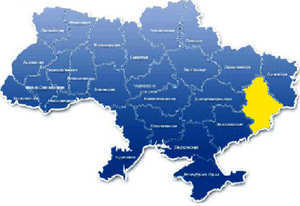 Taking into consideration the lack of actual practical results of the meeting of the Trilateral Contact Group on the 1st of June 2016 in Minsk, in the nearest future we should expect preservation of the high level of intensity of the Russian-terrorist units’ shelling of the positions of Ukrainian troops. The enemy’s provocative attacks against the ATO forces in certain areas should not be ruled out either.
The above-mentioned will be aimed at forcing Ukraine to carry Russia’s conditions of “settlement” of the conflict in the Donbas, namely: granting amnesty to all militants; adoption of the law on the special status of the occupied territories (“DPR” and “LPR”), which will guarantee more rights for these territories; securing additional rights (within the framework of the special status) in the Constitution of Ukraine on a permanent basis, and holding elections in the occupied territories on Russia and its puppets’ terms.
In this context, Moscow will seek to achieve its goals before the EU’s revision of its sanction policy towards Russia in late June – early July 2016. In this respect, V. Putin’s regime counts on both, attrition of Ukraine and strengthening of pro-Russian sentiments in the leaderships of Germany and several other European countries.
2.2. The Crimea
 The RF government’s plans to reduce spending to finance the Crimean Peninsula will force Russian authorities to seek opportunities to reduce the local budget. Based on previous experience, subject to sequestration first of all will be articles of social spending, including education, medicine and paying salaries and pensions of public sector employees (from June 1, 2016 salaries of state employees have been cut by 10 %).
Under such circumstances, the occupation authorities of the Crimea will make additional efforts to divert the population’s attention from further complications of socio-economic problems of the region to other sensitive issues. In particular, there will be more information-propaganda activities to provoke tension around the issue of Crimean Tatars and to demonstrate the process of “the world’s recognition of the Crimea as a subject of the Russian Federation”.
In this context, we should expect the Kremlin and Crimean local authorities’ new actions to implement the FSB’s plan (adopted in spring 2015) for putting purposeful pressure on the Crimean Tatars and opposing them to the Russian-speaking population.
First of all, it will mean intensification of the information campaign to further discredit the Crimean Tatar Mejlis in the Crimean and Federal media. Preliminary steps in the implementation of this plan was the decision of the Russian court (April 26, 2016), to recognize Mejlis as an extremist organization and to ban its activity in the Russian Federation and the arrests of a number of activists of the Crimean Tatar people on charges of anti-Russian and terrorism activity.
Moscow continues to work with leaders of local authorities in a number of Italian, French and German regions in the context of their recognition of the “Crimea’s belonging to Russia”. In particular, after a decision by the regional council of the Italian province of Veneto (May 18, 2016), in the nearest future it may be joined by several other provinces of Italy, including Lombardy, Liguria and Tuscany. The documents on this issue are being prepared by the faction of the pro-Russian Lega Nord party in local parliaments of territorial entities. Applications for recognition of the Crimea “part of Russia” and the lifting of sanctions against it are being prepared by the left-wing faction of the Municipal Council of the German city of Quakenbrück.
2.3. The European Union
 Taking into consideration Russia’s intransigence towards Ukraine, and the nearing of the time of the revision of the EU’s sanction policy towards Russia, next week the above-mentioned issues will remain in the focus of attention of the European Union.
In particular, in order to discuss the plans for continued sanctions against Russia, on June 7-8, 2016, US Deputy Treasury A. Shubin will visit Paris and Berlin. The American official is supposed to meet the heads of Foreign Ministries, Interior Ministries, Ministries of Finance and Economy of France and Germany. The parties have to agree on positions and joint actions towards Russia.
June 8, 2016, the Polish Parliament is going to study the report on crimes in the occupied territories of Ukraine. The investigation materials are based on questioning Ukrainian volunteers and former prisoners of war, who had been held hostage by militants. The document has already been presented to the European Parliament.
However, given the common interests in political, economic and security spheres (first of all to resolve the situation around Ukraine), the EU will keep establishing the dialogue with Moscow. To this end on June 16, 2016, the European Commission President J.-C. Juncker will visit Russia, and will meet with President V. Putin within the framework of the St. Petersburg Economic Forum. During the visit, J.-C. Juncker intends to convey to the Russian leadership and wider audience the European Union’s vision of the current state of relations between the EU and the Russian Federation. At the same time, according to European Commission President, his visit to Russia is not a concession to Moscow. The European Union has firm intentions to maintain sanctions against Russia in case of its non-fulfilling the Minsk Agreements.
2.4. NATO
As part of the deepening cooperation between Ukraine and the Alliance, June 15, 2016, the NATO-Ukraine Commission will be held at the level of Defence Ministers. A comprehensive program of assistance to Ukraine is planned to be approved, and be finally adopted at the Warsaw Summit July 8-9, 2016.

