
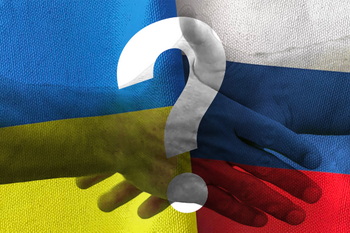
 Who and Why Needs to Freeze the War?
Ivan Sichen
At the end of February 2024, President of Türkiye Recep Tayyip Erdoğan initiated the resumption of negotiations between Ukraine and Russia in Istanbul. The Turkish leader fundamentally supported the Ukrainian peace plan, although he did not abandon some pro-Russian positions. China also supports the need for a peaceful dialogue between Kyiv and Moscow. Thus, in early March 2024, this issue became the main focus of the European tour of Special Representative of the Chinese Government on Eurasian Affairs Li Hui. The truth is, he actually promoted the Russian position. The idea of peace talks is also supported by leaders and individual political forces in other countries, including the United States, Europe, and Africa, as well as the Roman Catholic Church. They mostly adhere to Russia’s perception of this problem.
Of course, our Western partners also want peace, but not to the detriment of Ukraine. But then, so far, they have not put pressure on Ukraine or called on for negotiations with Russia. However, this situation may change fundamentally if Donald Trump returns to the White House. Let us consider this issue in more detail.
|
…Russia is currently more interested than anyone else in temporarily freezing the war… |
Let’s start with the Russian Federation. It is currently more interested than anyone else in temporarily freezing the war. The reasons for this are quite obvious, but require some clarification. First of all, they are related to the lack of tangible success at the front, despite all the efforts of the Russian army, the continuation of mobilization in various forms, and the partial introduction of a war economy in the country. The Russian Armed Forces suffer heavy losses, which is an obvious fact for everyone, the socio-economic situation in the country is deteriorating, hostilities are spreading to Russian territory (including fighting in the border areas and attacks on rear targets), the number of supporters of the war among Russians is noticeably decreasing, and the number of Russian citizens supporting the need for peace talks with Ukraine, is growing.
The situation for the Putin regime will become especially acute during the presidential election in Russia in March 2024. It is clear to everyone that the Kremlin will falsify the election results one way or another. But the ruling elite of Russia still needs the appearance of at least some support from the Russian population. Firstly, to avoid mass protests, as happened in 2012. Secondly, to create the impression that the presidential election was fair. Especially since a number of countries and political forces are already calling for not recognizing both the presidential election in Russia and Putin himself as legitimate after his current presidential term ends.
|
…Even the beginning of peace talks without any results would be interpreted by Moscow as “achieving the goals of the special military operation” and thus as its “victory”… |
Russia’s defense industry has been unable to produce enough heavy equipment to compensate for losses on the battlefield. A significant portion of tactical aircrafts, helicopters, airborne early warning and control aircrafts, warships and boats of the Black Sea Fleet have already been lost. And the continued conscription of Russian citizens into the army is causing a critical shortage of qualified personnel in the country’s economy. Russia cannot resolve these problems by winning the war quickly, or at least by a more or less noticeable breakthrough of the front line. That is why it seeks to temporarily freeze the war on its own terms, the main ones being the following:
- Russia’s keeping control over of the occupied territories with their further recognition as part of the Russian Federation;
- Ukraine’s neutral status and abandonment of its course of European and Euro-Atlantic integration;
- radical reduction of the Armed Forces of Ukraine, with abandonment of all heavy weapons;
- a ceasefire at the front without any specific obligation for Moscow;
- introduction of Russian as the second official language in Ukraine and other unfair terms.
Even the beginning of such negotiations without any results would be interpreted by Moscow as “achieving the goals of the special military operation” and thus as its “victory”. In this way, the Putin regime would be able to improve its rating in Russia, to radically weaken the Armed Forces of Ukraine, and to gain additional time to restore the Russian army and prepare for a new offensive against Ukraine. And if Moscow does succeed in forcing Ukraine to fulfill Russian demands, it will be the end of our statehood.
|
…In fact, the Russian-Ukrainian war fully meets Beijing’s interests… |
China remains Moscow’s main ally. Until recently, it actually supported Russia’s war against Ukraine, although it declared neutrality on the issue. In fact, the Russian-Ukrainian war fully meets Beijing’s interests, as it allows it to:
- strengthen its position in competition with the West;
- increase its influence on Russia;
- gain greater access to the Russian economy and natural resources;
- earn additional money by supplying Russia with dual-use goods.
That is why Beijing refuses to condemn the Russian-Ukrainian war, agreeing with Russia’s definition of it as a “Ukraine crisis”, and calls the “NATO expansion” the reason for the war. The Chinese media, which promote the theses of Chinese state propaganda, have a more open position. They are actively sympathetic to Putin, while portraying Ukraine as a “quasi-state that has no will of its own”.
At the same time, China conceals its assistance to Russia, as it wants not to deteriorate relations with its main trading partners — the United States and the European Union. At the official level, China’s leadership is for a peaceful settlement of relations between Russia and Ukraine and puts forward relevant initiatives. In this way, Beijing is demonstrating China’s role as a leading power in the world and an active participant in the processes of resolving key international problems.
In early 2023, China unveiled a peace plan with the following provisions:
- respecting the sovereignty of all countries;
- abandoning the Cold War mentality;
- ceasing hostilities;
- resuming peace talks;
- resolving the humanitarian crisis;
- protecting civilians and prisoners of war (POWs);
- keeping nuclear power plants safe;
- reducing strategic risks;
- facilitating grain exports;
- stopping unilateral sanctions;
- keeping industrial and supply chains stable;
- promoting post-conflict reconstruction.
Separately, the Chinese plan emphasized the inadmissibility of the use of nuclear weapons. This issue is especially relevant for the whole world in the context of Moscow’s open nuclear threats against its opponents. At this, Beijing is well aware that a certain number of Russian nuclear missiles are aimed at Chinese territory.
Overall, most of the provisions of Chinese peace plan are supported by Ukraine. However, it does not recognize Russia as an aggressor country. It also does not demand the liberation of the occupied Ukrainian territories, reparations, or prosecution of those responsible for starting the war and war criminals. That is why the Chinese plan was not accepted by Ukraine. The plan was also rejected by Russia, which at that time still hoped to defeat Ukraine in a relatively short time and without significant losses for the Russian army.
In response, China took part in an international summit organized by Ukraine, and without Russia’s participation, in August 2023 in Saudi Arabia. Moreover, the introduction by the USA and EU of secondary sanctions against foreign companies and banks cooperating with Russia has put China in a rather difficult dilemma, namely:
- to continue to support Russia in the above-mentioned issues and thus be at risk of losing the American and European markets and increasing obstacles to the implementation of the Chinese strategic initiative “The Belt and Road”; or
- to limit cooperation with Russia in order to maintain constructive political and economic relations with the United States and the EU.
China can cope with this dilemma without losses to itself only if Russia’s war against Ukraine is frozen. This will allow China to continue to cooperate with Russia, the United States, and the EU on favorable terms. Therefore, Beijing has slightly changed its position, although without fundamental changes of its general policy. Thus, on the one hand, China is imposing certain restrictions on financial and economic cooperation with Russia, but on the other hand, it is actively trying to promote its peace initiatives.
|
…Freezing Russia’s war against Ukraine will allow China to continue to cooperate with Russia, the USA, and the EU on favorable terms… |
In particular, Chinese banks have partially refused to provide loans and financial services to Russian businesses. This was done to avoid Western sanctions and to put pressure on Moscow to accept Beijing’s peace plan. To actualize this plan, in early March 2024, Li Hui, Special Representative of the Chinese Government on Eurasian Affairs, visited Russia, Ukraine, Belgium, Germany, France, and Poland. Li Hui tried to promote the Chinese plan to the representatives of those countries and the European Union, and to clarify the European reaction to Beijing’s initiative. Against this background, China’s Foreign Minister Wang Yi supported the idea of holding an international conference on restoring peace in Ukraine. This statement was made at the annual meeting of the China’s National People’s Congress, which makes it particularly important.
Unfortunately, as before, the PRC’s officials have actually demonstrated support for Russia’s perception of freezing the war. At the same time, China is the only country capable of stopping the Putin regime. It is enough for China to stop supplying Russia with equipment, components, and materials, and the Russian economy will come to a complete standstill, as it’s 90 percent dependent on Chinese supplies.
|
…The Russian-Ukrainian war puts Türkiye in a rather puzzling choice of which side to take… |
As mentioned above, Türkiye is actively advocating for the resumption of peace talks between Russia and Ukraine, with Türkiye’s mediation. In this way, Ankara is trying to gain its weight as a regional leader, which would help strengthen its influence in the Black Sea region. Moreover, it is Türkiye that controls the Black Sea straits, i.e., the main “gateway” to the region.
In addition, Türkiye is interested in trade and economic cooperation with both the European Union and Russia. Therefore, the Russian-Ukrainian war puts Türkiye in a rather puzzling choice of which side to take. Since 2014, Ankara has taken an openly ambivalent position on this issue. For example, it has been deepening cooperation with the EU, even though it has political disagreements with it, and has been supplying weapons to Ukraine. At the same time, it refused to join the EU sanctions against Russia even after Moscow launched a full-scale war against Ukraine in 2022. However, the prolongation of the war, the increase in the number of victims, and the scale of destruction make it difficult for Ankara to implement this approach.
And finally, Russia’s war against Ukraine has led to a significant complication of the security situation in the Black Sea region, which directly affects Türkiye’s security. The hostilities have so far avoided Türkiye, but its leadership obviously consider the possibility of Russian missile or UAV debris falling on its territory, as has already happened in Poland or Romania. At the same time, the sea mines that Russia laid off the coast of Ukraine in 2022 are currently drifting uncontrollably in the Black Sea and threatening merchant shipping.
Therefore, Türkiye’s desire to end the war is understandable. Recep Tayyip Erdoğan has launched a new initiative to hold Russian-Ukrainian talks in Istanbul with Türkiye’s mediation. He also proposed to organize an international peace summit (conference) in Türkiye with the participation of Russia, which once again demonstrated the duality of Ankara’s position.
As expected, Ukrainian President Volodymyr Zelenskyi rejected the proposal. Instead, he invited Recep Tayyip Erdoğan to join the peace summit in Switzerland, without the participation of the aggressor country — Russia.
However, according to some experts, the continuation of the war is also positive for Türkiye, as it weakens its main competitor in the Black Sea region — the Russian Federation. Due to constant Ukrainian attacks, the Russian Black Sea Fleet has already been forced to move from demonstrating dominant power in the Black Sea to defending itself on the far outskirts near the Novorossiysk naval base on the Caucasus coast. Ankara, on the other hand, is concerned about Ukraine’s possible defeat, as it would lead to a significant strengthening of Russia’s regional positions.
|
…Members of both houses of the US Congress are gradually and persistently pushing through the further assistance to Ukraine… |
In the United States, the main promoters of the idea of ending the war between Russia and Ukraine are Donald Trump and part of the Republican Party. At this, threats to stop providing financial and military assistance to Ukraine actually promote Russia’s interests. Currently, this approach is being implemented in the lower house of the US Congress, where the Republican Party is delaying the allocation of 60 billion US dollars to strengthen Ukraine’s defense.
At the same time, such actions by Donald Trump and the Republican Party are mostly an election campaign to counteract Joe Biden’s and the Democratic Party’s policy of supporting Ukraine. Of course, Donald Trump and some of the Republican congressmen have traditionally demonstrated pro-Russian positions, but they have to take into account the moods of American voters, who mostly support Ukraine. That is why members of both houses of the US Congress are gradually and persistently pushing through the further assistance to Ukraine.
|
…As is always the case in politics: election promises are one thing, but real policy is quite another… |
It is hard to know whether Donald Trump will actually be able to block aid to Ukraine if he is elected President of the United States. At least, during his previous presidential term in 2017–2021, he did not do so, although, on the eve of the 2016 election, he spoke from almost the same position as today. Moreover, he tripled the military expenditure to contain Russia in Europe. That is, as is always the case in politics: election promises are one thing, but real policy is quite another.
|
…Some Russia’s allies and political forces are pursuing their own goals by stepping up efforts to freeze the war on Russia’s terms… |
Some countries of Africa also join the peacekeeping process, trying to attract the attention of the international community. In particular, in the summer of 2023, a delegation of African countries consisting of leaders and special representatives of South Africa, Egypt, Zambia, the Republic of Congo, Senegal, the Union of the Comoros, and Uganda visited Russia and Ukraine. They had their own peace plan with the following provisions:
- the conflict should be resolved through negotiations and diplomatic actions;
- de-escalation of the conflict;
- providing security guarantees for all countries;
- recognition of the sovereignty of countries in accordance with the UN Charter;
- resumption of grain and fertilizer supplies through the Black Sea;
- providing humanitarian assistance to victims of the conflict;
- release of prisoners of war from both sides;
- post-war reconstruction.
As we can see, with the exception of certain points, the African plan in general does not meet either Russian or Ukrainian interests, and therefore was rejected by both Russia and Ukraine.
The list of “peacemakers” also includes Prime Minister of Hungary Viktor Orbán and Prime Minister of Slovakia Robert Fico. They traditionally side with Moscow and also call for freezing the war. First of all, this applies to Viktor Orbán, who solidarizes in his statements with both Putin and Donald Trump. However, neither Hungary nor Slovakia has a significant political weight in international relations and cannot really influence the situation. An example was Hungary’s unsuccessful blocking of the European Union’s new EUR 50 billion package of financial aid to Ukraine.
In fact, the head of the Roman Catholic Church, Pope Francis, has also played on Russia’s side. He recently called on Russia and Ukraine to “raise the white flag and negotiate”. Perhaps for some reasons, the Pope simply does not realize the situation, including the fact that no normal dialog with Russia is possible!
|
…Any “peace” agreements with Russia would stop the Putin regime from a new attack on Ukraine… |
So, Russia and some other allied countries and political forces are pursuing their own goals by stepping up efforts to resume peace talks between Moscow and Kyiv to freeze the war on Russia’s terms. At the same time, in order to put pressure on Ukraine, they are trying to influence the positions of our Western partners.
Such efforts by Russia and its satellites are aimed at forcing Ukraine to sign new, openly binding “peace” agreements that would in no way stop the Putin regime from a new attack on our country. After all, once Russia’s military capabilities are restored, a new attack (aimed at the complete elimination of Ukraine as an independent state) will be inevitable. Let’s recall the Kremlin’s violation of the Minsk agreements, which were, in fact, a peace treaty between Russia and Ukraine.
Therefore, no new peace treaties should be signed with Russia, as they would be a death sentence for Ukraine. And then Moscow would move towards Europe. Fortunately, our Western partners are well aware of these prospects, refrain from putting pressure on Ukraine and continue to provide us with assistance, albeit with some delays.


